
Heat and UV Roof Damage Repair in Staten Island, NY
Heat and ultraviolet damage repair for Staten Island commercial roofs: chalking, crazing, shrinkage, granule loss and coating restoration. Call us.
A ring of crazing around an exhaust vent, with clean sheet beyond its edge, is where an inspector learns the most about heat damage, because the ring shows exactly where the hot air lands and how much of the top layer remains. Heat and ultraviolet light do not leak a roof overnight. They age it, a season at a time, until the surface that shed water has become the surface that cracks.
Commercial Roofing Staten Island repairs and restores heat and UV damaged commercial roofs across the island, and we tell a facility director how much life is left in the surface before anyone proposes a coat of anything.
What sun does to a membrane
Ultraviolet light breaks down the chemical bonds in roofing materials. Asphalt dries and cracks. Granules on a cap sheet wear off and expose the asphalt. Single-ply sheets chalk, craze and shrink as plasticizers leave. Coatings thin and lose their grip. Heat adds expansion: a dark membrane running far above the air temperature moves more every day than a light one, and every seam, fastener and flashing moves with it.
The result is a pattern an inspector learns to read. Chalking turns to crazing, crazing turns to cracks and cracks turn to splits at the places that move most, which are corners, seams, fastener lines and flashings. The roof does not fail all at once. It fails at its details, in order.
Shrinkage deserves its own mention. As a sheet loses plasticizer or oils, it pulls toward its fasteners and away from its edges, and the pull shows at corners and walls, where a gap opens at the flashing and a seam failure follows. A shrunk sheet cannot be stretched back, and the repair is to replace the tight section, not tape it.
What the island's summers do
In July the mean daily high in New York City is 84.9 F and 100 F days are very rare, which sounds gentle until a dark roof is measured, since the surface can run far above the air temperature and the expansion cycle repeats daily from spring to fall. The damage is cumulative, and the Hylan Boulevard retail centers that began to rise in New Dorp in the 1960s, with Hylan Plaza opening in 1966, show the kind of age where years of sun matter more than any one season.
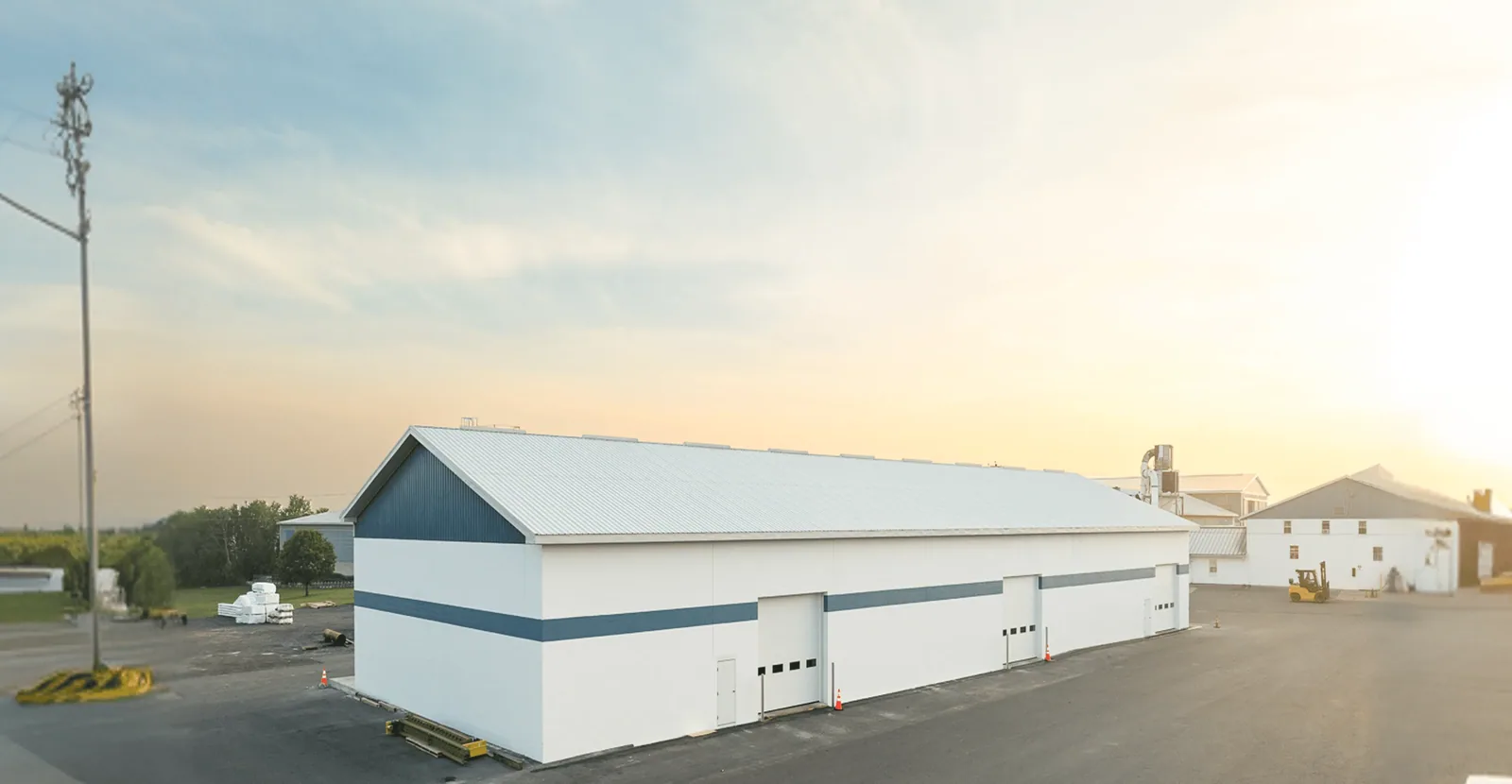
The pattern holds for the large flat roofs of the West Shore warehouse belt in Bloomfield and Travis, for retail along Richmond Avenue and for offices in Bloomfield where several large buildings went up in the late 1980s. The longer a surface has been in service, the more of its top layer the sun has used.
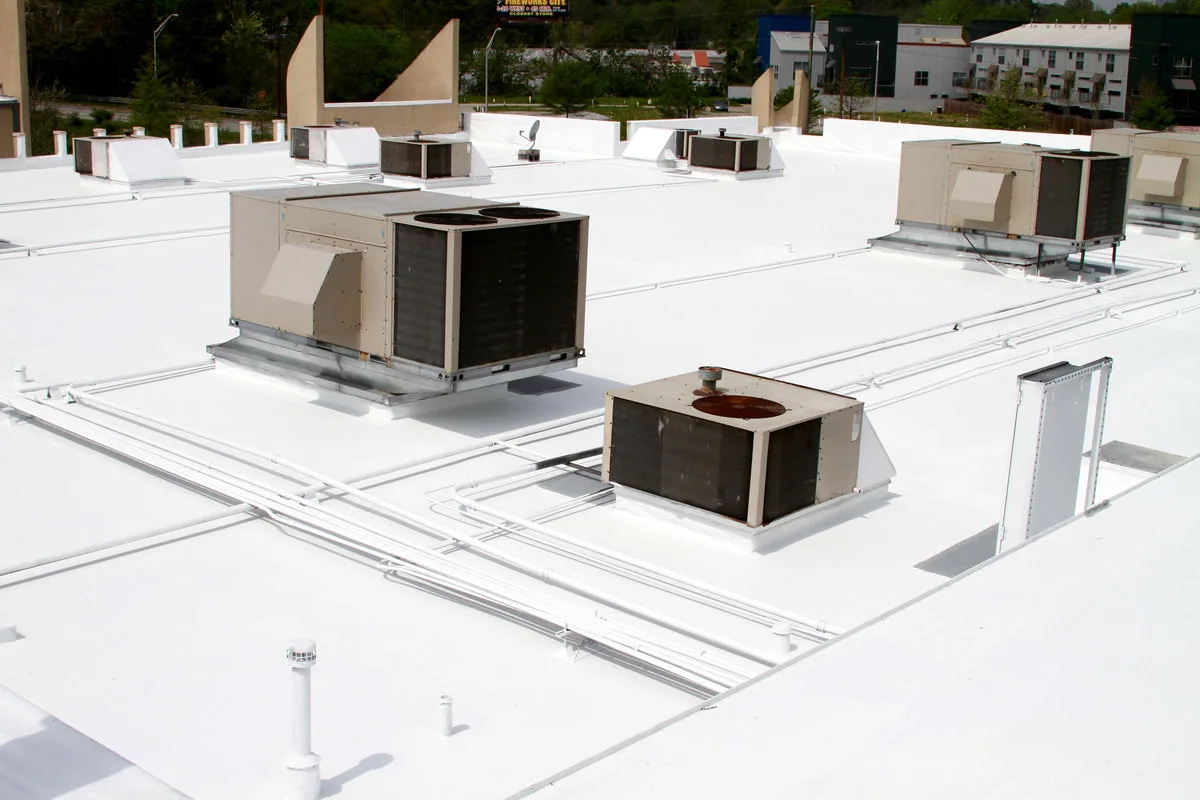
Heat also works from below. Rooftop equipment that exhausts hot air onto the sheet cooks the surface around it, and a ring of crazing around a vent shows where the exhaust lands. Moving the outlet or adding a protective pad costs little and saves a patch every few years.
What the inspector looks for
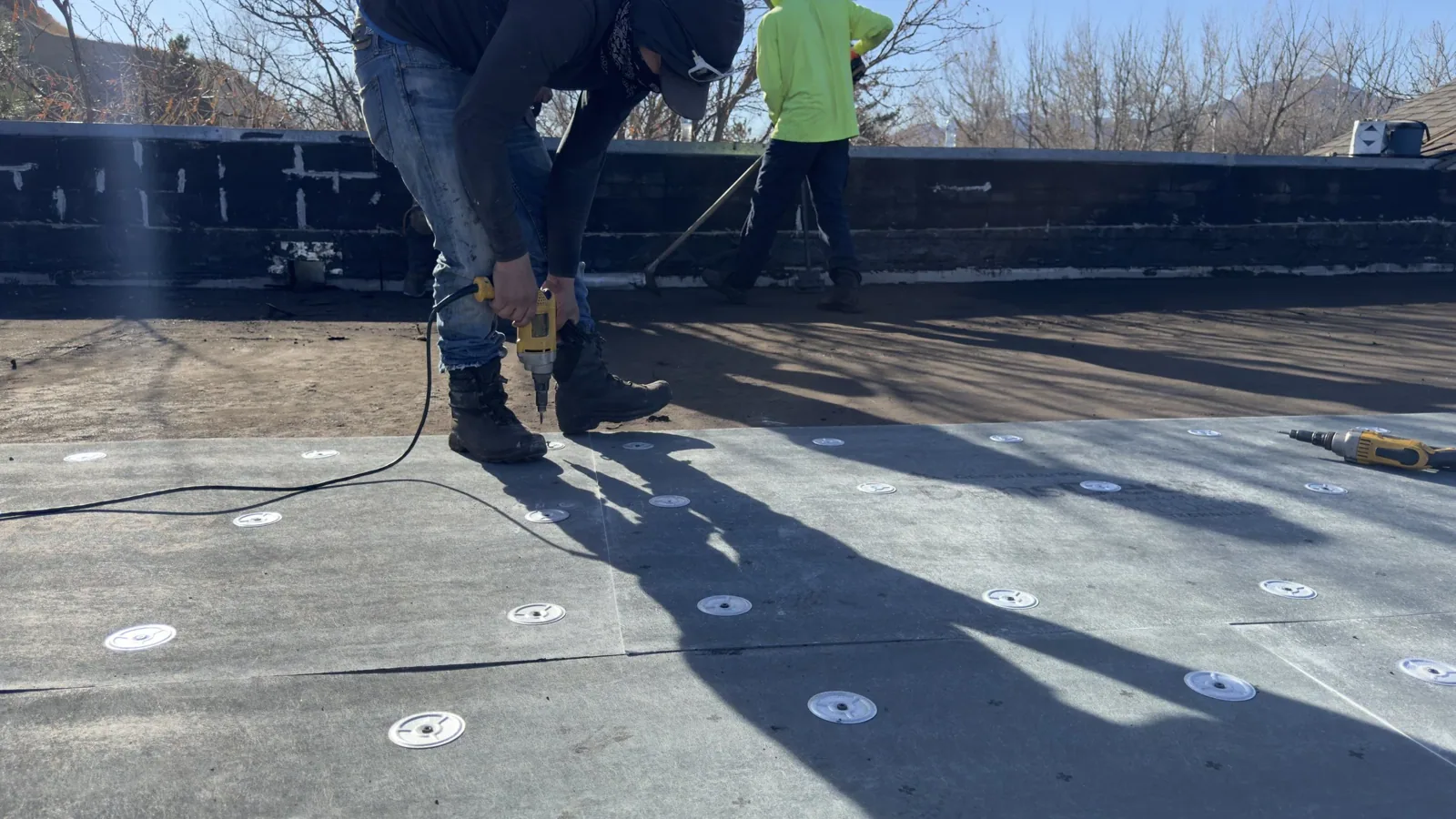
We read the surface. On modified bitumen, we look at granule loss and exposed asphalt. On single-ply, we look at chalking, crazing and shrinkage at corners. On coatings, we check thickness and adhesion. On built-up roofs, we look at the gravel and the flood coat. In every case we press the surface for brittleness and look at the details that move: seams, flashings and edges.
- Granules in the drain basket, and bare asphalt on the cap.
- Crazing and cracks, mapped by location.
- Shrinkage at corners and pulled flashings.
- Coating thickness and adhesion, tested with a patch.
A core cut tells us whether the heat has reached the insulation, which can cook and shrink under a dark roof, leaving gaps and soft spots that a walk can feel.
We press the sheet at several places across the roof, because sun damage is not even. South-facing slopes and open fields weather faster than shaded corners, and a roof can be sound on one side and brittle on the other. The inspection log records each area on its own line.
The repair in plain terms
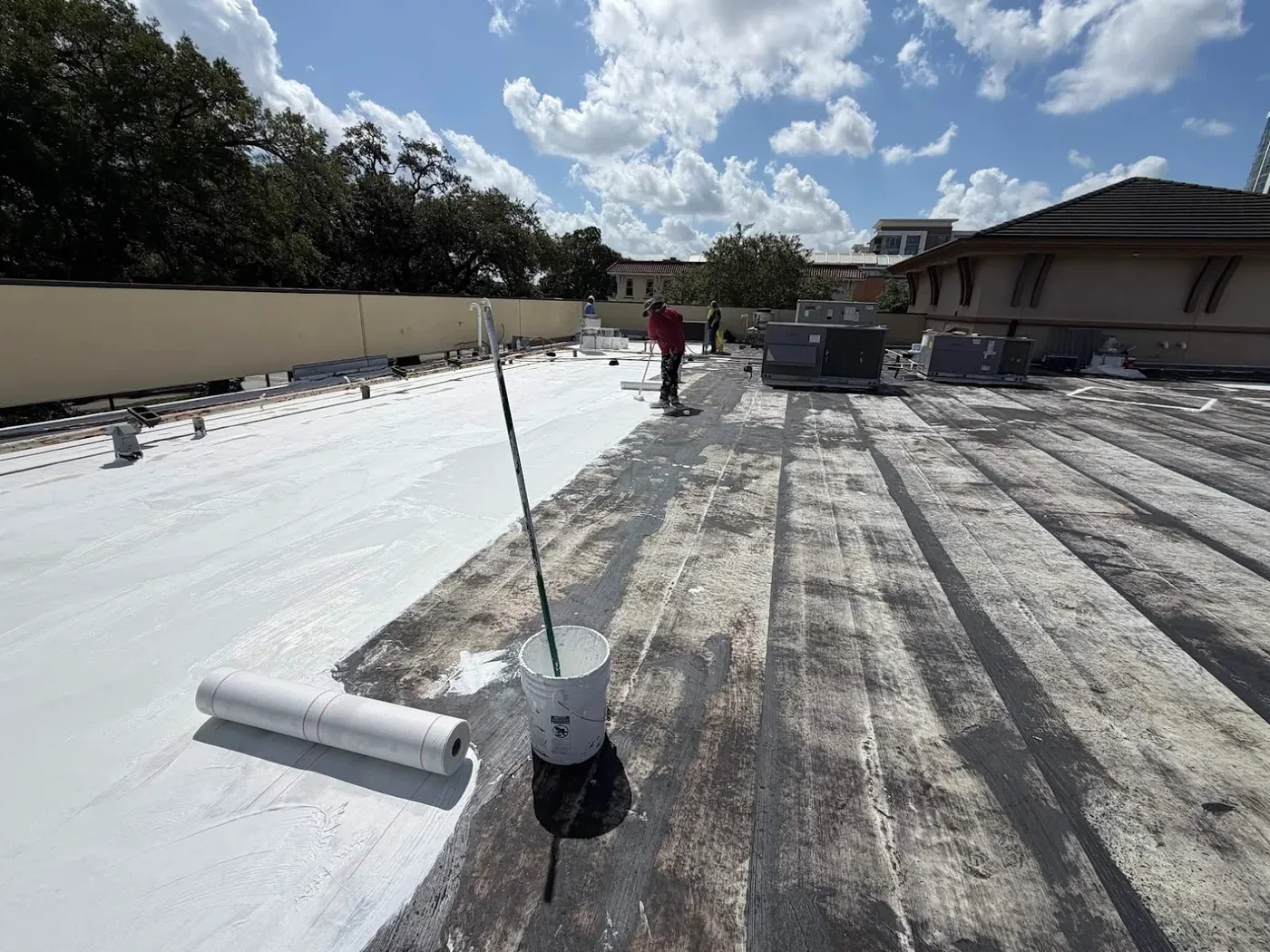
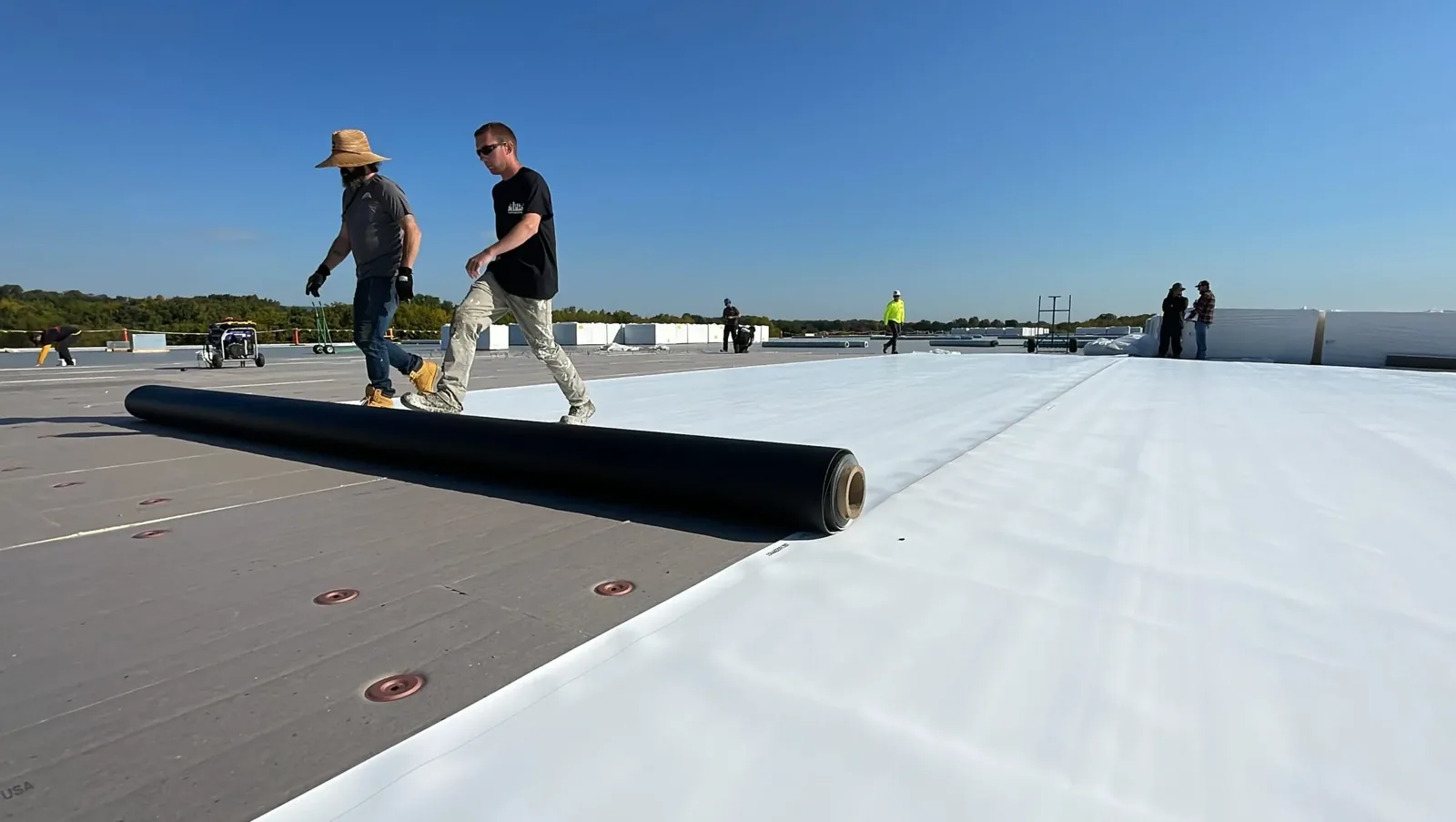
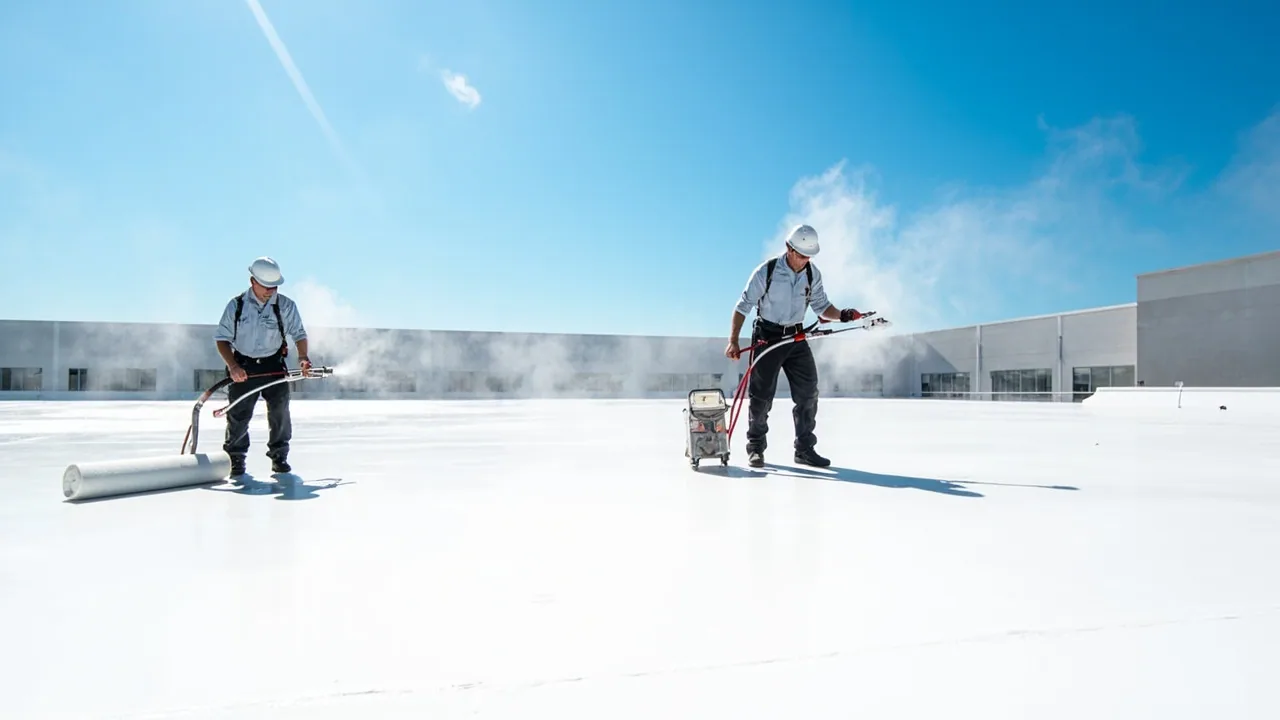
If the damage is surface-deep and the roof is dry, restoration works: clean, repair the details that moved and apply a reflective coating, which both protects and cools. Our roof coating restoration process covers it, and a white finish doubles as a cool roof installation. If cracks have reached the sheet's reinforcement or the insulation has shrunk, local repair comes first. If the damage is everywhere, a commercial roof replacement is the sound answer.
The choice of coating matters. Acrylic suits a roof that drains well, and silicone suits one that ponds. A coating over a cracked sheet only hides the problem, so cracks are treated and reinforced first, and the sequence is written into the scope.
Cost drivers are plain: roof area, the repairs that must come before coating, the coating type and thickness, and access. A coating costs less than replacement because it avoids tear-off, and the gap is widest on a big, simple roof with a sound sheet. We show both prices side by side with the expected life of each.
Sun is only half the year
A roof weakened by sun meets winter at a disadvantage. Snow in the city averages about 29.8 inches a year, with 27.3 inches on the record day, and freeze and thaw open every craze the sun began. A crack that did not leak in August can leak in February, which is why heat damage is repaired before winter and not after.
Wind finds weak edges as well. Edge details are built for gusts like Sandy's 80 mph, and a sheet that has shrunk at the perimeter is a sheet that wind can lift. The rain behind Ida's flash flood emergency in September 2021 was fast enough to find every crack, which is why a sun-damaged surface cannot wait.
Hot weather limits the work itself. Coatings and adhesives behave badly on a hot deck, so crews start early and stop before the afternoon peak.
What goes in the log
The log records the surface condition by roof section, with photographs, the core results, the coating thickness readings and the date, so next year's walk can compare. A short preventive maintenance plan washes the roof, checks coating thickness and records the trend. A membrane puncture found in a weathered area is repaired at the same visit.
A building in New Dorp or along Hylan Boulevard starts with the roof plan and the roof age. If a restoration grows into a replacement, the Department of Buildings, which publishes the 2022 NYC Construction Codes, is consulted on filings.
A recoat reminder goes on the calendar when the coating goes on, so the next one is planned and priced before the film thins to the point of failure.
Related Roofing Work
More roofing work that comes up alongside Heat and UV Roof Damage Repair.
Commercial Roofing Questions
How can I tell whether the sun has aged my roof?
Look for chalking, crazing, granule loss and shrinkage at corners. A press with a thumbnail shows brittleness.
Can a coating fix a sun-damaged roof?
If the damage is surface-deep and the roof is dry, yes. Cracks are repaired first. A coating does not bridge deep splits.
Does a white roof reduce sun damage?
It reduces the temperature swing and the heat load, which slows aging. It still needs washing and recoating.
Why do cracks leak in winter and not summer?
Freeze and thaw open cracks that were tight in warm weather, and water enters on the thaw.
How often should a coated roof be rechecked?
Once a year, to measure thickness, wash the surface and spot-repair. The log shows when a recoat is due.