
TPO Roofing in Staten Island, NY
TPO single-ply roofing for Staten Island warehouses, retail centers and offices: seam welding, flashing repair, recover and replacement. Request an inspection.
A base flashing standing a half inch off the parapet at a corner, where the white sheet has tightened over the years, is the entry an inspector makes on an aging TPO roof before writing anything about age. The field of the sheet is thin and uniform and tends to look fine long after a seam along a drain has started to lift.
Commercial Roofing Staten Island installs, welds, repairs and replaces TPO on low-slope commercial roofs across the island, and the first thing a facility director learns from us is whether a TPO roof needs a repair, a recover or a replacement, in that order of likelihood.
What TPO is
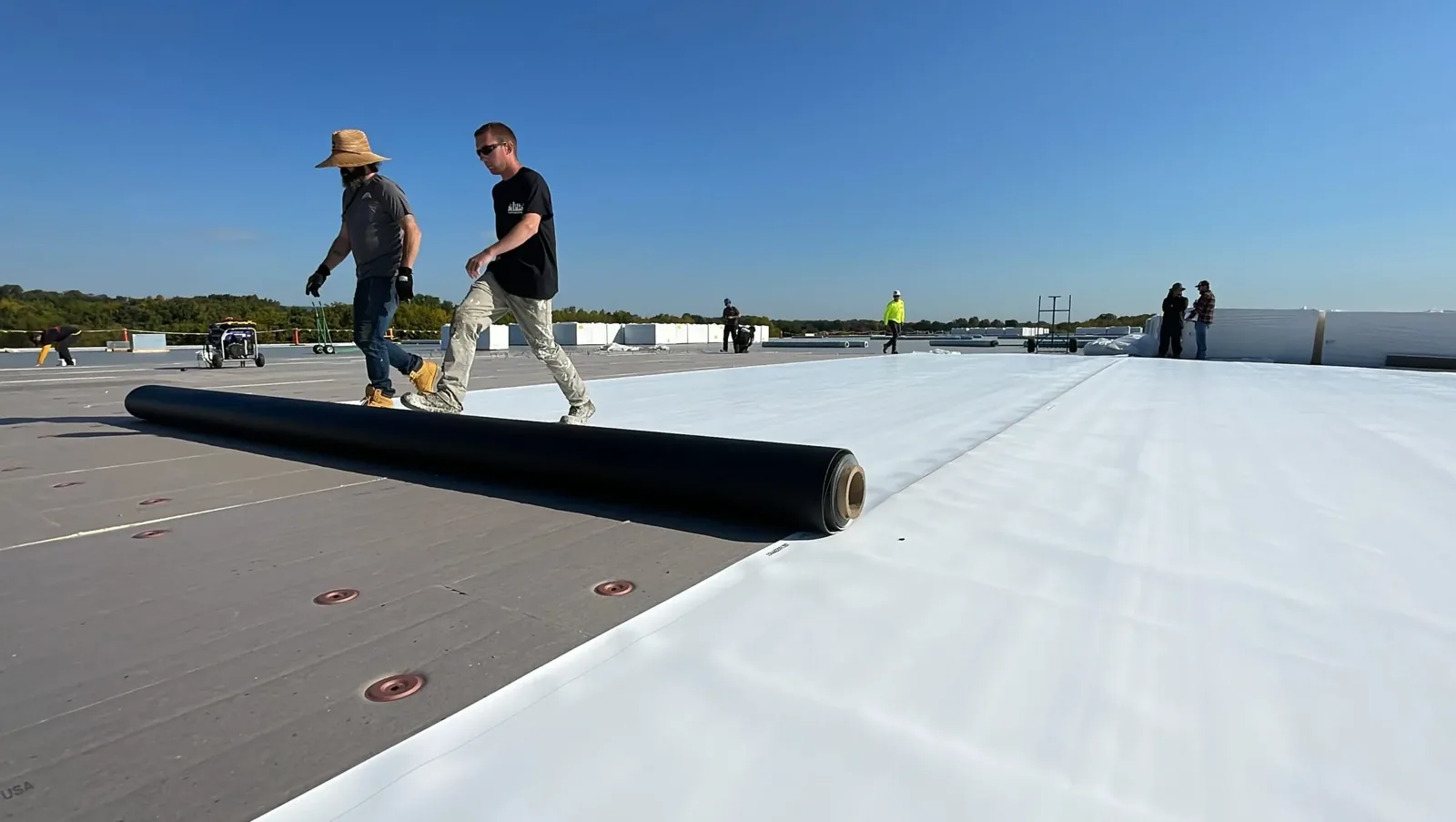
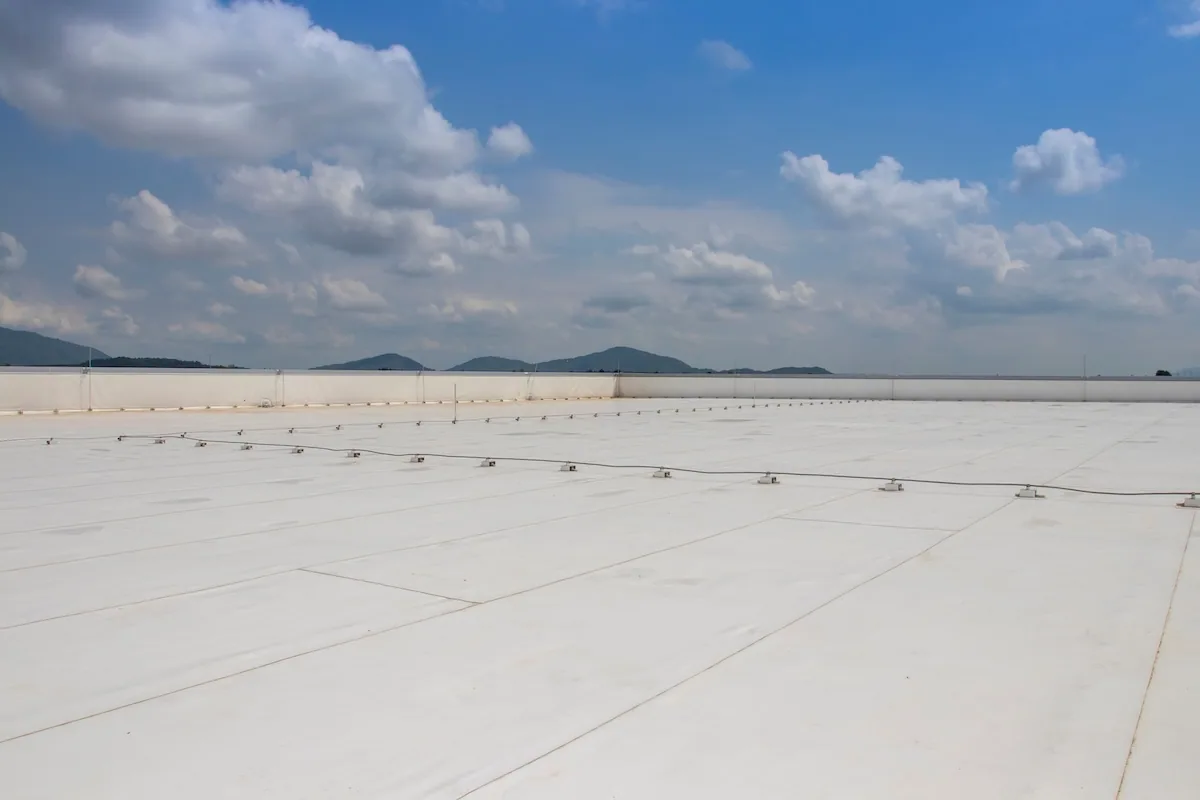
TPO is a thermoplastic single-ply membrane, usually white, supplied in wide rolls and joined at the seams with hot air, so the weld fuses two sheets into one piece with no adhesive in the seam to dry out. That is the main reason it is common on large flat roofs, along with a reflective surface that keeps the roof cooler through July.
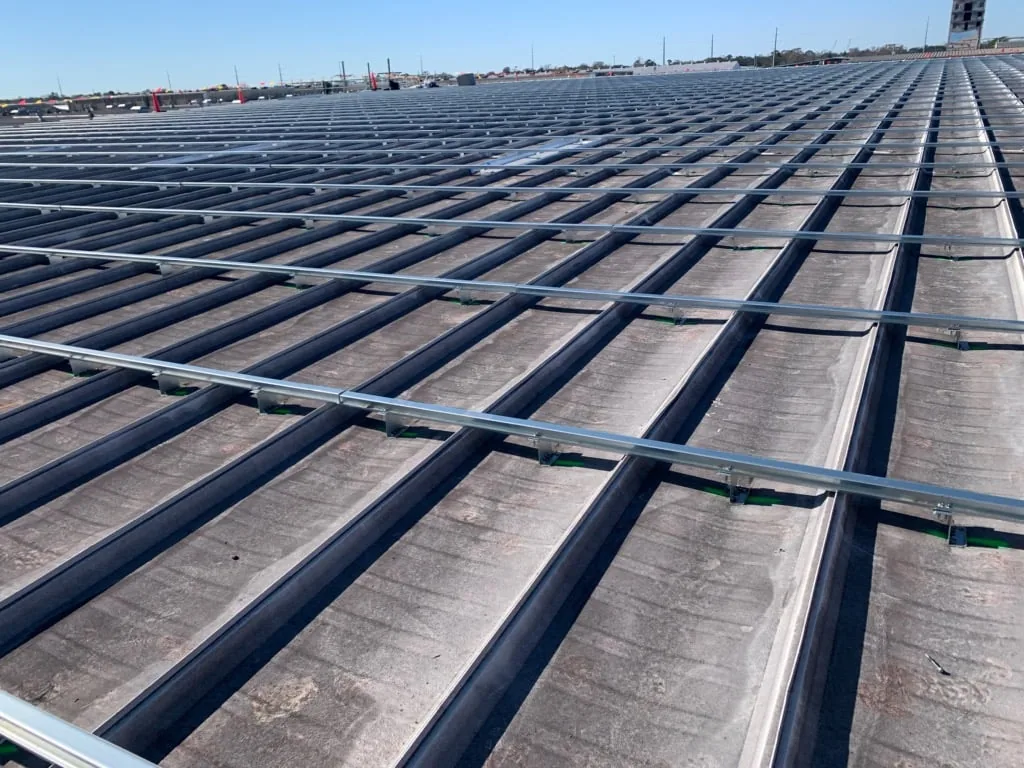
The sheet is held down one of three ways. Mechanically attached systems fasten it to the deck along the seam, fully adhered systems glue it to the insulation, and ballasted systems lay it loose under stone. Wind exposure and the structure beneath decide which one a roof gets, and on the island that decision belongs in the proposal, not in a footnote.
The insulation under the sheet gets as much of our attention as the sheet itself, because a new TPO membrane over crushed or wet board wastes the sheet. Polyiso board that has taken on water loses its value quickly, and a firm cover board over sound insulation is the usual way to give the membrane a surface it can bond to without telegraphing every fastener plate.
Where TPO fails first
Aging TPO gives way in four places. A weld made on a cold or dirty day opens. Flashing lets go of parapet returns and curbs. The sheet shrinks a little over the years, tightening at the corners and lifting the base flashing. And the surface weathers, with chalking, crazing and a gray film showing that the top layer is thin.
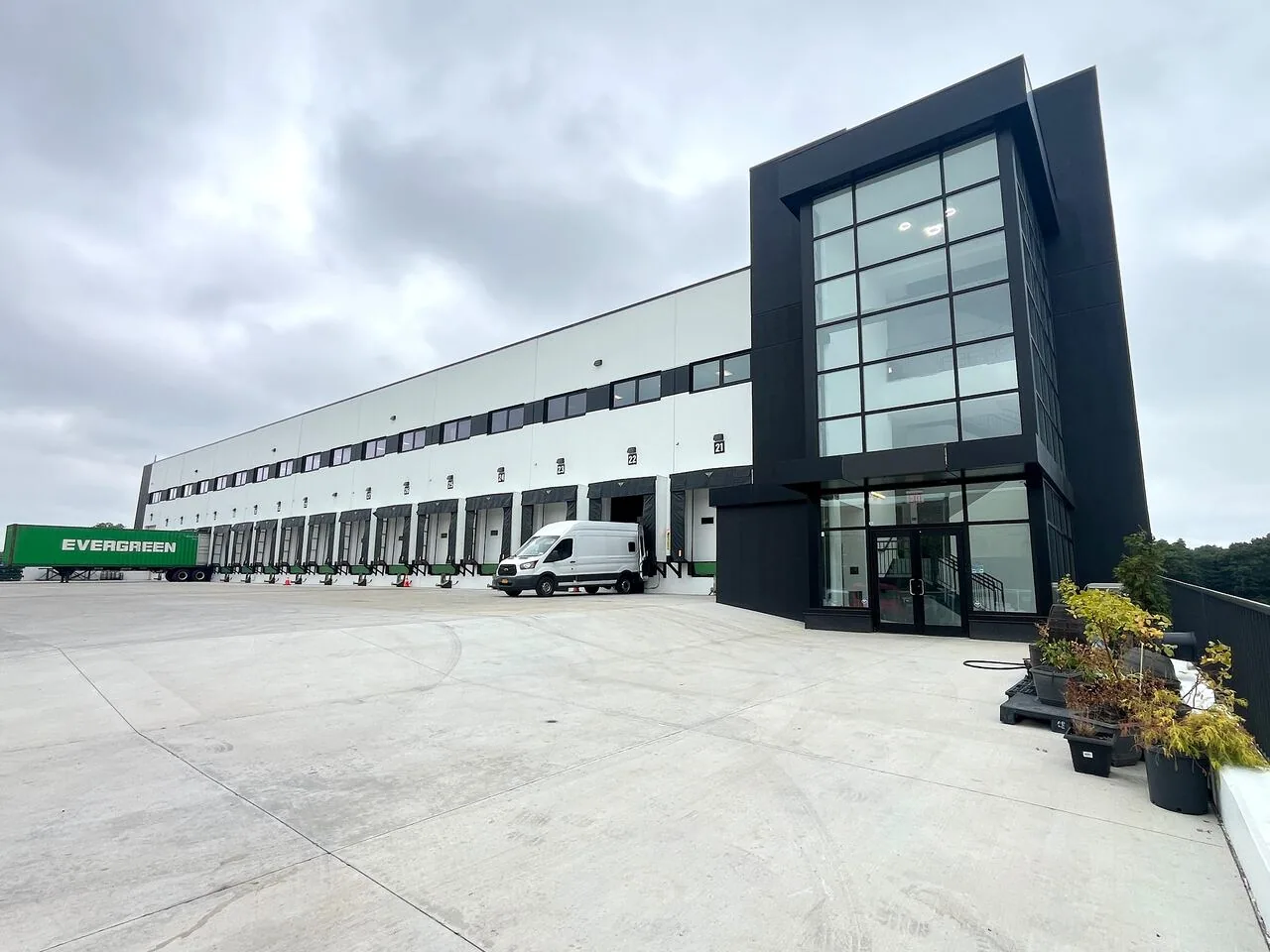
A big low-slope roof has long runs of seam and only a handful of drains, and on the West Shore, where the island's industry is concentrated and the Matrix Global Logistics Park opened in Bloomfield in 2018, a clogged strainer turns into a ponded seam within a storm or two. Rain on the scale of Ida's flash flood emergency in September 2021 shows exactly which roofs have slow drains.
Shrinkage is the quiet failure. As the sheet ages it pulls toward the fasteners and tightens at corners, which lifts the flashing at a parapet return and leaves a gap you can see from the lot. A shrunk corner is a repair if caught early and a replacement conversation if it has been left for several winters.
What the inspector writes down
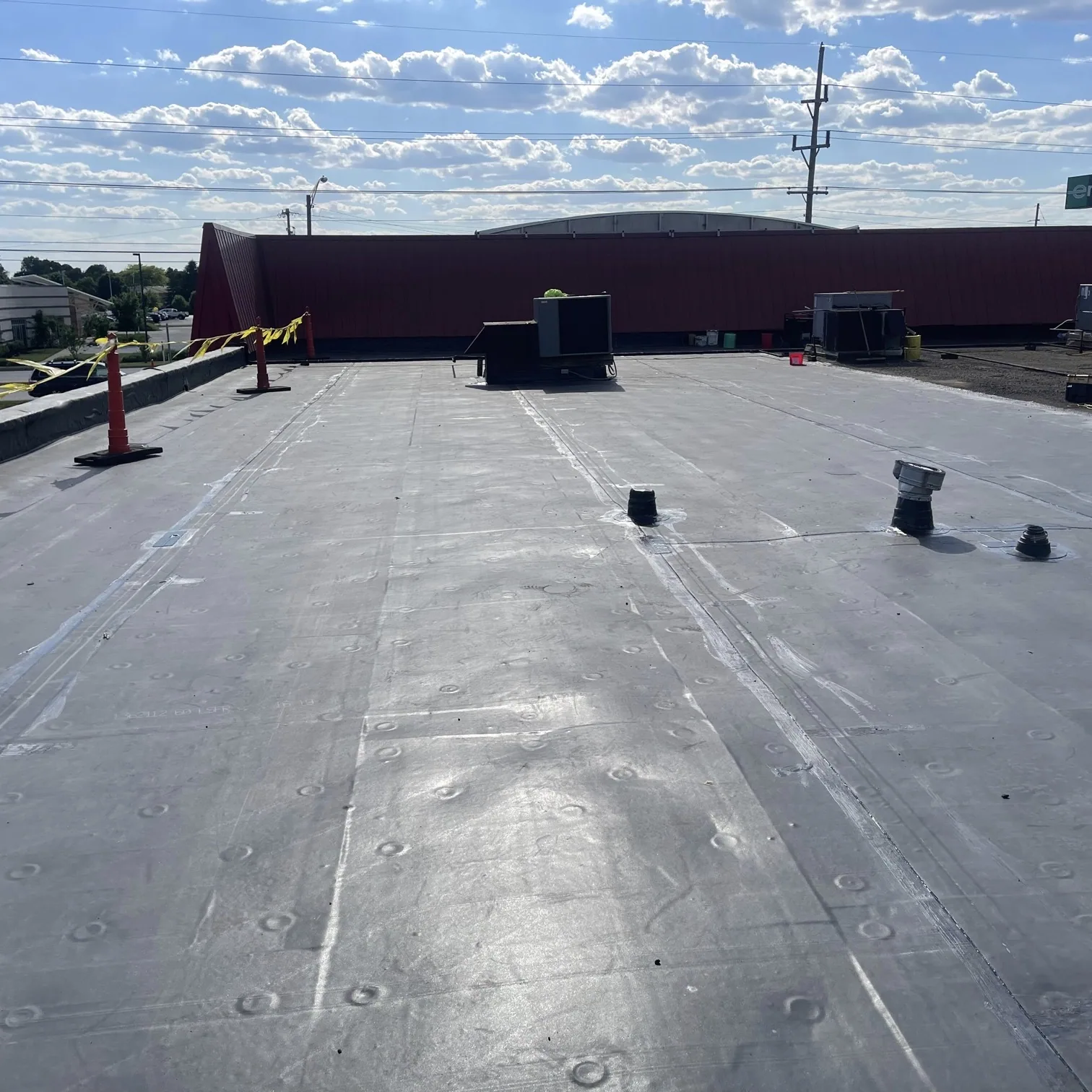
Every seam within reach gets probed and any that move are marked. Base flashings are checked for height and adhesion, and boots, drains and scuppers for dirt and splits. The field is pressed for the soft spots that mean wet insulation, and fasteners that have backed out and pushed up under the sheet.
- Seam probe results, with the location marked on the roof plan.
- Parapet returns and wall flashings, checked for height and lift.
- Drain strainers, scuppers and the ponding around them.
- Walk-pad wear along every service route.
Where a white sheet has gone gray in one stripe, we cut a core to see whether the insulation under it is wet, because that decides the whole recommendation.
The inspection log records every probe result against a location, so a facility director can see where seams have moved from one visit to the next. A seam that lifted a quarter inch last spring and half an inch this spring tells us more than any age estimate.
Repair, recover or replace
If the field is sound and the trouble sits at seams and flashings, we repair: clean and re-weld the failed seams, replace worn flashing and install new boots. If the sheet is aging but the insulation tests dry, a roof recover puts a new membrane over the old with less disruption. If the insulation is wet or the sheet has shrunk and cracked widely, the answer is a commercial roof replacement.
On most bids PVC and EPDM are the rivals to TPO. TPO usually prices below PVC and reflects heat, PVC resists grease from kitchen exhaust, and EPDM has a long record on small, cut-up roofs. We show the numbers side by side.
Cost drivers are plain: roof area, the number of penetrations and curbs, the thickness of insulation, the attachment method and the number of phases needed to keep the building running. A big simple roof costs less per square foot than a small one full of units, and we price the details one by one.
Wind off the water
Sandy's gusts reached 80 mph in October 2012, and Tottenville, bounded on three sides by water, shows how exposed a shoreline roof can be. On roofs like that the attachment pattern at the perimeter matters more than anything in the field, and fully adhered or reinforced edge details are the usual answer.
Winter adds a different check. Snow in the city averages about 29.8 inches a year, and ice at a drain that is only half open turns an ordinary thaw into a pond on the sheet. We clear the drains and scuppers on every visit and note it in the log.
Retail, warehouses and scheduling
TPO suits large open roofs with few penetrations, such as the warehouse roofs of the West Shore and the long retail roofs along Richmond Avenue and Hylan Boulevard, where big sheets and long welds keep a crew's time on site short. A warehouse roof is the easiest case, and a roof with many curbs and parapets takes longer, because every cut is a detail welded by hand.
Hot-air welding needs dry surfaces and moderate temperatures, so TPO work is best scheduled from spring through fall. The insulation and cover board are reviewed along with the sheet, and an owner in Bloomfield or on the Richmond Avenue corridor can start by sending the roof plan and the leak history.
Closeout carries a seam map, photographs of each flashing and the date of the final probe test, so the next inspection starts with a record instead of a guess. A yearly preventive maintenance visit keeps drains and seams in order.
Related Roofing Work
More roofing work that comes up alongside TPO Roofing.
Commercial Roofing Questions
When does a TPO seam start to need attention?
A clean weld can outlive the sheet beside it, while one made on a dirty or cold day fails early. Probing every seam on the walk finds those before a ceiling stain does.
Is tear-off always needed before new TPO?
No. When the old insulation tests dry and the structure carries the extra layer, new sheet can go over it, with a cover board between and any wet sections removed first.
Is white TPO better than black EPDM on the island?
It depends on the roof. TPO lowers heat load and suits large flat roofs, and EPDM has a long record on small, cut-up roofs. We price both when a building could take either.
What does TPO not tolerate?
Heavy grease from restaurant exhaust and some solvents can soften the sheet. A roof under kitchen exhaust is a PVC question.
How does wind affect a TPO roof near the shore?
Wind lifts edges first, so perimeter attachment is stronger than the field. Waterfront roofs may need fully adhered or reinforced edges.