
Commercial Roofing in Mariners Harbor, Staten Island, NY
Commercial roof inspection, repair and replacement in the Mariners Harbor district of Staten Island, NY, from marine yards to small-business industrial space.
Tug yards, dry docks, a cargo terminal and converted industrial space share the Kill Van Kull shoreline in Mariners Harbor, Staten Island, NY, and the roofs over them are work buildings first: low-slope sections, metal shop roofs and loading-dock canopies that take weather from the water and traffic from the crews. In the district Commercial Roofing Staten Island inspects, repairs and replaces commercial roofs, and a marine-side walk starts with the state of the edge, since that is where wind from the channel goes to work.
The district is large and mixed, and we read each roof on its own terms. A working waterfront building, an old mill reused by small tenants and a newer shop building each carry different problems.
What the waterfront holds
Mariners Harbor sits along the Kill Van Kull, where Bethlehem Steel once held much of the land and turned out Navy destroyers during World War II. Tug companies, smaller dry docks, a dredging firm and a cargo terminal operate along the water. At the neighborhood's edge the old Cross Paper Plant now leases space to small businesses, and the northwestern section is often called Arlington. That mix gives the district a wide range of building uses, from marine support to light industrial tenants. Work yards tend to mean heavy equipment, grit and exhaust, so we plan the inspection around the wear those things leave behind.
What the inspector sees on a work-yard roof
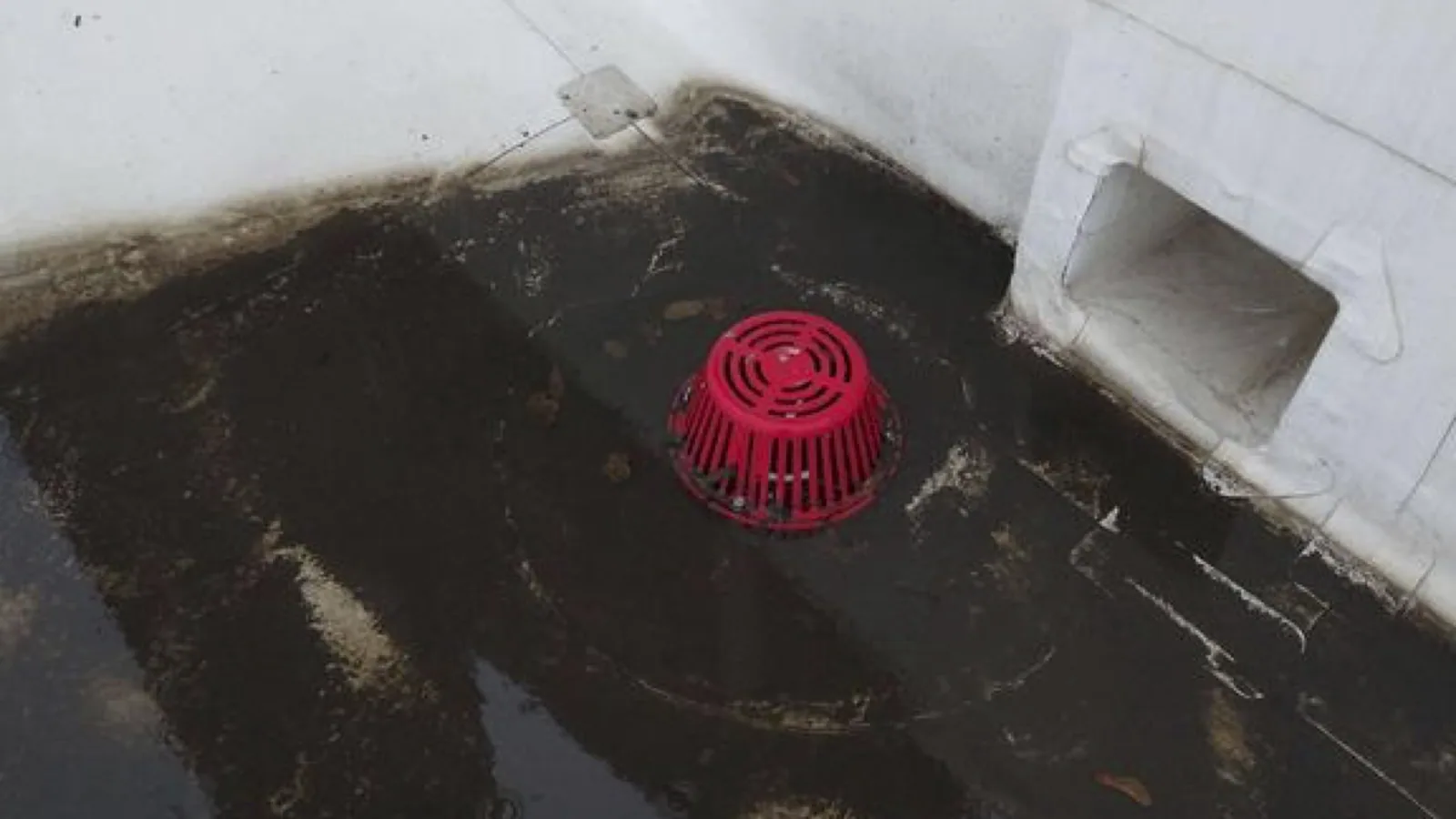
Roofs over active yards collect grit, oil film and debris from the ground, carried up by wind and by crews' boots. The first notes on a walk are often walk-pad wear along the route to a rooftop unit, a drain strainer packed with grit and a patch of membrane discolored downwind of an exhaust stack. Each is small by itself and adds up if ignored.
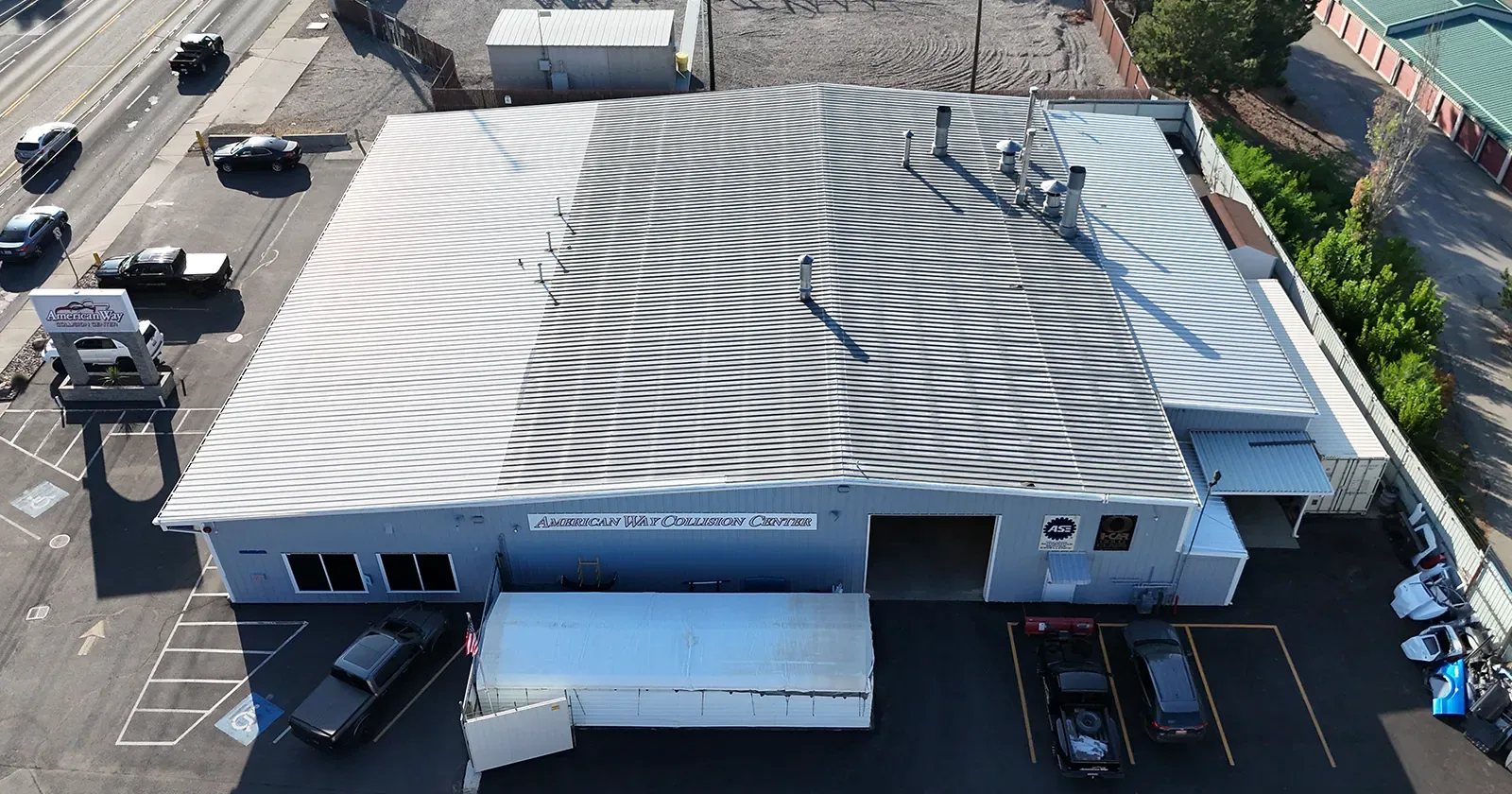
Ballast displacement matters too, where a roof is ballasted. Wind off the channel can push stone toward the edge and leave bare membrane exposed to the sun, which ages the sheet faster in that spot. We sweep the displaced stone back, check the sheet beneath and log the area. For metal shop roofs, the walk turns to fasteners, laps and sealant: a screw head that has backed out is a leak waiting for the next heavy rain. Our metal roof retrofit options come into play when the panels are sound and the fasteners are not.
Wind and water from the channel
The channel side takes the worst of the wind, and Sandy's gusts of up to 80 mph in October 2012 are why shoreline roofs are checked first for wind-lifted edges, loosened coping and drains that backed up. Rain makes its own claim: when Ida triggered the city's first flash flood emergency of that type in September 2021, any flat roof with a clogged scupper or an unmarked overflow felt it. On a long run of roof, one blocked outlet puts a lot of water in one place. The drain and scupper service clears, repairs and logs each outlet.
Reused industrial space
When an old plant rents space to small businesses, the building often carries additions from earlier owners and equipment from each new tenant. Each tenant adds a vent, a unit or a conduit run, and each one cuts the roof. A leak in such a building is usually found at the newest penetration, though the older ones need checking too. We map every penetration on the roof plan and mark which ones leak, which are sealed with sealant alone and which have a proper flashing.
Tenant leases matter here: who pays for a repair caused by a tenant's equipment, and who pays for age. Our report documents the entry point, the likely cause and the photographs, so the owner and the tenants have the same facts in front of them. The flex industrial roofing notes follow the same order.
The edge of a reused plant is worth a separate look. Additions often meet the older building at a wall tie-in, and that line, where one roof ends against another, is the weakest on the property. We probe it, check the counterflashing and photograph it, then set it in the log with the date so the next walk can compare.
Repair, restore or replace
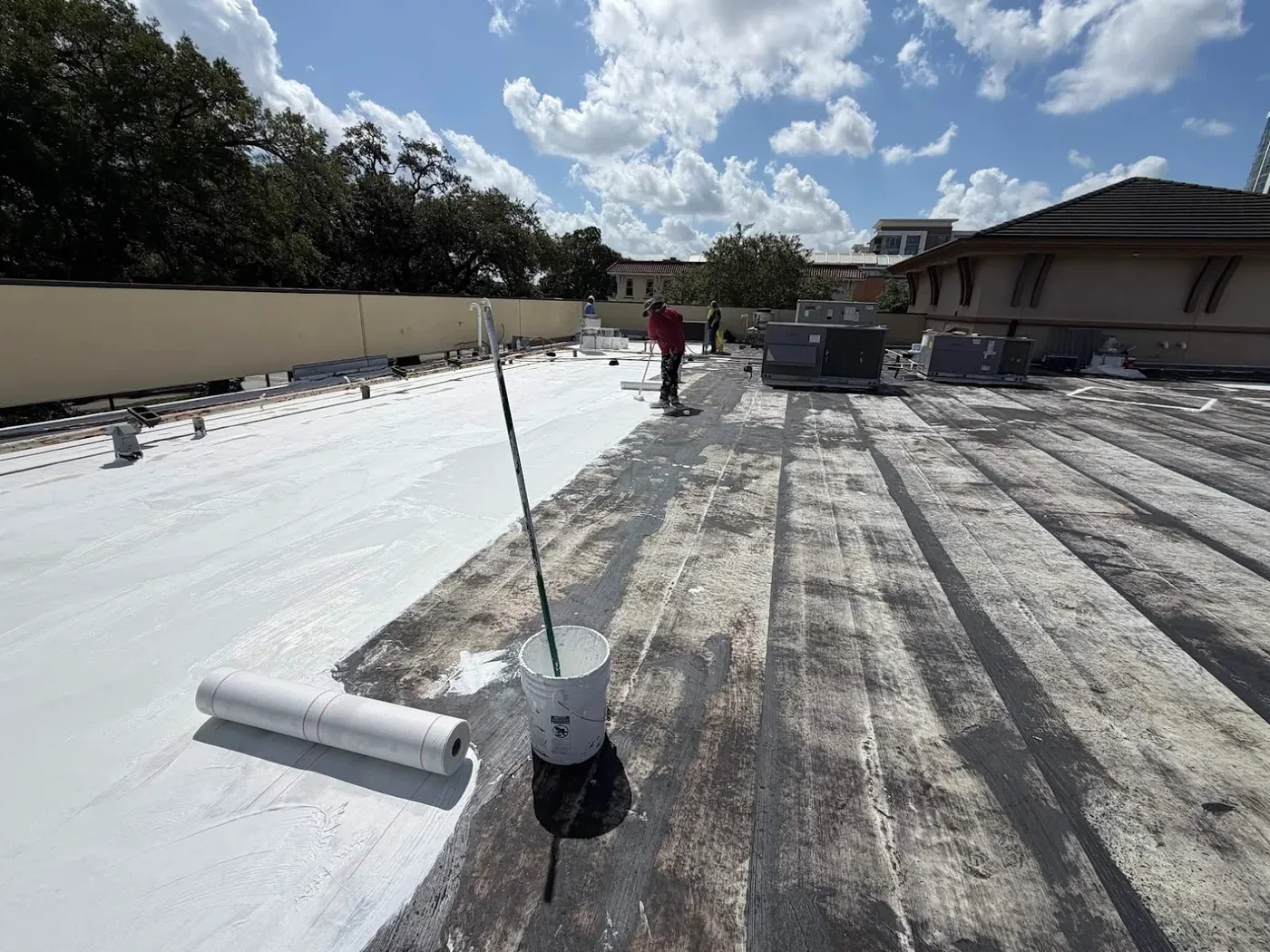
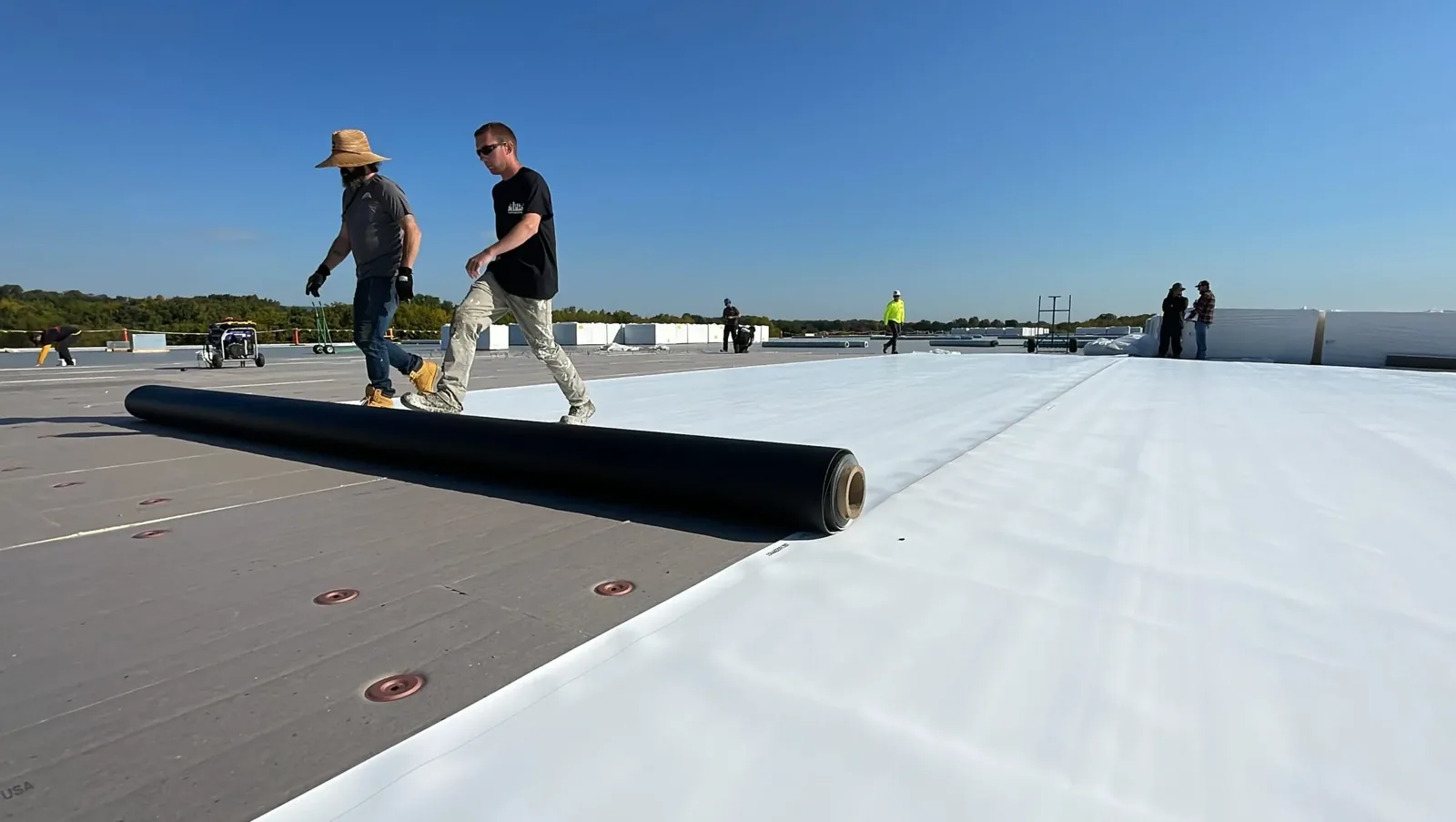
The choices follow the findings. Damage in one place is repaired in matching material. A membrane that is dry but weathered may suit a coating restoration. A roof with wet insulation needs replacement, and the moisture scan decides, with core cuts at the doubtful spots. In a yard where the roof sees grit and traffic, a tougher system or a protective layer along service routes is part of the proposal.
Cost follows the details: length of parapet, number of penetrations, condition of the deck, and how trucks and a hoist reach the roof. A yard with open space is easier to stage than a shop squeezed against a neighbor, and we price access as its own line.
Working around crews and tides
A working yard runs on its own schedule of vessel arrivals, crane use and shift changes. We plan roof work to avoid the busiest windows, keep lifts away from crane swing zones and agree the hoist position with the yard manager before the crew arrives. Hot work is coordinated with the yard's own safety rules, and material is kept off the walkways that crews use.
Winter adds its own checks. Winter snow in the city averages about 29.8 inches, and the 27.3 inches of a single day in January 2016 showed how quickly a drain disappears under a drift. Neighbors in Port Richmond and Bloomfield face the same calendar.
What goes in the log
The log gathers a zoned roof plan, a photograph for each finding, scan results and a ranked list of repairs, each flagged can wait, fix this season or fix now. A yard manager can use it to budget the year, brief a lender or send the findings to an insurer.
Owners who also hold buildings in the Arlington section or along the waterfront can keep one log format for all of them, so a shop roof and a plant roof read the same way and the repair lists can be ranked against each other when budgets are set.
Reused industrial space brings new tenants who do not know the roof, so the first entry in the log names the penetrations, the drain count and the last visible repair. Later visits build on it, and a new occupant can see in one page what the building has needed.
Related Roofing Work
More roofing work that comes up alongside Mariners Harbor.
Commercial Roofing Questions
What is the first thing to check on a roof in an active yard?
The drains and the service routes. Grit and debris clog strainers fast, and a route without walk pads wears a groove in the membrane.
Can roof work run while vessels and cranes are active?
It can, with the lift position agreed with the yard manager and kept clear of crane swing. We avoid the busiest windows and tell the yard what is open on the roof each day.
How do you handle a reused plant with many tenants?
We map every penetration, mark which leak and which are sealed with sealant only, and write findings so the owner and tenants see the same facts.
Do metal shop roofs need different checks?
Yes. Fasteners, laps and sealant come first, since a backed-out screw leaks before the panel fails. Restoration or retrofit depends on how sound the panels are.
What shows up first on a roof hit by wind off the channel?
Edge metal and coping. Lifted corners and loose fasteners along the perimeter give the wind its way in, so we walk the edge before the field.