
Modified Bitumen Roofing in Staten Island, NY
SBS and APP modified bitumen roofing for Staten Island mixed-use, industrial and civic roofs: lap repair, torch-free options and replacement.
A hollow thump under a boot heel near a drain, with a faint ridge in the cap sheet running toward the wall, is the note an inspector makes on a modified bitumen roof when a blister has formed over a lap or a trapped pocket of moisture. The roof will look sound from the lot, and the sound under the boot says otherwise.
Commercial Roofing Staten Island installs, repairs and replaces modified bitumen on low-slope roofs across the island, in torch-applied, cold-applied and self-adhered forms, and we pick the method that fits the building and the people in it before we pick the price.
What modified bitumen is
Modified bitumen is asphalt blended with polymers for flexibility and strength and rolled out in fabric-reinforced sheets. SBS, the rubber-like modifier, makes a sheet that stretches and recovers, which suits roofs that move with temperature. APP, a plastic-like modifier, makes a sheet that resists heat and ultraviolet light and is common on open roofs in strong sun.
The sheets go down in two or three layers, a base and a cap with a granulated or coated surface on top. The cap carries the weather and the base backs it up, so a flaw in one layer is often covered by the next, which is the main reason the system has a long record on multifamily and mixed-use buildings.
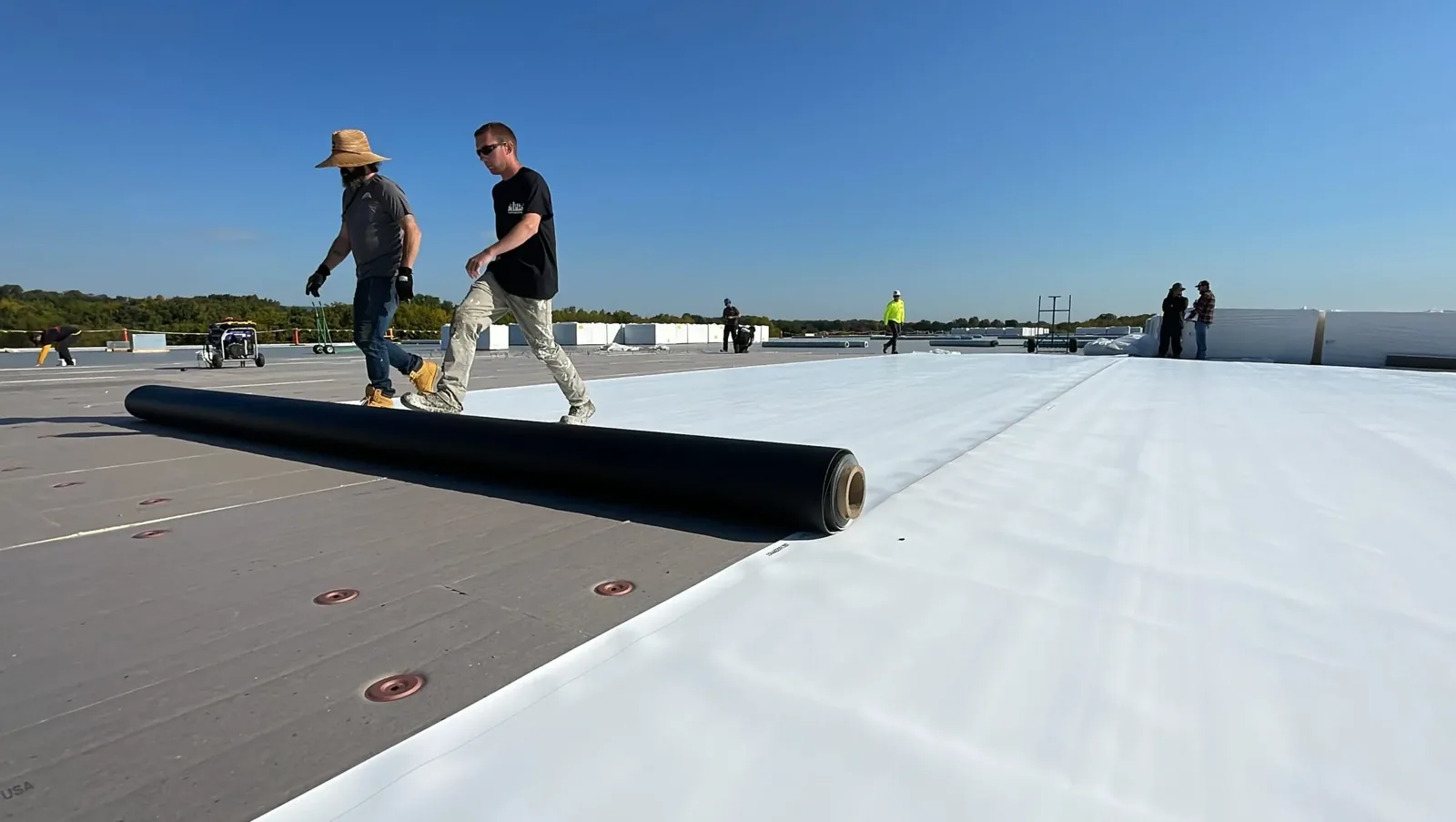
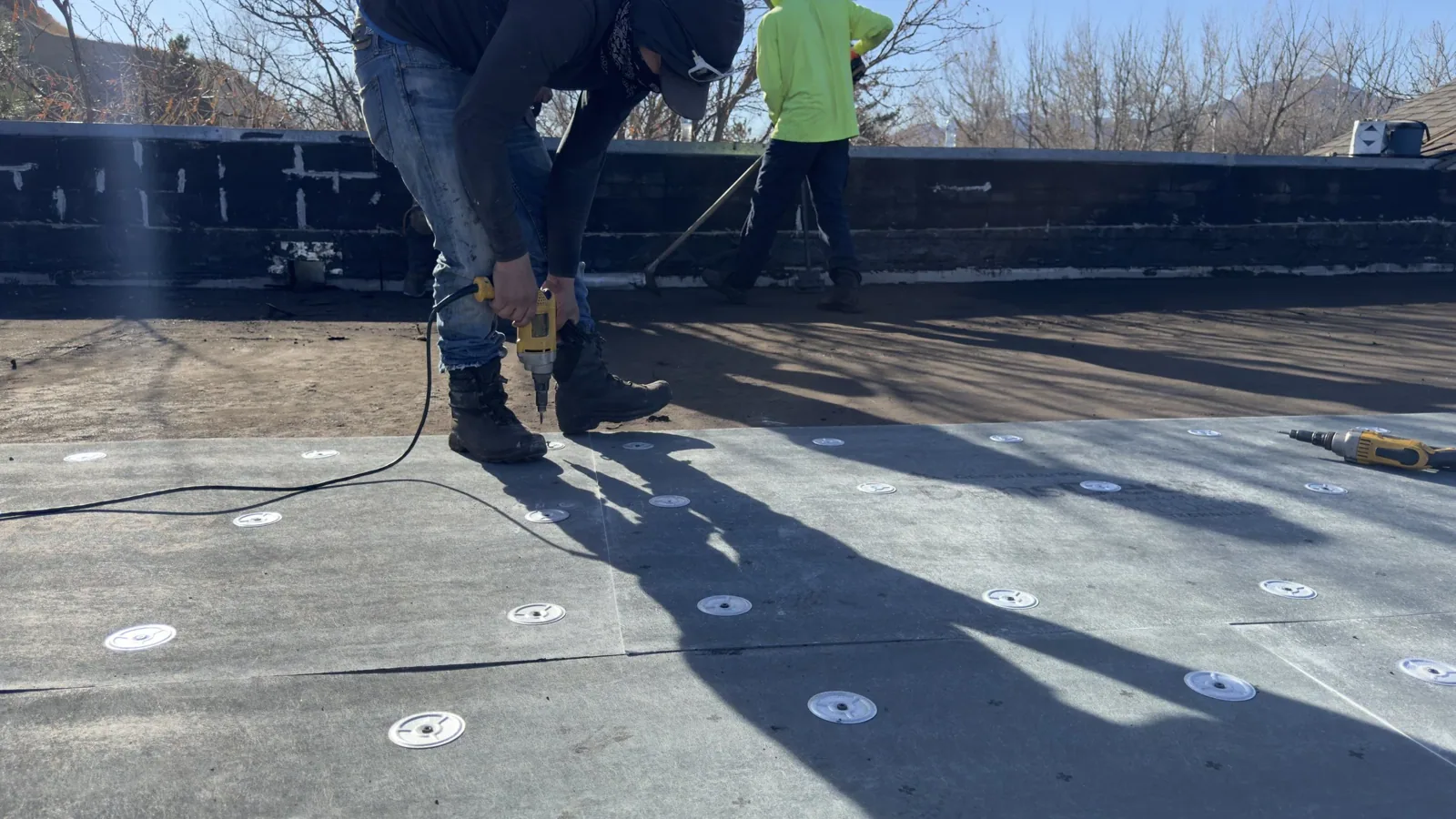
Installation methods change the job as much as the polymer does. Torch application fuses the sheet to the substrate with open flame. Hot-mopped systems set it in asphalt heated in a kettle. Cold-applied systems use adhesive, and self-adhered sheets use a peel-and-stick backing. Each carries a different fire risk, odor and noise, and on an occupied building those factors decide the method before price does.
Where the system gives out
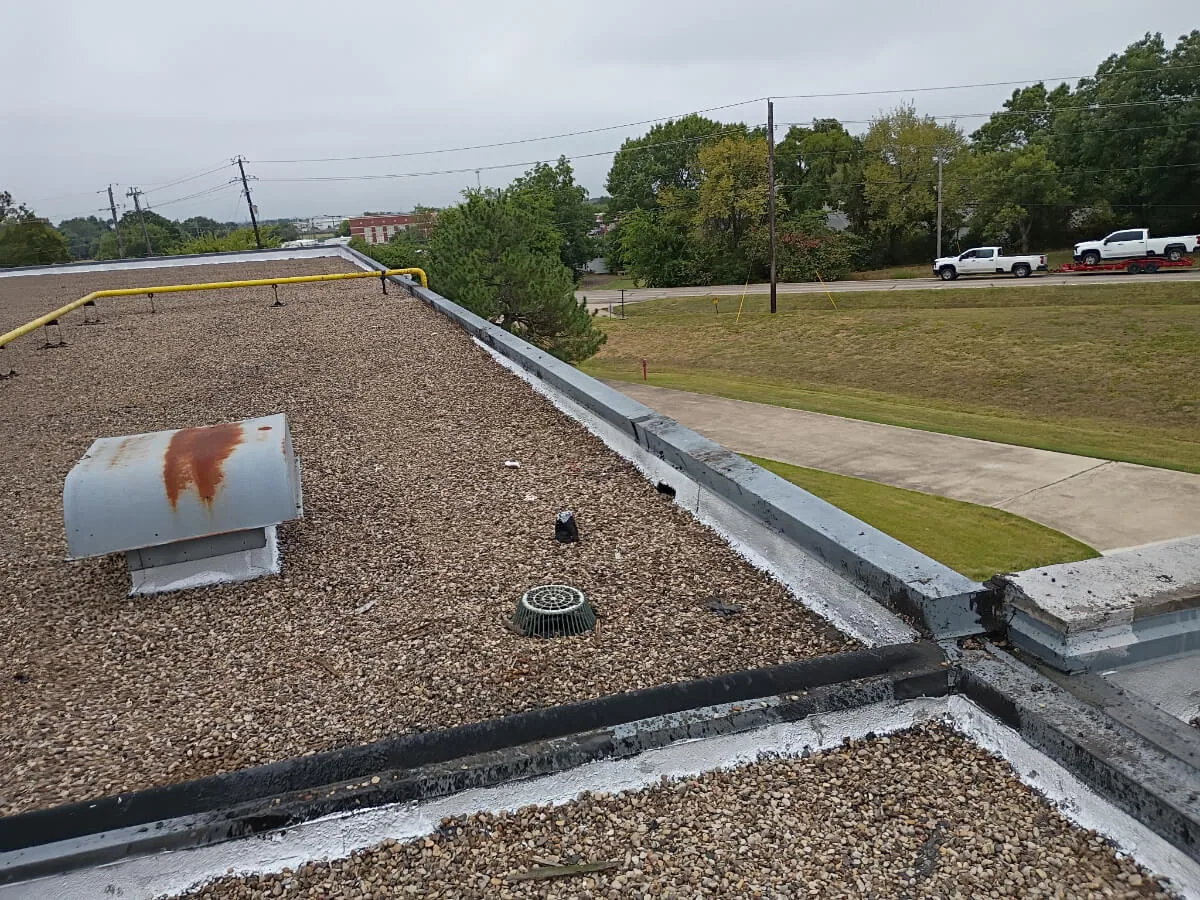
Laps open when a side lap or end lap was not fully sealed. Flashings split at corners and at the base of a parapet. Granules wear off the cap and expose the asphalt to the sun, which dries and cracks it. Blisters form where moisture was trapped in the insulation or between layers, and they break open under foot traffic.
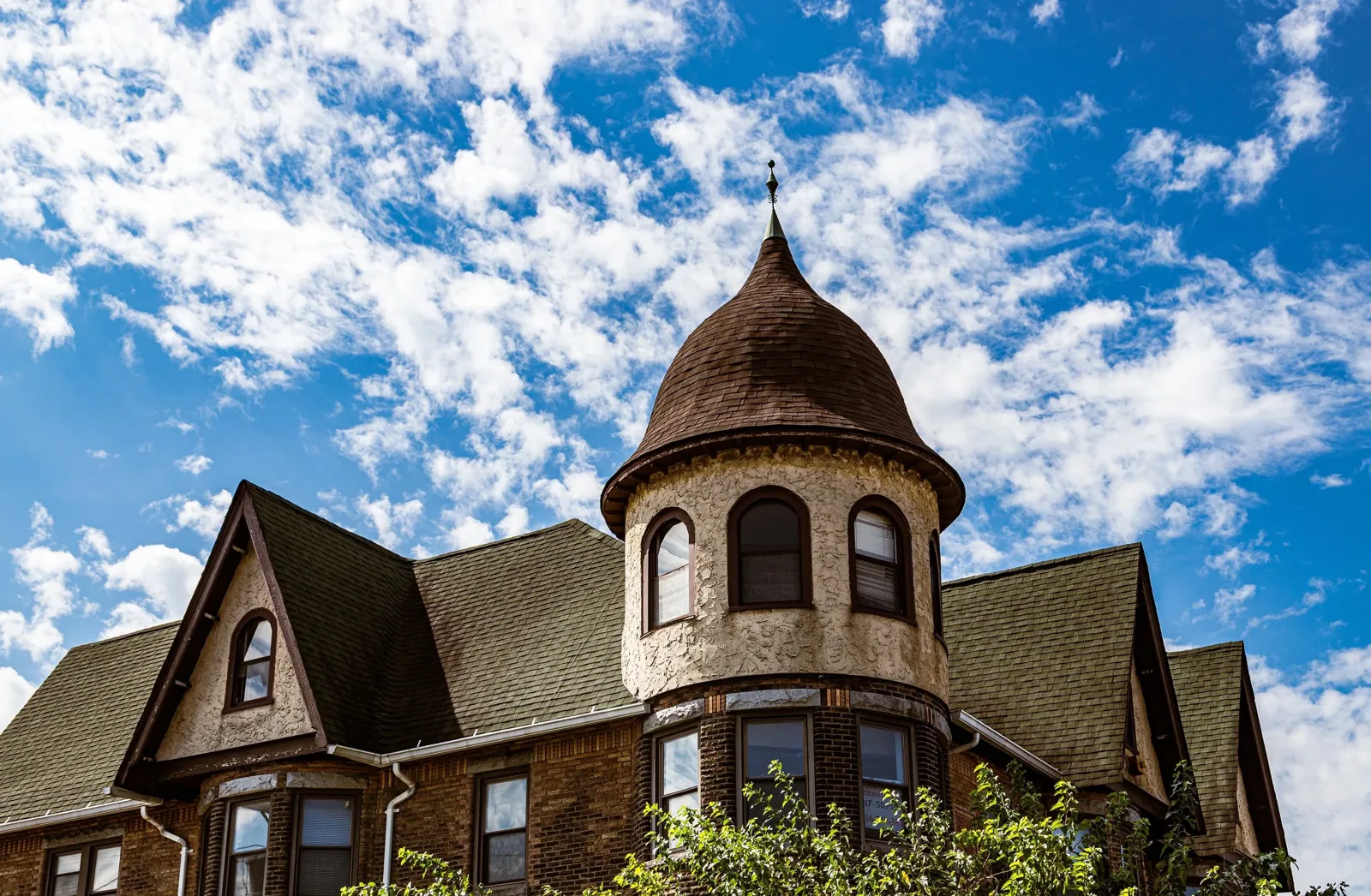
Older commercial streets are where an inspector expects layered roofs and parapet flashings. Richmond Terrace in Port Richmond faces the Kill Van Kull and mixes 19th-century buildings with working waterfront uses, and the Ritz Theater of 1924 at Port Richmond and Anderson avenues, now a tile showroom, shows how older commercial buildings change hands and purpose.
Stapleton and Tompkinsville tell a similar story. The Paramount Theater on Bay Street in Stapleton stopped operating as a concert hall in the late 1980s, and Tompkinsville's commercial streets are lined with tall brick buildings. Where a layered roof meets a brick parapet, laps and flashings are the first details to be probed, one after the other.
What the inspector reads
We read the cap sheet for granule loss, alligatoring and cracking. We check every lap by hand and probe for lifted edges. We examine base flashing for height and for loose or missing fasteners, and we look at the coping and counterflashing on each parapet. In the field we press the surface for soft spots and mark blisters.
- Bare asphalt on the cap, with its granules lying in the drain basket.
- Laps that lift under a probe.
- Base flashing height against the water line, and parapet returns that have moved.
- Blisters that sound hollow underfoot.
For a roof of uncertain age we cut a core, which shows how many layers sit on the deck and whether the insulation is wet.
The coping and the wall behind it matter as much as the sheet, because a parapet with loose coping stone lets water behind the flashing and the repair fails if it ignores the wall.
Repair, coat or replace
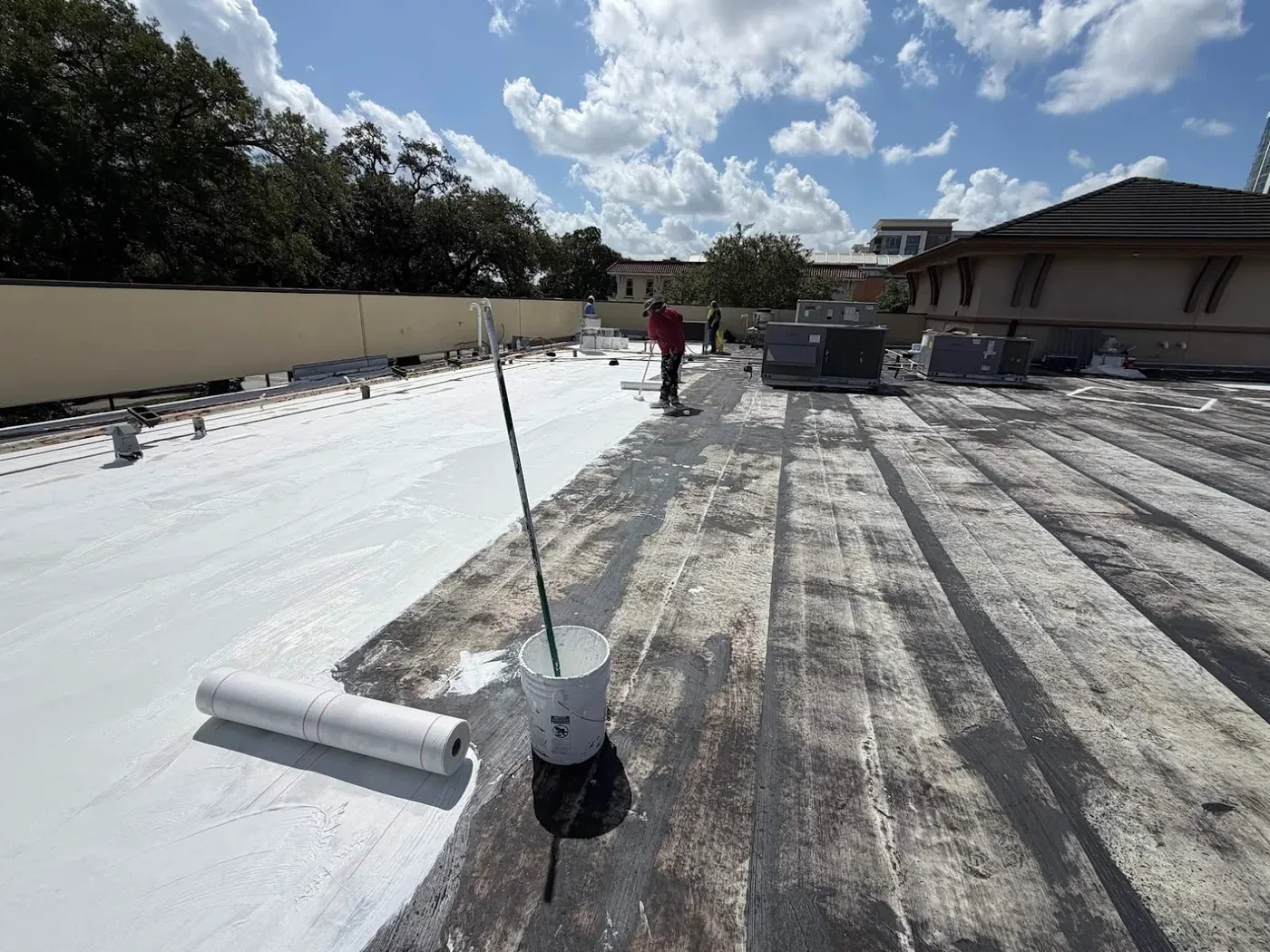
A roof with sound laps and worn granules can often be coated, which adds years at low cost, and our roof coating restoration work covers that case. A roof with local flashing or lap damage is repaired by cutting out the failed area and installing new sheet and flashing. A roof with multiple layers, wet insulation or widespread cracking needs a commercial roof replacement.
Compared with built-up roofing, modified bitumen is easier to repair and lighter. Compared with single-ply sheets such as EPDM, it is tougher underfoot and more forgiving of foot traffic, but it takes longer to install and puts more odor into the air.
The price turns on how many layers come off, what the deck looks like, which application method is chosen, how hard the roof is to reach and how many flashing details there are. A torch-free system costs more per square foot than a torch-applied one on a plain roof, and the difference shrinks when fire watch and permits are priced in.
Fire, odor and tenants
Open-flame torches are the main concern on an occupied building. A torch near wood blocking, old parapet material or a hidden void is a fire risk, and many owners and insurers prefer torch-free methods. Self-adhered and cold-applied sheets avoid the flame, and hot-mopped asphalt avoids it with a kettle on the ground, which brings its own smell. We lay out the options in writing before work begins.
Odor reaches tenants through windows and vents, so air intakes are covered and the facility director is told which days will be strongest. Hot work on an older building gets a fire watch after the last torch is out.
Timing, wind and winter
Modified bitumen goes down best in dry weather above freezing. Cold slows adhesive cure and stiffens the sheet, and rain stops the work. With snow in New York City adding up to about 29.8 inches in a typical year, the best window runs from spring through fall, and open sections are covered after the last shift.
Sandy's 80 mph gusts of October 2012 set the standard for edge details, so cap sheets at the perimeter are attached more heavily than the field, since a loose edge is the first thing a big blow finds. A building in Port Richmond or along Richmond Terrace starts with the roof plan and the leak history, and the list of seam failure repair items returns with photographs.
Closeout covers photographs of every lap and flashing, the layer schedule and the date, so the next inspection starts from a record. A short preventive maintenance visit each fall clears strainers and checks laps before the first freeze.
Related Roofing Work
More roofing work that comes up alongside Modified Bitumen Roofing.
Commercial Roofing Questions
How do I know the roof is close to the end of its service?
Granules in the drain baskets, alligatoring, open laps and a growing count of patches all say so. A roof covered in patches usually has details that were wrong from the start, and a core sample shows the layers and the moisture.
Is a torch-down roof allowed on an occupied building?
It can be, with a fire watch, a permit where required and care around combustible material. Many owners choose torch-free methods, and we price both.
Can a modified bitumen roof be coated instead of replaced?
Yes, if the laps are tight and the insulation is dry. A roof with wet insulation or open laps needs repair first.
What is the difference between SBS and APP?
SBS is rubber-like and stretches, which suits roofs that move. APP resists heat and sun, which suits open exposure.
Why do blisters form?
Moisture or air trapped between layers expands in the heat and lifts the sheet. Small intact blisters can be watched, and broken ones need repair.