
PVC Roofing in Staten Island, NY
PVC single-ply roofing for Staten Island restaurants, medical buildings and food-service roofs facing grease, heat and chemical exhaust. Request an inspection.
A PVC sheet that cracks along the crease at a drain bowl during a January freeze is telling the inspector how much plasticizer it has left, and on a roof serving a kitchen, a lab or a medical suite that supply runs down faster than it does over an office. PVC is the single-ply sheet made for grease, oils and chemical exhaust.
Commercial Roofing Staten Island installs, welds, repairs and replaces PVC on low-slope roofs across the island. When a lower-cost sheet would do the job, the proposal says so rather than spending money on an exposure the roof does not have.
Reading a stain correctly matters, because one that follows water toward a drain is a grease problem and one that stops at a seam is a weld problem, and the repairs are not the same.
What PVC is and what it resists
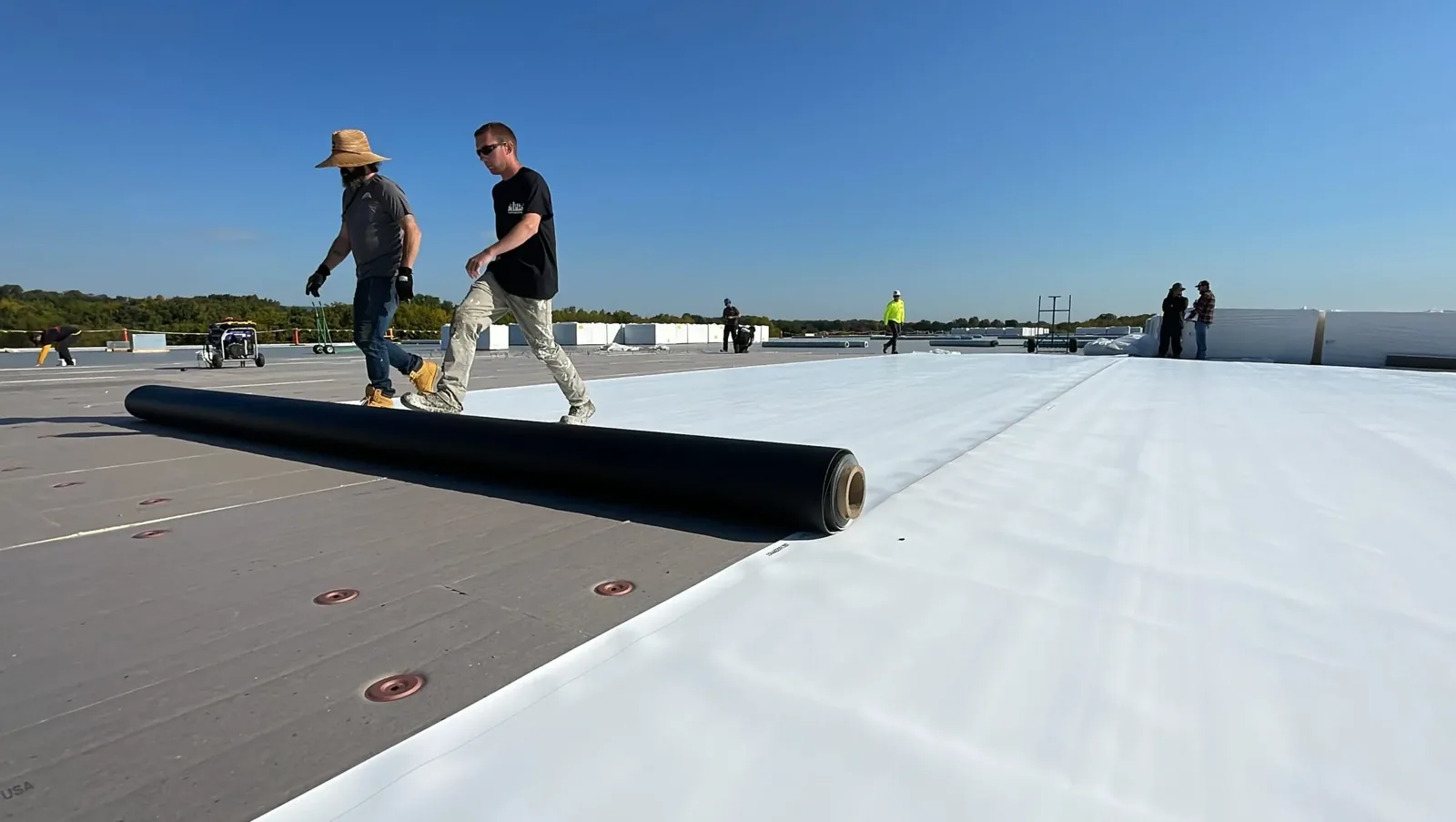
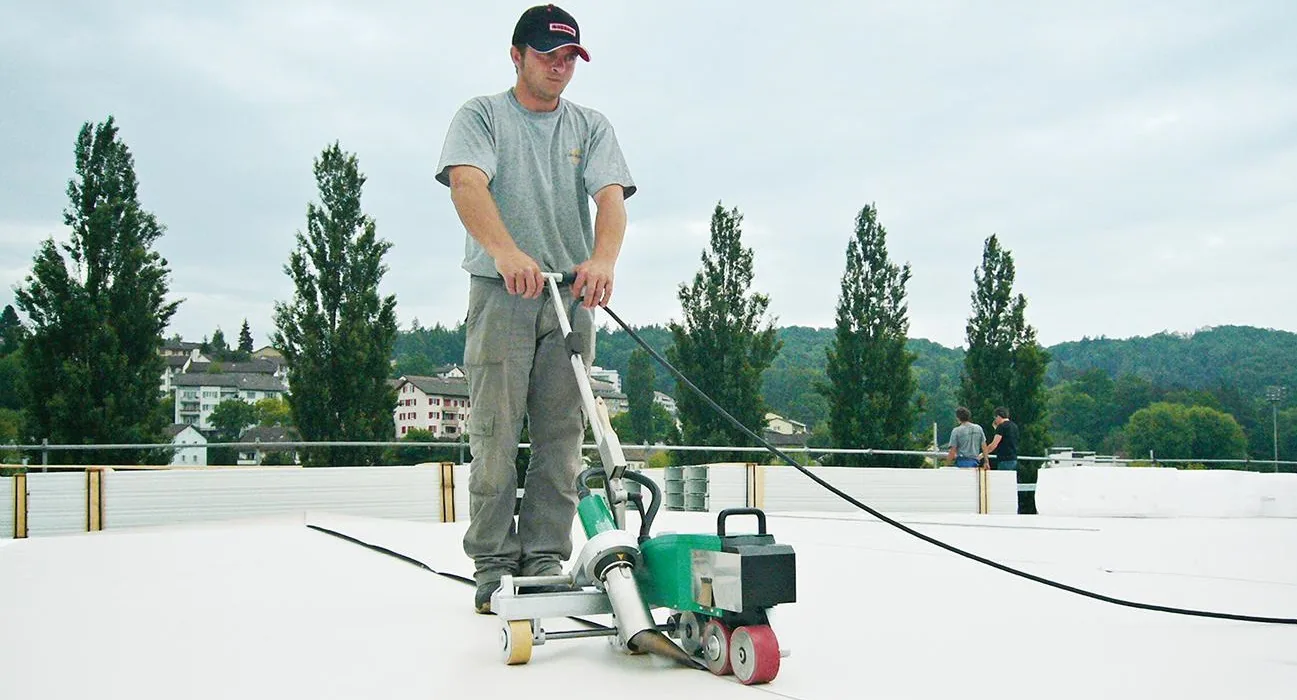
PVC is a thermoplastic sheet like TPO, reinforced with polyester or fiberglass scrim and joined by hot-air welding, but formulated with plasticizers and stabilizers that make it more resistant to grease, oils and many chemicals. The sheet usually comes white or light gray, and it can be mechanically attached, fully adhered or ballasted.
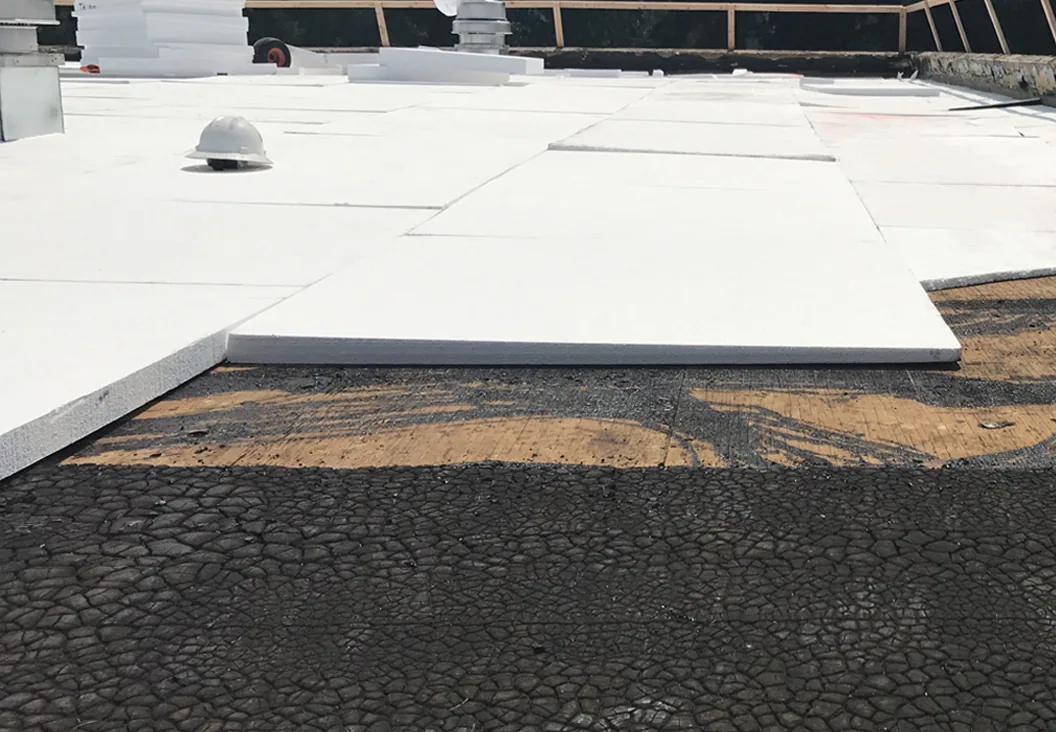
The tradeoffs are plain. PVC prices above most other single-ply sheets, and over many years the plasticizers can migrate out, which stiffens the sheet. It also reacts badly with some adjoining materials, so we check what the membrane will touch before specifying it, since direct contact with old asphalt or certain foam insulations can attack the sheet and a separator layer solves it.
Reinforcement and thickness vary by sheet, and the choice should follow the traffic on the roof. A roof with frequent service visits to equipment wants a thicker sheet and walk pads along every route, and a quiet roof with a few vents can use a lighter one. We state the thickness in the proposal so bids compare on the same footing.
Where PVC roofs show wear
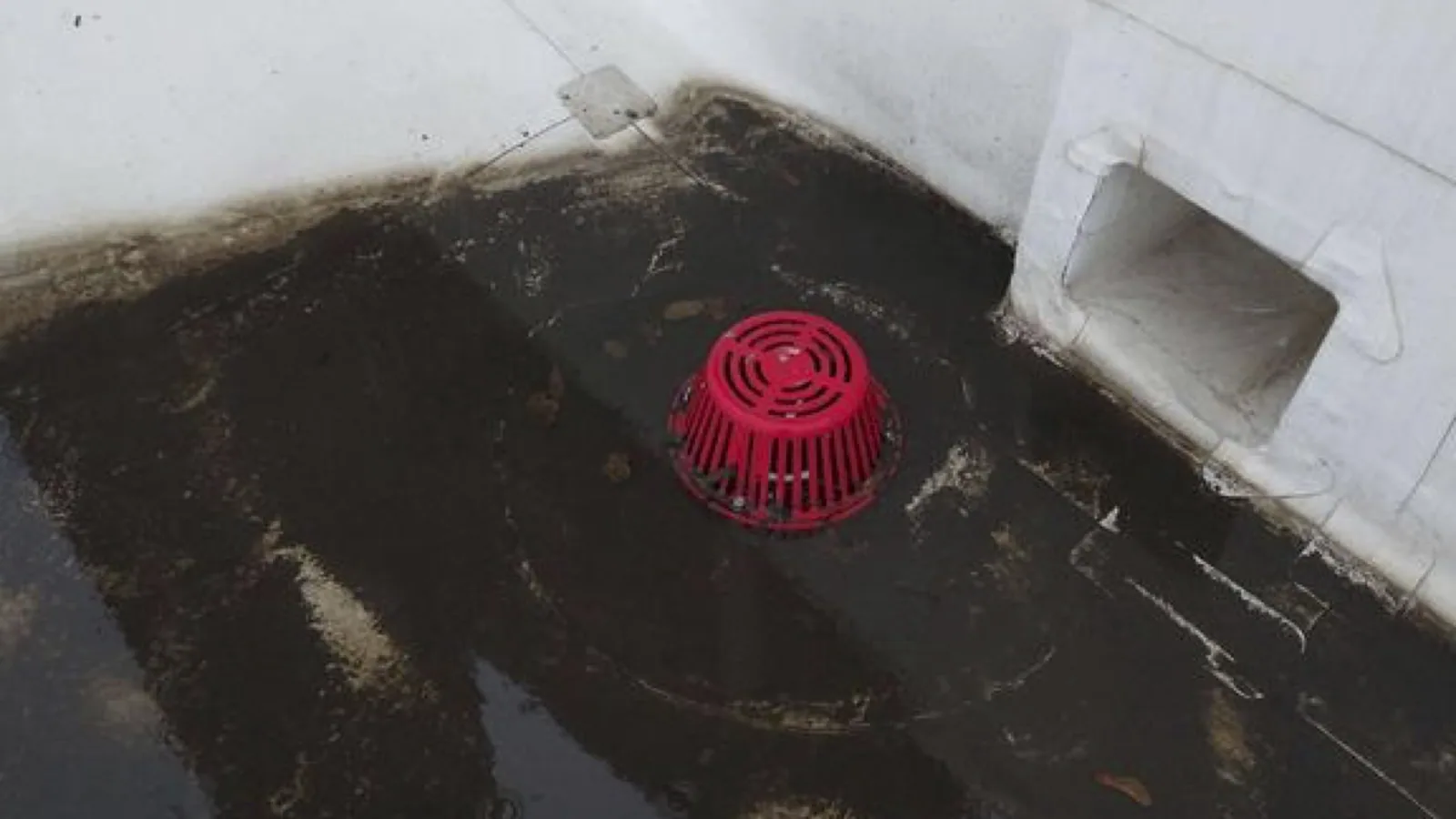
The exhaust areas show it first, with softened or sticky sheet around kitchen fans, discolored patches near laboratory stacks and a film that collects at the low edge of a curb. After that come fold lines, where an aged sheet that has lost plasticizer cracks along the crease at a flashing or a drain, and welds that were made on a cold or dirty day.
Hylan Boulevard, which the city describes as its longest commercial roadway at about 14 miles from Rosebank to Tottenville, is the sort of strip where restaurant roofs sit, and Sandy destroyed the Coral Bay Cafe at Tottenville Beach in 2012, a sign of how exposed a shoreline restaurant can be. A PVC sheet that has aged and stiffened will crack at a fold during a hard freeze.
Edges are the other trouble spot. Metal edge flashing that has loosened lets wind get under the sheet, and a coated metal edge welds directly to the field, which makes a tighter perimeter than sealant alone.
Starting at the exhaust
We start at the stacks and fans, looking for softened, sticky or discolored sheet within several feet and testing how the sheet flexes at its folds. Then the seams, probed one by one with attention to those near drains, and then the base flashings at walls and curbs, which stiffen and shrink with age.
- Grease zones around kitchen and lab exhaust.
- Fold lines at curbs, drains and parapet returns.
- Weld seams, probed along their whole length.
- Grease pans and containment, which should be emptied before they overflow onto the sheet.
Where the roof drains toward an exhaust, grease follows the water, so slope and strainers matter as much as the sheet.
Where the history is unclear, a small cutout comes from the existing roof, since a swollen or stiffened sheet shows how the exposure has treated it, with photographs and measurements entered in the inspection log.
Repair, recover or replace
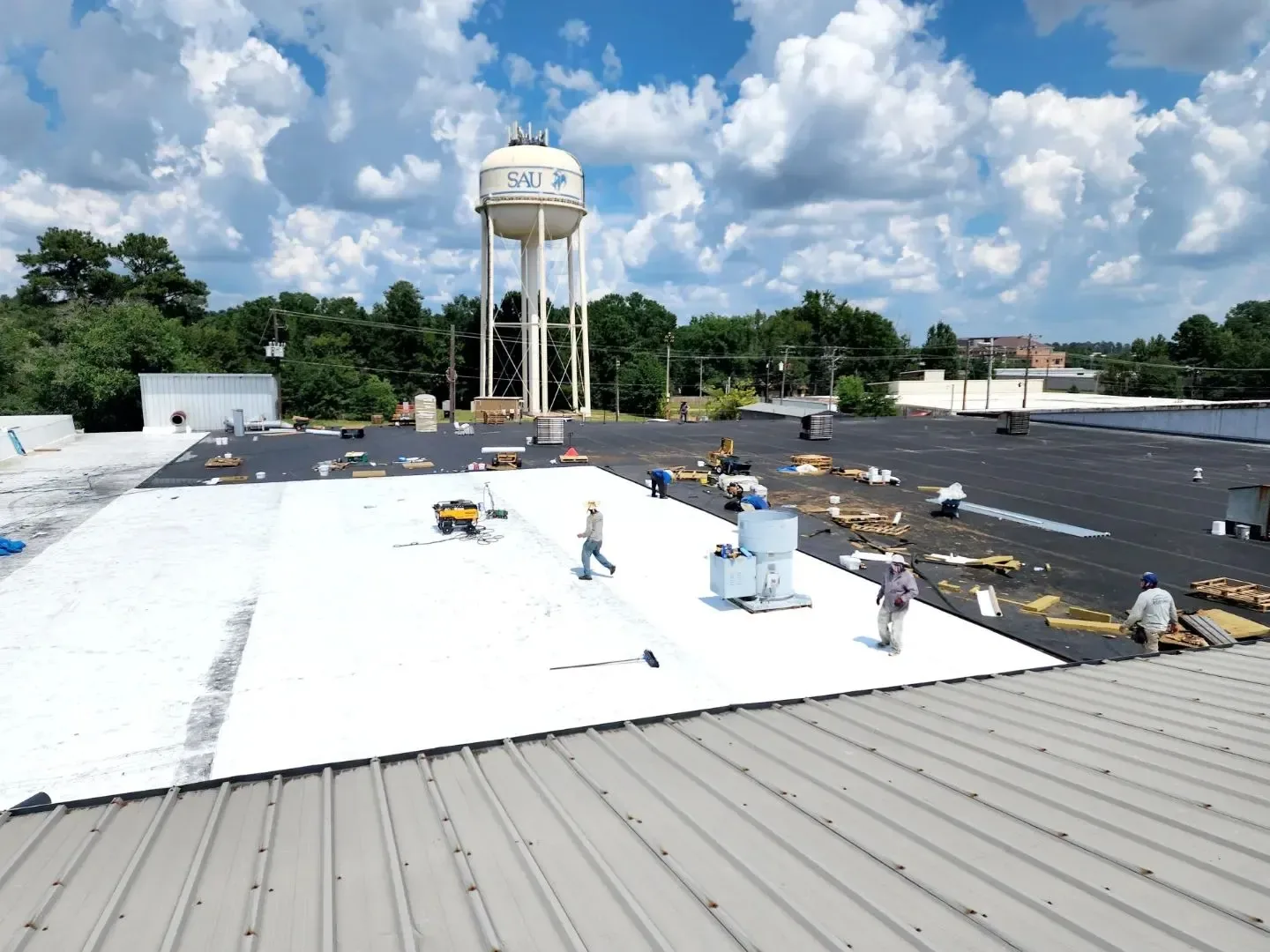
A young PVC roof with local damage is repaired: we cut out the affected area, weld in new sheet and replace the flashing. A roof that has stiffened across the field is past patching, and a commercial roof replacement is the better spend. Provided the insulation is dry and the structure sound, a roof recover with a separator sheet can go over the old roof.
Compared with TPO, PVC gives better resistance to grease and chemicals at a higher price, so a roof without kitchen or lab exhaust may be better served by TPO. For heavier exposure, KEE adds another margin of chemical resistance.
Insulation under a PVC roof deserves the same review as the sheet. Crushed or wet polyiso is replaced, and a cover board protects the new membrane from the old surface and from foot traffic around the exhaust area.
Storm and winter checks
Wind off the water tests every sheet on the island. Sandy's gusts reached 80 mph in 2012, and the edges of a PVC roof near the shore are checked for lift and loose fasteners before anything else, since the first failure in a gust is usually at the perimeter, not the field.
Winter checks are about drains. The city averages about 29.8 inches of snow and logged a record 27.3 inches in a single day on January 23, 2016, so strainers are cleared each fall and again once the thaw comes. A PVC roof that ponds near a kitchen exhaust is carrying grease in standing water, and that combination is the one that ends a sheet early.
Ponding near exhaust is the case to avoid, so we check slope at every fan and add crickets or drains where water collects against a curb.
Hospitals, labs and food service
Medical and institutional buildings, among them Seaview Hospital in Willowbrook, a former tuberculosis sanatorium added to the National Register of Historic Places in 2005, and the College of Staten Island campus on the former Willowbrook State School site, put PVC in play well beyond the retail strips. A medical roof carries exhaust, lab ventilation and sensitive intake equipment, and work on one is scheduled with the facility staff, with intakes covered while seams are welded.
On a food building, the crew coordinates with the kitchen so exhaust is not shut off at peak hours, and for a restaurant the work usually happens in the morning, before service, with fans protected. From Great Kills to the rest of the Hylan Boulevard strip, the roof plan and the exhaust locations are what the first walk needs.
Rooftop equipment at a medical building often cannot be shut off, so we flash around live units and plan lifts with the building engineer, and adhesive-free welded seams keep fumes away from intakes. Closeout covers a seam map, photographs of the exhaust zones and a list of grease containment items that need regular emptying, because a full pan does the sheet more harm than the weather.
Related Roofing Work
More roofing work that comes up alongside PVC Roofing.
Commercial Roofing Questions
Why does grease ruin one membrane and spare another?
Oils attack the plasticizers in many sheets, which leaves the membrane soft and weak. PVC is formulated to resist that attack, so it is the usual pick beside commercial kitchen exhaust.
Can PVC go over an old asphalt roof?
Yes, with a separator and dry insulation. Direct contact between PVC and asphalt can damage the sheet, so a barrier goes between them after a moisture scan.
Is PVC worth the higher price on a roof without a kitchen?
Often not. Without grease, chemicals or hot exhaust, a lower-cost single-ply may do the job. We price both and show the difference.
What does a cold winter do to PVC?
An older sheet that has lost plasticizer stiffens and can crack at folds, drains and flashing. A new sheet handles cold well, so the age of the roof matters more than the weather.
How are PVC repairs made?
We clean the area, cut out damaged sheet and weld in a matching patch with hot air. Contaminated PVC may not weld, so we test a small area first.