
Manufacturing Plant Roofing in Staten Island, NY
Manufacturing plant roofing in Staten Island, NY: inspection, repair and replacement for process exhaust, heavy equipment and shoreline industrial buildings.
A discolored, slick patch of membrane downwind of a process exhaust stack is what an inspector writes down on a plant roof, because it shows what the building breathes out and what the roof is taking in return. Industry on Staten Island runs along the Kill Van Kull, the Arthur Kill and the West Shore, and on a plant roof the exhaust and the weather both work on the same few feet of membrane, so the finding carries weight this season and neither pauses for a shutdown.
Where the plants sit
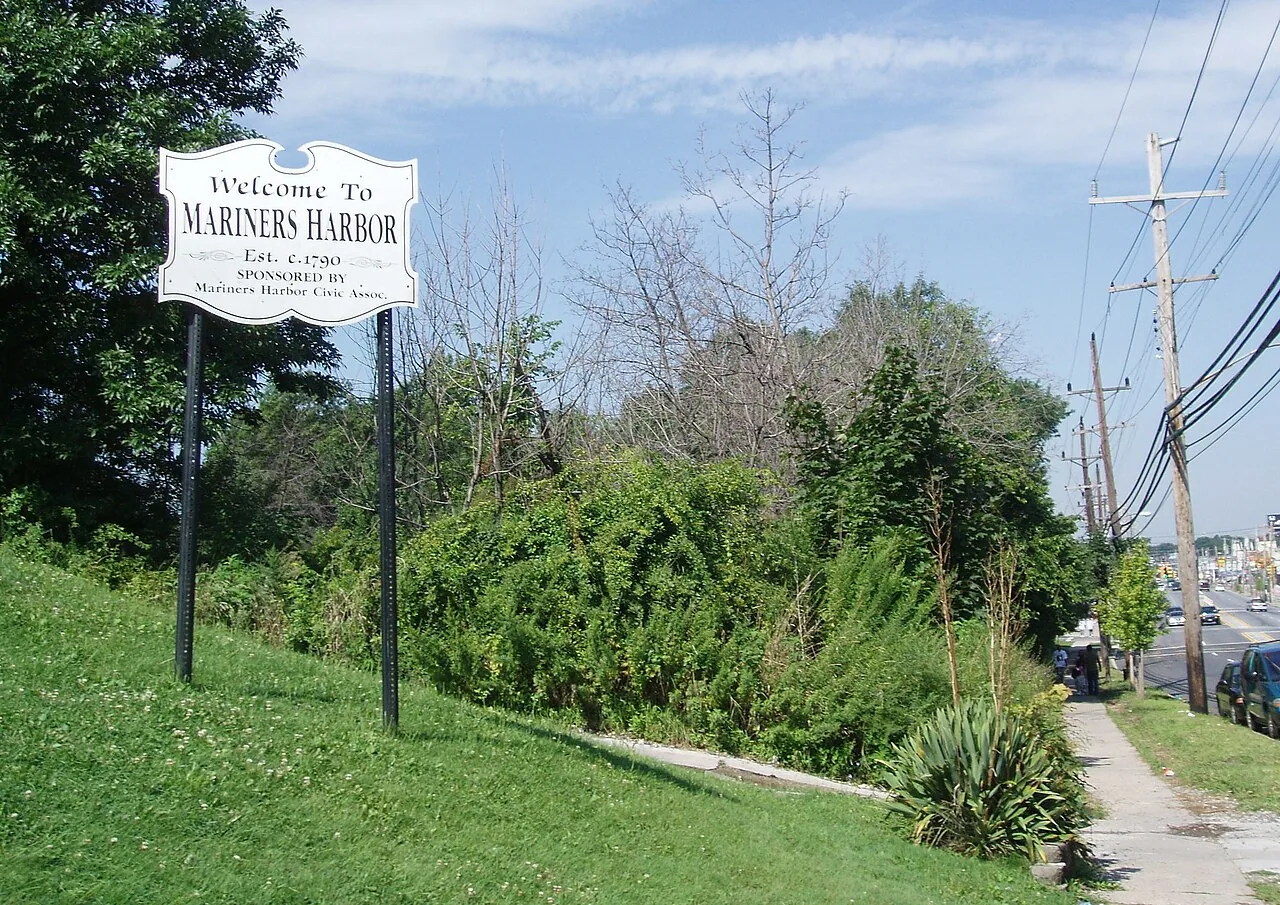
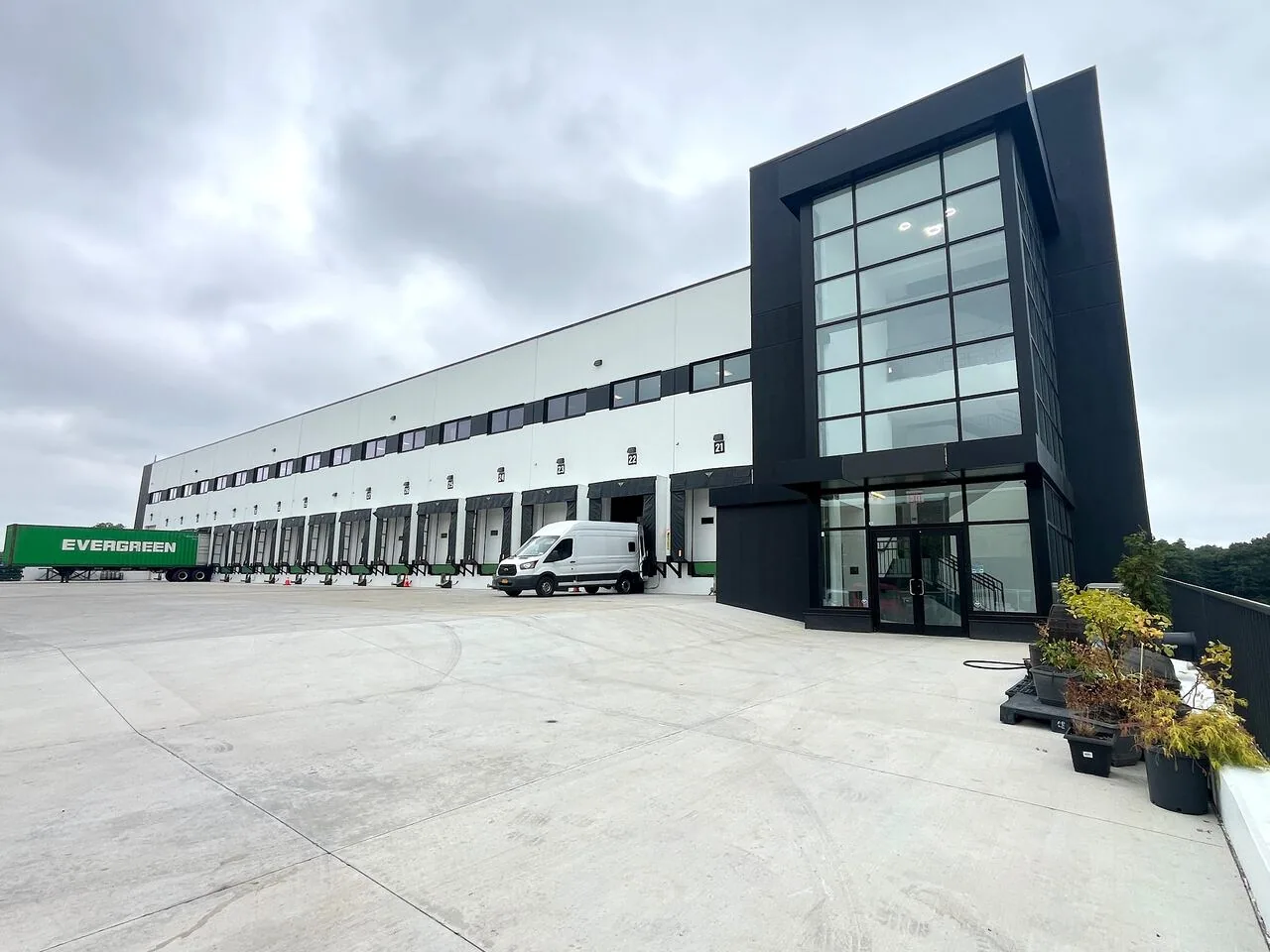
Industry clusters on the West Shore, and the Kill Van Kull shoreline in Mariners Harbor has a long working history: Bethlehem Steel once owned much of the land and built Navy destroyers there in World War II, and tug, dredging and dry dock firms still work the water. The old Cross Paper Plant at the neighborhood's edge now rents space to small businesses. Over on the Arthur Kill, a marine scrapyard in Rossville, among the largest on the East Coast, has operated since 1964, and Port Ivory had a Procter and Gamble soap factory from 1907 until 1991. Plants change hands and change use, and the roofs often carry the history of every change.
For a facility director, that history raises practical questions. Which curbs belong to the current process? Which penetrations served a line that was removed? Where did past patches go? A walk with the plant's maintenance lead answers most of it in a few hours, and the inspection log keeps the answers on file. Sites in flex industrial use sometimes follow similar change-of-use patterns.
What the exhaust does
Process exhaust sends heat, oils, vapors and particulates onto the surface around each stack. Some membranes soften, others blister, and sealants harden. The damage shows in rings that spread downwind from each outlet, and in flashing that has gone brittle at the stack base.
We map every exhaust outlet and read the surface in the plume. A chemical-resistant thermoplastic or a protective pad may be the right answer there, and the rest of the roof may need something different. We note the temperature and discharge of each stack so the membrane near it is chosen for the exposure, not for the budget.
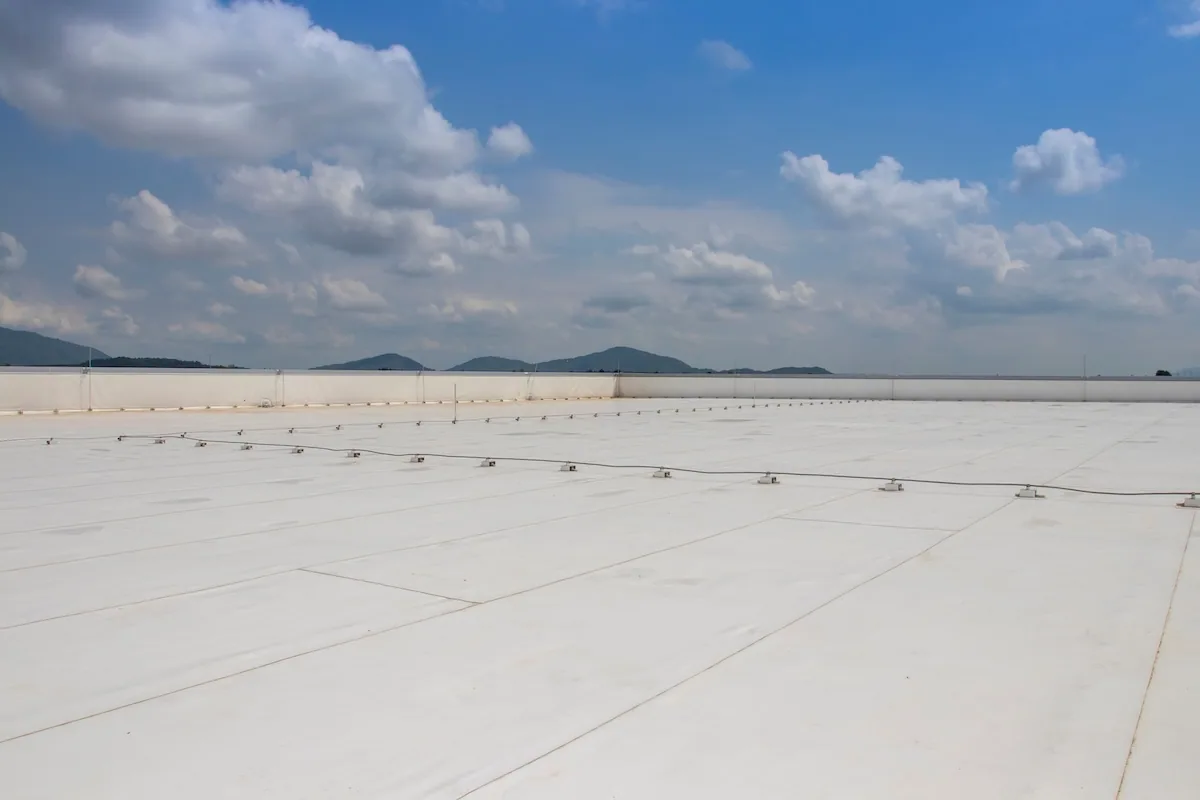
Where the exposure is chemical or greasy, a PVC roof with welded seams is a common candidate, since the sheet resists many oils and solvents that soften other membranes. The finishing detail still matters: a stack boot, a pitch pan replacement or a field-formed flashing at the outlet decides whether the plume reaches the deck. We record which stacks are active and which are abandoned, because an abandoned stack can be capped and flashed once, and then forgotten.
Heavy equipment and penetrations
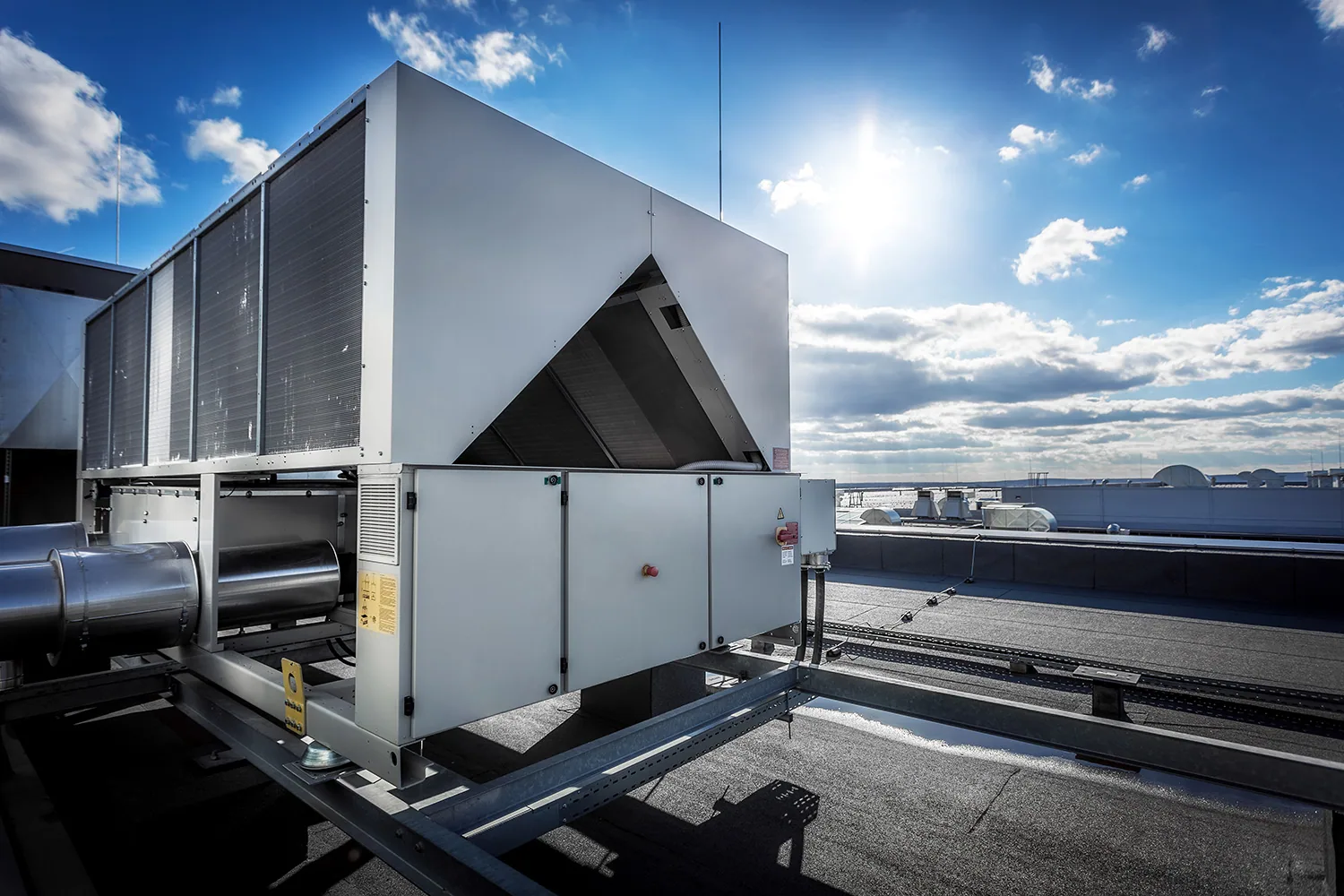
A plant roof carries more equipment than most: makeup air units, exhaust fans, process piping, conduit trays and sometimes tanks. Each sits on a curb, a rail or a frame, and each connection through the roof is a flashing that someone installed and someone else may have altered.
We check equipment curbs and supports for loose covers, split sealant and sagging rails, and we check conduit and pipe supports for walk-pad wear and membrane chafing. Abandoned equipment is a leak path with no purpose, so we flag every redundant curb and open penetration for removal and closure.
Vibration is part of the picture. Large fans and compressors shake their supports, and the shaking works sealant loose and wears the membrane under rails. Isolation pads, flashed supports and a regular look at fasteners reduce the wear. We note the supports where a rail rests directly on the membrane without a pad, since that is where a puncture develops.
Moisture and the structure
Wet insulation adds weight and quietly loses strength, and a plant roof deck often supports equipment loads. A moisture scan after sunset shows warm, wet patches, and a core cut confirms the reading and reveals the layers beneath. Wet insulation near a heavily loaded zone gets priority, since the deck below carries more than its own weight.
If the survey finds corroded deck or loosened fasteners, we tell the building engineer before any repair. A roof job is a roofing scope, and a structural finding needs its own review. We record the finding, the photo and the location in the inspection log.
Insulation type matters on a plant roof as well. Some boards tolerate heat better than others, and a roof over a hot process may need a higher-temperature board near the equipment. We note what is there and what the process requires.
Storm and winter checks
Plants on the shoreline check wind-lifted edges and drain backups first, with Sandy's 80 mph gusts of October 2012 as the benchmark. Ida's flash flood emergency of September 2021 is the reminder that drains carrying process runoff have to clear fast. Winter brings its own load: the city averages 29.8 inches of snow a year, and 27.3 inches fell in one day on January 23, 2016. We check that snow load, meltwater and ice at the drains do not combine into ponding near heavy equipment.
Access and scheduling
A plant that cannot stop production needs roof work in sections. We agree work areas with the plant manager, arrange hot-work permits where torch work might be proposed and choose cold-applied or mechanically attached systems near flammable processes. Crane dates are set with bridge-day traffic in mind, on the Goethals Bridge approach and along the West Shore Expressway.
Safety rules come first. We follow the plant's lockout, hot-work and confined-space rules, attend its safety briefing and keep a named contact on the roof.
Materials handling is the other constraint. A plant roof with rooftop units close together leaves little space to stage a pallet, so we plan lifts in small loads, protect the surface with plywood runways and keep debris moving off the roof throughout the day.
What goes in the log
The inspection log lists each exhaust plume, each curb and support, each ponded seam, the moisture map and the state of every drain, and each one has a photograph and a call on timing. A capital plan places the repairs and replacements across years. Facility directors in Mariners Harbor and Rossville get the same walk, and plants next to storage buildings can compare notes with our warehouse roofing findings.
The log also records each exhaust plume's condition on the date of the walk, so a later change in the process, a new solvent or a hotter discharge can be matched against the roof's response. That record is useful to the plant, the insurer and the manufacturer of the roofing system.
Related Roofing Work
More roofing work that comes up alongside Manufacturing Plant Roofing.
Commercial Roofing Questions
Can process exhaust void a roof warranty?
It can, if the warranty excludes chemical exposure. We read the terms and tell the facility director before the scope is written.
What membrane suits a roof under heavy exhaust?
A chemical-resistant thermoplastic is a common choice near stacks. The exposure at each outlet decides it.
Do old curbs need to stay?
Not if they serve nothing. We close redundant curbs and openings to remove leak paths.
How do you handle hot-work rules?
The plant's own permit process governs, and where torch work is not allowed the system is cold-applied or mechanically attached.
What if the deck looks corroded?
We stop, record it and ask the building engineer to review it before roofing continues.
How long does a plant roof walk take?
Most plants take a day on the roof with the maintenance lead. The written log follows within a few business days.