
Commercial Roof Leak Repair in Staten Island, NY
Commercial roof leak repair in Staten Island, NY: tracing the entry point on flat roofs, stopping it with the right material, and documenting what was found.
Before anyone opens a membrane, an inspector walks to the nearest drain and writes down whether the strainer is seated and whether the sump is draining, because the stain in a Staten Island stockroom can sit far from the place where the water got in. Flat roofs carry water along the deck, through insulation seams and over steel flutes before it finds a fastener hole or a light fixture to fall through. That travel is why the first job in leak repair is detective work, and why Commercial Roofing Staten Island starts with interior photos, a moisture scan and a walk of the roof before any sealant is opened. The goal is to stop the leak at its source, record what failed, and leave the roof in a condition the facility director can defend.
We do the work on occupied buildings across the island, from retail on Hylan Boulevard to buildings along the West Shore.
Tracing the entry point
We begin inside. Stained ceiling tiles, rusted deck underside, and damp insulation edges give a rough map of where water arrives. Then we move to the roof and work uphill from that area, looking at everything higher: seams, flashings, penetrations, rooftop equipment curbs, and drains. A moisture meter or an infrared survey confirms where the insulation is wet, which marks the extent of the problem more reliably than any visible stain. If the cause is not obvious, a water test with a hose, section by section from the lowest point up, isolates the entry point without guesswork.
Some leaks do not come from the roof at all. Condensation on cold ductwork, a failed wall joint or a plumbing line can mimic a roof leak, and we tell you when that is the case instead of selling a repair that will not help.
How water travels before it drips
Deck type changes the trace. On a steel deck, water follows the flutes and drops at a laps or a screw line, sometimes dozens of feet from the roof opening. On a concrete deck, it spreads laterally between the slab and the insulation and shows up at a cold joint or a wall. On a roof with a vapor retarder or multiple layers of insulation, it can move between layers and appear far from the cause. That is why we never stop at the stain, and why a leak map drawn from the inside and checked from the roof beats an educated guess. We mark each wet reading on the roof plan with a date, so later readings show whether the area is drying or growing.
Buildings with large open roof areas, such as the distribution and warehouse space in Bloomfield, benefit most from this mapping because a long path between the leak and the entry point makes guesswork expensive.
The usual suspects on a flat roof
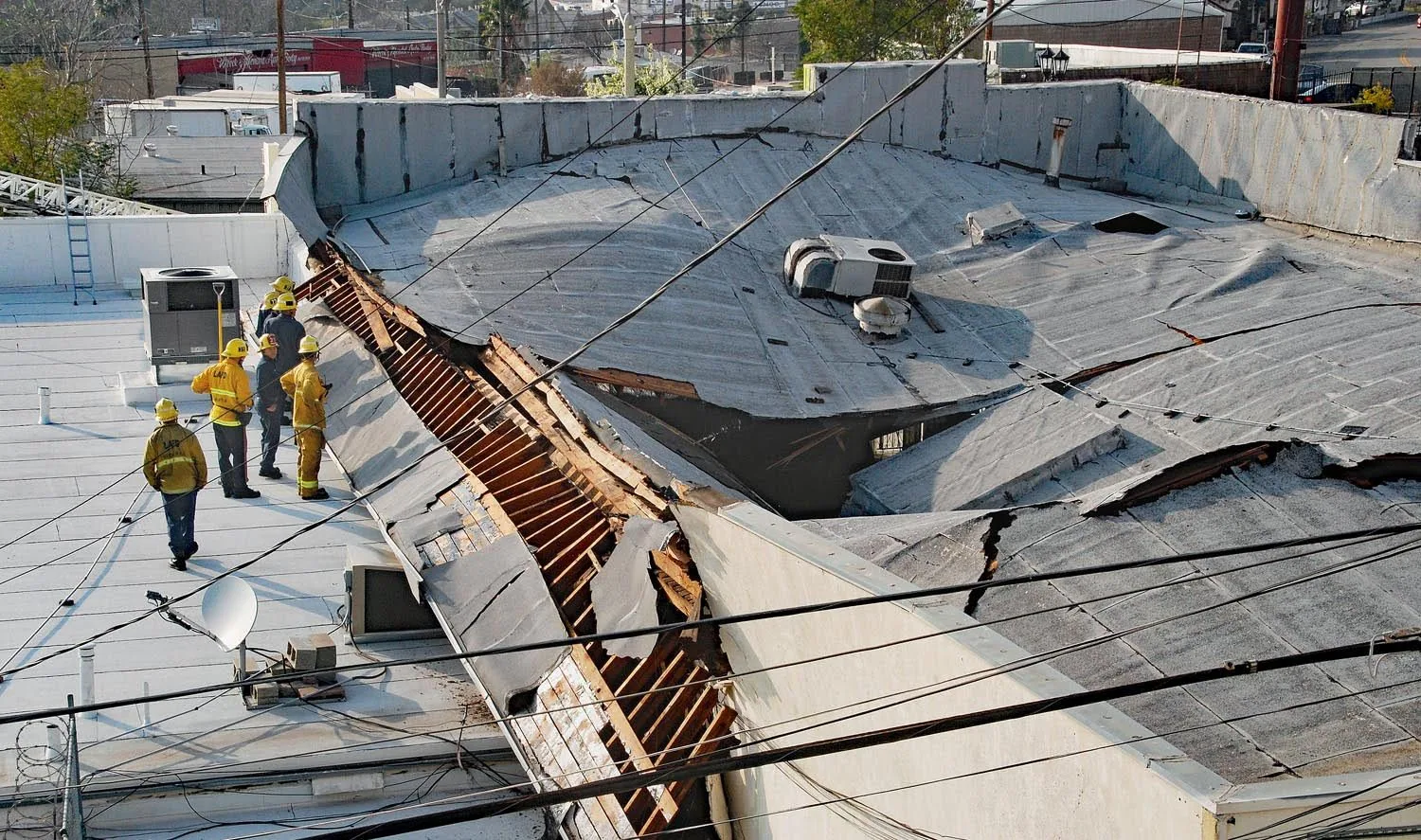
Four details account for most flat-roof leaks. The first is flashing at walls and curbs, where the membrane turns up and terminates; a gap at the top of the flashing or a cracked corner lets water behind the roof. The second is penetrations, including pipes, conduit and vent stacks, where boots wear out. The third is seams, especially on older single-ply roofs where a weld has lifted or an adhesive has aged. The fourth is drainage. A clogged outlet or a low spot can hold water until it finds a way in. Our flashing failure repair and seam failure repair work address the first and third of those in detail.
Stopping it with the right material
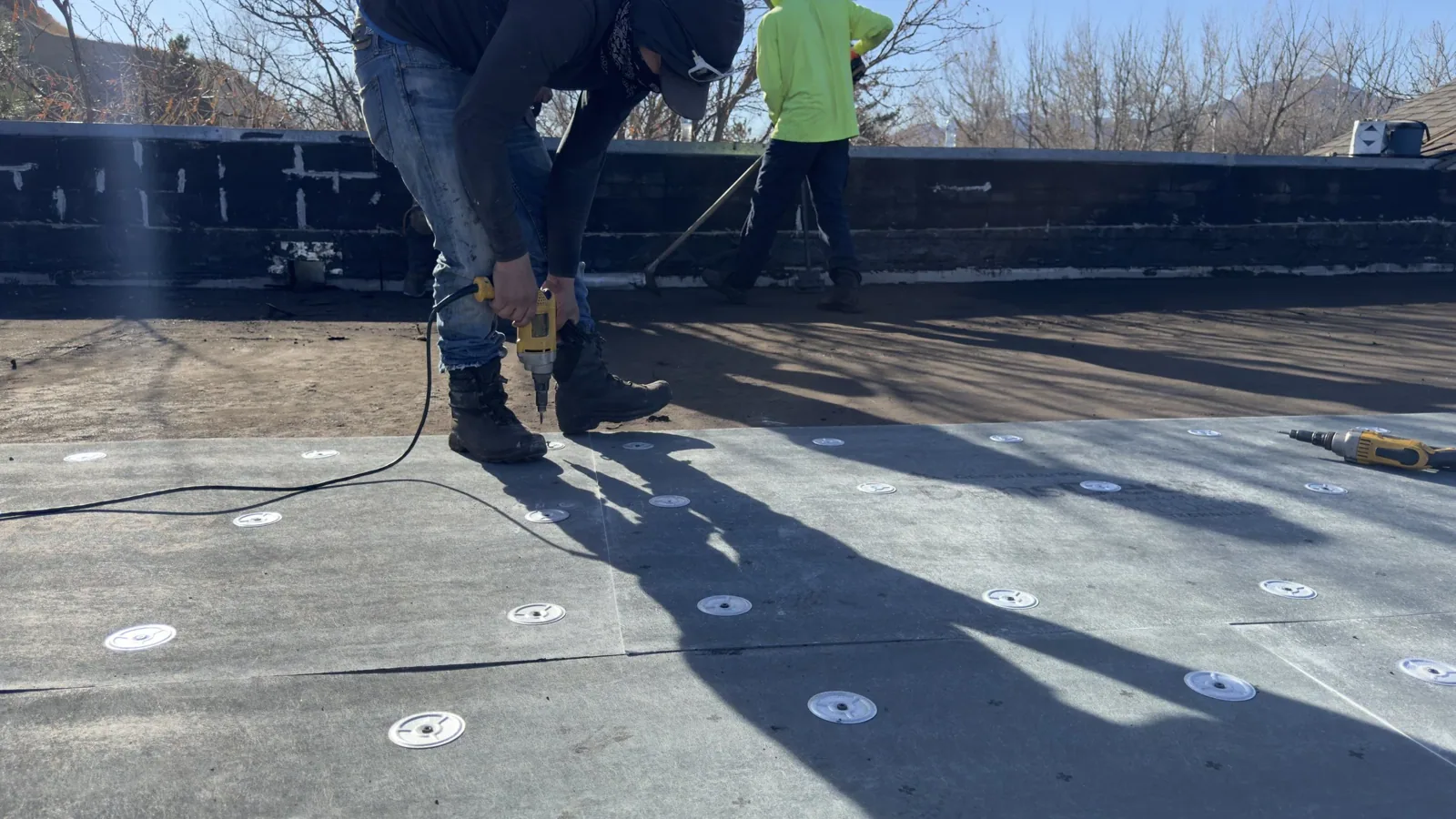
Once the entry point is confirmed, we dry the area, remove failed material, and repair with a product compatible with the membrane. A thermoplastic roof gets a hot-air welded patch, an EPDM roof gets splice adhesive and tape, and a modified bitumen roof gets heat or cold-applied material with matching granules. Wet insulation under the repair is cut out if the moisture scan says it is saturated, since leaving it traps water against the deck and invites rust. We test the finished repair, often by water, and photograph it. Temporary measures are labeled as temporary in the log, with a date for the permanent fix.
Leaks after storms on the island
Storms expose weaknesses that fair weather hides. Sandy's gusts of up to 80 mph on October 29, 2012 are the island's reminder that wind-driven rain pushes water sideways under flashings and up under edge metal. When rain falls faster than the drains can move it, as it did on September 1 and 2, 2021 under Ida's flash flood emergency, water rises across a flat roof and finds every tiny opening. Winter adds another cause, freeze and thaw: water gets into a crack, freezes, widens it, and drains out the next warm day. Roofs near the South Shore water, around Midland Beach and Great Kills, face open exposure, and their edges are checked first after a big blow.
Leaks in occupied buildings
A leak in a medical office, a grocery, or a distribution center with racked inventory has consequences beyond the roof. We coordinate with building staff so that buckets, plastic and tarps protect equipment and stock while we work, and we plan the time on the roof around operations. For retail on Richmond Avenue, near New Springville, we usually work before opening or after closing. For buildings with sensitive equipment, we agree on a stop list before the first call. If a leak is active during a storm, our emergency roof repair team can dry in the opening until a permanent repair is possible.
What goes in the log
Each leak call ends with a written record: where the water showed up inside, where it entered the roof, what caused it, what we repaired, and what else we saw. That record helps with insurance paperwork and with budgeting for future work, and it shortens the next visit because the history is on file. If we find that the roof has wet insulation beyond the leak area, the log says so and we explain the choices. A repair may be enough, a moisture survey may be needed, or the roof may be approaching replacement.
Related Roofing Work
More roofing work that comes up alongside Commercial Roof Leak Repair.



Commercial Roofing Questions
How quickly can the source of a leak be found?
Many leaks are found in a single visit with a roof walk and a moisture scan. Hidden ones need a section-by-section water test, which we schedule in dry weather.
Will you patch it during a rainstorm?
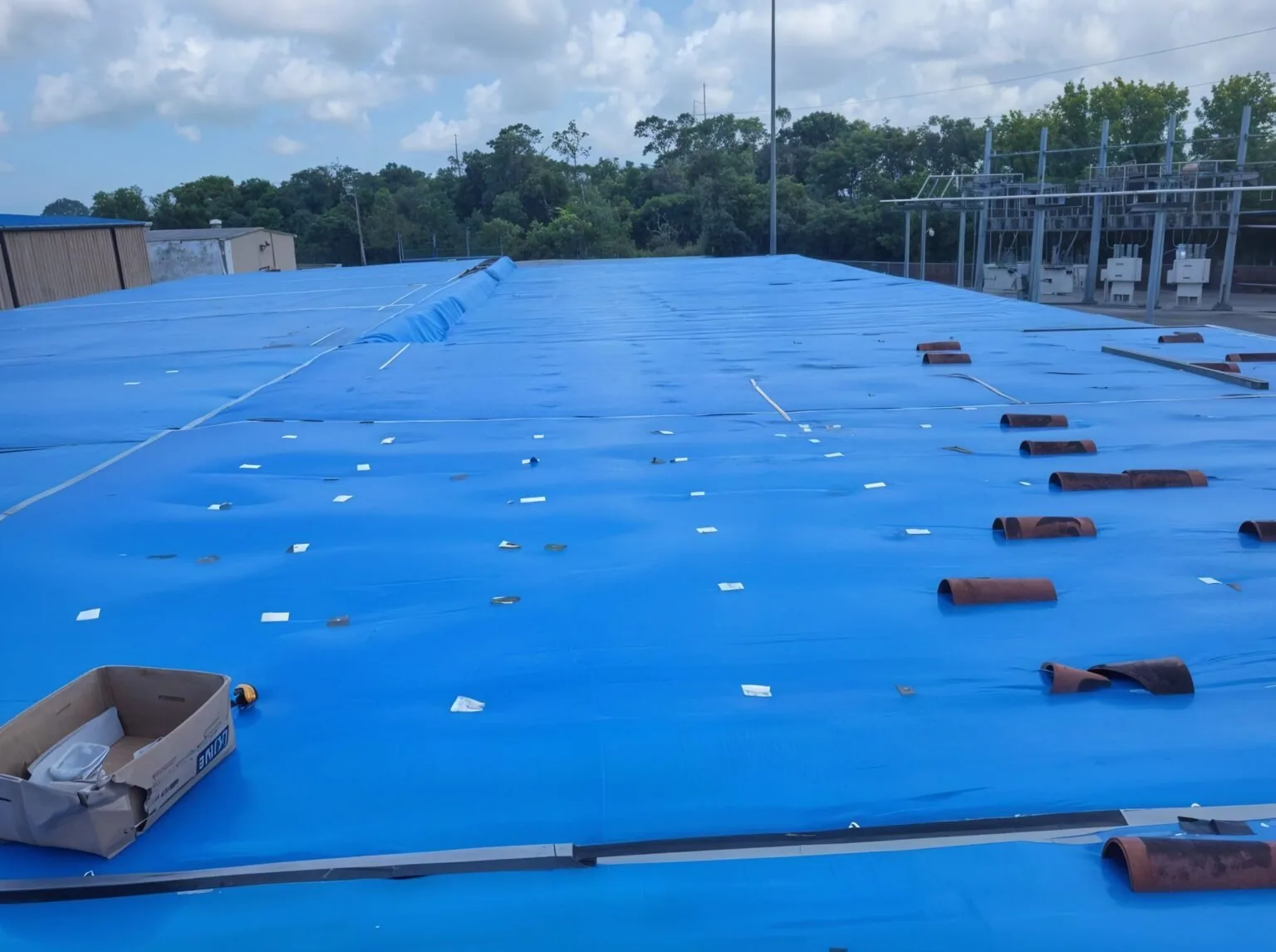
We can dry in an opening with a temporary membrane or tarp during rain, then make the permanent repair once the surface is dry. Adhesives and welds need a dry substrate to hold.
Why does a leak return after a patch?
Usually because the patch covered the symptom rather than the entry point, or the insulation under it stayed wet. Tracing before patching and cutting out saturated material prevents the return.
Is the leak covered by insurance?
That depends on the policy and the cause. We document the cause, location and condition in photos and notes so your adjuster has what is needed, and our insurance claim assistance can help organize the file.
Should I replace the roof after a leak?
Not on a single leak. If the moisture scan shows broad wet insulation or the roof has leaked repeatedly in different places, replacement may be the better value, and we price it beside repair.
Which details from the building staff help most when a leak first shows?
Move stock and equipment away from the drip, photograph the area with the date, and note when it started and whether it follows rain, wind or snowmelt. Those details narrow the search and save time on the roof.