
Commercial Roof Inspection in Staten Island, NY
Hands-on commercial roof inspections in Staten Island, NY, with photo-based condition findings, ranked repairs and a written log for budgets and insurers.
One strainer left loose, a seam with a visible lip, a patch of granules gone from a cap sheet: the inspector's notebook on a Staten Island roof is made of small things like these, and each one has a cost attached. Commercial Roofing Staten Island inspects roofs on foot, section by section, and turns what we see into a written condition report with photos and a ranked repair list. The report is meant to be used. A facility director can hand it to an owner, a lender or an insurer, and each of them will find the same plain account of what is wrong, how urgent it is, and what it will take to fix.
An inspection is not a sales call dressed up as a report. It is the foundation for every roof decision on the building.
What the walk covers
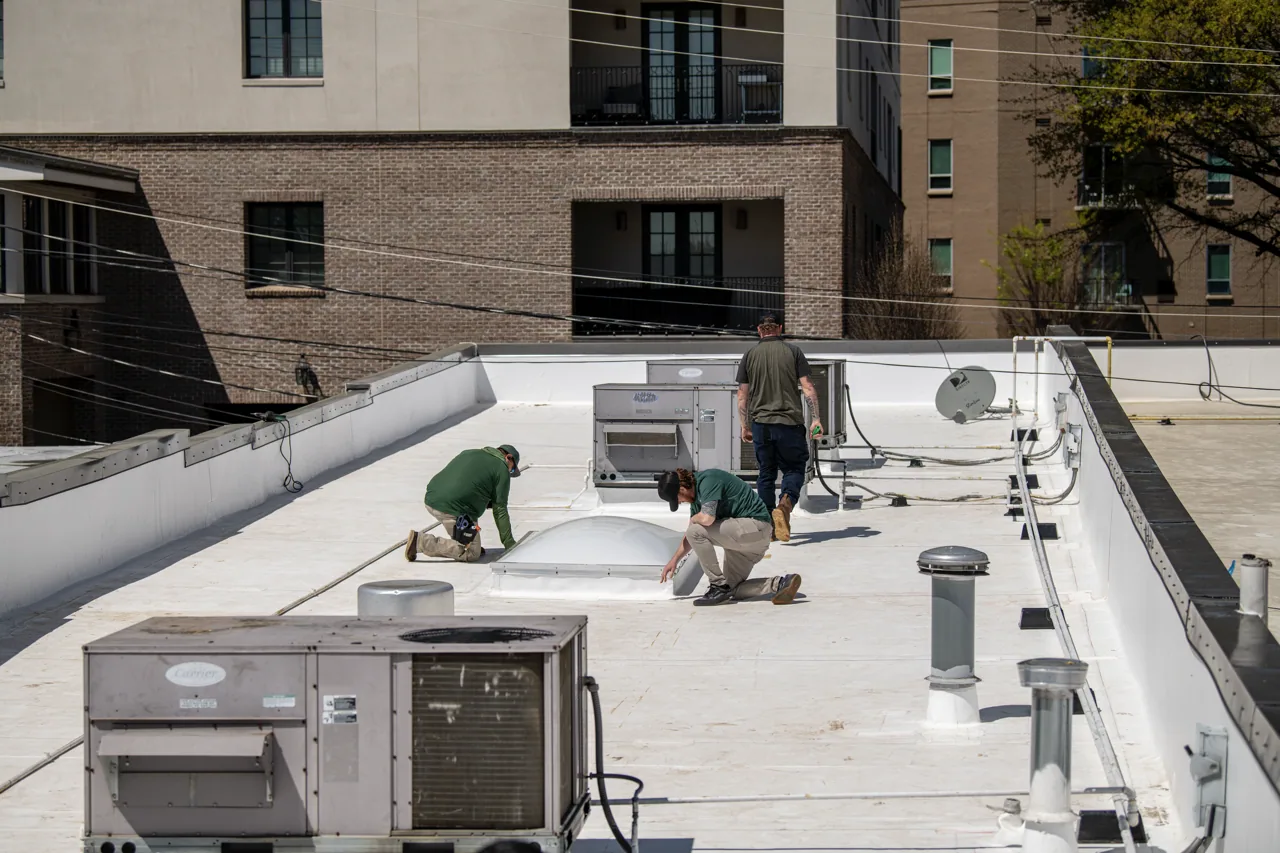
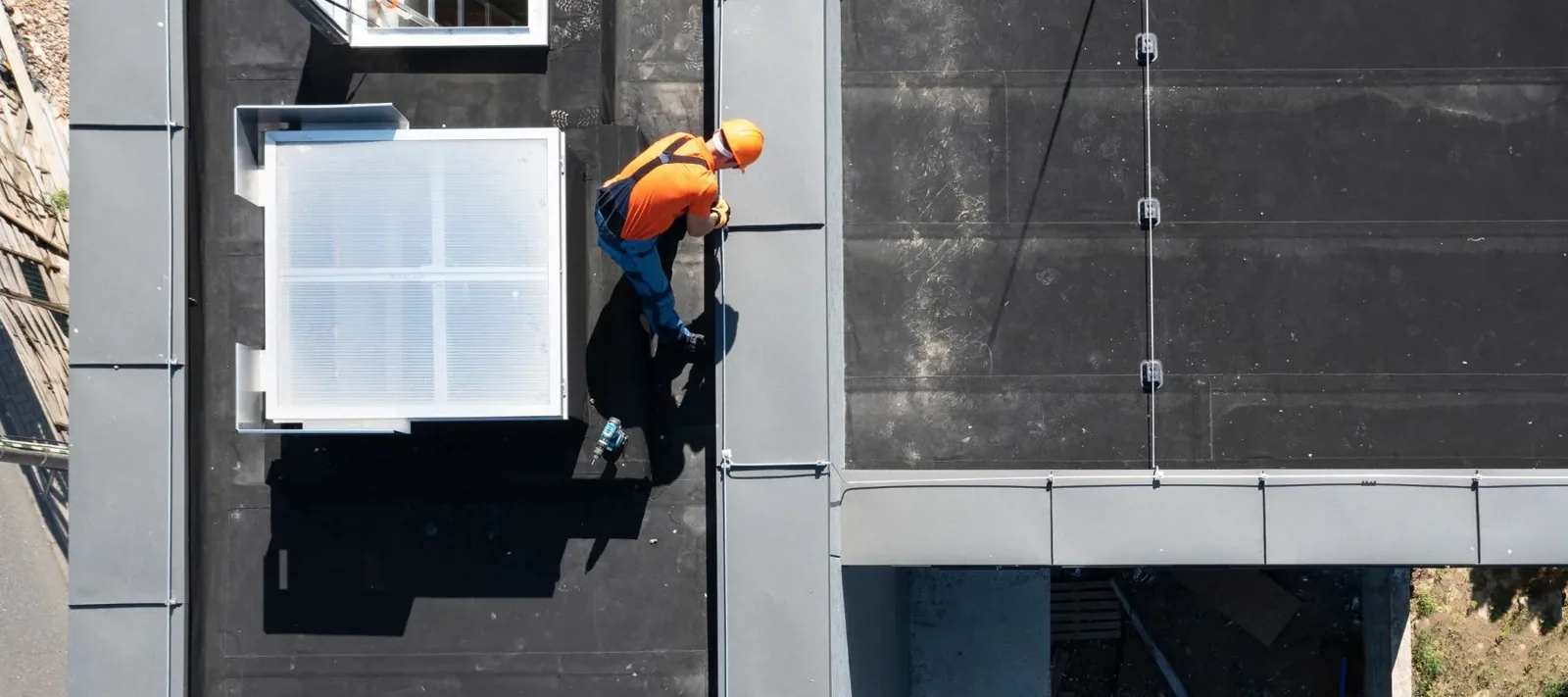
We begin at the edge. Coping, edge metal and parapet returns get checked for loose fasteners, open joints and lifted corners, since wind finds these first. Then we move across the field, looking at membrane condition, seam integrity, ponding, blisters, splits and punctures. Penetrations and rooftop equipment come next: pipe boots, curbs, sealant pockets, and the support for mechanical units. Finally we check every drain, scupper and gutter for debris, damage and slope. We also look inside the building where we can, at ceiling tiles, deck undersides and mechanical rooms, because interior evidence confirms what the roof surface suggests.
A full walk of an average commercial roof takes a few hours, and large roofs take more. We do not rush it.
Instruments we bring
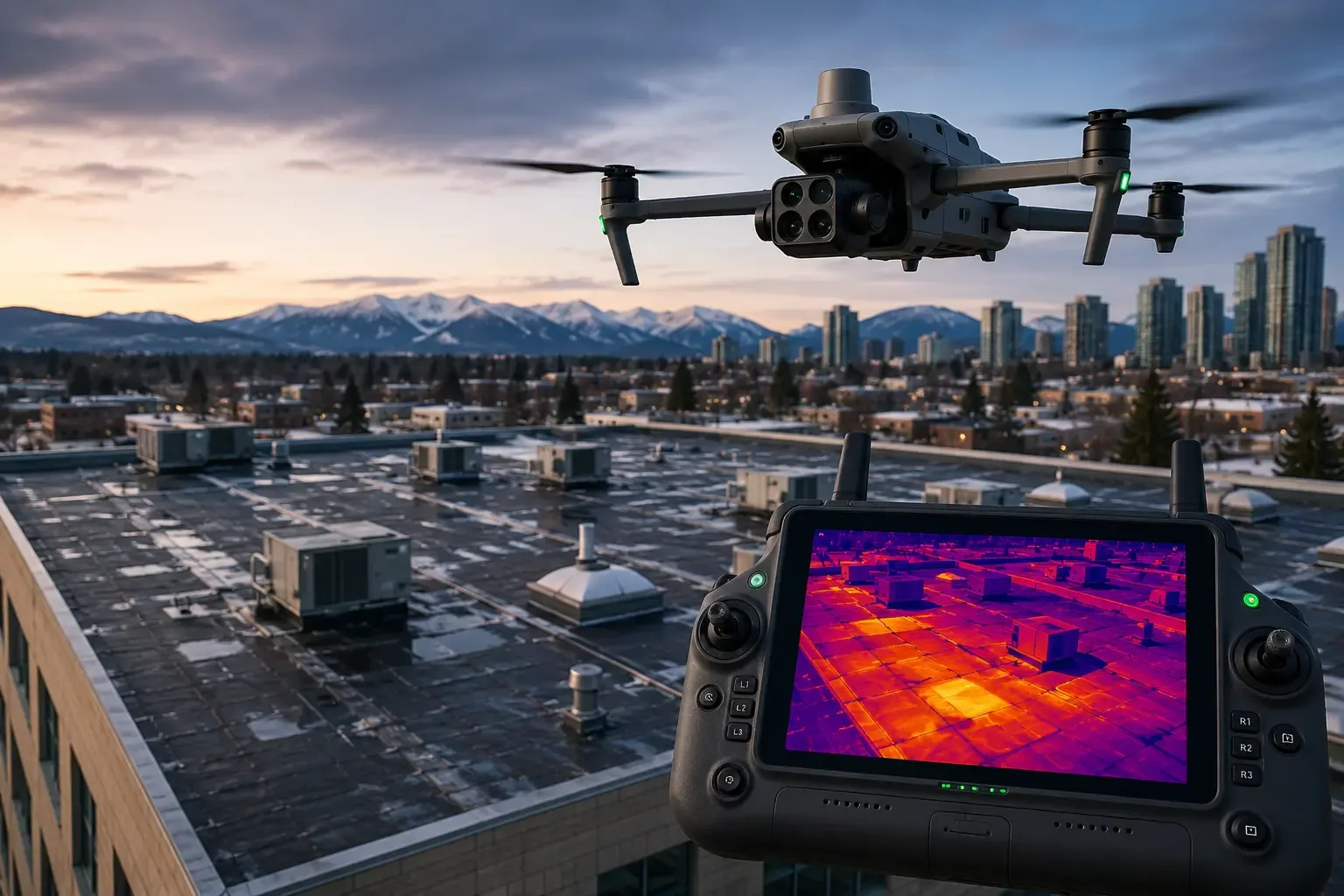
Our eyes do most of the work, but instruments sharpen the findings. A moisture meter finds wet insulation under a dry-looking surface, infrared imaging maps larger areas after sunset when wet material releases heat more slowly, and core cuts confirm the layers and the condition of the deck. Probes test seam welds. For roofs that are large or difficult to reach, drone imaging adds a fast overview, and the infrared moisture survey gives a defensible map of trapped water.
Findings by roof type
Each membrane tells a different story. On a single-ply roof such as TPO or PVC, we look for seam lift, shrinkage at flashings, and surface cracking near fasteners. On EPDM, the signs are open splices, shrinkage pulling the membrane off its flashing, and tears at penetrations. On modified bitumen and built-up roofs, we look for blisters, alligatoring, lost granules, and open laps. Metal roofs get a different check: fasteners backing out, sealant failing at laps, panel corrosion, and clip movement. Each type has its own aging pattern, and knowing the pattern lets us estimate remaining life more realistically than a number printed on a warranty.
We also note the evidence of past repairs. A roof covered with patches in the same area tells a story of repeated failure, and the report maps those areas so the owner can see how the roof has been maintained and where money has already been spent.
The written report
The report has four parts. A roof plan marks each finding with a number. A photo log shows each finding up close. A condition summary rates the roof by area, from sound through watch to failing. And a ranked repair list prices each fix by urgency, so the budget is clear. We write the report in plain language, with no jargon the owner has to decode, and we state which findings are leaks now, which are leaks waiting for the next storm, and which are cosmetic. If the roof is approaching the end of its service life, we say so and outline the options, including a planned repair program, a recover or a full replacement.
What we look for on the island
Staten Island roofs meet the weather from several sides. Wind off the harbor, which reached 80 mph in gusts during Sandy in October 2012, tests perimeter metal and membrane attachment. Rain on the scale of Ida in September 2021 tests drains and scuppers. Winter adds snow load and freeze and thaw, and the city's snow averages about 29.8 inches a year, with the 27.3-inch day of January 23, 2016 as the record. In the warehouse area of Bloomfield we pay attention to large open fields and long drain runs. Along Hylan Boulevard in New Dorp where shopping centers date to the 1960s, the walk counts every penetration, since years of tenant changes tend to add more of them.
What waiting costs
Small findings grow. A loose coping joint lets water into a wall and into the insulation beneath it, and wet insulation costs far more to fix than a joint sealed in time. A drain strainer left unseated lets debris build until the outlet clogs, and the ponded water speeds membrane aging around it. A skylight curb with a cracked corner leaks only when the rain is driven from one direction, which makes it easy to ignore until the ceiling below stains. The inspection log gives each of these a place in the repair order so the choice to wait is a decision, not an oversight.
For owners with several buildings, the report helps compare roofs against each other, so repair money goes to the roofs that need it most. That is the basis for capital planning, and it is also how a property manager avoids spending on a roof that is close to replacement.
When to schedule an inspection
The best times are spring and fall, after winter has stressed the roof and before summer storms or winter loads arrive. Also schedule one after any major storm, before buying or selling a building, before a lease renewal, and when a roof reaches the age at which the manufacturer's warranty is ending. Property managers often add an inspection to the calendar for each building so that condition data accumulates, which is what makes capital planning possible. A single report is useful, and a sequence of reports shows the rate of decline. Our roof condition reports are built for that kind of tracking.
Related Roofing Work
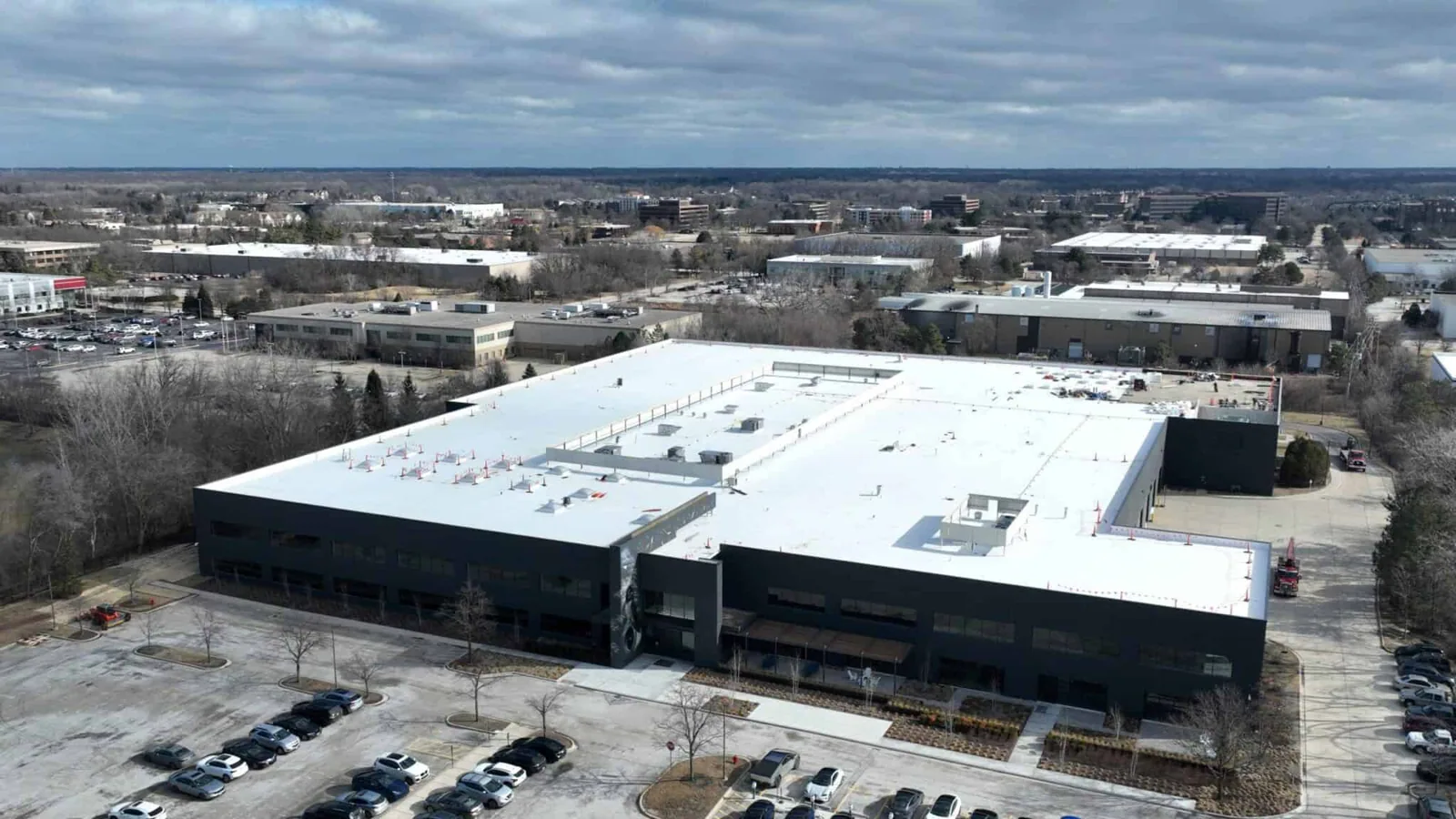
More roofing work that comes up alongside Commercial Roof Inspection.
Commercial Roofing Questions
What separates a quick look from a real inspection?
Time on the roof, instruments, and a written report. A quick look gives an opinion, while an inspection gives evidence: photos, moisture readings, and a ranked list that you can budget against.
Will you walk the roof or only use a drone?
We walk it. A drone adds an overview for large or awkward roofs, but the hands-on walk finds soft spots, loose seams and cracked sealant that images cannot show.
Do you inspect roofs that are not leaking?
Yes, and those are often the most useful. Finding a lifted flashing before it leaks is a lower-cost repair than finding it after the ceiling stains.
Can the report be used for insurance or a sale?
It can support both. The photos, dates and conditions are recorded in a way that helps an adjuster, a buyer or a lender understand the roof.
How long until I receive the report?
Timing follows the size of the building and the instruments used, and we state it when the visit is booked. Urgent findings are shared by phone the same day.
What do you need from me before the inspection?
Roof access, keys, any equipment restrictions, the leak history, and the original roof plan or past reports if you have them. We also ask which tenants sit below the roof so we can plan around sensitive spaces, and we number each roof area so the photos and findings stay organized for later reference.