
Metal Roof Retrofit and Restoration in Staten Island, NY
Retrofit and restore exposed-fastener metal roofs on Staten Island sheds, depots and shops: fastener replacement, lap sealing, coatings and over-roof systems.
A panel that rattles under a hand on a gusty afternoon, with a screw backed out of the purlin beneath it, is the first entry an inspector makes on an exposed-fastener metal roof. Each screw is a small hole that has lost its gasket, and a roof with a thousand of them leaks in a hundred places that all look alike from inside.
Commercial Roofing Staten Island restores and retrofits metal roofs on sheds, depots, shops and storage buildings across the island, and we tell the owner whether the panels are worth saving or whether a new system over the old one is the cheaper path to a dry building.
What an exposed-fastener roof is
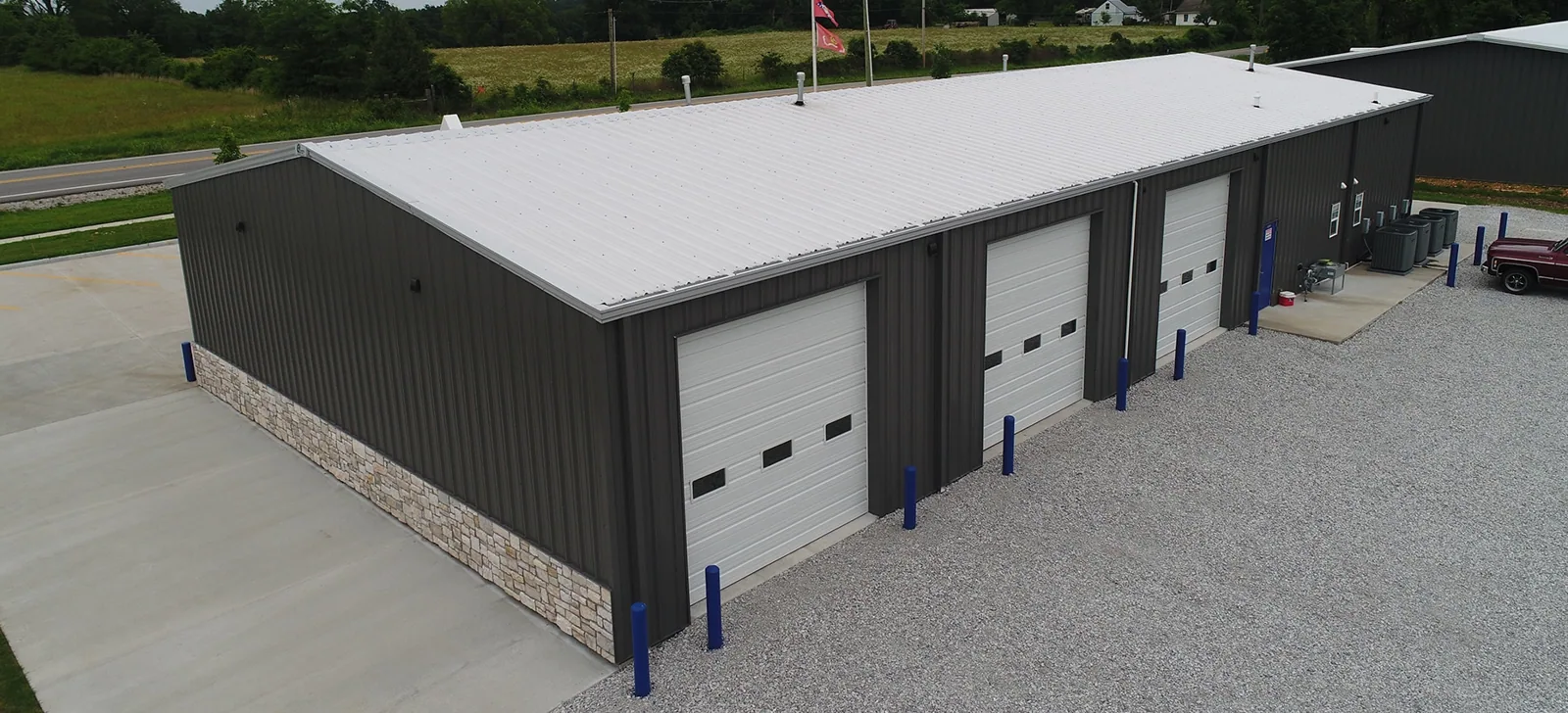
An exposed-fastener roof is made of ribbed or corrugated steel panels screwed through the face into purlins. A neoprene or EPDM washer under each head seals the hole, and the whole system is simple, low in cost and common on sheds, depots, warehouses, storage buildings and light industrial shops.
The weak point is built into the design. Washers age in the sun, the holes enlarge as the panel moves with temperature, laps depend on sealant tape that dries, and ridge and eave closures leave gaps where the profile does not match the trim. Many of these roofs sit on buildings that are otherwise sound, with panels that are solid and a structure that is fine, and that is the case for restoration over replacement.
Panel profile affects the choice. Corrugated sheet has a wavy profile that is hard to seal at laps, while a ribbed panel has flat pans between high ribs where screws sit and the water runs past. Knowing which one is on the roof tells us how many fasteners sit in the water and how many sit above it, and that shapes both the price and the method.
Where exposed metal fails first
Fasteners and laps go first, followed by penetrations and panel ends. Rust starts at scratches, cut edges and screw heads. Fasteners that have pulled out of the purlins leave panels loose, which rattle and lift in wind.
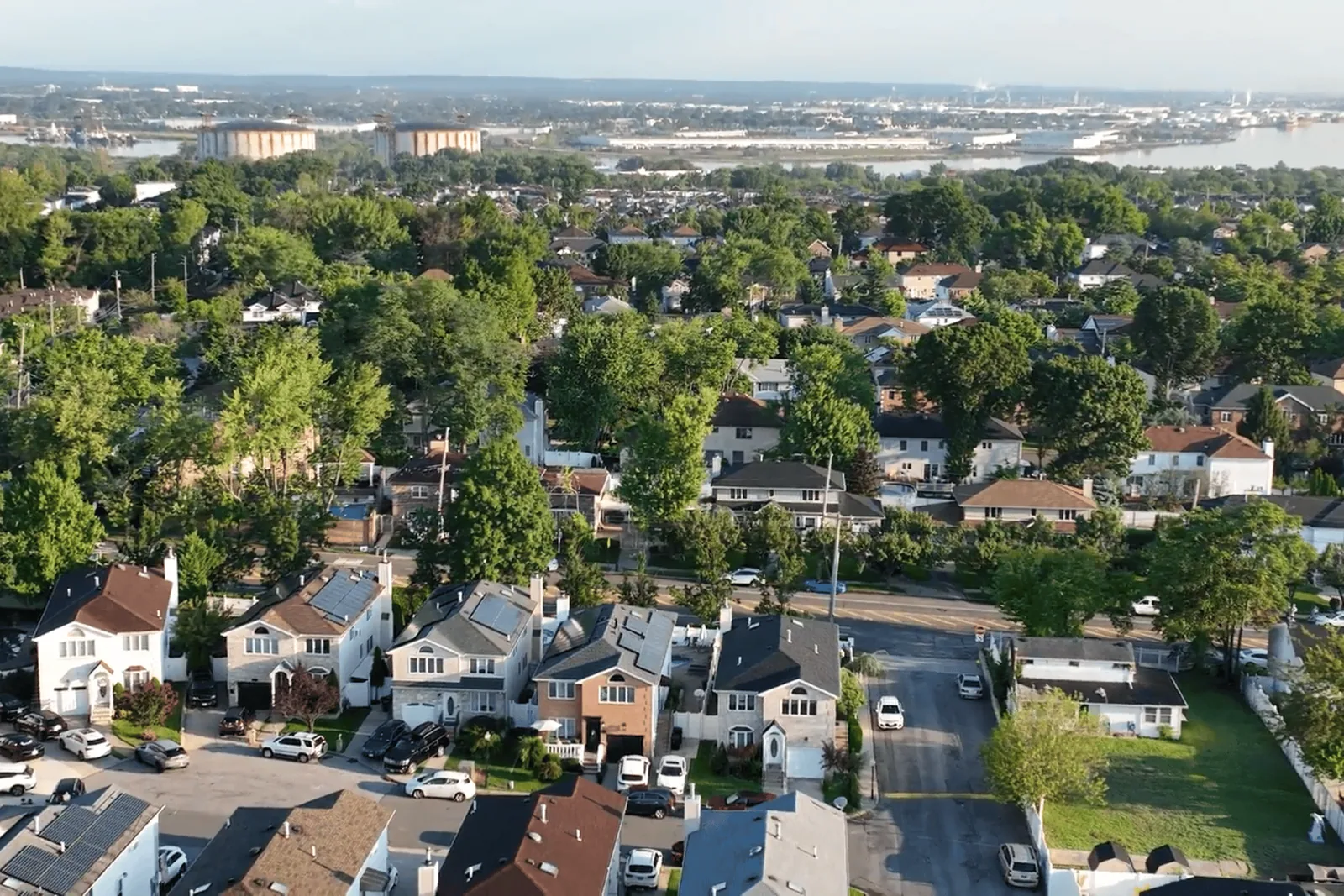
Sheds, depots and yards are where an inspector expects to find corrugated or ribbed metal. In Charleston a 2002 broker estimate gave commercial and industrial properties roughly a third of the neighborhood, and in Rossville a marine scrapyard has operated on Arthur Kill Road since 1964.
Closures at the eave and ridge are quiet trouble spots. Foam or metal pieces that match the panel profile shift and shrink, and a gap at a closure lets wind-driven rain run uphill under the panel, invisible from the ground. We check every closure and note the missing ones in the log.
What we check before choosing a route
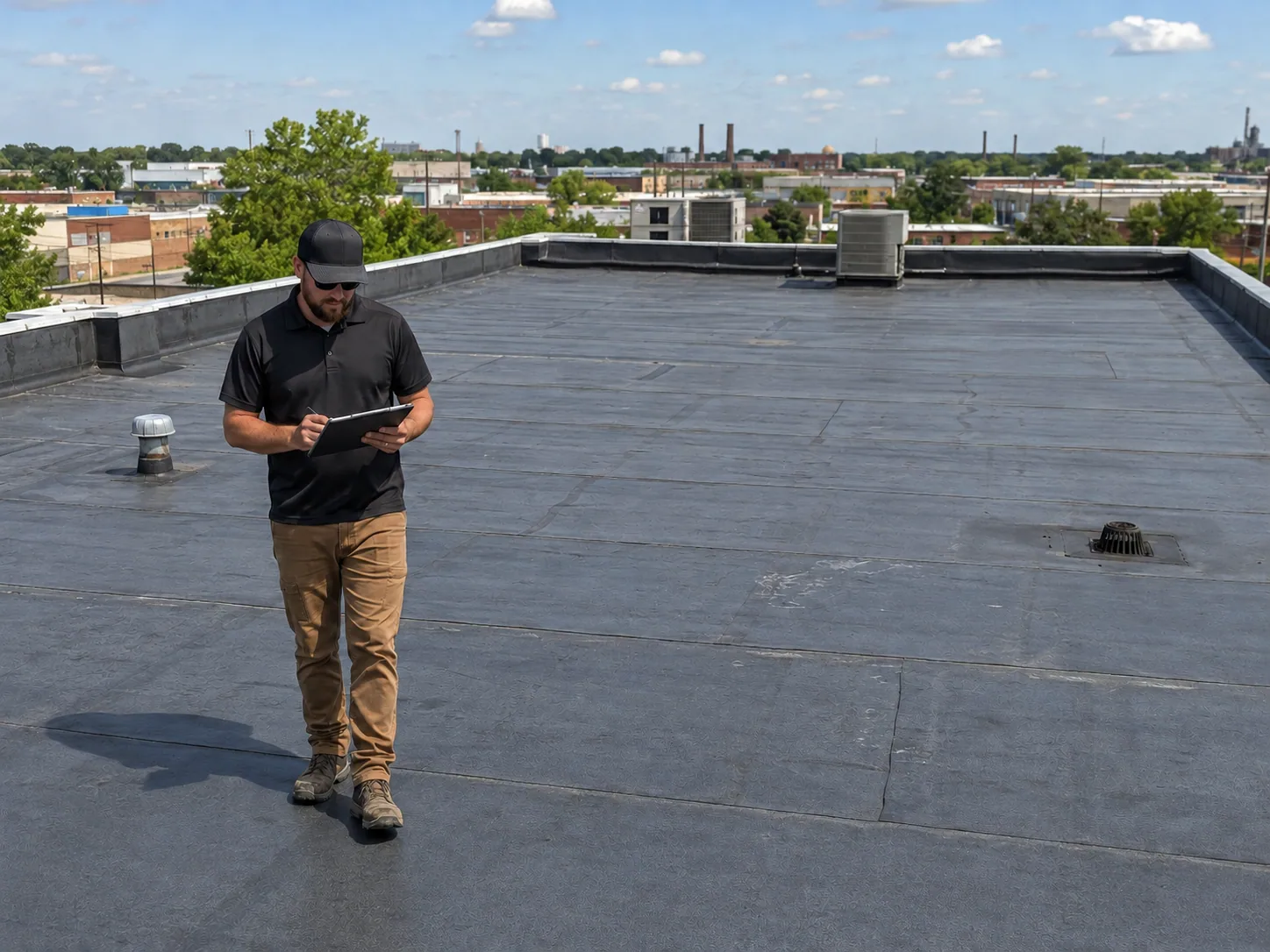
We walk the roof and test fasteners with a driver. We look for panels that are loose, rusted through or dented, check the purlins and deck where we can see them, and note the age of the finish. Inside, we check the underside for staining, condensation and daylight through holes.
- Fastener condition, where backed-out and stripped screws show the scale of the problem.
- Panel rust, where surface rust can be treated and perforated panels cannot.
- Purlin condition, since rusted or bent framing changes the plan.
- Insulation, where wet batts under the panels point to a long leak history.
A roof with sound panels and failing fasteners is a restoration candidate, and a roof with rusted panels or weak framing is not.
We also look at the gutters and downspouts, where rust shows first and where a clog backs water against the eave. A gutter that has pulled away from the fascia lets water behind the panel edge, and the repair is on the gutter, not the roof.
Restore in place or retrofit over
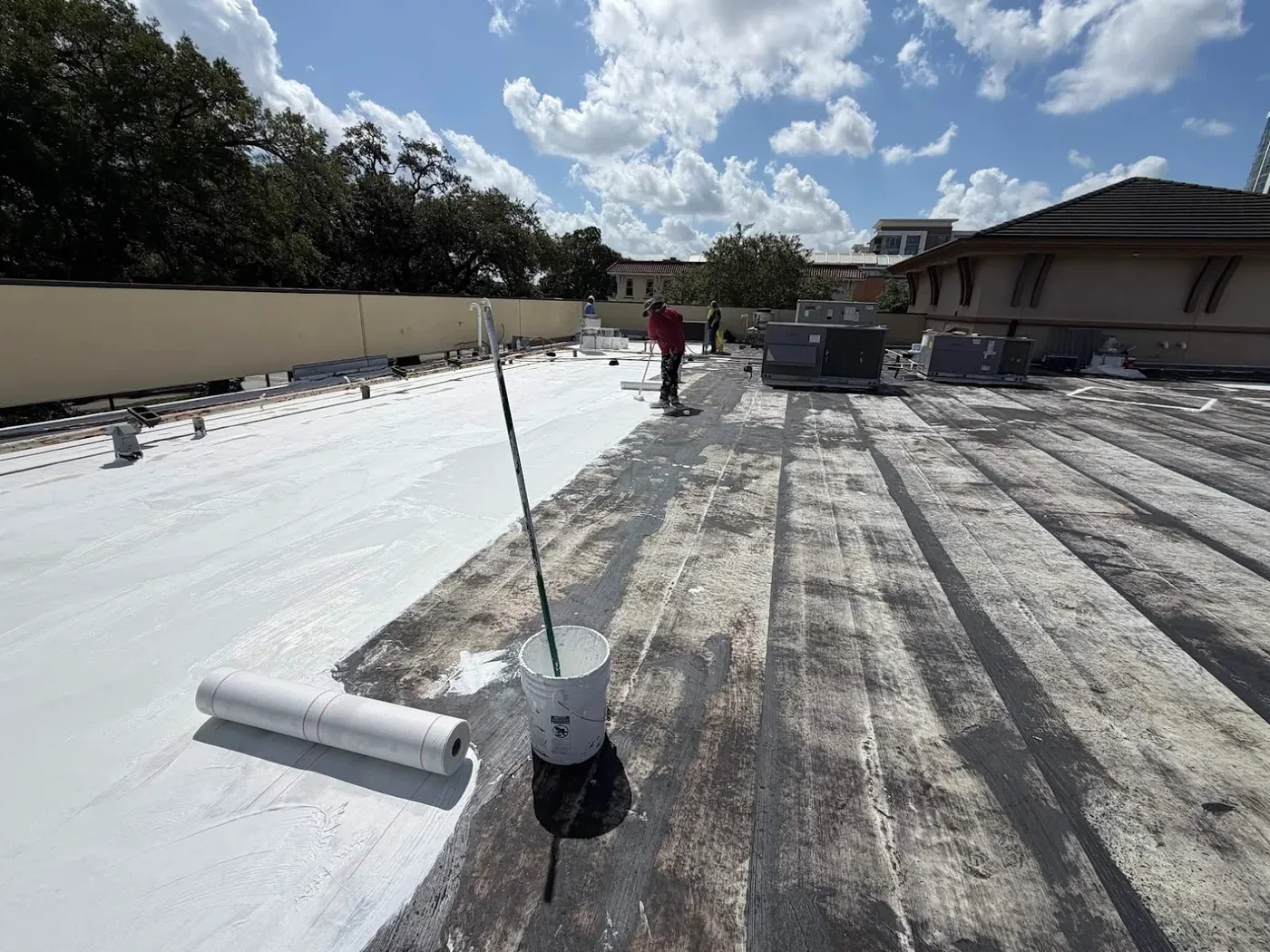
Restoration means replacing failed fasteners with larger, better-sealed ones, sealing laps and penetrations, cleaning and priming rust and applying a continuous coating such as silicone or acrylic. It adds years at modest cost and keeps the building open.
Retrofit means a new system over the old panels, either sub-purlins carrying standing seam panels or a layer of insulation and a membrane over the metal. It adds insulation value and removes the exposed fasteners at a higher price. We recommend restoration when the panels are sound and the owner wants a few more years, and retrofit when the owner wants the roof settled for good. A roof coating restoration proposal sits beside the retrofit price so the owner sees both.
The price gap between the two routes is real, and it should be set against the building's plans. If the owner expects to sell, redevelop or reuse the building in a few years, restoration buys time at the lowest cost. If the building will be held a long time and heating or cooling matters, a retrofit with added insulation changes the energy picture, and the extra spend repays itself in comfort and fewer calls. A commercial roof inspection sets the scope for either.
Wind and snow
Loose panels are where wind starts. In the 80 mph gusts of Sandy in October 2012, a panel held by hardened washers and backed-out screws is the first to rattle and lift. After any storm we walk the roof for loose trim and missing screws.
Snow adds a different test. A slab of snow sliding off a metal roof takes gutters and eave trim with it. New York City snowfall comes to about 29.8 inches in a typical year, and the 27.3 inches of January 23, 2016 are the figure to keep in mind for the roof structure and its gutters.
Falling snow and sliding ice are hazards at entrances and yard gates, so snow guards or a rerouted walkway belong in the plan for a pitched metal roof over a work area.
Working on live shops and yards
Shops and storage buildings keep running during roof work. We stage materials away from bay doors, protect stored goods and cover vehicles under open areas. Screw replacement is loud, so we agree on hours with tenants, and drop cloths and catch pans control sealant drips.
Metal roofs are slippery in morning dew, so the crew works dry and sets fall protection at every edge. Coatings need dry, moderate weather, so restoration runs spring through early fall. Owners in Rossville and Charleston can hand us the roof plan, the building use and where it drips.
We close out with a count of fasteners replaced, photographs of the lap and penetration seals and the coating batch information, which lets the next crew match the system if a repair is needed later. A preventive maintenance visit each spring and fall keeps washers, sealant and drains in working order.
Related Roofing Work
More roofing work that comes up alongside Metal Roof Retrofit and Restoration.
Commercial Roofing Questions
How many fasteners does a restoration involve?
A typical shed has thousands of screws, and a restoration addresses every one that is backed out, stripped or sealed with a failed washer. We count them on the walk and price by the fastener.
Can a rusted metal roof be coated?
Surface rust can be wire-brushed, treated and primed before coating. Panels rusted through cannot be saved.
Is a retrofit better than a tear-off?
Often, because the old roof stays as a temporary cover, the building stays dry and disposal costs drop. A retrofit needs sound framing and adds weight.
Why does condensation drip under a metal roof?
Warm, moist air meets a cold panel and turns to water. Insulation, a vapor barrier or ventilation fixes it, and a retrofit with insulation often solves it.
What happens to the old fasteners?
Failed screws come out and larger screws with new sealing washers go in at the right torque. Over-tightened screws crush washers and leak.