
Silicone Roof Coatings in Staten Island, NY
Silicone roof coatings for Staten Island flat roofs that pond: restoration over sound membranes, seam sealing and reflective finishes. Request an inspection.
A fabric-reinforced seam that shows through the film like a raised scar is what an inspector looks for on a silicone roof after its first winter, because that line shows whether the coating bridged the movement or split along it. Silicone is the coating that tolerates standing water, and the scar tells whether the roof beneath it is moving.
Commercial Roofing Staten Island applies silicone coating systems over sound low-slope roofs across the island. A coating bonds to a clean, dry, sound surface and fails over a wet one, so the proposal says plainly when coating is the wrong spend.
What silicone coating is
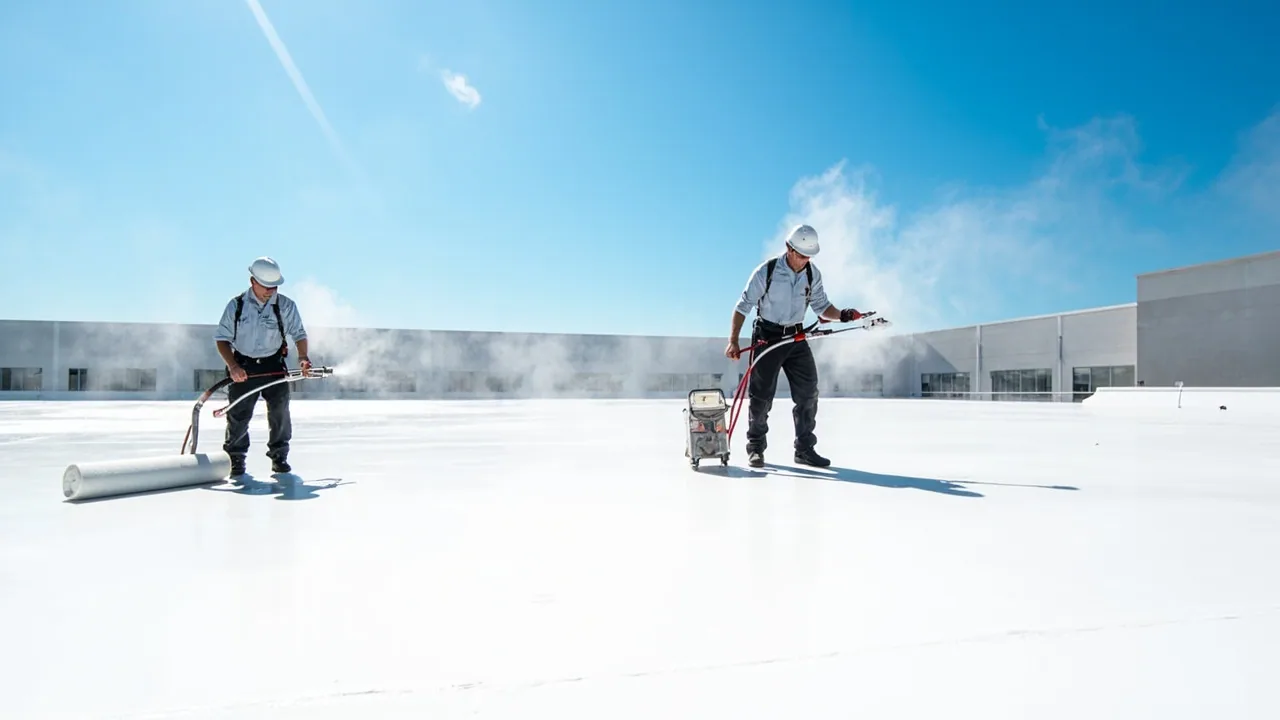
Silicone coating is a liquid, rolled or sprayed onto the roof, that cures into a flexible, waterproof film. It is made from silicone polymer in high-solids formulas that cure by reacting with moisture in the air, and the film is stable under sunlight, does not chalk the way some coatings do and keeps its flexibility through hot and cold swings.
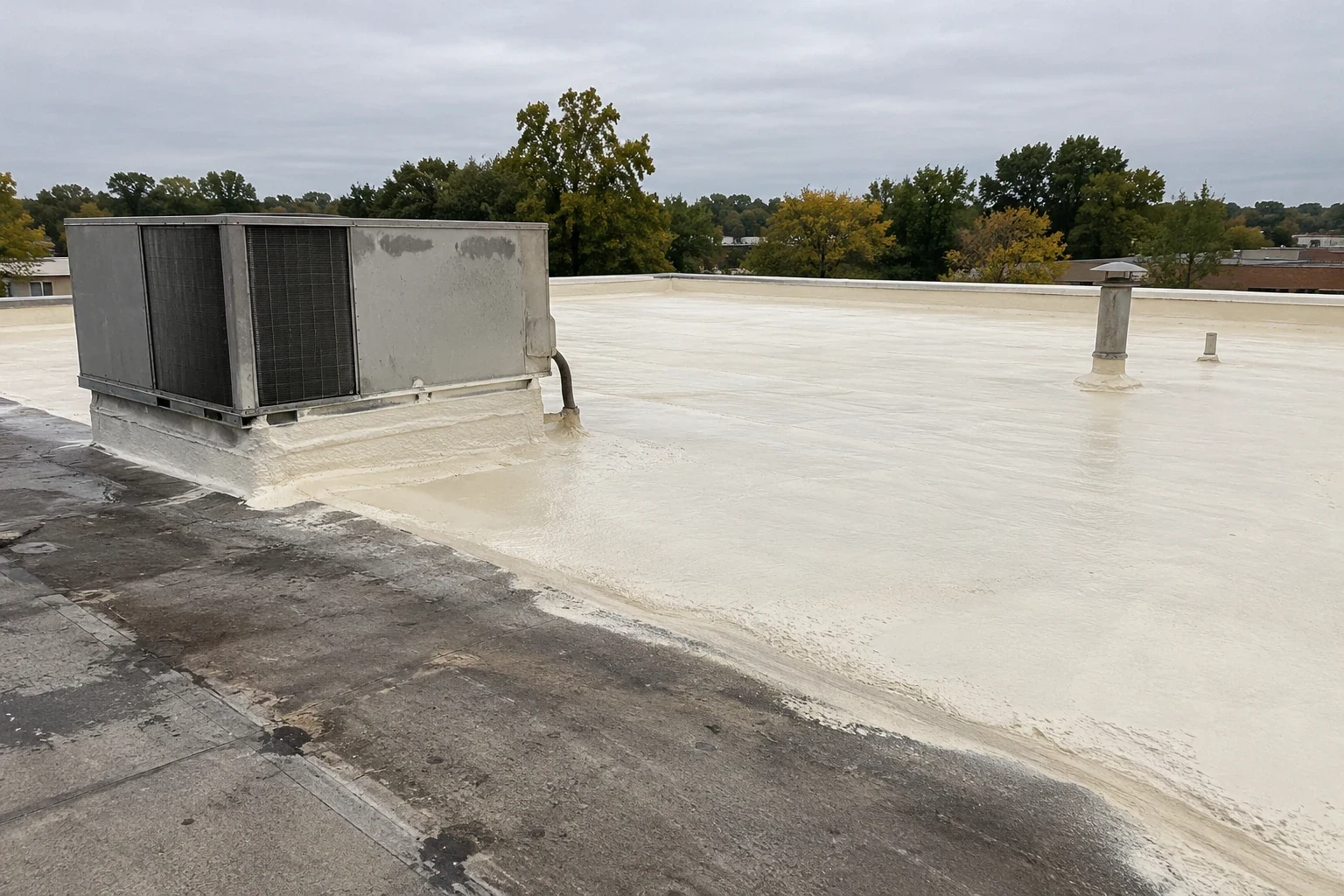
The property that matters is water. Silicone does not break down under standing water the way most acrylic coatings can, so it is the usual choice on roofs with low spots, and in white it reflects sunlight and lowers the surface temperature. It flows into seams and around penetrations, forming a continuous layer with no heat welding. It does not repair a failed roof. It extends a sound one.
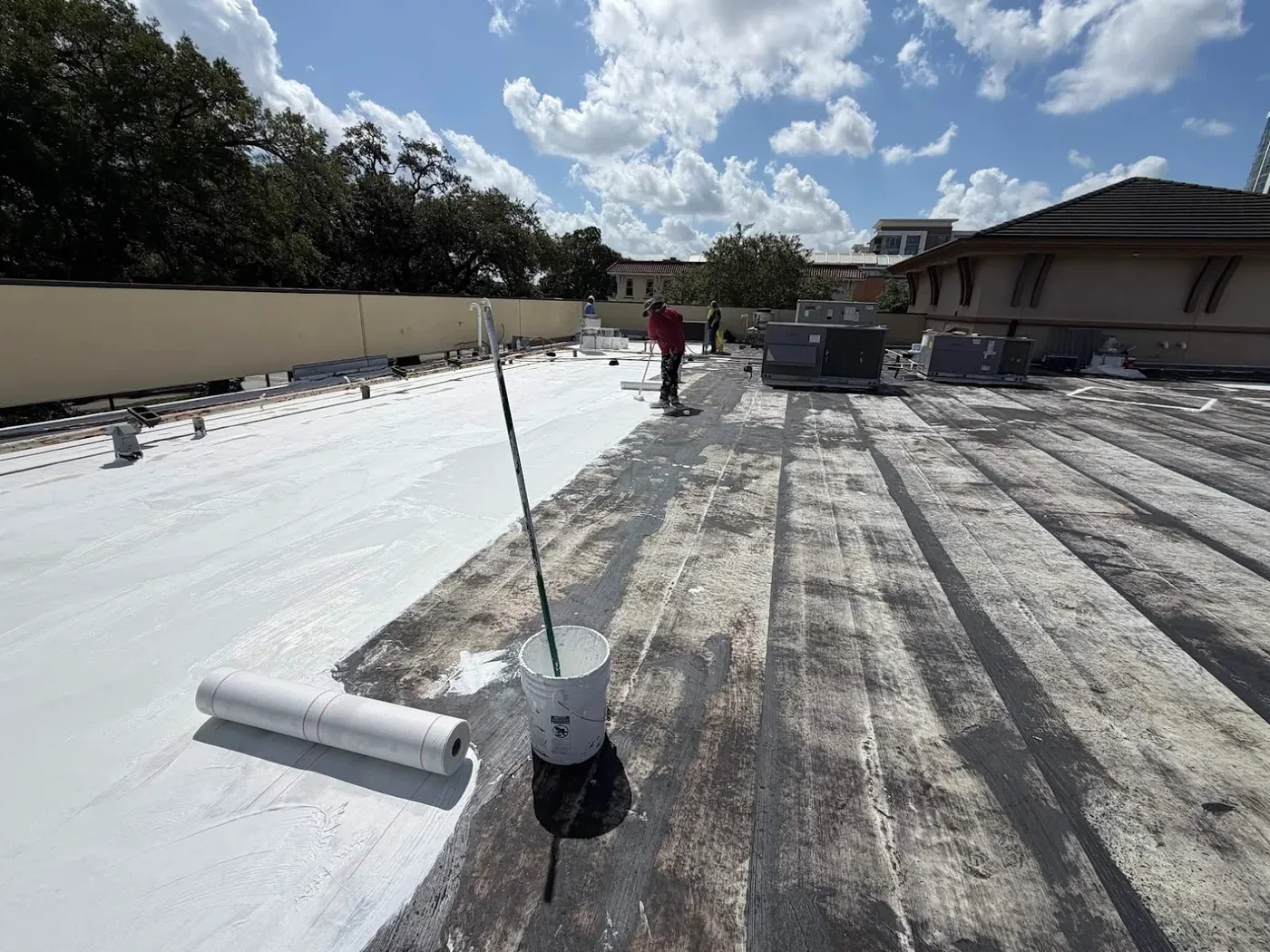
Seams, flashings and penetrations are reinforced with fabric before the field is coated, which is how a liquid film gets the strength to bridge hairline movement. The fabric is embedded in a base coat at every seam, corner and pipe, and the topcoat goes over it in passes that must cure between coats.
Where coating jobs go wrong
Four things sink a silicone job. Wet insulation under the membrane, which blisters the coating. Poor adhesion, from dirt, oil or an incompatible old coating. Thin application at edges and penetrations, where the film stretches over a corner. And dirt pickup, because silicone holds dirt, which dulls the surface and cuts its reflectivity.
Midland Beach is the plain case for ponding on the island. Flooding there is a long-running problem tied to the coastal location, the Midland Beach Bluebelt project is meant to ease it along the low-lying northern edge, and Sandy's surge on October 29, 2012 devastated the neighborhood. Flat roofs on low coastal ground are where ponding after a storm is part of the picture, and where silicone belongs in the estimate. Ida in September 2021 showed how quickly rain can fill a roof.
New Dorp has the other kind of flat roof. Retail development spread along Hylan Boulevard from New Dorp Lane starting in the 1960s and produced five shopping centers, the largest of them Hylan Plaza, opened in 1966. Sandy's flooding also took out entire blocks of houses in New Dorp, Midland Beach and Oakwood Beach. A flat retail roof with few drains is the kind of surface where a coating can pay off, if the sheet under it is dry.
What we check before coating
The walk has a short list, and every item can stop the job. We scan for moisture. We test adhesion by applying a patch of coating and pulling it after cure. We check seams, flashings and penetrations for repairs and identify the existing surface, since not every old coating accepts silicone.
- Moisture, where wet insulation must be cut out and not coated over.
- Adhesion, tested with a patch pulled after it cures.
- Substrate, where some surfaces need a primer to bond.
- Drains, since a clogged drain defeats a coating faster than weather.
The result is a written scope: repairs first, then preparation, the coating thickness and the expected life.
The tide line itself is evidence. Its shape shows which way the slope runs, and a dirt ring that does not match the drain location tells us a drain is clogged or the deck has sagged, so a slope fix or an added drain goes into the scope before any coating.
Silicone against replacement and acrylic
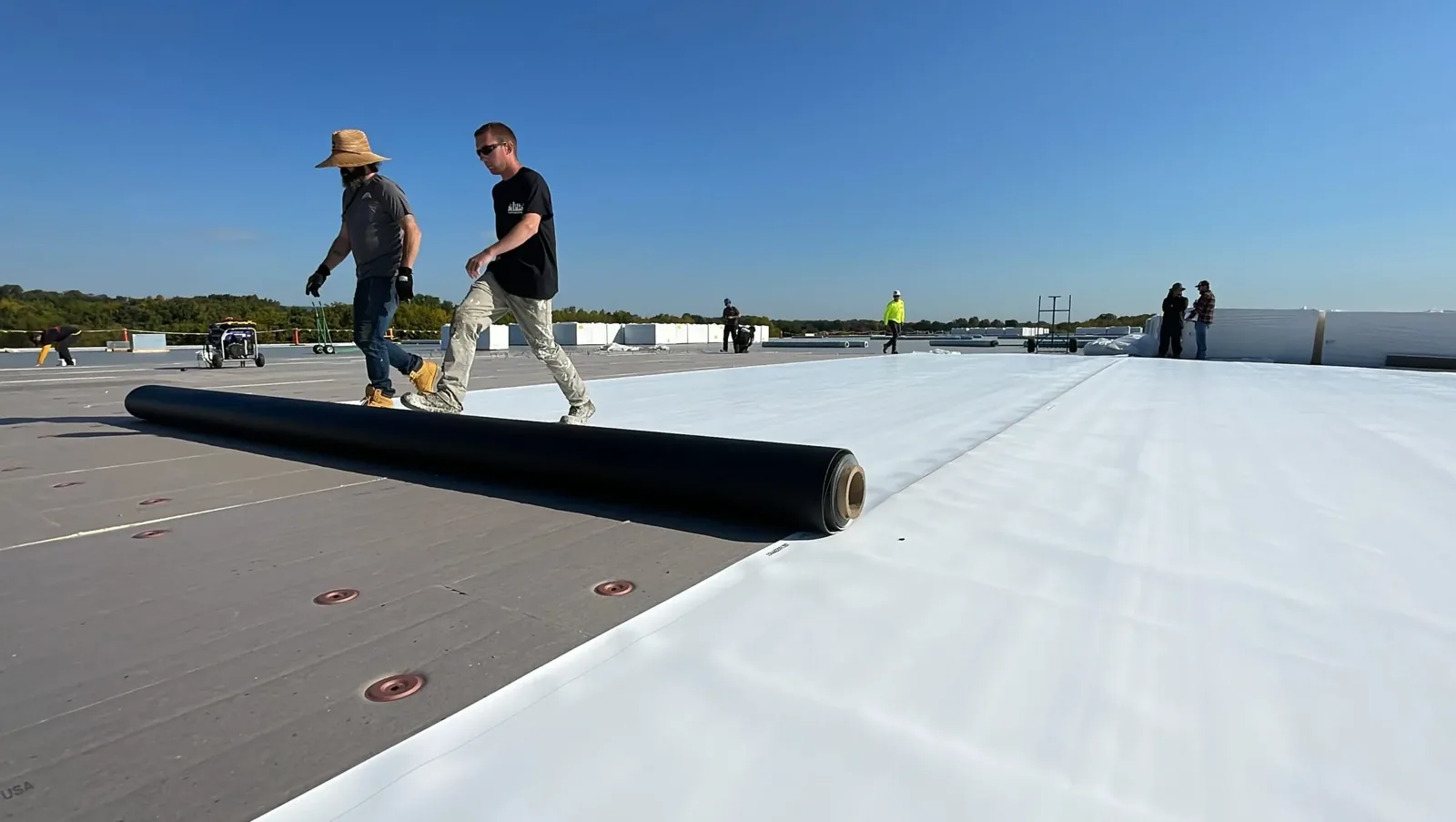
If the membrane is sound, dry and tested, silicone is a good restoration choice, and our roof coating restoration work follows that path. If moisture is widespread, the better spend is a commercial roof replacement, and we say so. If the roof drains well and cost is tight, acrylic coatings cost less and may do the job.
Silicone also works over spray foam and over many metal roofs. It does not stick well to some existing coatings, such as certain asphalt-based surfaces, without a primer, and we test first. Maintenance is a yearly wash and an inspection, with a recoat when the film thins.
Price follows roof area, how much repair comes first, the preparation (power washing, priming), the penetration count and access. Set against replacement, silicone saves the tear-off and the disposal, and the gap is widest on a big roof with few curbs.
Freeze, thaw and weather windows
Coating goes on in dry, mild weather. The surface must be dry, dew must be off and rain must hold off long enough to cure, which limits work to late spring through early fall. With snow in the city averaging about 29.8 inches a year, drains are cleared before every winter, and the 27.3-inch day of January 23, 2016 shows why.
Freeze and thaw flex any coating, and silicone handles that movement better than stiff coatings do. Seams and flashings still come first, because a coating over an open seam bridges it for a season and then splits along the same line, so repairs are finished before the first coat.
Rooftop equipment stays in service. We coat around curbs and up their sides, mask nameplates and vents and keep the coating off air intakes, and where a unit must be lifted the mechanical contractor schedules the lift and we coat the exposed area the same day.
Tenants, odor and the log
Tenants notice little. There is no tear-off, so there is no dust and little noise, and the building stays open. Silicone has a mild odor during application, so we cover intakes and tell the facility director which days will be strongest, and overspray is controlled by rolling near edges and spraying only in calm air.
After the coating cures, we walk the roof, photograph every edge and penetration and enter thickness readings and the date in the inspection log. A white silicone finish also works as a cool roof installation, and owners in Midland Beach and nearby can hand us the roof plan and the surface description.
A recoat reminder goes on the maintenance calendar, and a yearly commercial roof inspection after the first winter confirms the film has held through freeze and thaw.
Related Roofing Work
More roofing work that comes up alongside Silicone Roof Coatings.

Commercial Roofing Questions
Why choose silicone over acrylic on a roof that ponds?
Silicone holds up under standing water, while many acrylics soften or wash out when ponded. Fixing the low spot is still the better long-term answer.
Can I coat a roof that has leaked?
Not until the wet insulation has been found and taken out. A scan locates it, the saturated sections are cut and replaced, and then the entire roof is coated.
Does silicone get dirty?
Yes, it holds dirt, which dulls the surface and lowers reflectivity. A yearly wash restores most of it.
How thick is a silicone coating?
Thickness is set by the product and the roof, specified in the proposal and checked during application. Edges and penetrations get extra.
Will a coating change my roof warranty?
It can. The membrane maker sets terms, and some warranties require approved coatings. We read them before the proposal is written.