
Acrylic Roof Coatings in Staten Island, NY
Water-based acrylic roof coatings for Staten Island retail and office roofs that drain well: cleaning, seam repair and reflective recoats. Call us.
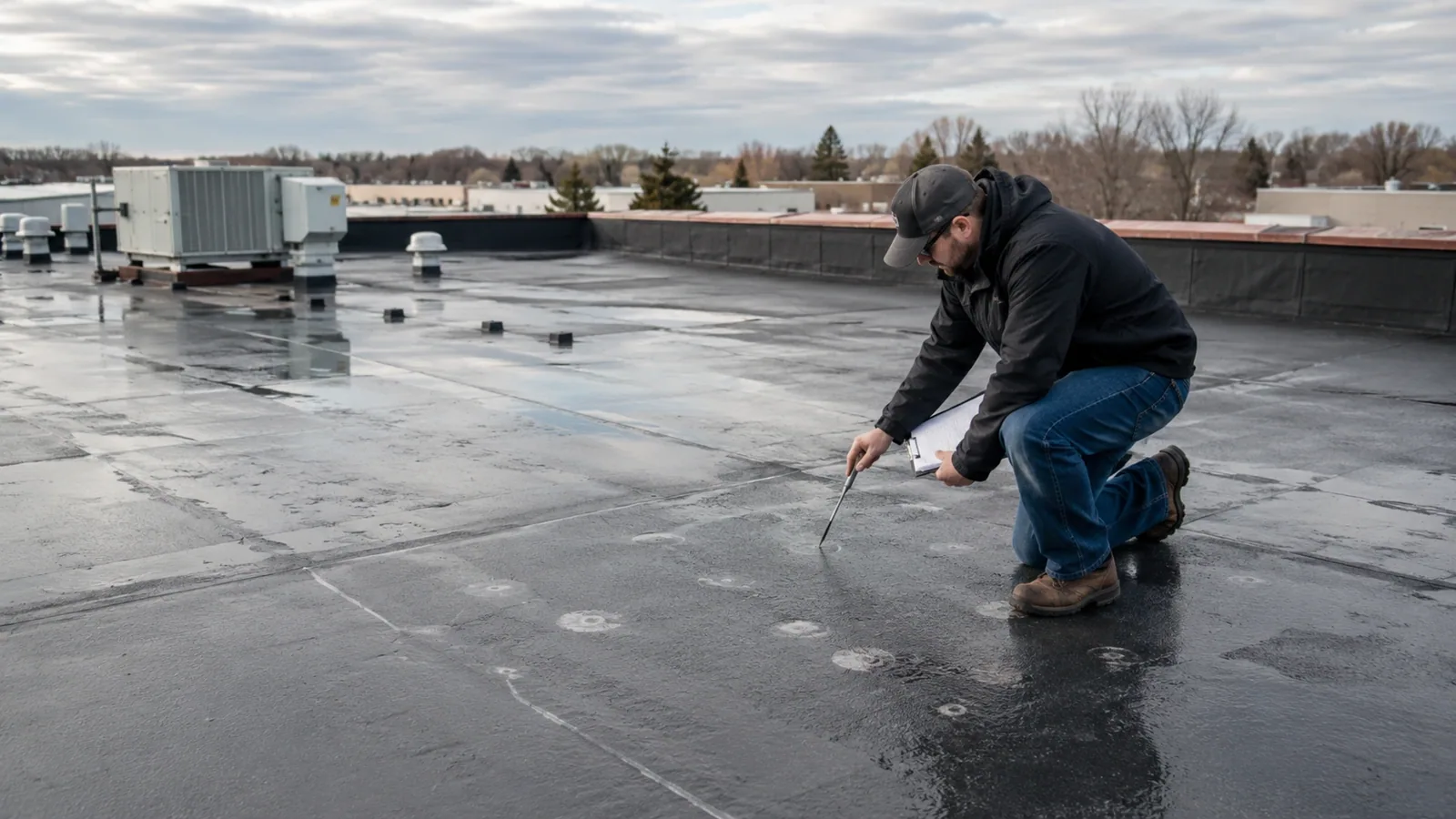
A thumbnail that lifts a curl of old coating at a seam is the test an inspector runs first on a roof being considered for acrylic, because the new film is only as good as the surface it grips. Acrylic is the economical coating, water-based and easy to apply, and it asks two things of a roof: that it drains and that it is dry underneath.
Commercial Roofing Staten Island applies acrylic coating systems over sound low-slope roofs on the island, and we recommend them only where the roof under the coating earns it, since a coating on the wrong roof is a bill for a leak that is still there.
What acrylic coating is
Acrylic roof coating is water-based. Polymer particles in a liquid carrier are rolled or sprayed onto the roof, and as the water evaporates the particles fuse into a flexible, waterproof film. It cleans up with water, has little odor and is easy to apply, which makes it a favorite on occupied buildings.
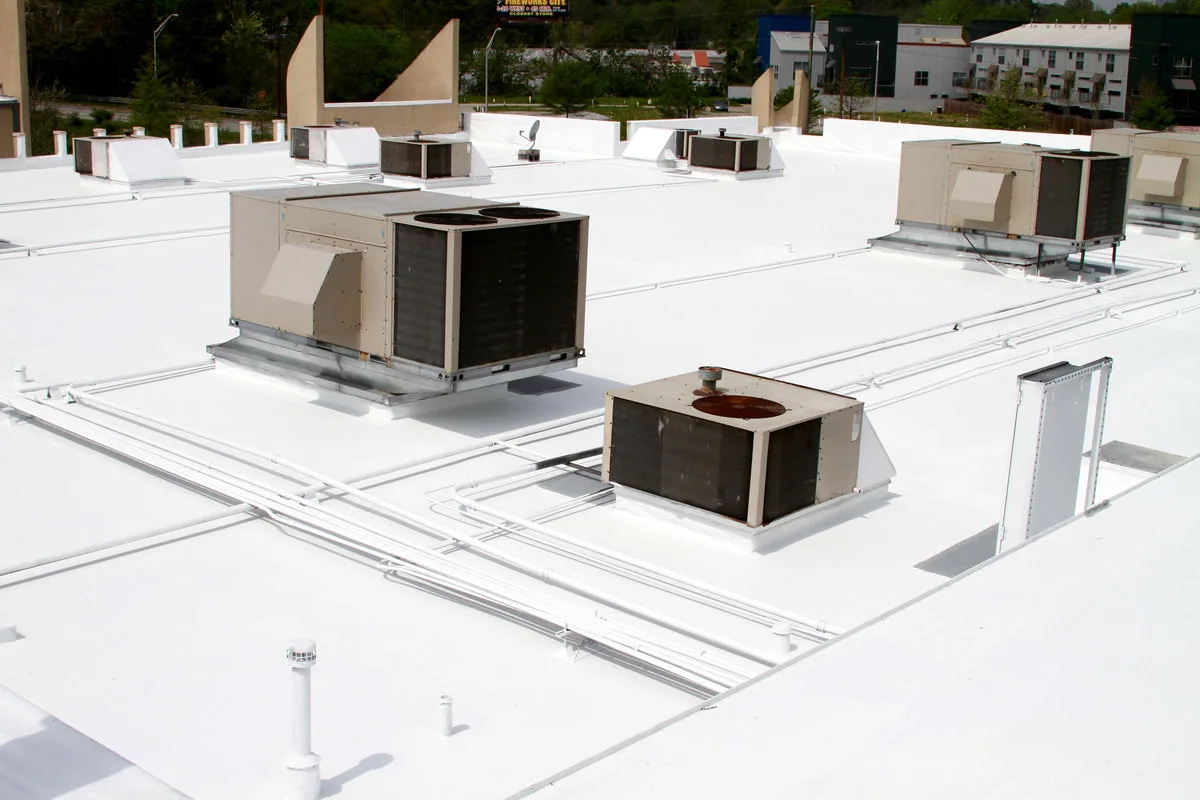
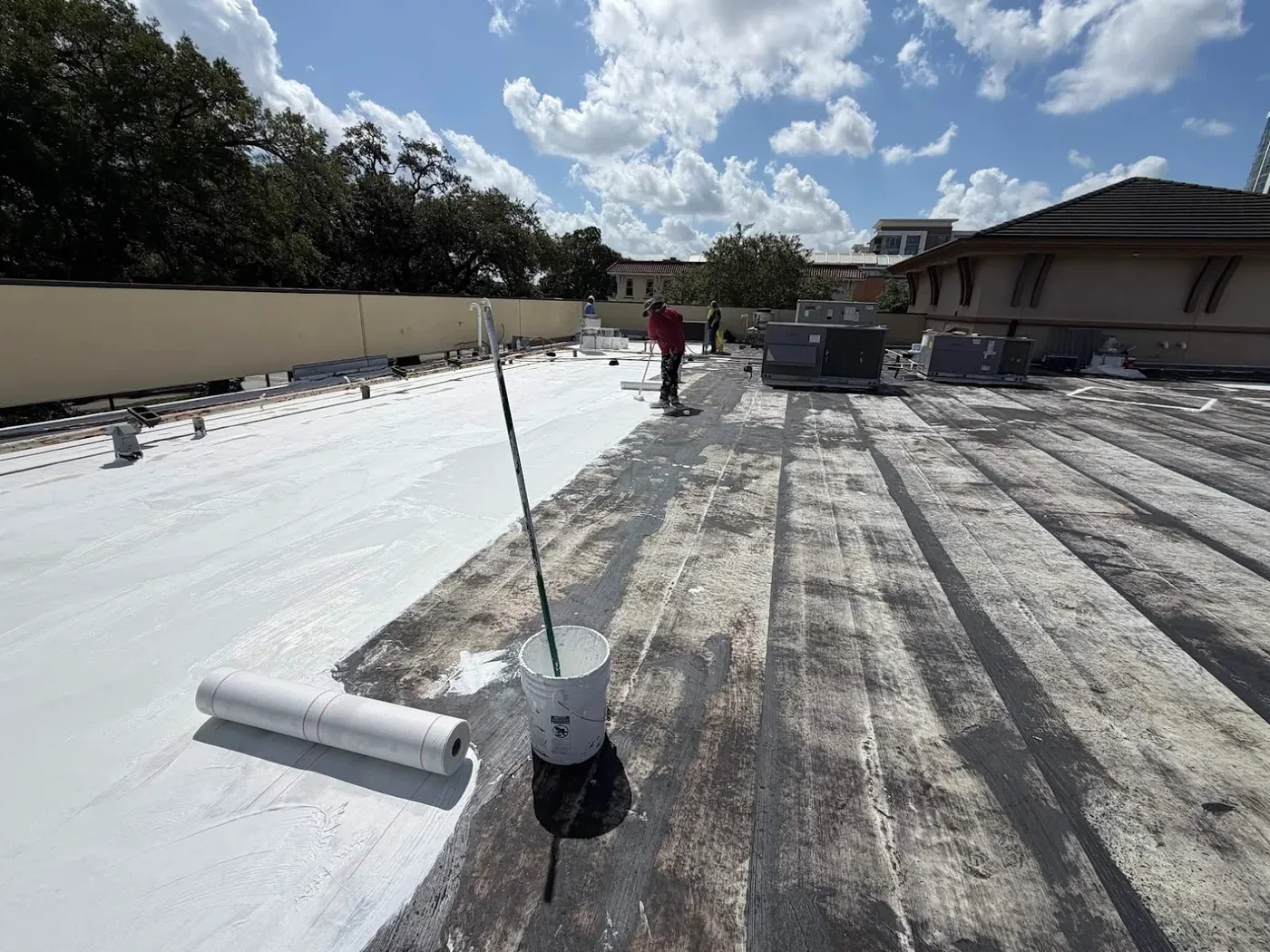
White acrylic reflects most of the sunlight that hits it, lowering the surface temperature and the heat load on the floor below. It is applied in coats with reinforcing fabric at seams and details, and the system is only as good as its thickness, so coverage rates are measured during application. A thin coat looks fine on the first day and fails early.
The reinforcing fabric is not decoration. Seams, corners and penetrations get a base coat with fabric embedded in it before the field is coated, which gives a water-based film the strength to bridge small movement. A coating applied without that step looks the same on day one and splits along the seams by the second winter.
Where acrylic fails first
The chief enemy is ponding water. Acrylic can soften, swell or wash out where water sits for days, and the film then peels or blisters. Second is application in the wrong weather, since rain within hours of coating washes the film out before it cures. Third is poor preparation, where dirt or loose old coating keeps the new film from bonding. Fourth is thin coverage at edges and penetrations.
Retail roofs that drain well suit a water-based coating. Eltingville's main commercial area runs down Richmond Avenue with branches along Amboy Road and Hylan Boulevard, and in Arden Heights a shopping center was added beside the Village Greens development. On roofs like those, the deciding questions are drainage and a dry substrate, not the address.
Edges deserve their own note. A coating over rusting edge metal fails where the metal fails, so edge repairs and primer go in before the first coat. Heat and UV damage on the surface is the reason a coating goes on, and it is also what shows a dull, chalky roof is overdue.
What we check before coating
We check four things. Does the roof drain? We look for ponds, clogged drains and sagging areas. Is the roof dry? We scan for moisture and probe suspect spots. Is the surface clean and sound? We test adhesion on a small patch. And are the seams and flashings tight? Coating bridges hairline gaps but not open splits.
- Drainage, where water that stays more than a day or two after rain points to silicone or a slope fix.
- Moisture, where wet insulation must be removed before coating.
- Adhesion, proven by a small test patch on the old surface.
- Surface, where chalk, dirt and loose granules must be washed or primed.
The report gives the owner the repairs, the preparation, the coating thickness and the expected life.
Prep work decides the result. We power wash the roof, let it dry fully, repair splits and blisters, reinforce seams and flashings with fabric and prime where the old surface demands it. Skipping the wash, or coating over damp dirt, is how a coating peels in the first winter.
Acrylic against silicone and replacement
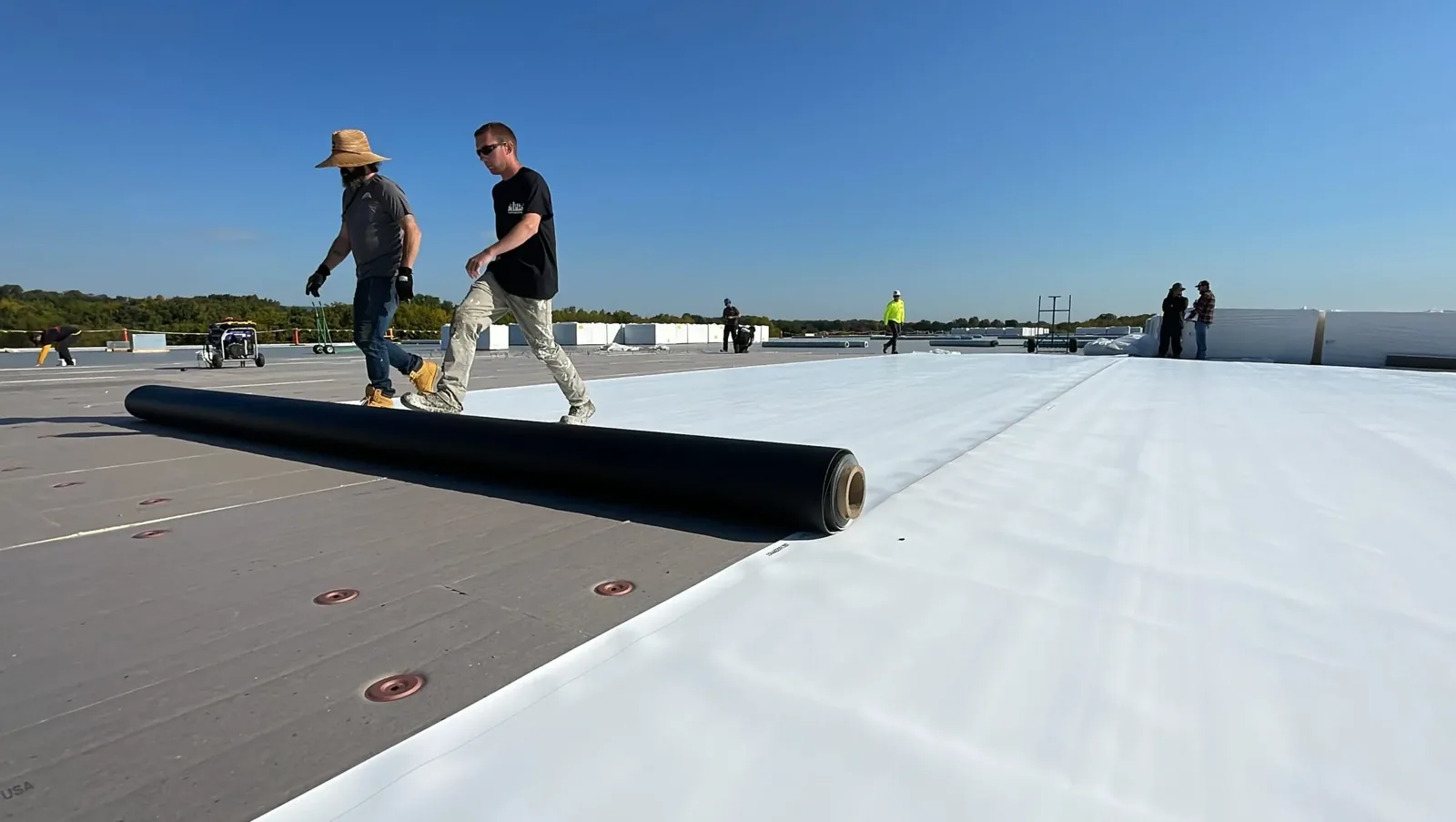
Acrylic costs less than silicone and is the sensible choice on a roof that drains. On a roof that ponds, silicone is the safer film. If the membrane is cracked, shrunk or wet through, a coating wastes money, and a commercial roof replacement is the answer. Where the roof is a worn single-ply, the coating decision often sits beside a roof recover proposal, and we price them together.
Acrylic bonds well to modified bitumen, built-up, metal and EPDM that has been properly prepared, and it is often the finish for a roof coating restoration on a building with limited capital. Recoating on a cycle keeps the film working.
Price follows roof area, the repair work, the preparation and the number of penetrations. Next to replacement, acrylic skips the tear-off, and the difference is greatest on a big, simple roof that drains well. Owners in Eltingville can hand us the roof plan and the last coating date.
Weather windows and drains
Scheduling is the real constraint. The roof must be dry, the dew must be off and no rain is allowed for hours after the coat goes on. We watch the forecast and shift the day when weather turns, and on the island the best windows run from late spring to early fall.
Drains decide the coating's life. A roof that ponds in a storm like Ida's flash flood emergency of September 2021 is a roof for silicone. Strainers are cleared in fall because ice at a half-open drain turns a thaw into a pond, and the 27.3-inch snow day of January 23, 2016 shows how much can arrive at once.
Sun and wind matter at application. Heat limits work to the cooler hours of a summer day, and a stiff wind carries mist, so the crew rolls near edges and sprays only in calm air.
Tenants, odor and the log
Water-based acrylic is the gentlest option for tenants. Odor is mild, there is no tear-off and the building stays open. We tell the facility director the days of application and keep coating off windows, intakes and vehicles. Hoses run up the side of the building or through a hatch, and drains are masked during application and cleared before we leave.
Retail roofs near Castleton Corners, where Victory Boulevard and Manor Road form the core of a commercial district, and along Richmond Avenue can be coated in early-morning or weekend windows so customers are not disturbed. A dated entry in the inspection log records coverage rates and batch information, and a yearly wash keeps the roof on schedule for its next recoat.
Related Roofing Work
More roofing work that comes up alongside Acrylic Roof Coatings.
Commercial Roofing Questions
How do I know whether my roof drains well enough for acrylic?
Look at it a day after a normal rain. Any water that remains is a problem for acrylic. If the roof is dry by then, acrylic is a good fit.
Can acrylic go over an old coating?
Often, if the old coating is sound and clean. We wash it, test adhesion and prime where needed.
What happens if it rains right after coating?
Rain before cure can wash the film out. We check the forecast and stop early, and if a shower hits we inspect and recoat the affected area.
Does a white acrylic coat lower cooling bills?
It lowers the surface temperature and the heat load below. The size of the saving depends on insulation and equipment, so we do not promise a number.
How long before foot traffic is allowed?
Light traffic after the coat is dry to the touch, though we keep the roof clear for a day or more. Heavy equipment waits longer.