
Commercial Roofing in Eltingville, Staten Island, NY
Commercial roofing in Eltingville, Staten Island, NY for Richmond Avenue retail strips, shared tenant roofs and service buildings near the transit hub.
A parapet return lifted at the corner of a Richmond Avenue storefront, a shared roof over a bank, a pharmacy and a takeout counter with a drain nobody has cleared since last fall, a rooftop unit installed by the newest tenant on a curb that was never flashed: the inspector's notebook on an Eltingville roof reads like a list of neighbors. The main commercial area of Eltingville extends down Richmond Avenue, with branches north along Amboy Road and Hylan Boulevard, and most of the roofs in it are shared.
Low-slope roofs on retail, office and service buildings in Eltingville, Staten Island, NY, are repaired and replaced by Commercial Roofing Staten Island, and the landlord is asked first how many tenants share each one.
A strip that grew around the station
The business district grew up around the Eltingville Staten Island Railway station, and many SIM express buses terminate at the Eltingville Transit Center, which links the commercial strip to the rest of the borough. Foot traffic and delivery traffic are steady, and a strip like this typically holds low-rise commercial buildings, so we look for flat or low-slope roofs behind parapets and confirm each on the walk.
Roofs on a strip like this change owners and tenants more often than they change membranes. Each new tenant adds a unit, a vent or a sign, and each addition leaves a penetration behind. We inventory every roof by bay, rate the flashing on each penetration and give the landlord a list that separates landlord repairs from tenant items.
Shared roofs and divided responsibility
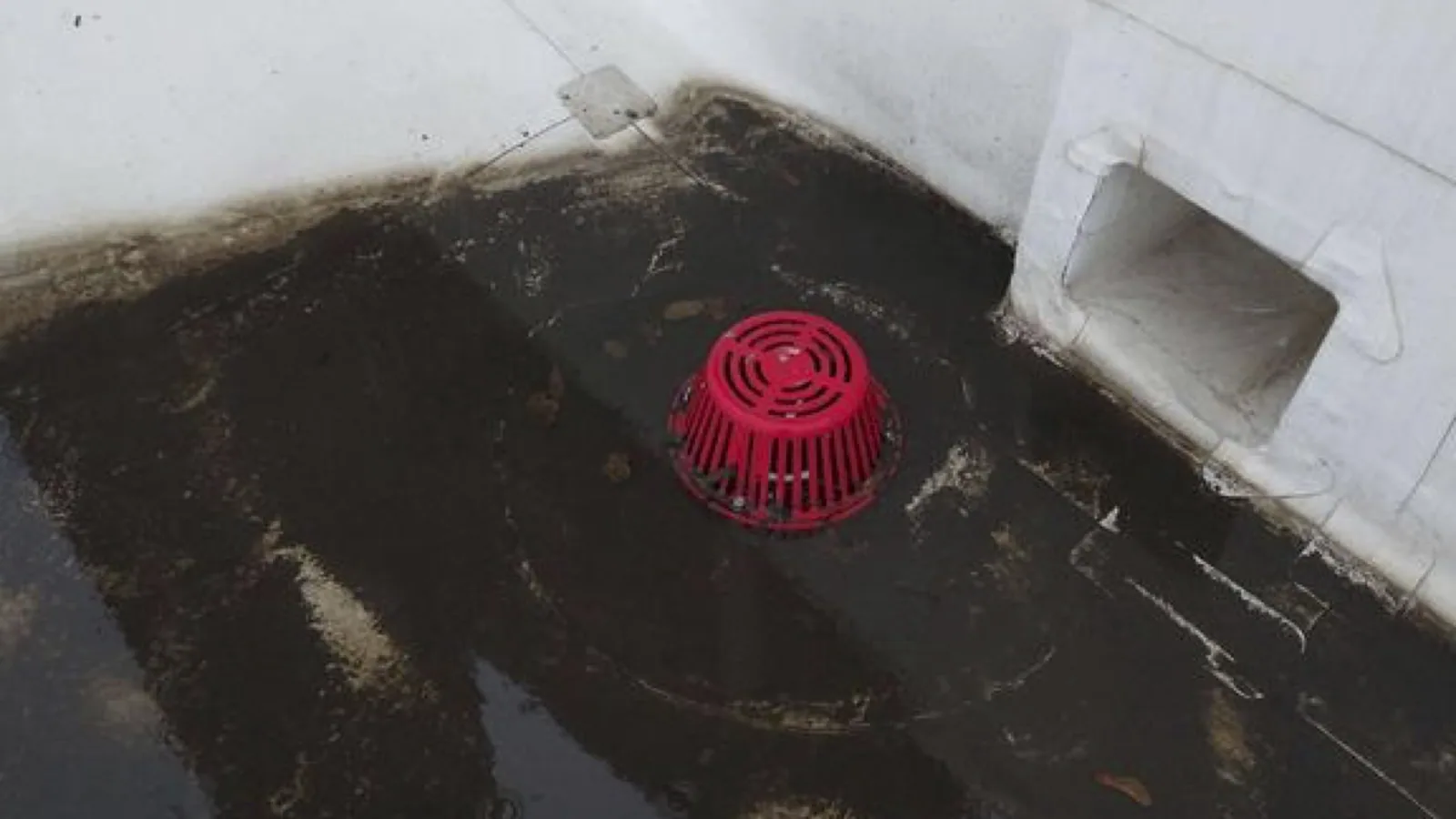
When four tenants share one roof, nobody owns the drain. Debris collects, the strainer clogs and the pond forms over whoever is unlucky. A leak lands on one tenant and the cause may be three bays away. The tenant calls the landlord, the landlord calls a roofer and the roofer starts from nothing.
We start with a plan and a log. The landlord supplies the tenant list, we mark the roof into bays, and each finding is tied to a bay and a tenant. Drain and scupper work sits with the landlord, since the drain serves everyone, and unit curbs sit with the tenant who installed the unit. A short written record settles most disagreements before they reach a lease clause.
The first walk takes one order on every roof. The walk opens at the drains, since a clogged one distorts every other finding. After them come the curbs, boots and brackets, then the seams and laps of the field, then the parapets and edges. A moisture scan after sunset follows where a tenant reports a stain, and a core confirms what the scan shows. A page per roof arrives within days, and every item carries a repair class: seal, re-flash, replace or leave. Prices are by item, so a landlord can approve the urgent ones and schedule the rest.
Transit, deliveries and working near a busy hub
A commercial strip beside a transit station sees steady foot traffic through the day. Sidewalk protection under work zones, hoists placed away from entrances and debris chutes aimed at service lanes keep the public out of the way. Deliveries of roofing material are timed for quiet hours, and crane lifts avoid peak commuter times.
Work near a rail station also affects noise planning. Loud steps are scheduled when the shops are closed or when the noise blends with ordinary street sound. Occupied building reroofing habits keep stores trading while a roof is open: small sections, daily dry-in and interior protection under any opening.
Rooftop units, exhaust and the tenant mix
Food, retail, banking and office tenants all put different things on the roof. A food counter vents grease, a service office carries small cooling units and a clinic adds exhaust. Each belongs to a different trade and a different budget.
We inspect every curb, boot and bracket, reseal what has failed and add walk pads along service routes. Condensate lines that drip on the membrane are extended to a drain or a splash block. Restaurant roofing practices apply near exhaust fans, with grease trays and a cleaning schedule. A membrane that tolerates oils is the usual specification beside food exhaust.
Rain, snow and the South Shore
Sandy's gusts hit 80 mph in October 2012, and the state's highest water line, 7.9 feet above ground, was recorded at Oakwood on the South Shore. Wind lifts edges anywhere, so edge metal and fastener spacing are checked before storm season. A strip roof with one clogged drain has nowhere to send the rain of an Ida, the September 2021 storm that brought a flash flood emergency. Winter snow in the city runs 29.8 inches in a typical year and hit 27.3 inches on January 23, 2016, and drifts against parapets melt back toward the wall, which puts base flashing in those corners on the March list. A fall visit clears drains, and a spring visit finds what winter did.
Repair, coat, recover or replace
The decision comes from the cores and the scan. Dry insulation under a sound membrane allows a coating or a fully adhered recover. Wet insulation across a wide area calls for replacement, phased by bay so the shops keep trading. A cover board protects the new membrane from foot traffic by service crews.
Common choices on small commercial decks are modified bitumen and single-ply systems, picked for access, fire rules and budget. Each option is priced for the same roof, with the difference in expected service life beside it. Owners with more than one building on the strip get one report and one calendar, and nearby Great Kills and Arden Heights follow the same format.
What goes in the log
Each roof gets a page with photographs, bay numbers, a condition rating and a ranked repair list with prices. A summary page ranks the buildings by risk. After every visit, an entry is added with dated photographs.
It answers lender and insurer requests, settles lease disputes and goes with the building when it is sold. A landlord who can show a buyer two years of dated roof entries sells a building with fewer questions about the roof. The price moves with the number of bays, the amount of wet insulation, the count of curbs and the access, and each driver is named so the landlord can set a repair beside a replacement on one page. The record also helps the next property manager, who inherits a roof with a history instead of a mystery.
Related Roofing Work
More roofing work that comes up alongside Eltingville.


Commercial Roofing Questions
Four tenants share our roof and the drain is clogged. Whose job is it?
The drain serves everyone, so it usually sits with the landlord. We clear it, photograph what came out and log the date, then set a cleaning schedule.
A tenant's unit leaks at the curb. Can the landlord bill the tenant?
The lease sets that. The roof log shows who installed the unit and the condition of the flashing, which supports the landlord's case.
How do you work near a busy station without blocking the sidewalk?
With sidewalk protection under work zones, hoists placed away from entrances and deliveries in quiet hours.
When is a coating enough on a small commercial roof?
When the membrane is sound and insulation is dry. Both are confirmed by a scan and cores before we recommend it.
What should a landlord send first?
The tenant list, the roof plan and the leak history of the last few years. The roof gets walked and a ranked list comes back.