Emergency Roof Repair in Staten Island, NY
Round-the-clock emergency roof repair in Staten Island, NY: tarping, dry-in and temporary repairs after storms, with a written record for insurance.
The first line an emergency crew writes on arrival is not the hole in the roof but the route to it: which hatch opens, who holds the key and which tenant is standing under the drip with a bucket. Commercial Roofing Staten Island answers the call at any hour, on weekends and on holidays, and the first goal is simple: stop the water entering the building and protect what is inside. Permanent repair comes after the weather clears and the surface is dry, and the emergency work is written so it leads into that permanent fix without wasted effort.
We respond across the island and into nearby New Jersey, and we keep the response procedural so that everyone, from the tenant to the facility director, knows what happens next.
What happens when you call
The dispatcher asks four questions: where the water is entering inside, what the building is used for, whether the roof is safe to access, and who can give us access. We ask for a photo of the interior and, if it is safe, one of the roof. Then a crew leader gives you an arrival window and a phone contact. On arrival, the crew leader checks conditions, sets up fall protection, and makes a quick survey before touching the roof. If lightning, ice or high wind makes the roof unsafe, we say so and begin with interior protection until conditions improve.
Interior protection matters as much as the roof work. We cover stock and equipment, divert water away from electrical gear, and extract standing water where we can, so the damage does not spread while the opening is still being closed.
Tarping and dry-in
A temporary dry-in has to hold in the weather that caused the damage. Tarps are secured with battens or ballast and fastened into solid substrate, with edges lapped so that water sheds away from the opening. On low-slope roofs, we may use a temporary membrane patch or a self-adhering sheet over a dried area. Where flashing has failed at a wall or curb, we install a temporary cap or termination. Every temporary measure is photographed, labeled temporary in the log, and given a date by which the permanent repair should follow.
A tarp is not a roof. It is a short-term seal, and it fails if the wind rises or if debris cuts it. We tell owners how long a temporary fix is likely to hold under the current forecast and plan the return visit accordingly.
Access, keys and safe footing
Minutes disappear when nobody knows who holds the roof hatch key. Before an emergency, the most useful thing a facility director can do is write down how a crew reaches the roof: which hatch or ladder, which mechanical room, who carries the keys after hours, and which tenants must be told. We ask for it up front so nobody hunts for keys during a storm. On arrival, the crew leader walks the route to the roof, tests the surface at the edge, and sets lines where a fall is possible. On a wet roof, every step is a risk, and a crew that rushes is a crew that gets hurt.
Roofs with skylights, fragile panels or deteriorated decks need special attention. We mark unsafe areas with visible barriers before any work begins and use walk boards over soft spots. If the deck itself has failed, we stop, cordon off the area, and notify the owner before going further. That caution keeps both the crew and the building occupants safe while the roof is being dried in.
Island storms and what they do to a roof
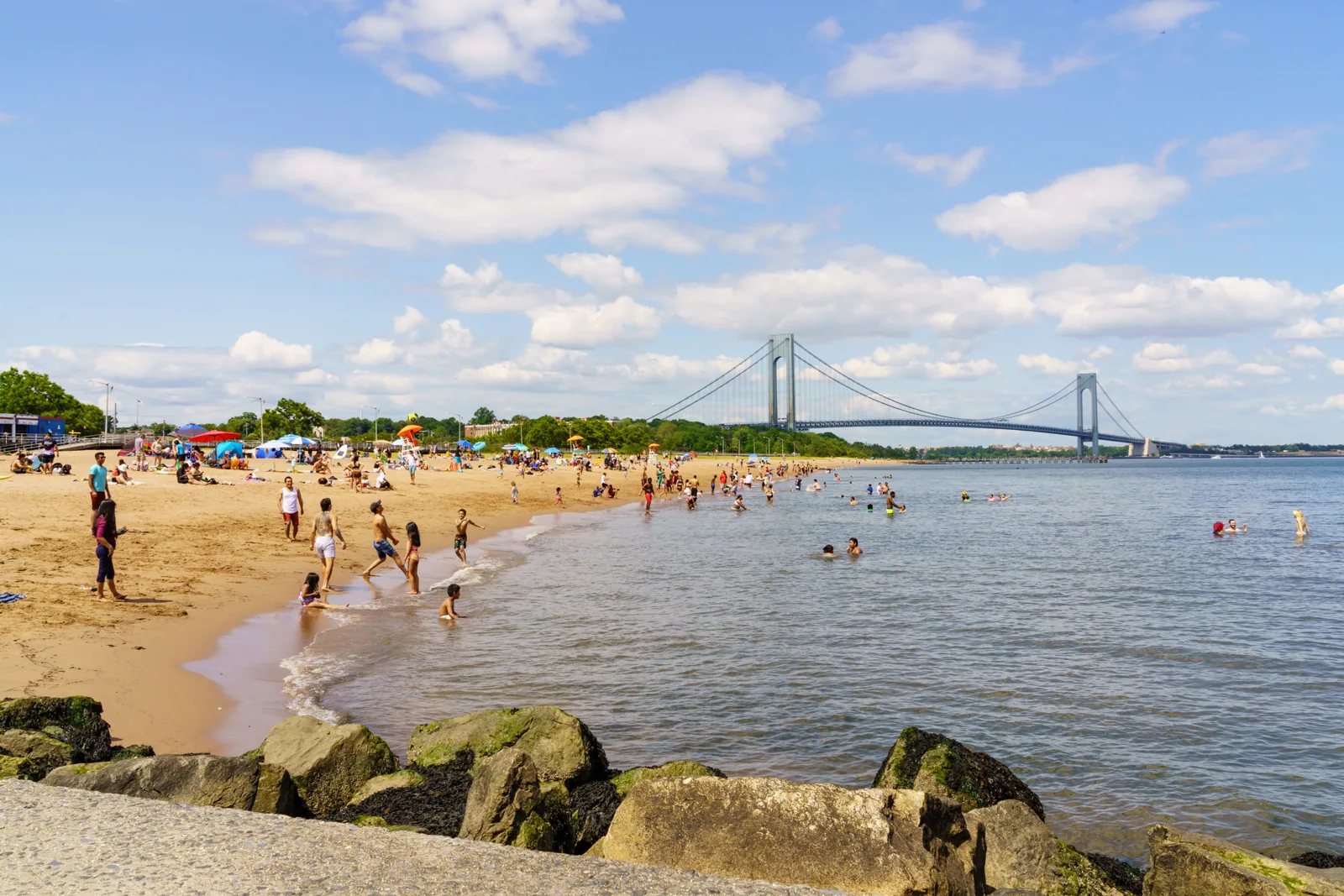
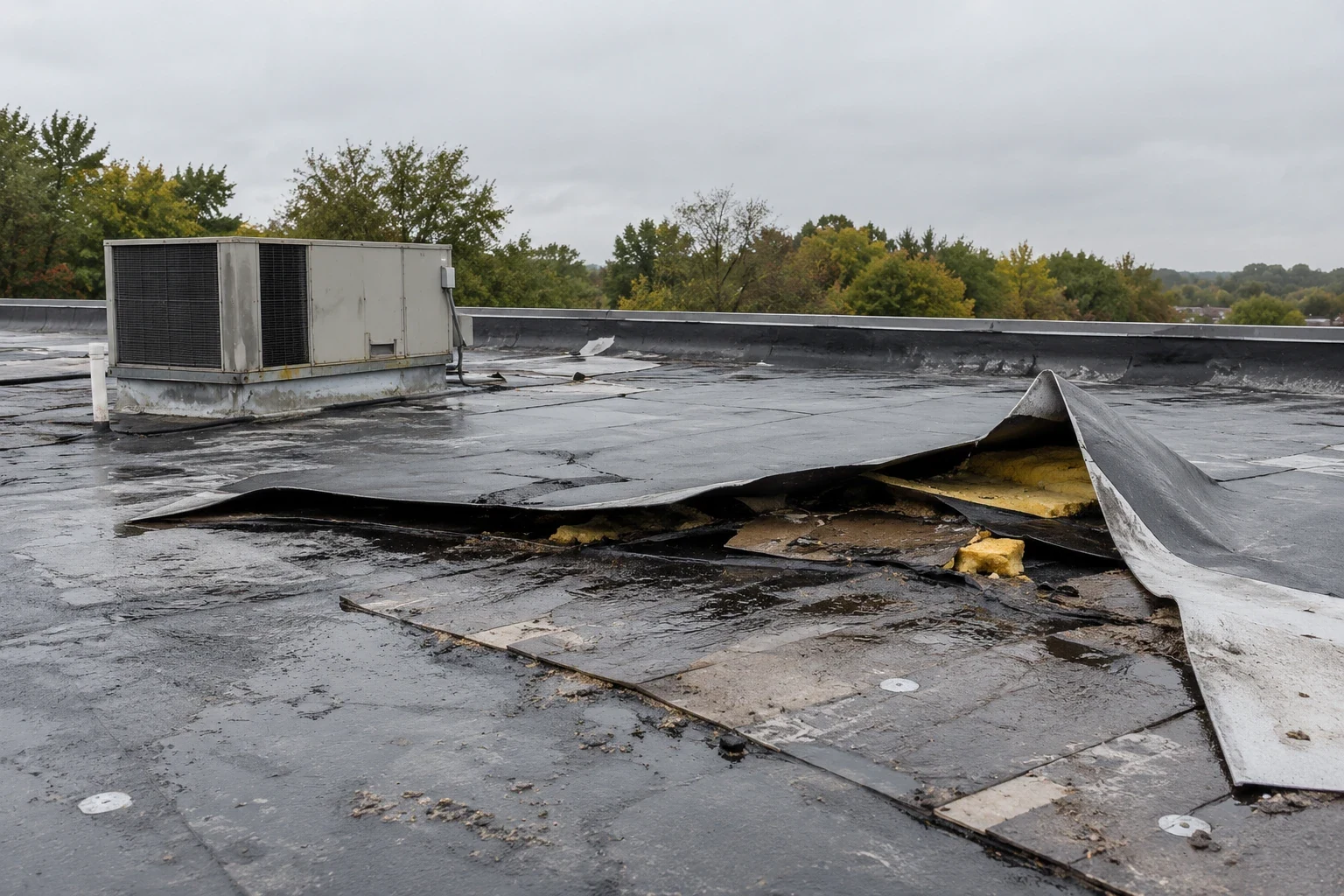
Staten Island has seen what the harbor can do. At the north tip, Sandy's surge on October 29, 2012 stood 9.56 feet above normal tide and the gusts reached 80 mph; farther south, floodwater swept entire blocks of houses out of Midland Beach, New Dorp and Oakwood Beach. Ida, on September 1 and 2, 2021, led the National Weather Service to declare its first flash flood emergency for the city. A roof that survives wind may still fail under rain that outruns its drains, and one that survives rain may lose a parapet cap to wind. Emergency calls after such events cluster around lifted membranes, missing edge metal, and blocked drains. Our hurricane damage roof repair work picks up where the dry-in leaves off.
Winter emergencies
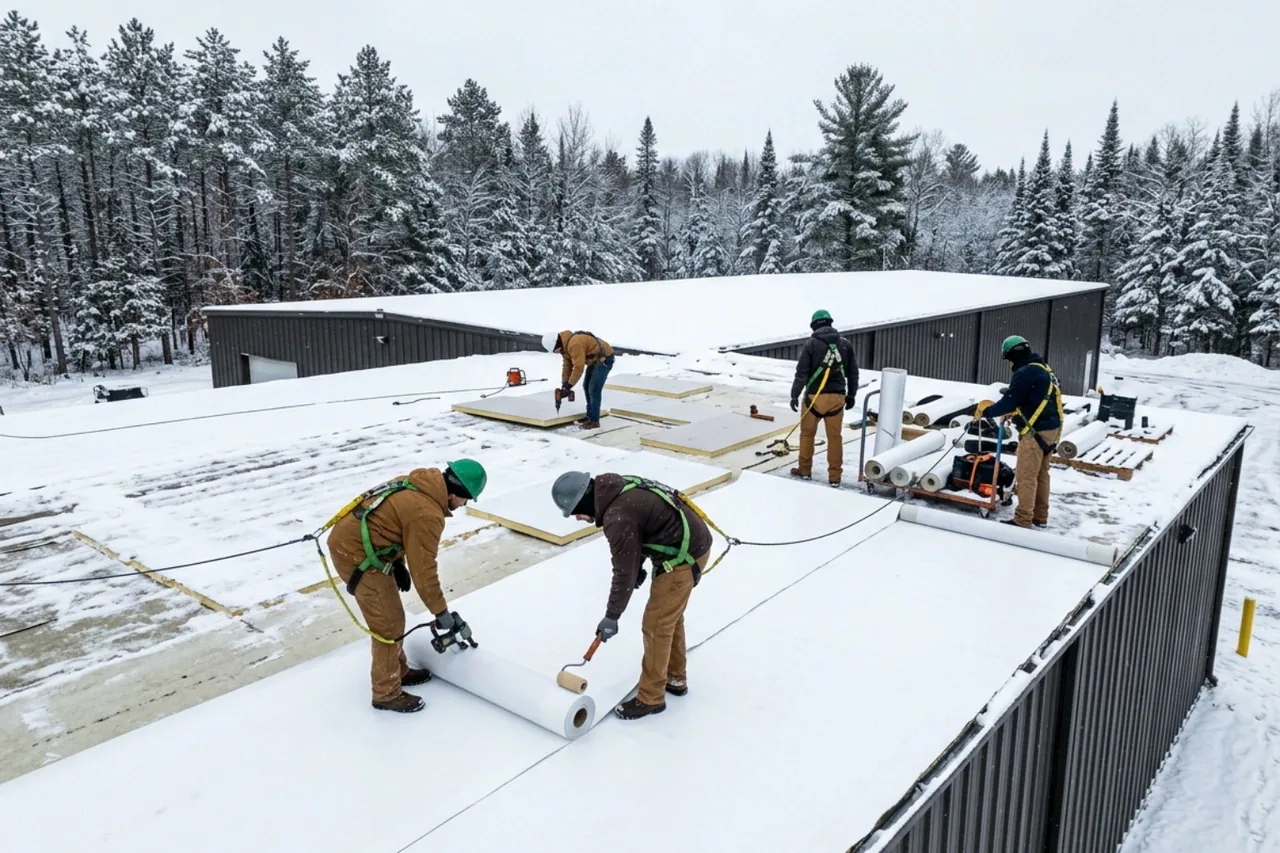
Snow adds weight and hides problems. Snow loads vary a great deal from winter to winter in the city, and January 23, 2016 dropped 27.3 inches in a single day. Drifts form behind parapets and rooftop units, ice dams form at eaves and gutters on metal roofs, and meltwater backs up behind clogged drains. When a roof leaks during a thaw, we clear the drain first, remove ice that is feeding the leak, and look for the opening beneath. We never use sharp tools near the membrane, and we leave a thin layer of snow rather than risk a cut. The permanent fix for snow and ice roof damage follows once the opening is dry.
Buildings that cannot wait
Some roofs cannot sit under a tarp for days. A grocery with refrigeration, a medical office, a shop with electrical gear below the leak, and a distribution building holding stock all need faster action and clearer priorities. On the West Shore, where the Bloomfield logistics park supplies shipments for companies including Amazon and Ikea, a leak above racked inventory has a different cost than the same leak above an empty bay. We ask what is below the opening and rank our actions by what is at risk, not by what is easiest.
After the emergency
Once the weather clears, we return for the permanent repair, and we document the whole event for the owner and the insurer: photos of the damage before work, the dry-in installed, and any hidden conditions found when the roof was opened. Our insurance claim assistance turns that record into something an adjuster can work from. We also recommend a storm damage assessment of the rest of the roof, since the damage you can see often has companions you cannot.
Related Roofing Work
More roofing work that comes up alongside Emergency Roof Repair.
Commercial Roofing Questions
Do you really answer at night and on holidays?
Yes. Calls are taken around the clock, every day of the year, and a crew leader gives you an arrival window and a direct phone contact.
How long will a tarp last on my roof?
It depends on the wind, the substrate and the debris around it. We estimate based on the forecast, secure the edges with battens, and set a return date for the permanent repair.
What if the roof is unsafe to climb during the storm?
We protect the interior first, with covers, diverted water and extraction, and wait for a safe window to dry in the roof. We do not put a crew on ice, lightning or high wind.
Will you document the damage for my insurer?
Yes. We photograph the damage before we touch it, log the temporary work, and give you a written summary. That record supports a claim, and we can walk you through what an adjuster usually wants to see.
Can you reach buildings on the South Shore after a flood?
We can when roads allow, and we plan routes and crew positions ahead of a forecast storm when owners ask. Sandy's floodwater washed away blocks of houses in Midland Beach and New Dorp in 2012, so route planning for those streets starts early.