Commercial Roofing in Bloomfield, Staten Island, NY
Commercial roof inspection, repair and replacement in the Bloomfield industrial area of Staten Island, NY: office buildings and logistics space.
Large office buildings from the late 1980s, a logistics park opened in 2018 and a former oil terminal site now cleared of its tanks make Bloomfield on Staten Island, NY a district of large commercial buildings where the roof work is planned on a big scale. On a Bloomfield walk the first line in the notebook is the water that has not left the roof, because a wide low-slope roof of any kind holds it in more places than a small building does, and Commercial Roofing Staten Island inspects, repairs and replaces the commercial roofs here.
The West Shore holds most of the island's industrial development, and Bloomfield sits inside that belt with Gulf Avenue running along the West Shore Expressway. A large building asks for more drains, more seams and more equipment to be checked, and the log grows with it.
What the area holds
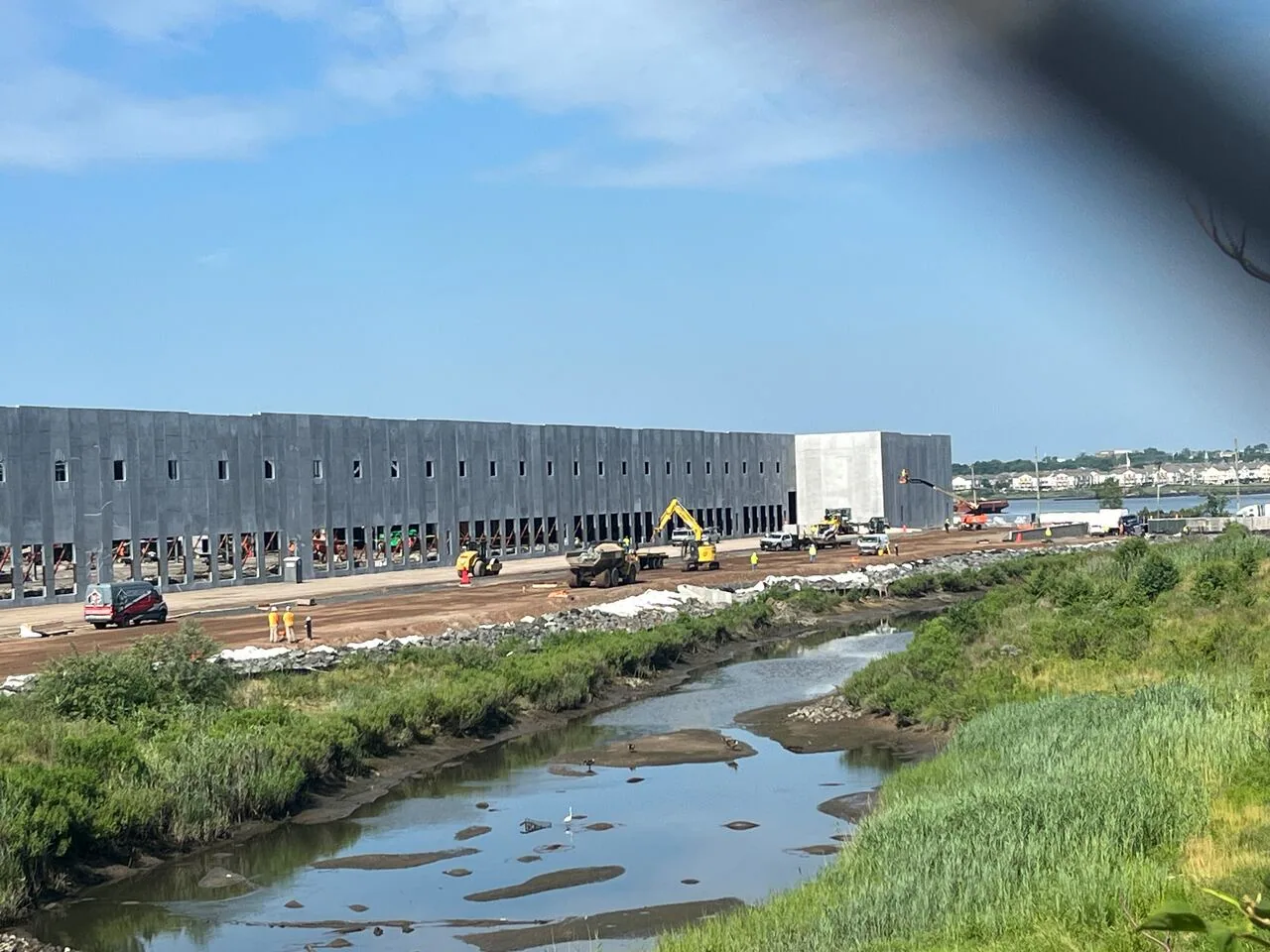
Bloomfield's commercial growth picked up in the late 1980s with the construction of several large office buildings. A Gulf Oil storage terminal covering 440 acres shut down in 1998, and its tanks have since been torn down. In fall 2018 the Matrix Global Logistics Park started up as a distribution center serving companies such as Amazon and Ikea, and Gulf Avenue, a service road beside the West Shore Expressway (NY Route 440), still carries the old terminal's name.
We read that as three generations of commercial building: office space from the late 1980s, an industrial site cleared for new use and newer logistics space. A park listing does not name a roof type. A core cut and a seam probe settle it, and the owner gets the answer in writing.
What the inspector sees on a big flat roof
On a large low-slope roof, the first note is where the water stands after rain. A ponded seam beside a drain says more than any age estimate, since it marks where the slope has settled and the membrane has sat wet. A roof with many drains usually has a few partly blocked, so strainers and sumps are cleared and photographed one by one.
The second note is traffic. Mechanical crews and maintenance staff cross a big roof along the same few routes to reach units, and walk-pad wear shows where. A route without a pad scuffs the membrane thin, and thin membrane is where the next puncture happens. Our distribution center roofing work and office building roofing notes both start with drains, then traffic, then edges.
The office buildings
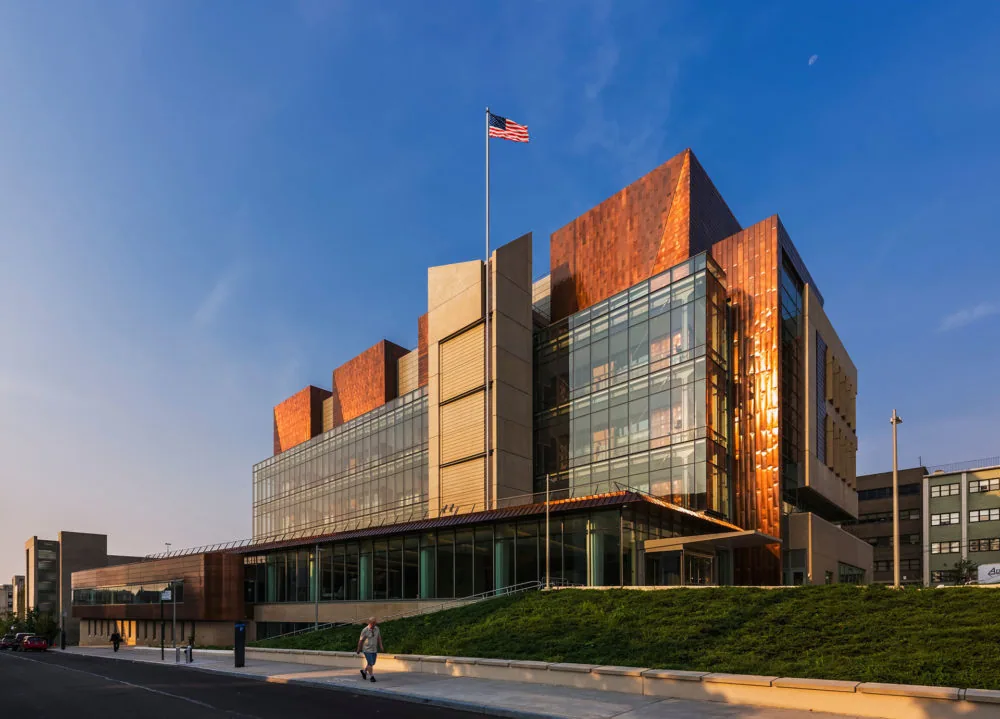
Office roofs carry chillers, air handlers and exhaust fans, each on a curb, rail or stand, and each is a penetration or a loaded spot. A late-1980s construction date does not tell us the age of the roof, which may have been replaced or recovered since. We core the roof to count the layers and test the insulation, then check the equipment curbs for dried sealant and lifted flashing.
Tenant complaints often arrive as ceiling stains on a particular floor. The trace goes from the stain to the deck and then out to the nearest penetration, drain or parapet. If the stain sits far from any rooftop equipment, ductwork condensation is a candidate, and that gets said before a roof repair is priced.
Logistics space and wet insulation
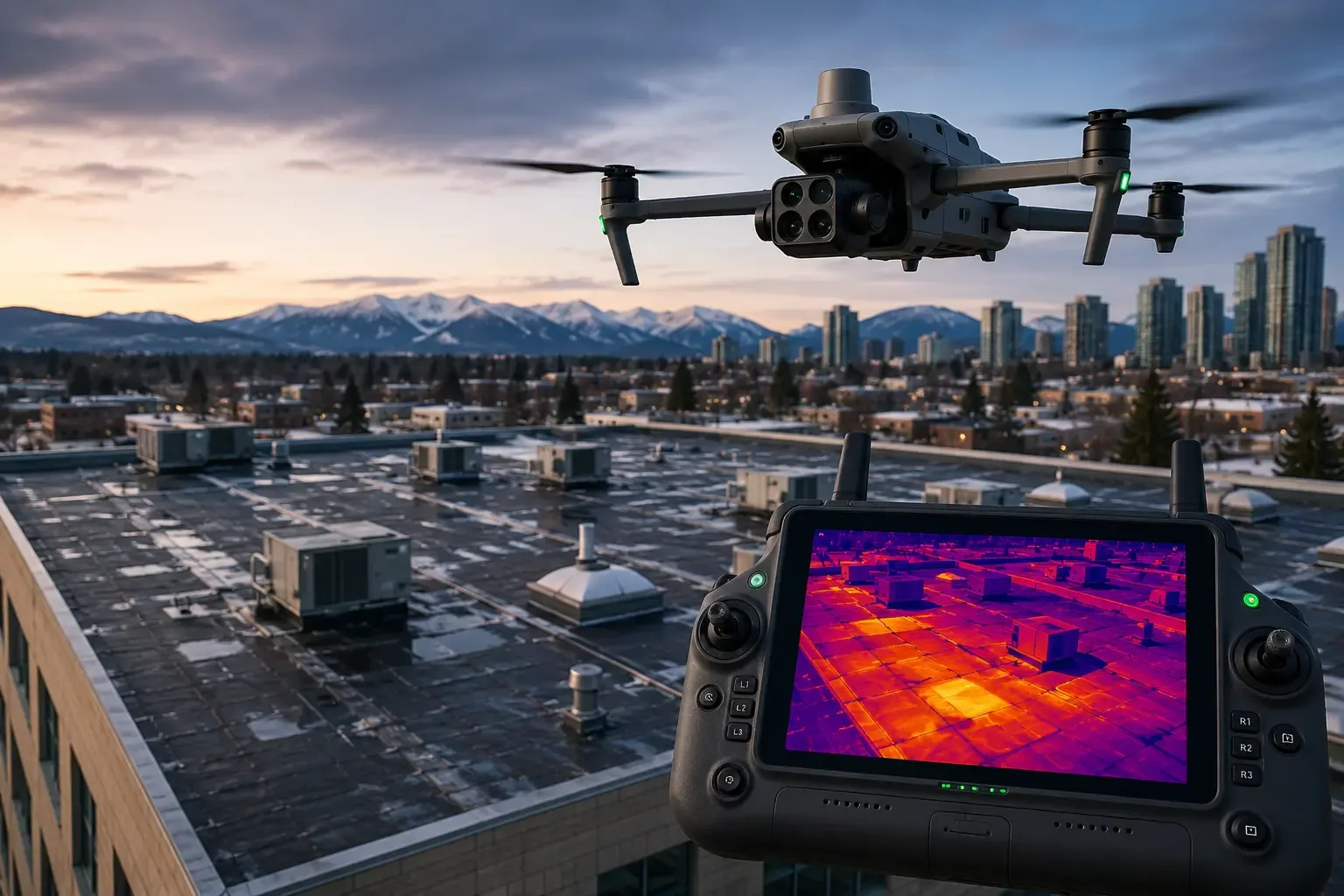
Inventory sits under a distribution roof, and every week that insulation stays wet costs more. An infrared moisture survey after sunset picks out the insulation still holding the day's heat, and cores confirm what it shows. A dry roof with a small number of wet spots can be spot-repaired; a roof with widespread moisture is a candidate for replacement.
Wide buildings also mean long perimeters, and the perimeter is where wind lifts a roof. The edge metal, the coping and the first few feet of membrane inside them are checked for loose fasteners and gaps, and Sandy's 80 mph gusts of October 2012 showed which perimeters were marginal.
Storm and winter checks
Winter loads the roof. Snow in an average winter in the city comes to about 29.8 inches, and on January 23, 2016 it buried drains across the island under 27.3 inches. The thaw is the moment to walk, since ice at a drain turns melt into a pond overnight. A strainer packed with debris is how the rain of Ida's September 2021 flash flood emergency became a leak.
Our checks sit in the preventive maintenance visit, one in spring and one in fall, with an extra look after any named storm.
Repair, restore or replace
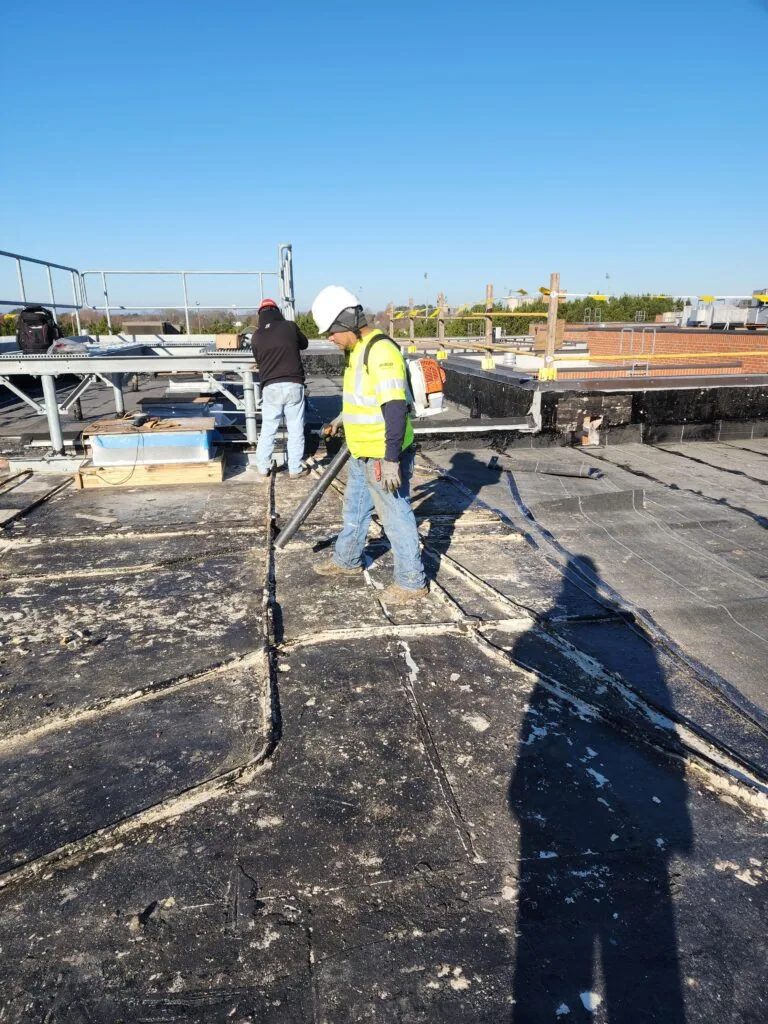
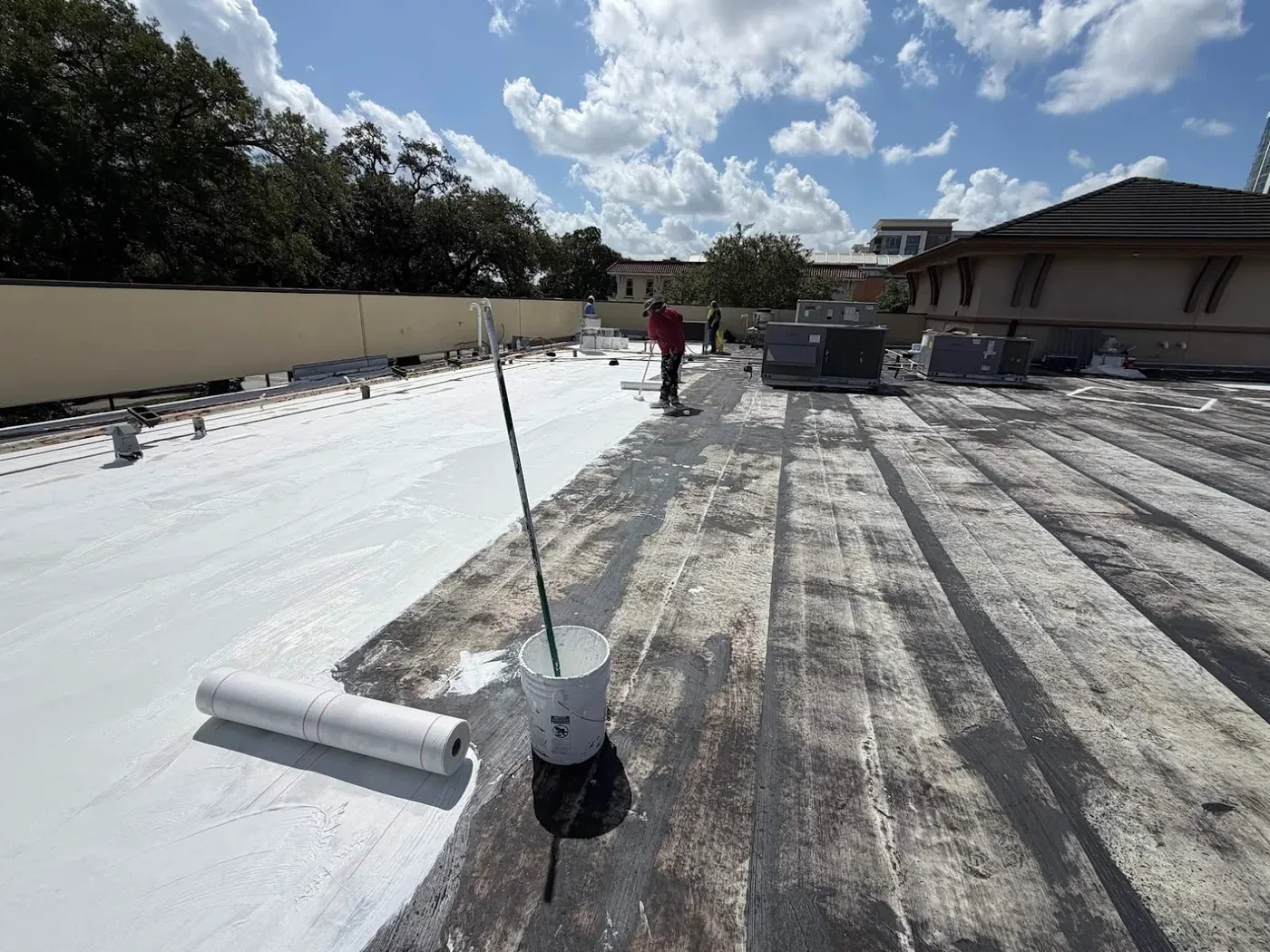
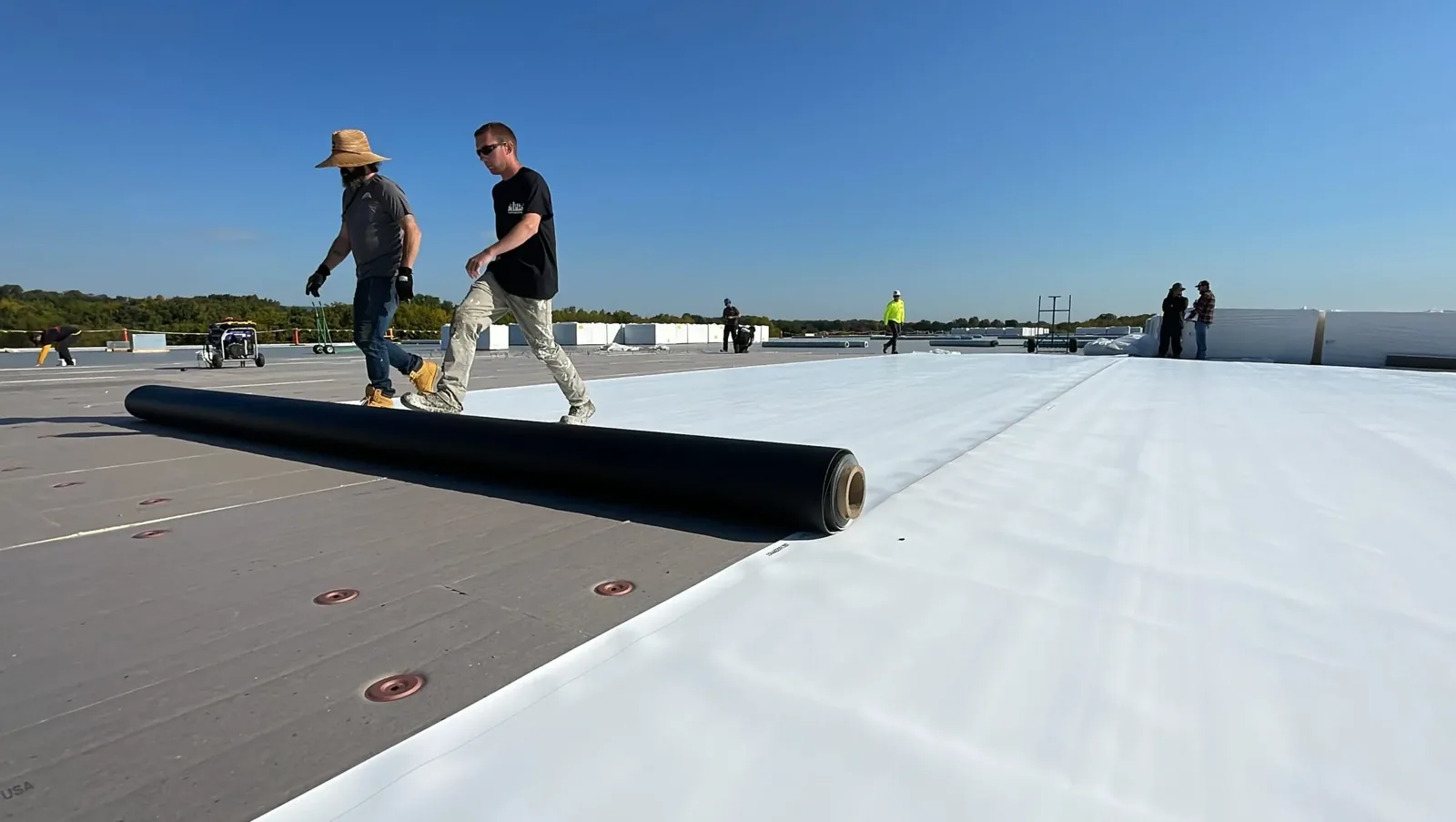
The owner's options follow the scan and the cores. A sound roof with a single damaged area gets a repair. A dry membrane with surface wear can take a coating restoration, which defers a tear-off by years. Widespread wet insulation points to replacement, and the proposal states both prices so the owner can weigh them. On a large roof the price turns on drains and curbs, perimeter length, the state of the deck and the crane or hoist, far more than on the sheet. Phasing is common: the worst sections go first, the rest is logged for later, and each phase is tied in so it sheds water alone. A facility director can use the resulting log to plan a capital year, answer a lender or brief a tenant.
Trucks, courts and the expressway
Large jobs bring large deliveries. Rolls of membrane, pallets of board and a crane need room, and the route in matters as much as the lot. The West Shore Expressway joins the Staten Island Expressway, one of the most congested roads in the city, and deliveries that miss the morning window can arrive in the afternoon with a roof already open. Material is scheduled early and sections are dried in before the crew leaves.
Neighbors on the same belt, Travis and Port Ivory, share the same truck routes.
A walk across the office roofs and the logistics roofs ends the same way: a dated list of what was found and what each fix costs. The list puts leaks over occupied floors first, drains that hold water second and cosmetic items last, so the owner can fund the work in the order that protects the building. Photographs are tied to the roof plan, and each repair is checked on the next visit. Where trucks and tenants share one court, the list also notes the access windows that suit each zone, so the schedule fits the day rather than fighting it.
Related Roofing Work
More roofing work that comes up alongside Bloomfield.
Commercial Roofing Questions
How many drains does a big flat roof need checked?
All of them, each season. We clear, photograph and log every strainer and sump, and we trace the overflow route, since a second path for water is what saves the roof when the first one blocks.
Can a roof over stored inventory be repaired without a shutdown?
Usually. Work moves in sections, each dried in the same day, and the crew sets protection under any area where the deck is open. Tarps and temporary covers go on before rain.
How do you tell an office roof leak from condensation?
A stain that appears after rain points at the roof. One that appears on humid days, or beside a duct, points at condensation, and we check the ductwork before pricing a roof repair.
Does a newer logistics building still need an inspection?
Yes. A recent building starts with a baseline: seam condition, drain function and edge attachment. The first log becomes the reference for every later walk.
What decides between a recover and a replacement on a large roof?
The moisture scan and the number of layers already on the deck. Dry insulation and one layer may take a recover, while wet insulation or several layers point to replacement.