
Built-Up Roofing in Staten Island, NY
Built-up roof repair, gravel resurfacing and replacement for older Staten Island industrial, retail and mixed-use buildings. Request a roof inspection.
A pitch pocket whose fill has shrunk away from its pipe, leaving a dark gap and a crust of grit, is the entry an inspector makes first on a built-up roof, because the small details give out before the felts do. Once a detail opens, wind, water and foot traffic go to work on the top defense of the roof, and the next hard sun bakes whatever asphalt is exposed.
Commercial Roofing Staten Island repairs, restores and replaces built-up roofs on the island, and the proposal sets another round of patching beside a new system so the facility director can compare the two over the next ten years.
How a built-up roof goes together
A built-up roof, or BUR, is made on the roof, one layer at a time. Plies of reinforcing felt are laid in hot asphalt or cold adhesive, usually three or four plies deep, and the top is finished with a flood coat of asphalt and a layer of gravel or with a mineral-surfaced cap sheet. Each ply adds redundancy, so a flaw in one layer is covered by the next.
Gravel earns its weight. It keeps the sun off the asphalt, pins the flood coat in place and adds some fire resistance, and where it is thin or gone the asphalt beneath bakes, dries and cracks. The system is heavy and labor-intensive, which is why newer roofs use single-ply sheets while many older roofs remain built-up.
Because the roof is made in place, its quality depends on the day it was laid. Felts set in cold or damp conditions carry voids, and a flood coat that was applied thin will craze early. An inspector reading an old roof is reading the weather of the day it was built as much as the weather since.
Where BUR fails first
Four spots give out first. The flashings at walls, where hot-applied base flashing has cracked and pulled away. The penetrations, where pitch pockets have dried and shrunk. The low spots, where water sits and the asphalt breaks down. And the surface itself, where the gravel has washed or blown away and exposed the felts to the sun.
Older industrial and commercial ground is where an inspector expects to meet a built-up roof. Richmond Avenue is Graniteville's main commercial strip, and a 1942 explosion at a fireworks plant on that avenue marks the area's earlier industrial use. In Charleston the Kreischer Brick Manufactory of 1854 was an early industrial site, and a 2002 broker estimate put about a third of the neighborhood in commercial and industrial use.
West New Brighton, whose original name was Factoryville, has Richmond Terrace along the Kill Van Kull, where several shipyards and tugboat companies operate. Waterfront industrial buildings take wind and spray that inland lots do not, and the first place that shows it is the flashing at the parapet return.
What goes in the inspection log
We start with the surface: is the gravel evenly spread or bare in patches, and is the asphalt under it dry and crazed? We probe blisters and ridges, check the flashing at every wall and curb and take a core where the roof history is unclear, to count plies and test the insulation for moisture.
- Bare spots, where exposed felts age quickly and need cover.
- Ridges and splits, where movement in the plies shows as a line across the roof.
- Base flashing, where stiff cracked material at a wall is the most common leak path.
- Pitch pockets, where dried-out fill around pipes needs rebuilding.
The core sample tells us how many layers are on the deck, and roofs with more than a few layers face limits on what can go back on top.
We also read the history of repair. Layers of mastic around a single curb show a detail that was wrong from the start, and the fix is a proper flashing, not another coat. We count the patches, photograph each one and note the date range so a facility director can see the pattern.
Repair, restore or replace
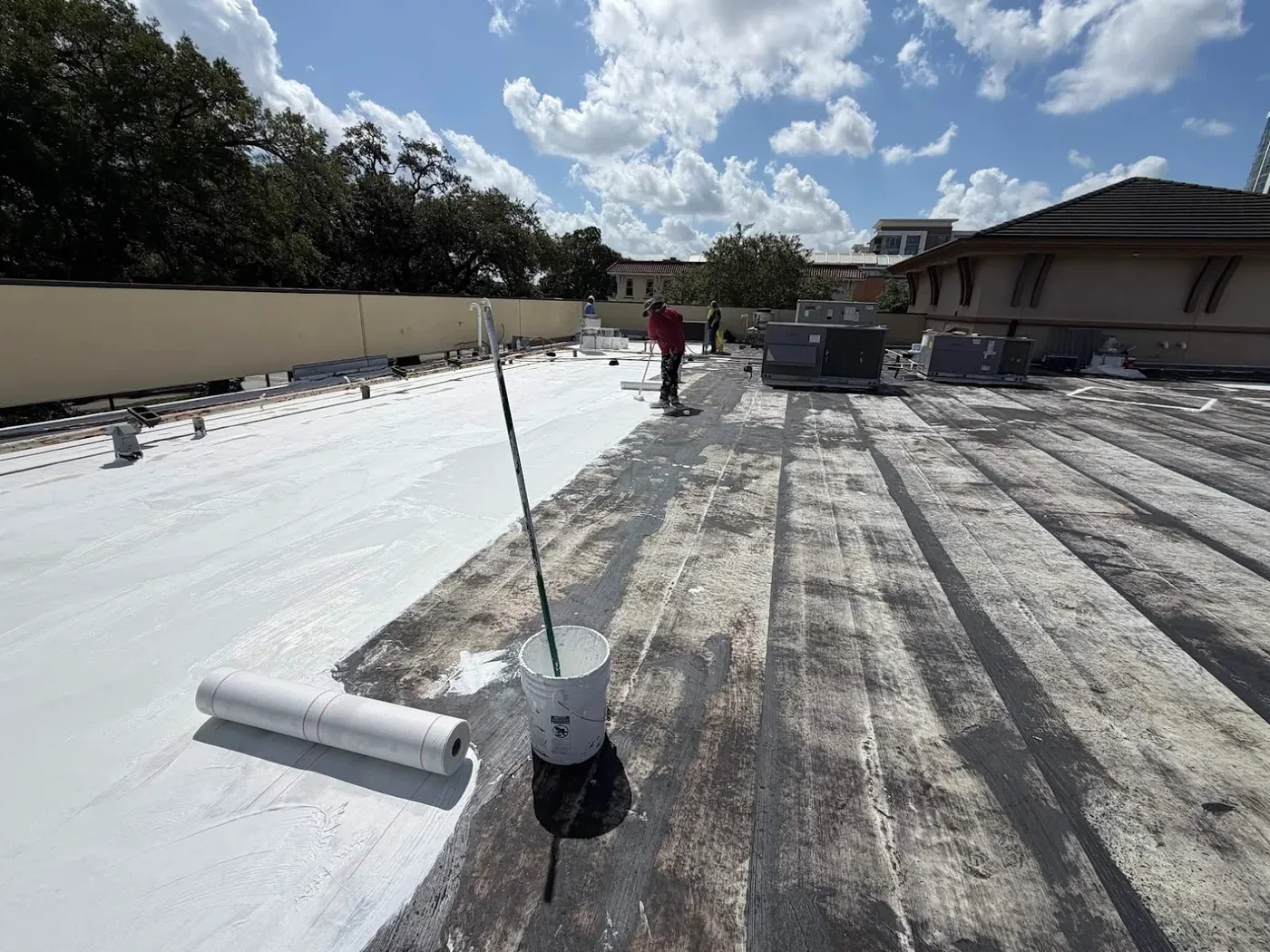
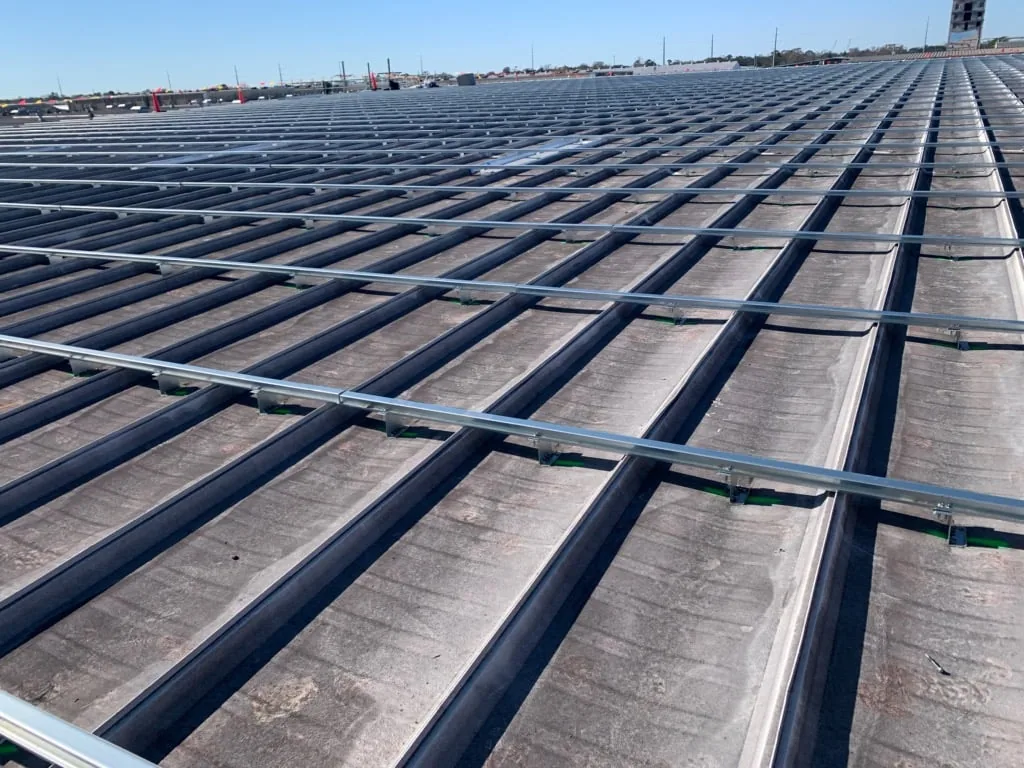
If the plies are sound and the damage is local, we patch the flashings, rebuild the pitch pockets and put gravel back on the bare areas. If the roof is aging but still dry, roof coating restoration can add years. If it has multiple layers, wet insulation or deep splits, we recommend a commercial roof replacement and discuss new systems.
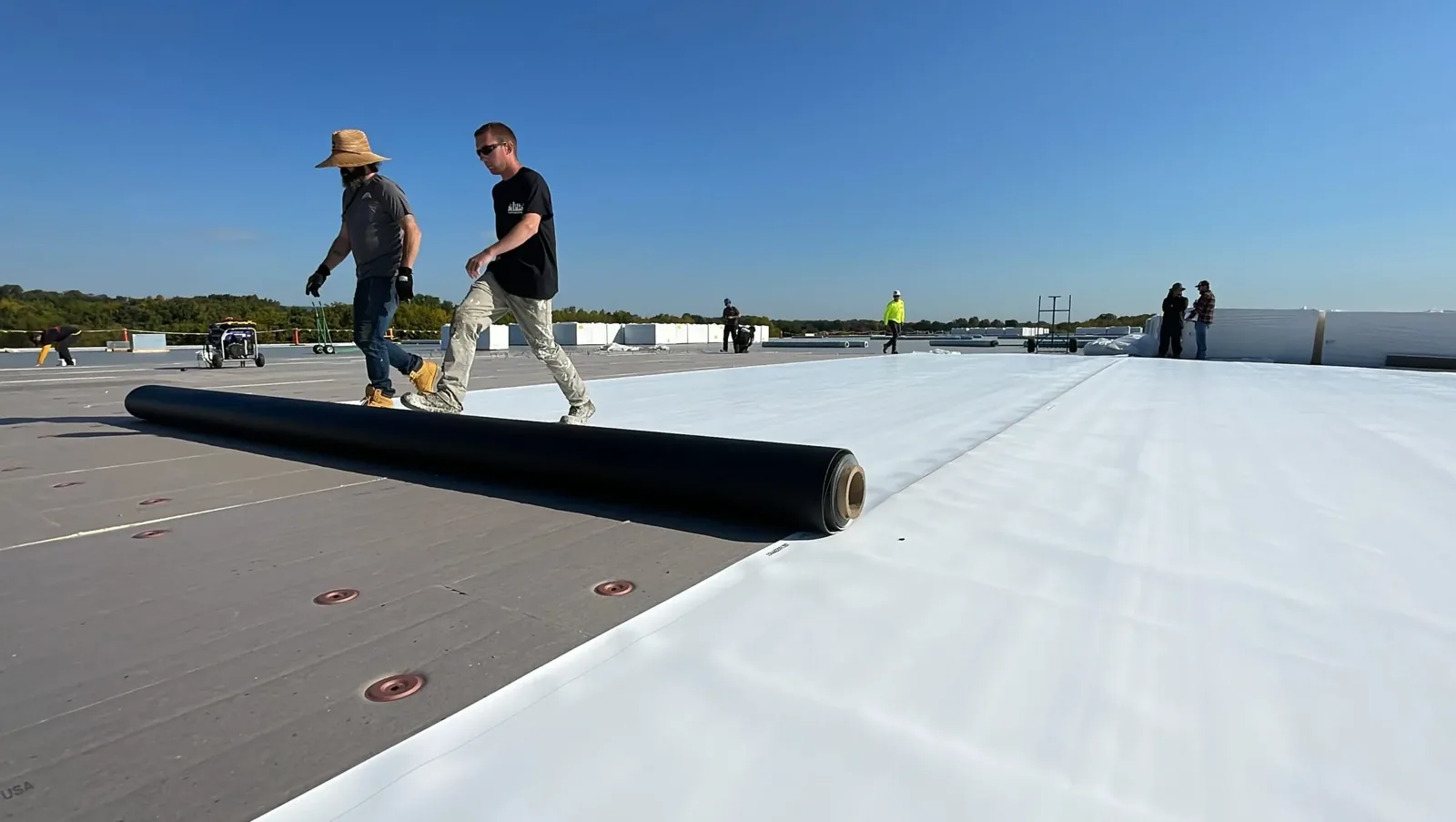
Replacement options include modified bitumen, which keeps the layered logic of BUR in a lighter, easier-to-repair form, and single-ply sheets such as TPO, which go down faster and weigh less. A roof with limited structural capacity favors the lighter options, and we ask for load information before we quote.
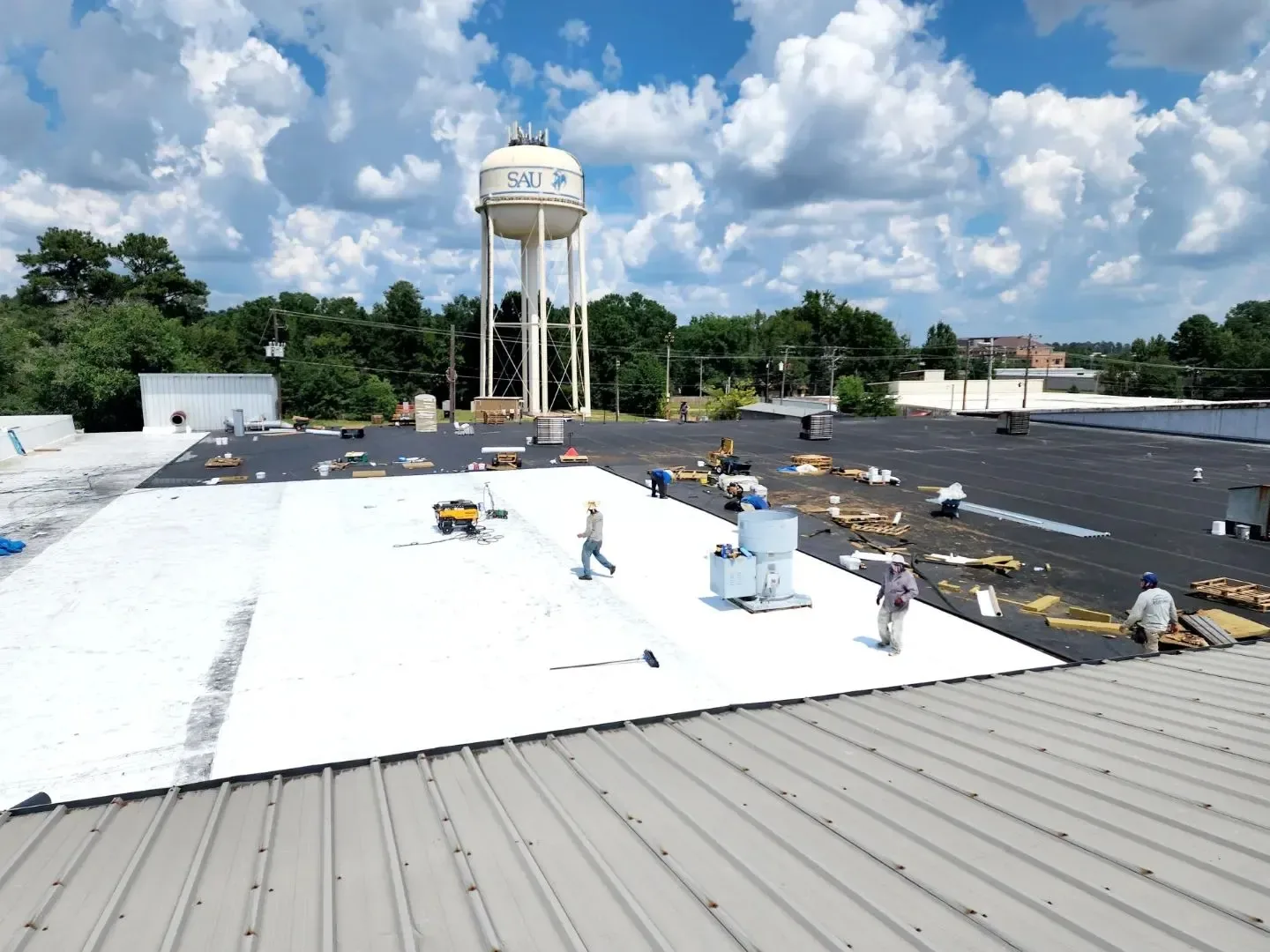
One more option applies to a dry, sound built-up roof: a new single-ply membrane over a cover board, which skips the tear-off. It saves disruption but adds weight and depends on a clean moisture survey, so a roof recover belongs in the proposal only when the survey says the layers underneath are dry.
Gravel, wind and snow
Gravel moves with the wind, and after gusts like Sandy's 80 mph in October 2012, a built-up roof near the shore loses stone from the edges and corners first, where uplift is strongest. After any big blow we walk the perimeter and re-spread displaced stone, because a bare corner is the start of a lifting edge.
Snow loads a heavy roof further. The city averages about 29.8 inches of snow a year, the single-day record is 27.3 inches from January 23, 2016, and a built-up roof with gravel and several layers carries real weight before the snow arrives. Ponding after the thaw is the second thing we check.
Price follows the layers to remove, the weight of gravel to haul, the deck underneath, the method chosen and the count of flashing details. Tear-off of a heavy gravel roof is a labor line, and a recover or restoration avoids it, which is why we price all the routes side by side.
Tear-off, hot work and trucks
Built-up roofs come off in layers, and tear-off brings noise, dust and weight. Debris goes down a chute into a covered container, gravel is swept and bagged to keep it out of drains, and where hot asphalt is used the kettle sits on a protected area clear of air intakes with a fire watch after the work.
Hot asphalt wants dry weather above freezing, so built-up work is best scheduled from spring through fall. Deliveries are timed to the morning, and a building along Richmond Avenue or in Graniteville starts with the roof plan and the leak history, with a commercial roof inspection returning before the next storm season.
Closeout covers a ply schedule, photographs of every flashing and the gravel specification. A built-up roof is repaired many times in its life, and the next repair is faster and cheaper when the file shows what is on the deck.
Related Roofing Work
More roofing work that comes up alongside Built-Up Roofing.
Commercial Roofing Questions
How long does a built-up roof last on the island?
It varies with ply count, maintenance and drainage. A roof kept free of ponding and covered with gravel can run for decades, while one with bare spots and clogged drains fails far sooner.
Can a gravel roof be coated?
Sometimes, if the plies are sound and the insulation is dry. We clear loose gravel, repair flashings and apply a coating made for the surface.
What does a blister mean?
Air or moisture is trapped between plies. Small intact blisters can be watched, and broken ones should be cut out and patched.
Why do old BUR roofs get so heavy?
Gravel, multiple plies and sometimes a second roof laid over the first all add weight. Before any new layer goes on, the structure is checked for capacity.
Is hot asphalt allowed on an occupied building?
It can be, with controls on the kettle, a fire watch and care around intakes. Many owners choose cold-applied or torch-free systems instead.