
Commercial Roofing in Stapleton, Staten Island, NY
Commercial roof repair, inspection and replacement in the Stapleton district of Staten Island, NY: waterfront apartments and older Bay Street buildings.
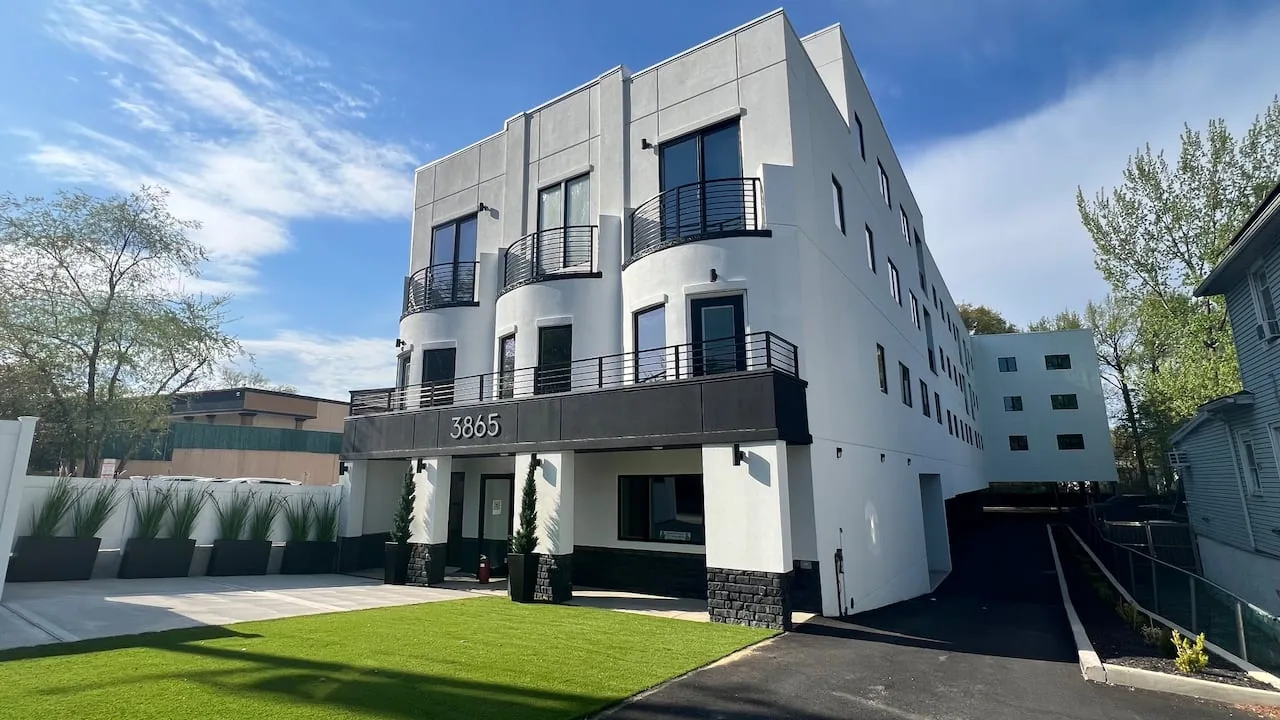
Newer apartment buildings on a redeveloped waterfront site and older commercial buildings along Bay Street call for two kinds of inspector, and in the Stapleton district of Staten Island, NY the same crew has to be both. Commercial Roofing Staten Island repairs, restores and replaces low-slope commercial and multifamily roofs here, and each job begins with the question of how old the roof really is, since the building around it may say little about the membrane above.
Stapleton rewards a patient walk. A residential complex of 900 apartments opened in 2016 on a former homeport site, a mixed-use project was announced for the land beside it, and Bay Street holds the older commercial stock. Every one of those has a different roof story, and we read each one separately.
From city piers to new apartments
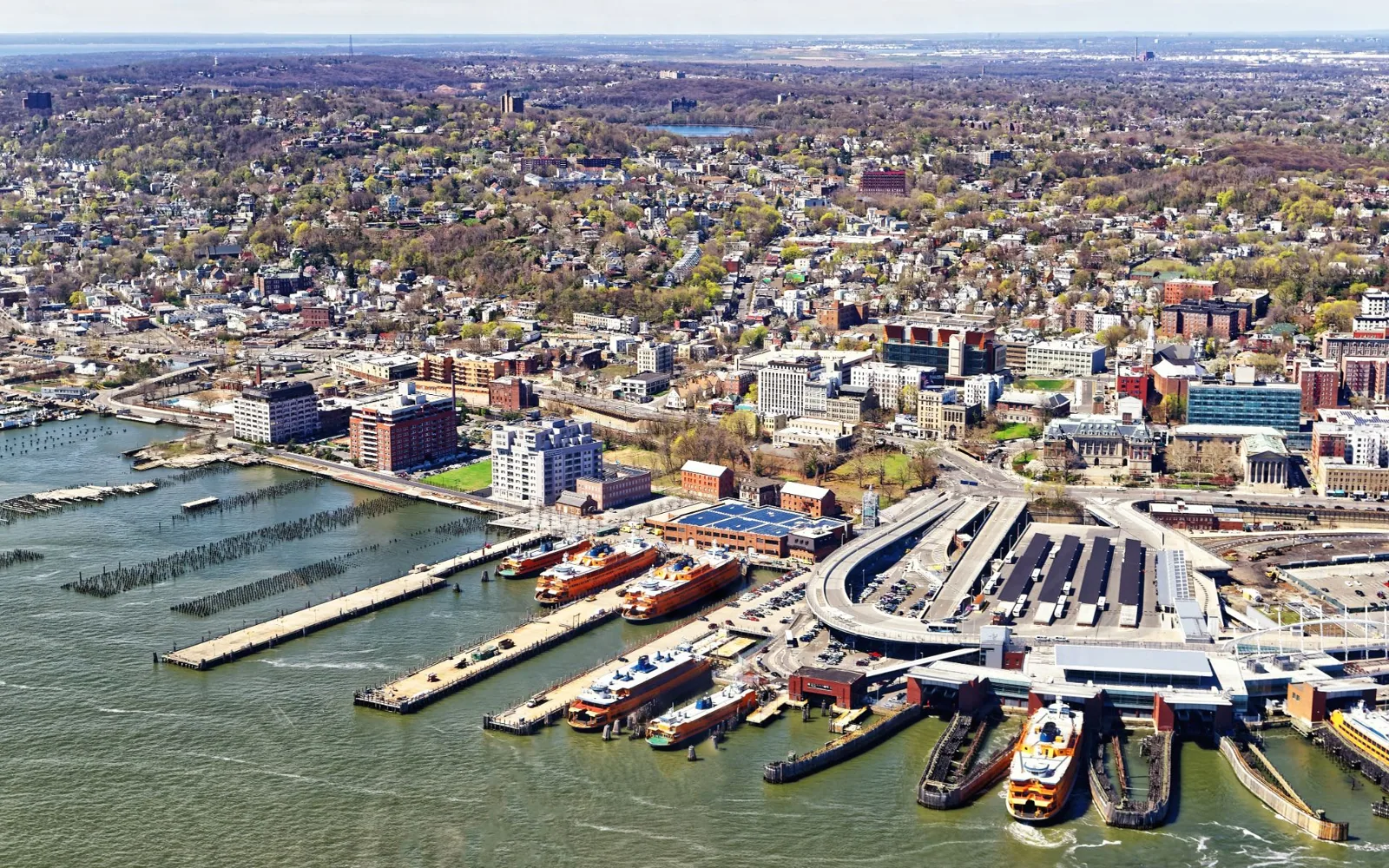
The city put up Stapleton's waterfront piers in 1920, and from 1937 to 1942 they housed the country's first Foreign Trade Zone. By the 1970s most of the piers were gone, and a plan the city approved in 2006 turned the 36-acre former homeport site into new development. Urby, a 900-apartment complex, welcomed residents there in 2016, and a 500-apartment mixed-use project has since been announced on the neighboring land.
For a roofer, that history means a district with recent construction beside older buildings. Newer low-slope roofs have different problems from older ones: poorly sealed penetrations, drains placed for the drawing and not for the weather, and rooftop equipment added after the sheet was laid. Which system sits on each building is settled by a walk, a moisture scan and a core cut.
What the inspector sees on a multifamily roof
Residential roofs carry things that office roofs do not: bathroom and kitchen exhaust, vent stacks, satellite mounts and often a terrace or amenity deck. Each is a penetration or a loaded spot. On a newer roof the first notes are usually a pipe boot with a split collar, a rooftop unit curb with dried sealant and a drain strainer packed with debris.
A stain on a top-floor ceiling is the resident's report, and it rarely marks the spot. Water travels along the deck, enters a wall cavity, and appears several feet from the break. We trace it from the stain upward and sideways, then confirm with a moisture scan. Our apartment roofing work follows that sequence, because residents deserve a dry ceiling and a clear answer about the cause.
Terraces and amenity decks add a layer of their own. Pavers on pedestals, planters and railings sit on the waterproofing, and a leak below one may require lifting the pavers to reach the membrane. We note every deck in the log with its drains, and flag any planter that sits on a seam.
Older commercial buildings on Bay Street
The Paramount Theater on Bay Street, which stopped operating as a concert hall in the late 1980s, is one example of the older stock along the street, the kind of older building where a parapet or cornice wants careful attention. Older commercial roofs fail at the same places the newer ones do, but with more layers to read. A core cut can find three generations of material stacked on the deck. When that is the case, a recover is rarely wise, and the proposal compares a partial tear-off with a full replacement and prices each. Change-of-use is common in buildings like this, and the new tenant's equipment is often the origin of the leak.
Storm and winter checks
Sandy's surge on October 29, 2012 climbed nearly ten feet over normal tide at the island's northern tip, with gusts reaching 80 mph. How that storm treated any single roof here is for the inspection to establish, and it looks for the usual signs: lifted edge metal, displaced ballast where there is any, and drains that backed up.
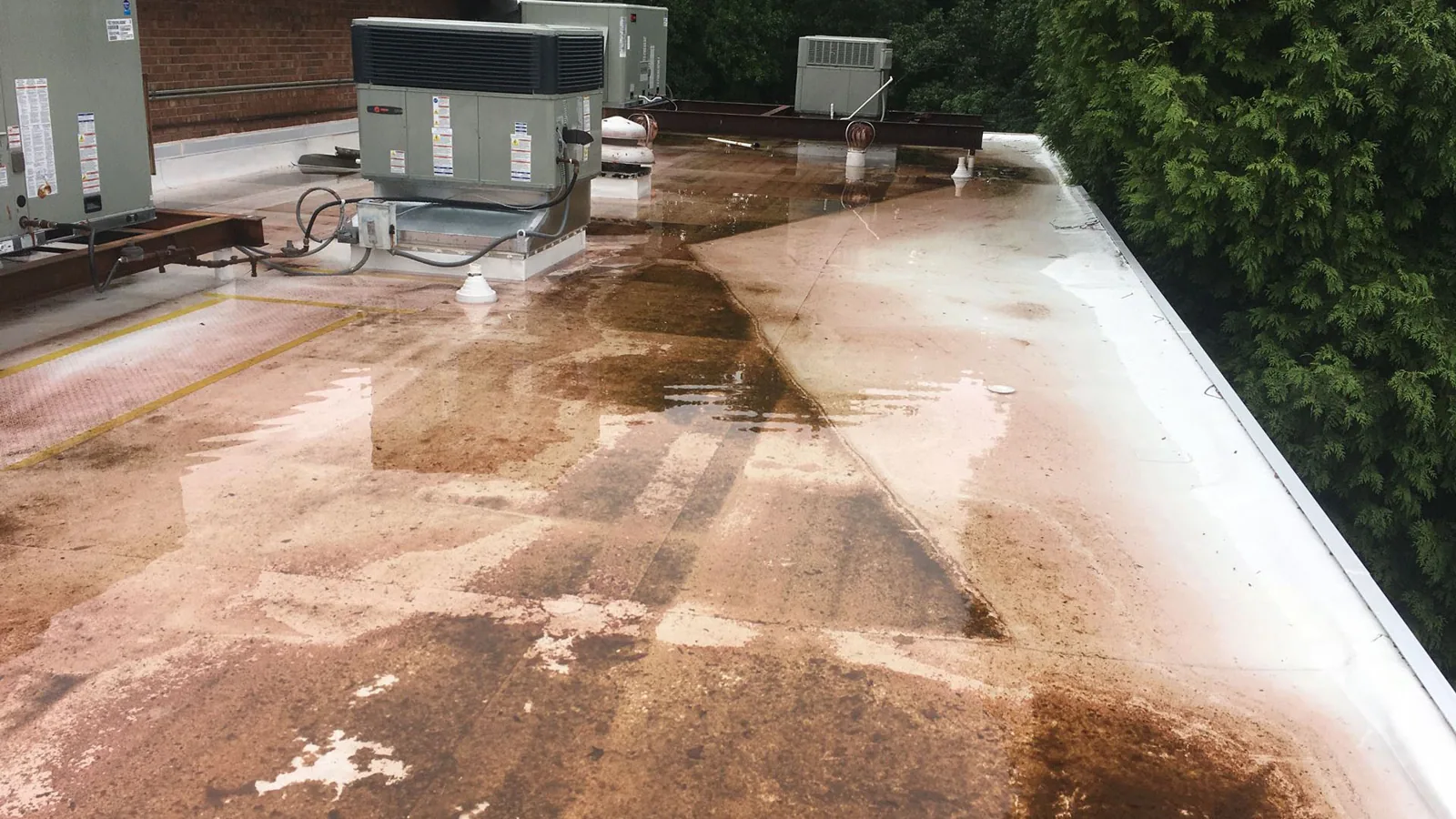
Snow and ice make a slower claim. Snowfall across the city runs near 29.8 inches in an average year and hit 27.3 inches on January 23, 2016, and a roof with ponded seams near its drains is the one that shows damage after the thaw. The ponding water repair routine measures standing depth after rain, since the cause (a settled deck, a clogged drain or a missing cricket) decides the fix.
Options and what drives cost
A repair suits a sound roof with local damage. A coating restoration suits a dry membrane with surface wear. A replacement suits a roof where the insulation has gone wet or the layers have outlived their service. A moisture survey tells which of the three applies, and the price follows the details: how many penetrations, how long the parapet runs, what lies behind the flashing and how the crew reaches the roof.
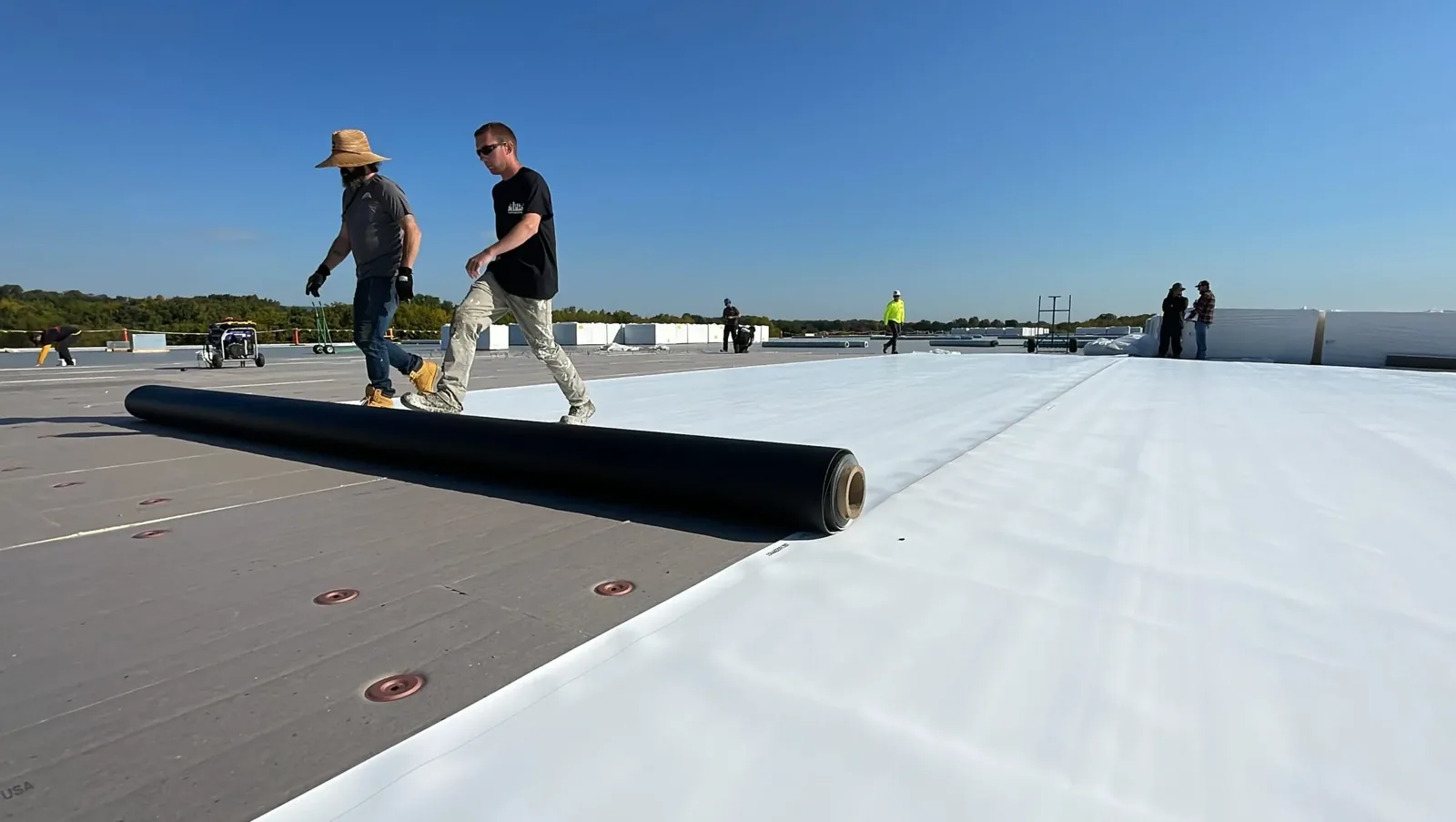
On a multifamily building, the schedule matters as much as the scope. Residents are home, balconies sit below the work, and noise rules apply. We plan sections that can be dried in the same day, and notice goes out before the loud steps.
Residents, staging and the calendar
Staging for a waterfront complex differs from a street-side brick building. A large open site may allow a truck court and a crane, while a street-side building means hoisting from the curb with a permit. Neighboring work in St. George and Tompkinsville follows the same approach, with deliveries early and material kept on the roof until it is used.
Timing follows the weather window as well. Membrane work wants dry mornings. Spring brings the most rain and snowmelt of any season, and the city's annual precipitation totals about 49.5 inches, so spring projects are fitted to forecast dry windows with temporary protection ready.
What goes in the log
The log pairs a marked roof plan with photographs, scan results and a ranked list of repairs, each with its reason. A property manager can hand it to a board, an insurer or a lender, and compare it year to year.
When a new roof or repair goes in, the closeout walk adds the new seams, the reset edge metal and the cleared drains to the same pages. A manager who inherits the building next year reads the same record, sees what changed, and knows which items were left on the can-wait list and why.
Related Roofing Work
More roofing work that comes up alongside Stapleton.


Commercial Roofing Questions
Does a newer apartment building still need a roof inspection?
Yes. Newer roofs carry the most penetrations and the most rooftop equipment, and boots, curbs and drains can fail early. An inspection that records the starting condition gives the owner a baseline to compare.
How do you trace a top-floor stain to the roof?
We start at the stain, trace upward and sideways along the deck, and confirm with a moisture scan. Exhaust ducts and condensation get checked as well, since they cause stains that a new membrane would not cure.
What changes when a building has been reroofed before?
The number of layers. A core cut counts them, and layers that are wet or fastened badly change the choice from a recover to a tear-off.
Can work happen while residents are home?
Roof work above living units goes ahead in short sections with notice posted ahead of time. Loud steps move to hours the manager approves.
What does a replacement cost compared with a restoration?
A restoration costs less when the roof is dry and sound underneath. A replacement costs more but resets the roof. The scan and the core cuts tell which one applies, and the proposal prices both.