
Roofing for School Districts in Staten Island, NY
Roofing for school districts in Staten Island, NY: summer-window schedules, bid-ready scopes, building-by-building logs and child-safe site rules.
A gym roof with a pond that has outlasted three rainstorms, a ceiling tile stained brown above a second-grade classroom, a roof hatch whose key nobody can find: a school district's roof file is a list of rooms where children spend the day. Commercial Roofing Staten Island works with school districts and charter and private operators on the island, and our reports, scopes and schedules are written for a facilities director who answers to a board, a budget cycle and a building full of children. The roof that matters most to a district sits over the room that cannot be closed.
The summer window and the rest of the year
School roofs are replaced in summer. The window runs from the last day of classes to a week before opening, and it is short. A roof that cannot be finished in that window is staged in sections across two summers, with the first section dried in and the second planned and ordered. Weather decides whether a section finishes, so the schedule builds in float and names a rain plan.
The rest of the year is for inspection, repair and planning. Fall walks clear drains and check flashing before the heating season. Winter repairs are temporary. Spring walks set the next summer's list, and the scopes go out for bid in time for material orders. A district that bids in May for a June start finds itself without time to buy membrane. Lead times for insulation and single-ply sheet, and for the crane and crew, run longer than the days between award and the last bell, so the bid goes out in early spring with the material order planned in the same week.
Different roofs in one district
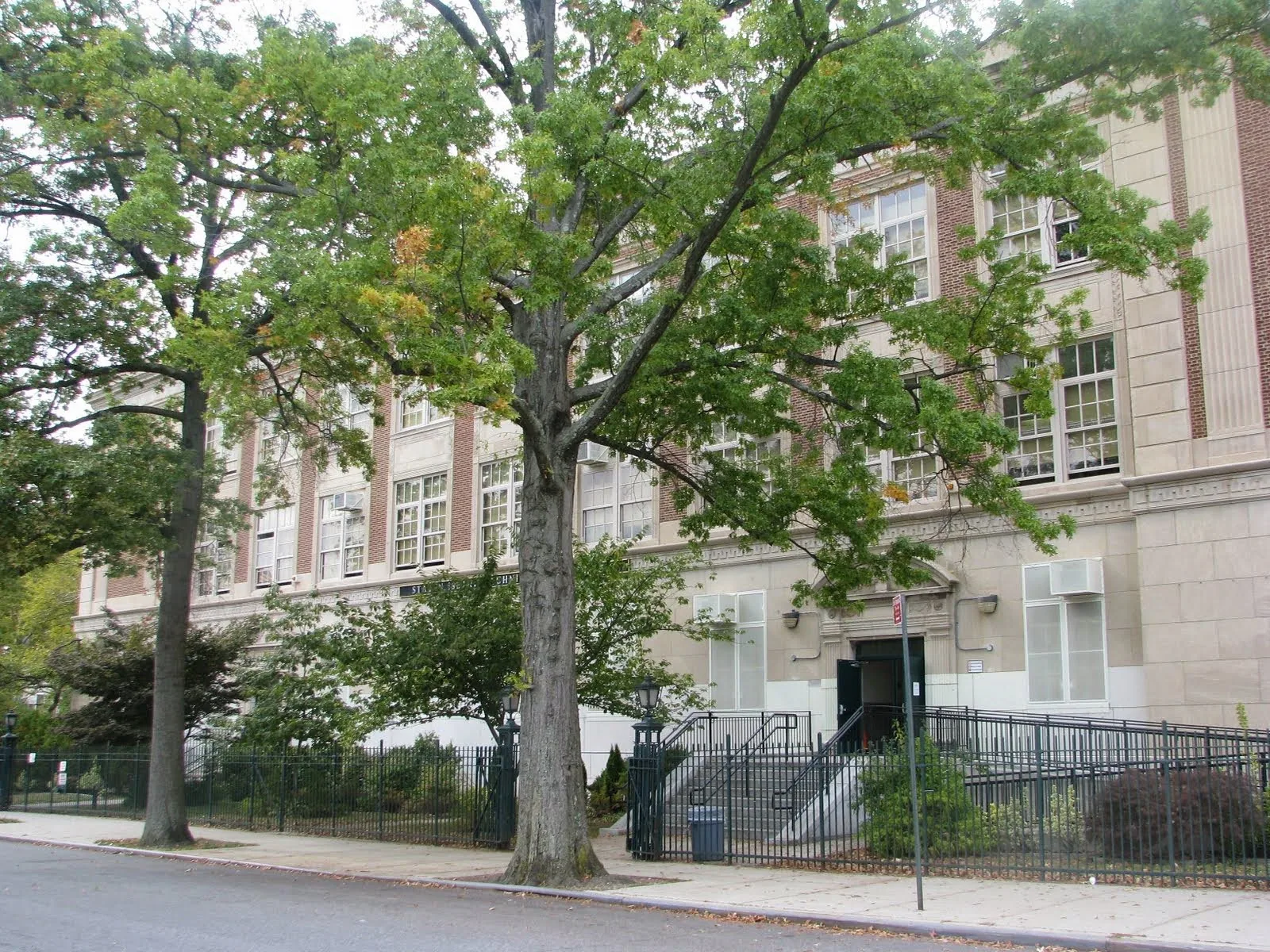
A district's buildings span eras. Older multi-story brick schools have flat roofs behind parapets, gyms and auditoriums have wide spans, and newer additions use single-ply or metal systems. Portable classrooms, bus depots and administration buildings add more. The Yukon Bus Depot in New Springville, opened in the early 1980s, can accommodate 380 buses, a reminder that district property includes large service buildings with their own roofs.
Each building gets its own entry in the log with photographs, a rating and a ranked list. The facilities director sees at a glance which schools carry the highest leak risk and which have years left. School roofing applies this approach building by building, and the district summary rolls them up.
Children, noise and site safety
Summer programs, sports camps and custodial crews still use school buildings. Roofing crews work with fenced work zones, controlled entries and separated routes, and no material is lifted over occupied areas. Noise is limited near summer classrooms, and dust and fumes are kept away from intakes.
If the work extends into the school year, the safety plan tightens: pick-up and drop-off routes, play yards and entrances are protected, and loud steps are scheduled for after dismissal. Background checks and access forms for crew members are filed before the first day, and the principal gets a contact for each shift. Occupied building reroofing rules fit a school with a few extra constraints.
The spring walk and the summer list
The spring walk is the most important visit of the year for a district, because it decides the summer list. We cross each roof in the same order: drains first, then penetrations, curbs and rooftop units, then the field for blisters, open laps and soft spots, then the perimeter flashing and parapets. A moisture scan follows on roofs with leak history, and core cuts confirm what the scan suggests.
The result is a ranked list of schools with prices. The top of the list gets full scopes for bid, the middle gets temporary repairs that buy a year, and the bottom is watched. The facilities director can show the board why one school is on the list and another is not. Because public agencies of every kind need this transparency, the report is written in plain terms with photographs, so a trustee who has never been on a roof can follow it. Items that cannot wait for summer, such as a leak over a cafeteria, get temporary protection the same week.
Old roofs, testing and what comes off
Older school roofs can contain materials that require testing and controlled removal before tear-off. Testing results guide the work, and the scope names the approach. Where a recover is possible, leaving the old roof in place avoids disturbing those materials, provided the insulation is dry and the deck can carry the weight.
Scans and cores decide it. A moisture scan finds wet insulation, and cores confirm what is under the membrane. If the roof is sound, a recover over a cover board is the usual choice. If it is wet, sections come off under the district's abatement or testing plan. Roof recover and overlay work is often the best fit for a summer window because it avoids heavy tear-off.
Bids, budgets and the capital plan
Public school work is put out to bid, and a scope that bidders cannot compare invites confusion, protests and change orders. We prepare scopes with quantities, details, unit prices and alternates, written to the district's format. Repair items, recover options and replacement options appear as separate lines, so a board can approve some now and hold the rest.
The capital plan spreads replacements across years, with each roof assigned a year based on condition and consequence. Roof capital planning turns the log into a schedule and a funding request. Photographs and cores support the request in front of a board or a funding agency, and the same record supports insurance reviews. A short one-page summary lists each school, the roof age, the rating, the next action and the year, so a trustee can read it between agenda items. When funding arrives late or is cut, the ranked list shows what can move to the next year without raising risk to a classroom.
Storms, snow and drains on large flat roofs
Sandy's floodwater took blocks of houses from Midland Beach, New Dorp and Oakwood Beach in October 2012, with gusts of 80 mph, and Ida's rain set off a flash flood emergency in September 2021. Snow adds weight, since New York City averages 29.8 inches a year and received 27.3 inches on January 23, 2016. Gym and auditorium roofs with few drains are the first to pond, the same way a church hall or a recreation center roof does, and the general contractors who bid renovation work around them need the roof condition in hand before they price. Fall walks clear drains and note ponded seams, and storm walks follow any hard event. Nearby New Dorp and Tottenville schools use the same checks.
Related Roofing Work
More roofing work that comes up alongside School Districts.
Commercial Roofing Questions
Can a school roof be replaced in one summer?
Often, if the bid is let early and the weather cooperates. Large roofs are staged over two summers with the first section dried in.
When should we bid summer work?
Early in the spring, so materials can be ordered and the schedule fixed. A late bid leaves no margin for delivery delays.
How do you protect children during summer work?
Fenced zones, controlled entries and no lifting over occupied areas. Dust and fumes are kept away from intakes.
What if older roofing needs testing?
Testing results guide the plan. A recover can avoid disturbing old layers when the insulation is dry.
What does the board receive?
A log for each building, a ranked list and a capital schedule, all with photographs and prices.