
Roof Capital Planning in Staten Island, NY
Roof capital planning for Staten Island owners: replacement timing, multi-year budgets, repair-versus-replace math and phasing for retail and industrial roofs.
An inspector's note that reads remaining life three years against a capital budget that reads zero is the line a facility director most needs to see in January, because roofs do not fail on budget cycles. A roof that is cheap to repair today becomes an emergency in two winters, and the choice of when to replace it is worth far more than the choice of how.
Commercial Roofing Staten Island builds roof capital plans for owners and managers on the island, with replacement years, price ranges and phasing laid out so the finance side can see the roof bill coming and the facility side can pick the order.
What a capital plan contains
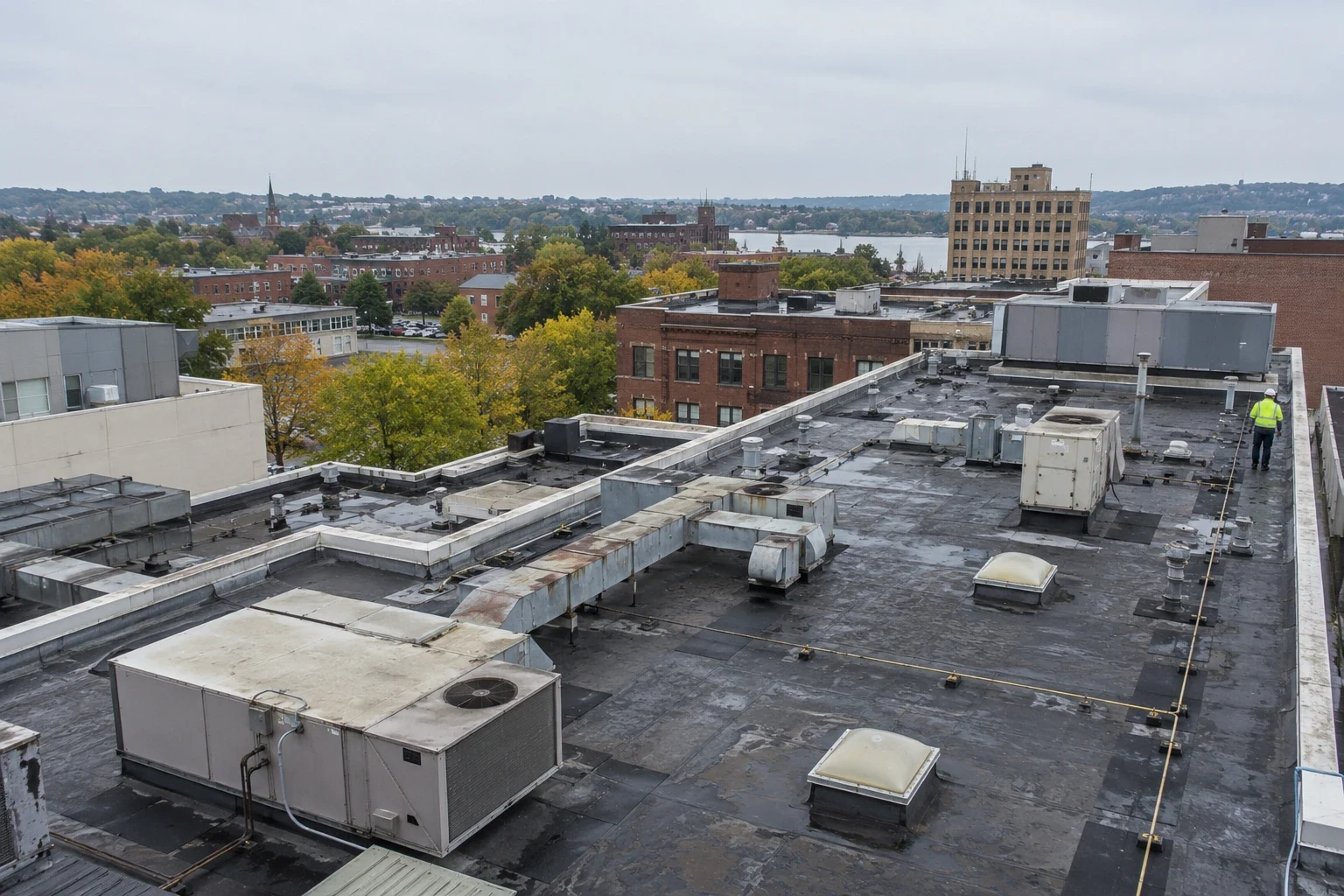
A plan starts with the register: every roof section with its system, age, area and condition. It adds an expected remaining life for each, with the evidence behind it, and a replacement year. It prices each replacement as a range, since the exact number depends on what is found when the roof is opened. And it sorts the work into years, so no year carries an impossible load and no roof is replaced before it needs to be.
The plan also carries the interim costs: the repairs that keep a roof alive until its year. Those are real money, and they belong beside the replacement figures, since a roof with a long repair tail may be cheaper to replace sooner. The plan shows both curves.
Price ranges are built from the roof, not from a rule of thumb. We use the area, the system a roof is likely to receive, the insulation that will be needed, the number of penetrations and curbs, the access and the disposal weight of what comes off. The range is wide when the roof is unknown and narrows after the core cuts, and we say which end each number sits at.
Where timing matters on the island
Timing matters most for owners with large roofs that cannot be replaced in a weekend. Large roofs belong to the West Shore, where most of the island's industry sits, and Bloomfield's Matrix Global Logistics Park there began serving companies including Amazon and Ikea in 2018. Retail owners on Hylan Boulevard and Richmond Avenue face a different calendar, since tenants and holiday seasons limit the months a roof can be open.
Newer construction still enters the plan. The Staten Island Mall was expanded between 2016 and 2019, and the 900-apartment Urby complex opened in Stapleton in 2016. Together they show that an island portfolio mixes ages, and a plan that treats all roofs as the same age will mistime the replacements.
Tenant calendars shape the plan. A retail owner avoids the holiday months, a school-adjacent property avoids the school year and an industrial owner schedules around peak shipping, so the plan names the windows for each roof and does not assume any month is open.
How we estimate remaining life
Remaining life is an estimate, and we show the work behind it. We start with the system and its age, then adjust for condition: the seams, flashings, drains and surface we found on the walk, the moisture we measured and the number of layers we counted. A roof that has been maintained and has dry insulation earns more years than one with ponding and wet cores of the same age.
- System and age, from records or cores.
- Condition rating and the defects behind it.
- Moisture, since wet insulation shortens every other estimate.
- Exposure, because a shoreline roof ages faster than a sheltered one.
The range is stated. A roof rated three to five years is planned for year three and checked each year, and the plan moves it if the roof earns more time.
We also record why a rating moved. If a roof slipped from watch to repair soon after a winter, the log says what changed, and that history is how estimates get better over time. A plan that never explains its changes is a plan nobody trusts.
Repair, restore or replace in the plan
The planning question for each roof is which of three paths costs least over the next ten years. Repair keeps a roof going at low cost until its failures multiply. Restoration, through roof coating restoration or a roof recover, extends a sound roof by years at a fraction of replacement. Replacement, through commercial roof replacement, resets the clock.
The plan compares the three for each roof with real numbers, and sometimes the answer is to replace a roof earlier than its rating requires, because phasing replacements across years is cheaper than facing three at once. It also marks roofs where restoration is still possible and will not be in two years.
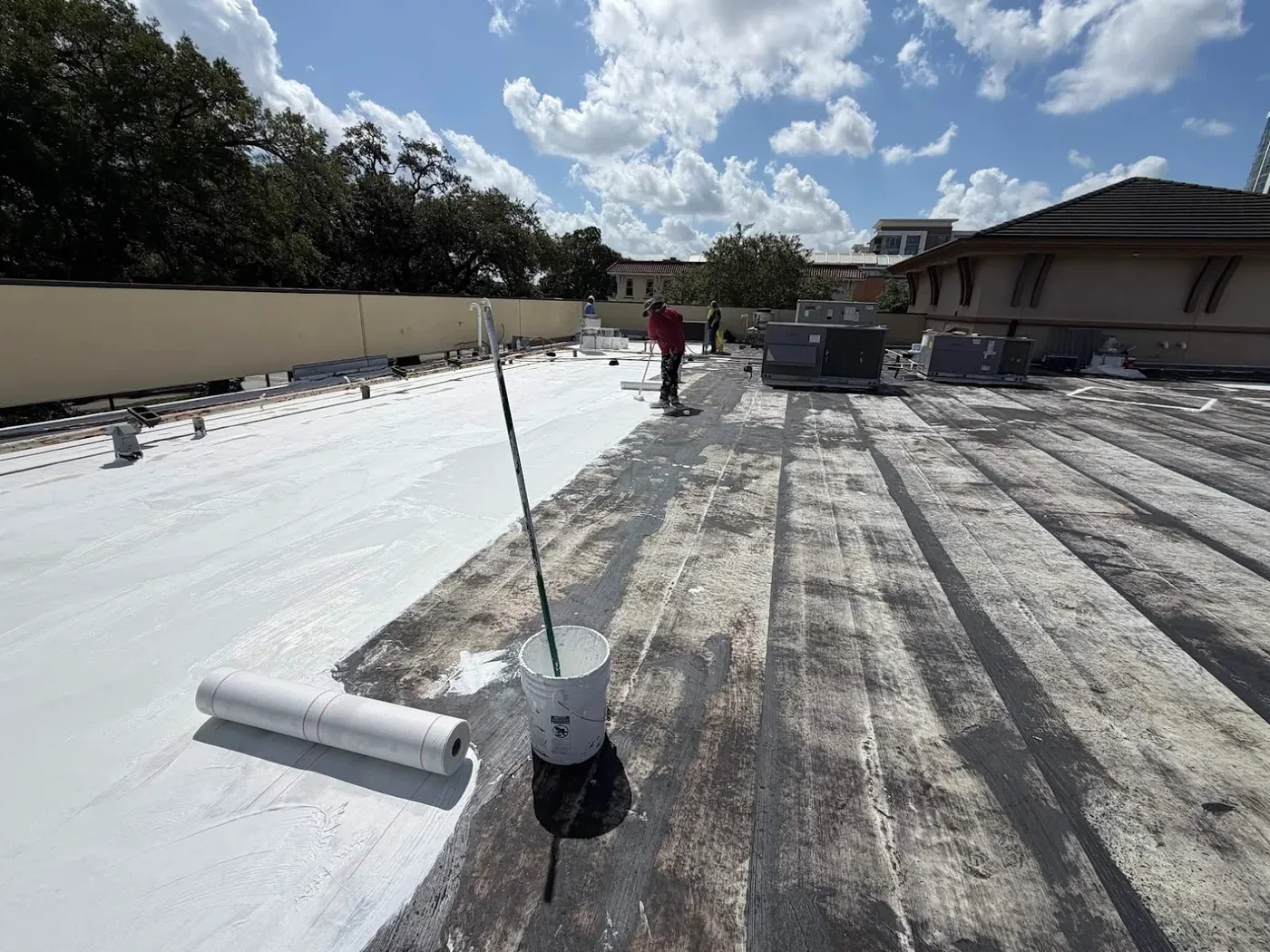
Phasing is the big lever. Replacing a large roof in two seasons, bay by bay, spreads the cost and keeps the building running, and replacing several small roofs in one mobilization saves crew time. We lay out the options as schedules with costs, so the owner can pick by cash flow and not by guess. The multi-site roof programs approach scales the same logic across many buildings.
Reserves for weather
A plan carries a storm reserve. A budget with no room for a storm like Sandy, with its 80 mph gusts, or a downpour on the scale of Ida's flash flood emergency turns one bad night into a deferred replacement.
Winter belongs in the plan too. With citywide snow averaging out at about 29.8 inches yearly and 27.3 inches landing on January 23, 2016, drain work and structural checks come ahead of surface work on roofs that drift. We sort the roofs by exposure so the shoreline and the long spans come first.
A good reserve is sized to the portfolio, not to a rule. A shoreline roof with a history of edge trouble carries more reserve than a sheltered inland one, and the plan says so.
What goes in the log
The planning file holds the register, the evidence behind each remaining-life estimate, the price ranges, the year-by-year schedule and a log of changes. Each annual walk updates it, so the plan stays accurate as roofs age faster or slower than expected. A lender or a board can read it in an hour.
Replacement years are tested against the 2022 NYC Construction Codes, which the Department of Buildings issues, so filings can be budgeted. For owners in Stapleton and elsewhere on the island the building list is the starting point, and the plan builds on roof asset management and ties into roof condition reports for the evidence.
Related Roofing Work
More roofing work that comes up alongside Roof Capital Planning.

Commercial Roofing Questions
How many years should a roof plan cover?
Ten years is a common span. The first five are firm, and years six to ten are estimates that each annual walk tightens as the roofs age.
Can a plan help with lender or board approval?
Yes. A plan with evidence, price ranges and a schedule is something a lender or a board can read and approve, and the log shows how the numbers were built.
What if a roof fails earlier than the plan?
The plan moves it up and we show what moves later. A storm reserve covers the emergency.
Is it cheaper to replace roofs in phases?
Often, because crews, materials and budgets spread out. Replacing several roofs at once can cost less per roof, though, so we price both.
Do you include repair costs in the plan?
Yes. Repairs that keep a roof alive until its year are part of the total cost.