
Roof Condition Reports in Staten Island, NY
Written roof condition reports for Staten Island owners: photo-backed findings, moisture maps, ratings and ranked repair lists for lenders and insurers.
A line in an inspector's notebook that reads ponded seam at drain four, northeast corner, photo fourteen, is the smallest unit of a roof condition report, and a good report is built from a few hundred such lines that a stranger could follow back to the roof. The difference between a report and an opinion is that a report can be checked: every finding has a place, a picture and a recommendation.
Commercial Roofing Staten Island writes roof condition reports for owners, lenders, insurers and buyers on the island, and we write them so a facility director can hand them to anyone and be understood without us in the room.
What a report contains
A report opens with a summary a busy reader can finish in a page: the roof, its system and age, its overall rating, the three things that matter most and what they cost. Behind the summary sit the sections: a roof plan with every finding numbered, a photograph for each finding, a description in plain terms, a rating and a recommended action with a priority.
Test results follow: moisture scan maps, core cut logs with layer counts and thicknesses, seam probe results and coating adhesion tests where they apply. The last pages carry the cost ranges, the repair sequence and the limits of what was seen, such as areas we could not reach. A report that hides its limits is a report nobody should rely on.
Ratings are defined in the report itself. Sound means no action beyond routine care. Watch means a defect is present and should be rechecked on a set date. Repair soon means water will find the defect within a season. Replace means repair no longer pays. Because each rating has a written meaning, two readers looking at the same roof reach the same conclusion, and that consistency is what lets an owner compare a dozen reports side by side.
Who reads these reports
Owners read them to budget. Lenders read them to size reserves. Insurers read them to price a policy or settle a claim. Buyers read them to decide whether a roof is a bargain or a bill. Property managers read them to answer boards and tenants. Each reader looks for something different, so the summary is written for the least technical one and the appendices are written for the most.
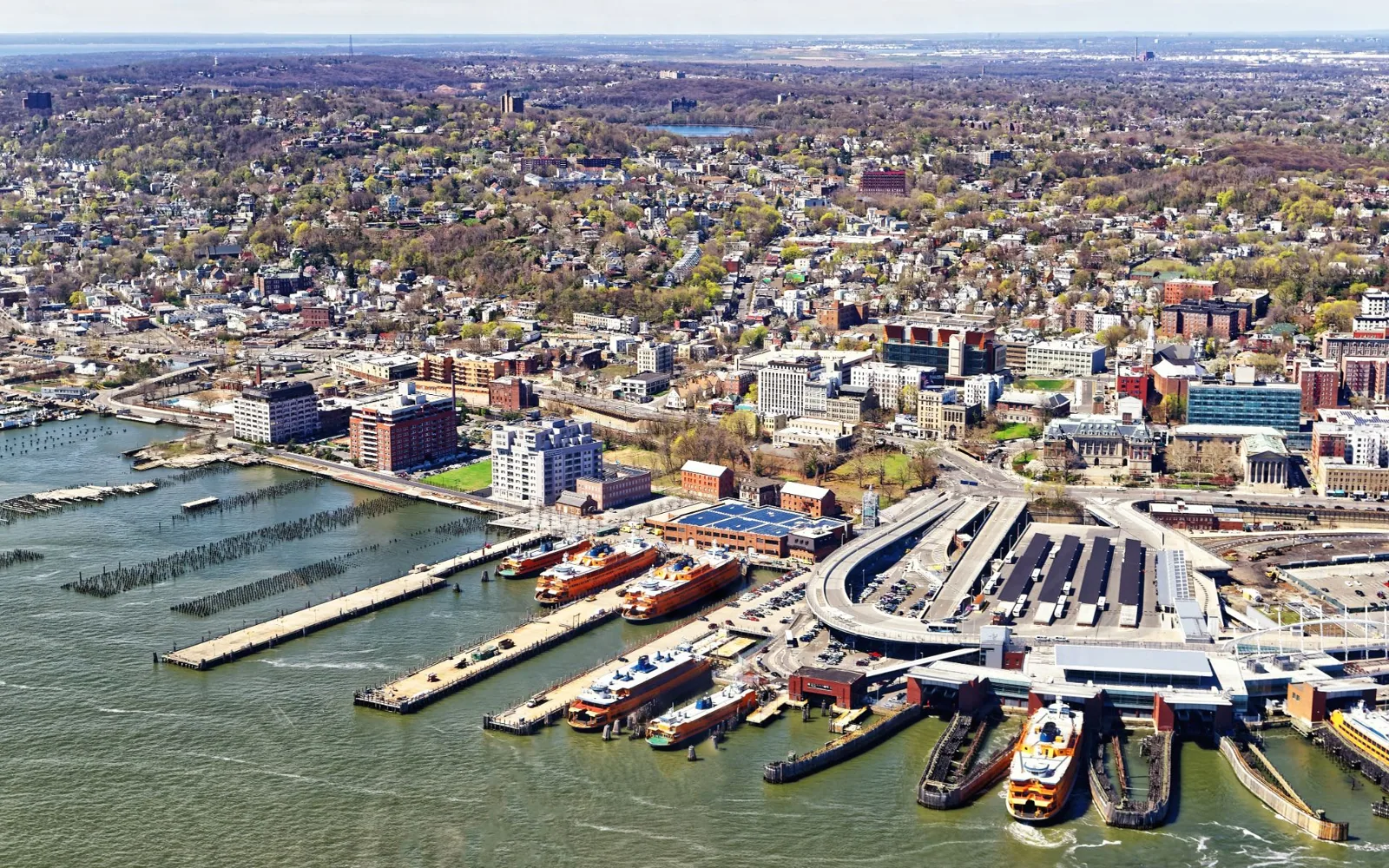
The island's mix of properties produces all of those readers. St. George alone shows the range: Borough Hall of 1906 and the 1919 courthouse on Richmond Terrace, the Federal Office Building finished in 1931, and Empire Outlets, which opened in May 2019 beside the waterfront. Public agencies and retail operators both need a report that survives scrutiny.
Buyers and lenders ask the sharpest questions. They want the roof's age, the remaining life, the reserve it needs and whether the warranty transfers, and a report that answers those four in the first page saves a round of phone calls. We write the summary to answer them.
How the fieldwork goes
Fieldwork is a full walk with a camera, a probe and a moisture meter. We photograph in a fixed order, from wide shots to close, and tie each picture to the roof plan. We scan for moisture on the roofs where the age or the history calls for it, take core cuts to confirm, and record every defect with its location and a rating.
- Roof plan with numbered findings and photographs.
- Seam, flashing, drain and penetration checks, area by area.
- Moisture scan and core cuts, with layer counts.
- Rooftop equipment, access and safety notes.
Drones help on large or steep roofs, and the aerial pass becomes part of the record. Every cut is patched the same day with matching material, and the patch is photographed.
We note the conditions of the day as well. Temperature, recent rain and wind affect what we can see, and a seam probe on a cold morning reads differently from one in the afternoon sun. The report records both, so a later walk can be compared fairly.
From findings to actions
A report that lists defects without ranking them leaves the owner to do the hard part. We rank each finding by urgency: fix now, fix this season, plan for next year or monitor. We attach a cost range to each, and we group items that should be done together, such as a flashing repair and a seam repair on the same wall. The result is a short action list on top of a long record.
Where the findings point to larger work, the report says so plainly and names the options. A roof near the end of life points to commercial roof replacement or a roof recover. A roof with local trouble points to commercial roof repair. A report also feeds roof capital planning and due diligence roof surveys.
Cost drivers for the report itself are the number of roofs, their size and access, whether scans and cores are needed and how fast the reader needs it. A single-roof report is a short visit, and a portfolio is scheduled in clusters to keep travel down. We price the scans and cores as separate lines so the reader can choose.
Reports before and after storms
A report taken before a storm is the best evidence after one. Sandy's 80 mph gusts in October 2012, which came with flooding in Midland Beach and New Dorp, and Ida's September 2021 flash flood emergency both produced claims, and a dated report from the spring lets an adjuster separate new damage from old, and the owner avoids an argument over what was already there.
Winter matters as well. Annual snowfall in the city is about 29.8 inches, with 27.3 inches on the record day, and a fall report that lists drains, drift zones and weak details gives the facility team a winter checklist. After the thaw, a short follow-up report records what moved.
Reports taken after a storm carry a different section: a damage list with causes, which separates storm items from wear. That section is written for an adjuster, with the direction of damage, the debris found and the photographs that show it.
What goes in the log
The inspection log is the report's working copy. It holds every photograph, the raw probe results, the moisture readings and the dates of each visit, and it grows with each walk. Where a report points to larger work, the filings are checked with the Department of Buildings, the office that issues the 2022 NYC Construction Codes. For a building in St. George or elsewhere on the island, the roof plan and the leak history are the starting point. We deliver the report as a document with photographs, and the numbers behind it stay available in the log. For ongoing work, the report becomes the first entry in a roof asset management register.
A copy stays on file with us, so a lender, an insurer or the next owner can ask for a refresh without starting over.
Related Roofing Work
More roofing work that comes up alongside Roof Condition Reports.

Commercial Roofing Questions
How is a condition report different from a quick inspection?
A report documents every finding with a location, photograph and recommendation, plus test results and cost ranges. A quick inspection gives a verbal opinion.
Will a lender or insurer accept it?
Reports are written for that use, with photographs, test results and ranked findings. The reader decides what it accepts.
How long does a report take?
Fieldwork takes a day or less for most roofs, and the written report follows within days. Large portfolios are scheduled by cluster.
Do you cut into the roof?
Only where cores are needed to confirm moisture or count layers. Each cut is patched the same day and photographed.
Can the report be updated each year?
Yes. An annual walk adds a new entry and shows what changed.