Roof Recover and Overlay Systems in Staten Island, NY
Recover a commercial roof in Staten Island, NY without a full tear-off when the deck and insulation test dry, with moisture scans and written findings first.
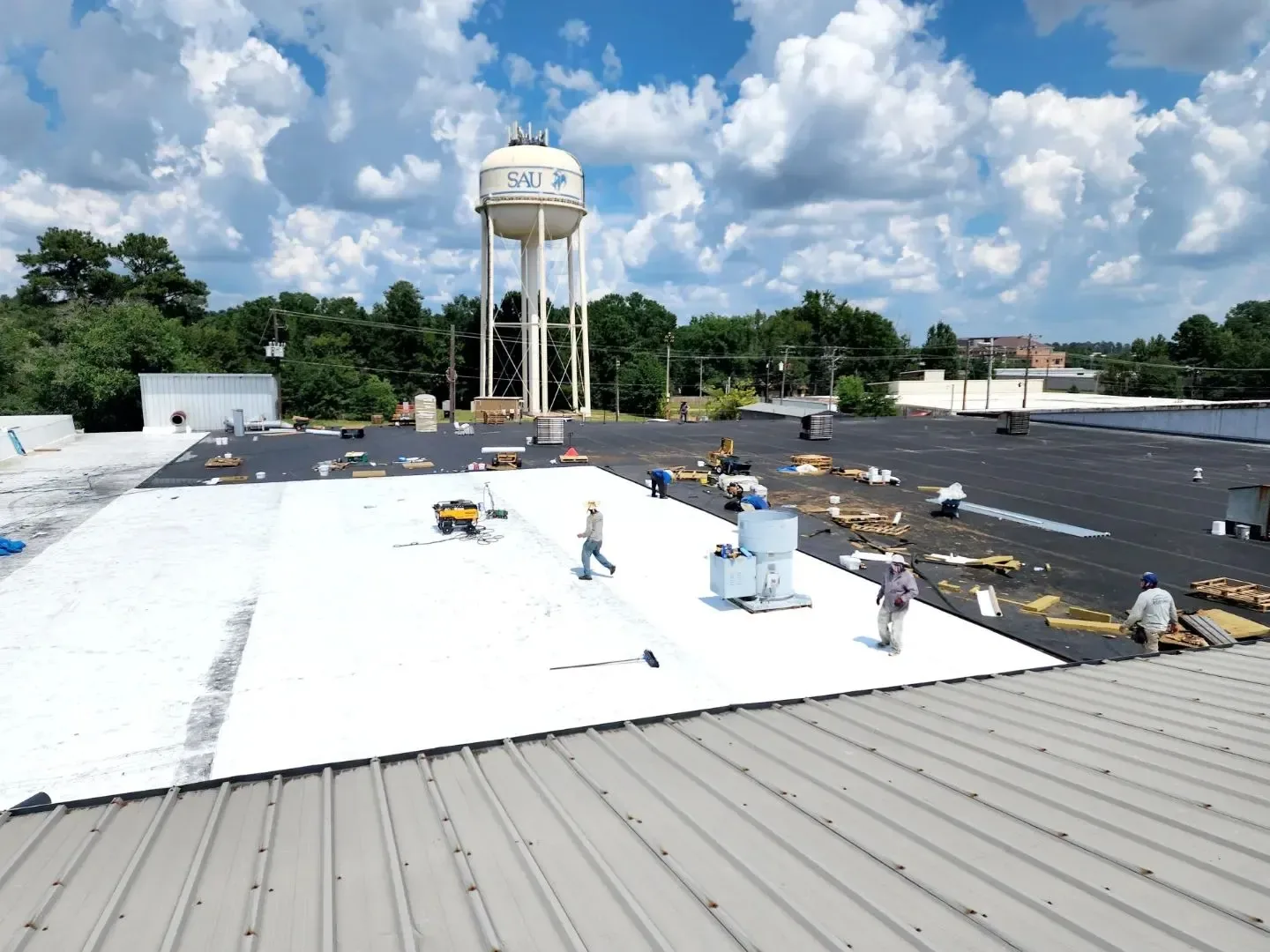
Cost and downtime are the two numbers a facility director in Staten Island watches when a roof reaches the end of its membrane life, and a recover can cut both. Instead of tearing everything off, a new membrane goes over the existing roof after the wet spots have been cut out and the surface prepared. It keeps debris off the lot, shortens the time tenants hear machinery overhead, and leaves the building weathertight at the end of each day. The decision only holds up when the layers underneath are dry, so every recover begins with a moisture scan and a few core cuts.
Commercial Roofing Staten Island puts that evidence in a written report before any membrane is ordered. If the roof passes, a recover is a sound choice. If it fails, we say so and price the full replacement beside it.
The dry test comes first
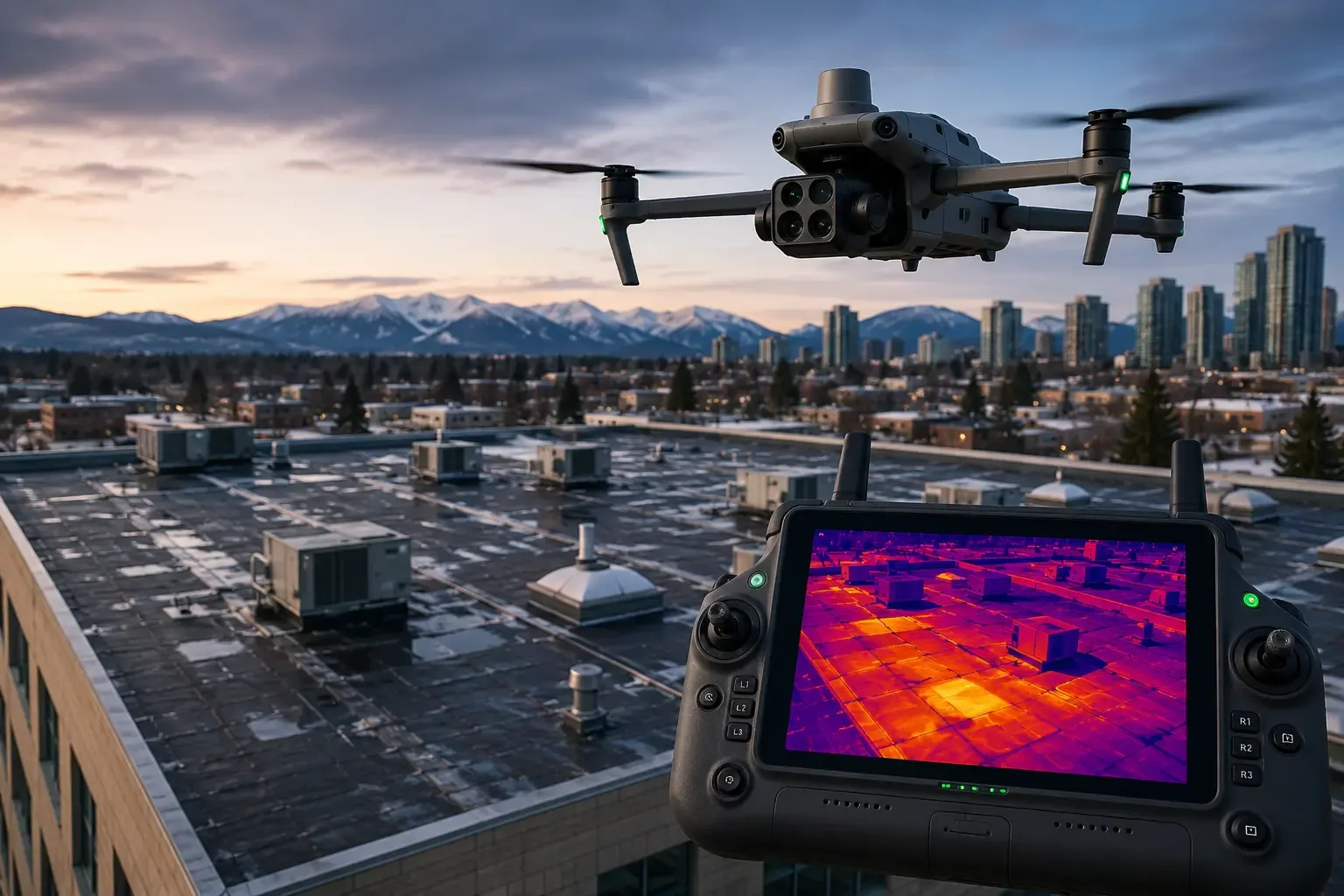
A recover over wet insulation traps moisture under a fresh membrane, and the trapped water turns into blistering, softened board and rusted deck within a few seasons. So we scan the full roof with infrared and a capacitance meter, then confirm the readings with core cuts at the suspect spots. A core shows how many layers are down, what insulation sits under them, how the deck surface looks, and whether the old membrane is adhered, ballasted or mechanically fastened. The infrared moisture survey gives the map, and the cores give the proof.
On a big roof the survey often shows that the wet area is a small fraction of the whole. Those sections are cut out, the insulation is replaced, and the rest is left in place. That targeted removal is what makes a recover practical.
Where a recover is the wrong call
Some roofs cannot take another layer. A deck that has corroded or sagged cannot carry added weight, and local code limits how many roof layers a building can have. A building that already has two systems stacked is usually a replacement candidate, because a third layer hides the problem rather than solving it. We also avoid recovering when the existing membrane has shrunk away from the flashings or when ballast has migrated and left bare patches.
Insulation and fire performance in a recover are checked against the 2022 NYC Construction Codes that the Department of Buildings publishes. We review the code path for your building and talk to the plan examiner when the scope needs it, so the permit does not become a surprise in the middle of the job.
Systems that suit an overlay
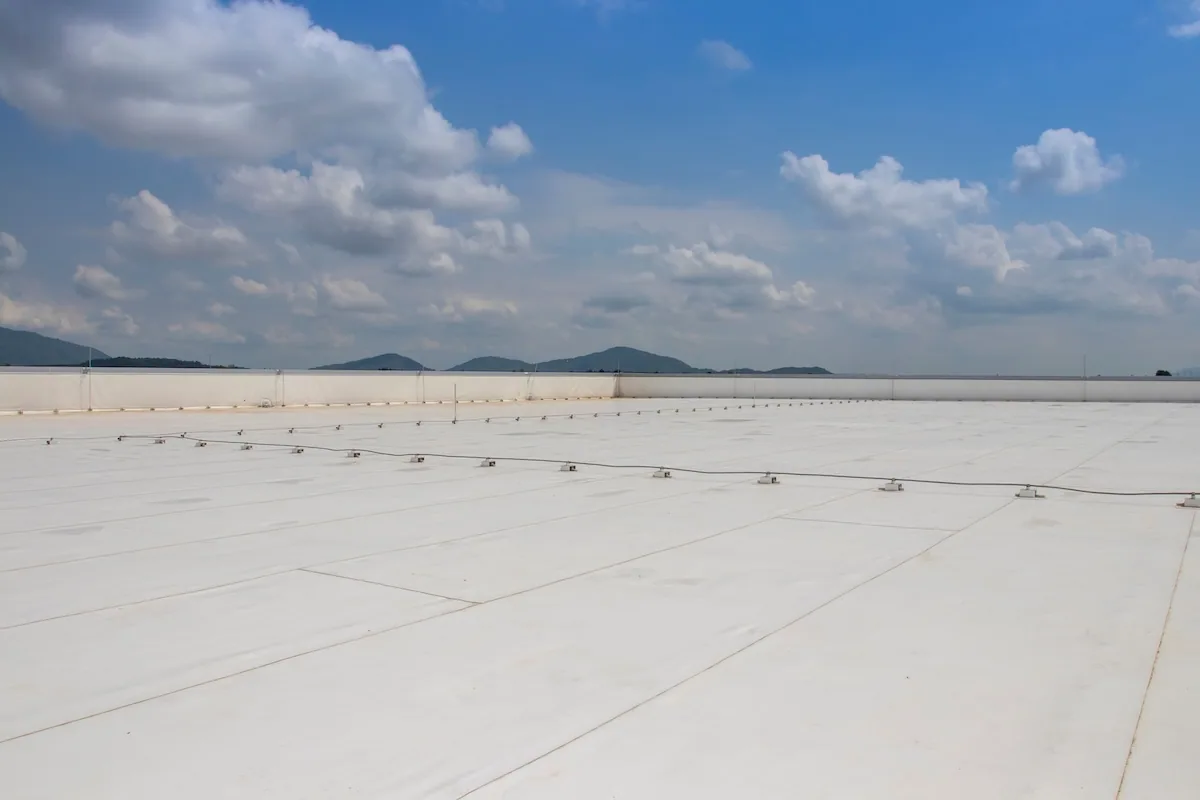
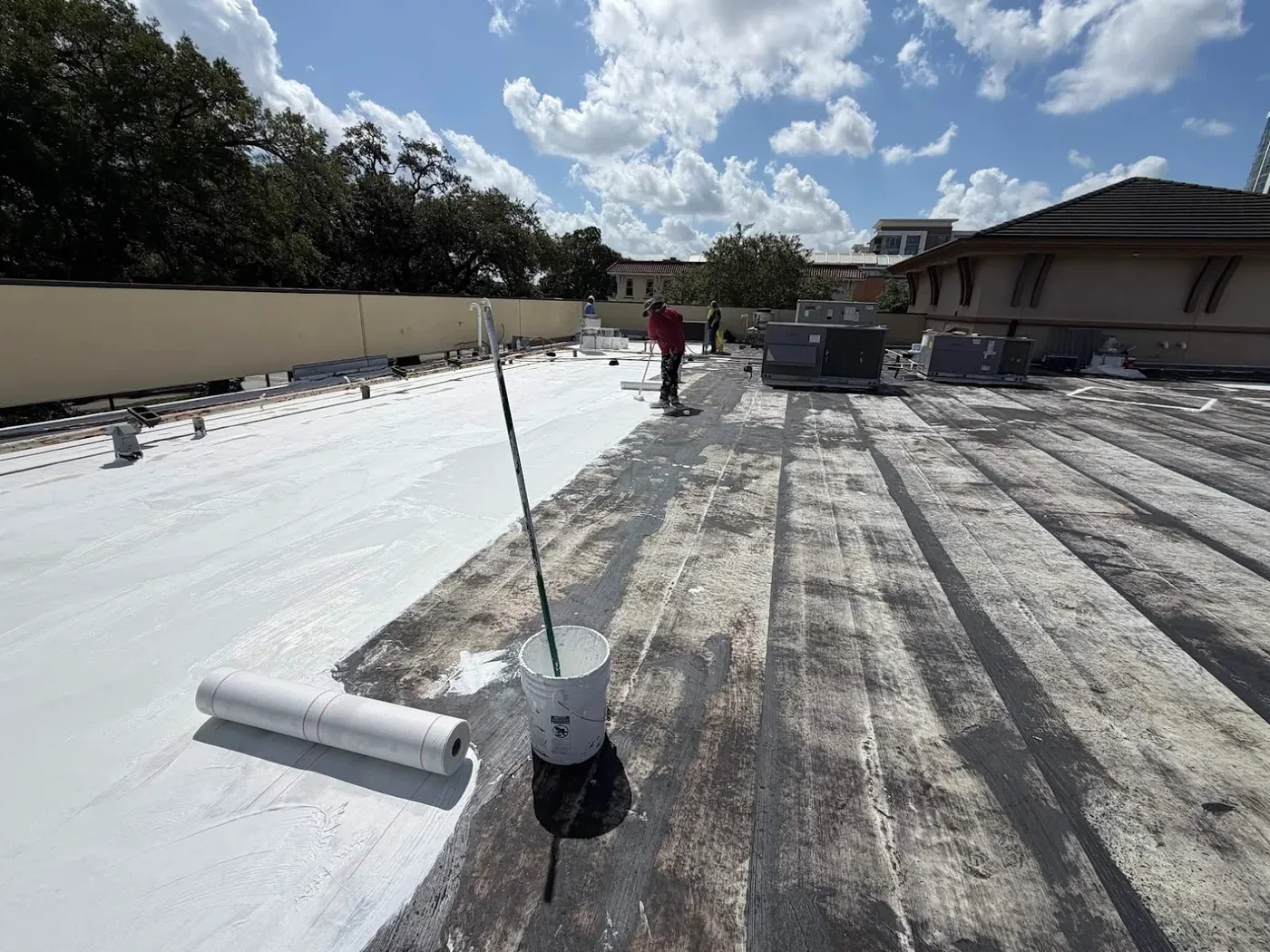
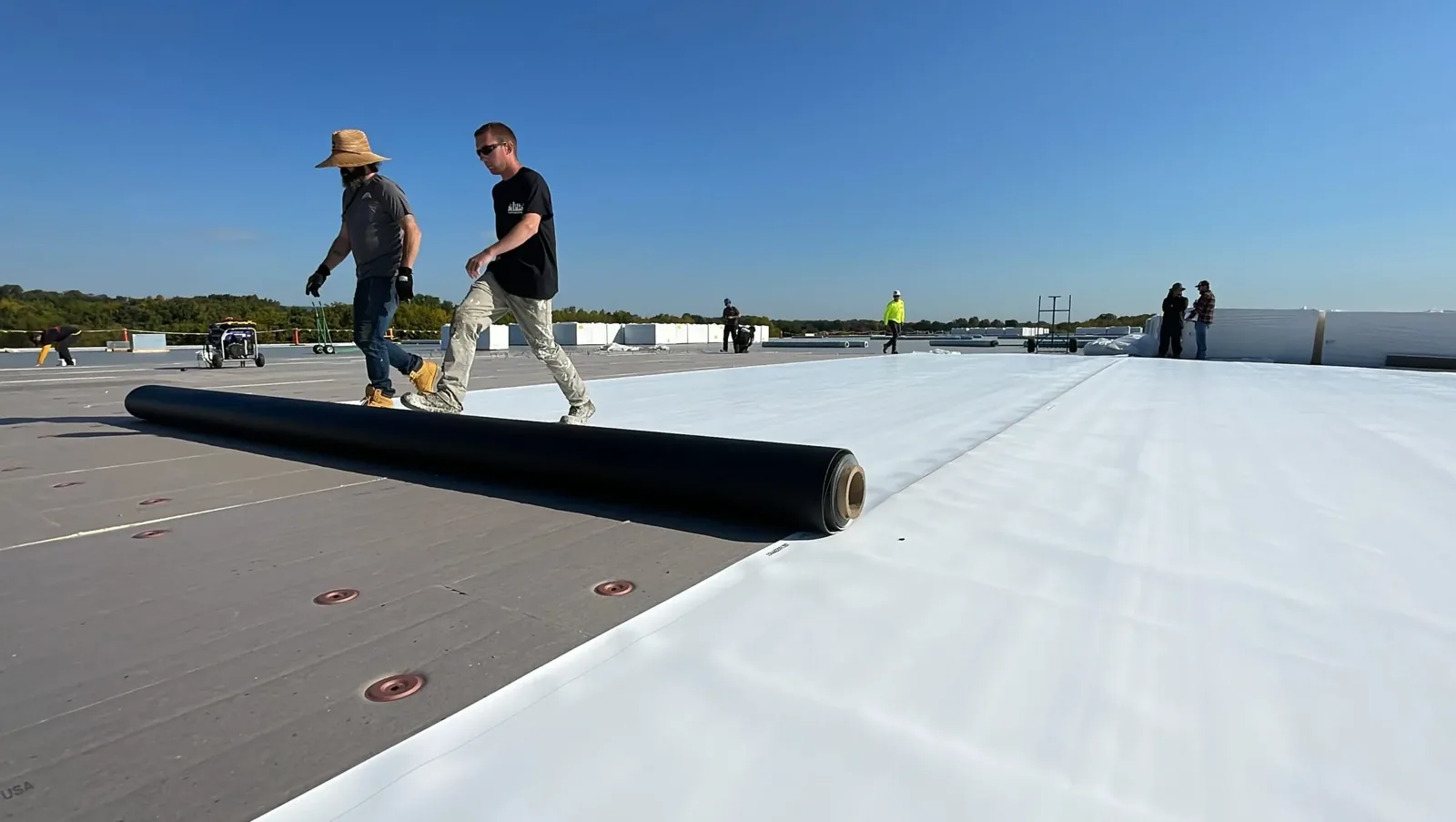
Single-ply membranes are the usual choice for a recover because they are light and can be mechanically attached or adhered over a cover board. A TPO membrane over a new cover board suits large low-slope roofs on Richmond Avenue retail and West Shore distribution. A PVC membrane is worth considering where grease, oils or exhaust residue reach the roof, which is common over restaurants and some manufacturing space. A fluid-applied silicone system can also work over certain sound existing membranes when the budget calls for restoration rather than recover, and we describe those options in our roof coating restoration work.
Flashings, curbs and the details that raise the roof
A recover raises the roof surface by the thickness of the new cover board and membrane, and every flashing at a wall, curb or pipe has to rise with it. Base flashing height is the detail that gets lost most often. If the new surface reaches a point where the flashing no longer stands high enough above it, water can wash over the top during a heavy rain. So we replace or extend base flashings, raise curbs where the equipment allows, and install new counterflashing at masonry walls. Where rooftop units sit on curbs that are already tight against their limits, we discuss resetting them as a separate item rather than burying the cost.
Penetrations get the same scrutiny. Pipe boots, conduit supports and vent stacks are prime failure points on any roof, and a new membrane wrapped around a worn boot only hides the problem. We replace boots, seal supports with proper pitch pockets or prefabricated flashings, and photograph each one so the log shows what was done at every penetration. That attention to small parts is what lets a recover reach the end of its service life instead of failing early at a detail.
Storm loads and the added layer
An extra layer changes how the roof behaves in a storm. A recover adds attachment points that must be driven through the old membrane and insulation into the deck, so fastener patterns are set for the wind exposure of the specific building. Sandy's gusts reached 80 mph in October 2012, and a recovered roof gets the same edge metal and extra perimeter attachment a full replacement would. Drains matter as much. After Ida's flash flood emergency in September 2021, we pay attention to drain capacity, overflow scuppers and any low spots that hold water on the old surface.
Phasing over tenants and trucks
A recover is attractive on buildings that cannot close. A shopping center on Hylan Boulevard keeps customers parking within yards of the work, and a distribution building near Howland Hook Marine Terminal may run trucks on a schedule that does not bend. We stage materials away from entrances and loading doors, work the roof in sections, and tie each section into the existing roof at the end of each day. Noisy fastening and cutting happen during the hours the tenant picks, and we agree on a stop list for sensitive spaces before work starts.
Cost drivers, plainly stated
A recover costs less than replacement because there is less to remove and haul away, but its price still moves with the same factors: area, number of penetrations, amount of wet insulation to cut out, edge metal, access and the system selected. Cutting out and replacing wet insulation can be the largest variable, and that is why the moisture survey is not optional. When we compare recover to full replacement on paper, the difference includes the likely service life of each choice, not only the first cost.
Related Roofing Work
More roofing work that comes up alongside Roof Recover and Overlay Systems.
Commercial Roofing Questions
How many roof layers can a Staten Island commercial building carry?
Code limits the number of layers, and the deck has to carry the added weight. We check both during the core-cut survey and confirm the code path with the plan reviewer before a recover goes into the scope.
What happens if the survey finds wet insulation?
We mark the wet areas on a roof plan and cut them out. If wet material covers too much of the roof, we recommend replacement instead and price both options so you can compare.
Does a recover affect my warranty options?
A new membrane carries its own system warranty from the manufacturer, issued according to that manufacturer's rules for the substrate. We confirm eligibility before the order is placed and keep the paperwork with the roof file.
Is a recover faster than a tear-off?
Usually, because there is no deck exposure and less debris to haul. Duration still follows area, weather and access, and the schedule comes with the written scope.
Can a recover go over a ballasted roof on the South Shore?
Ballast has to be swept or removed first, and the old membrane has to be sound enough to receive a cover board. Near Midland Beach and New Dorp, where Sandy's flooding hit hard, loose stone gets a close look, so the inspection comes before any recover is recommended.