Warehouse Roofing in Staten Island, NY
Warehouse roof inspection, repair, coating and replacement in Staten Island, NY, from West Shore industrial blocks to Bloomfield and Travis logistics space.
A drain strainer sitting loose in its bowl on a warehouse roof off Gulf Avenue is the kind of line an inspector writes first, because it tells you how the last storm went before anyone describes it. On the island, the West Shore holds most of the industrial development and has the fewest residents, so a facility director there is more likely to be managing wide industrial roofs than shop roofs, and a leak often turns up on a warehouse floor before anyone looks up. That matters this season because the same loose strainer will be there for the next hard rain.
What the West Shore holds
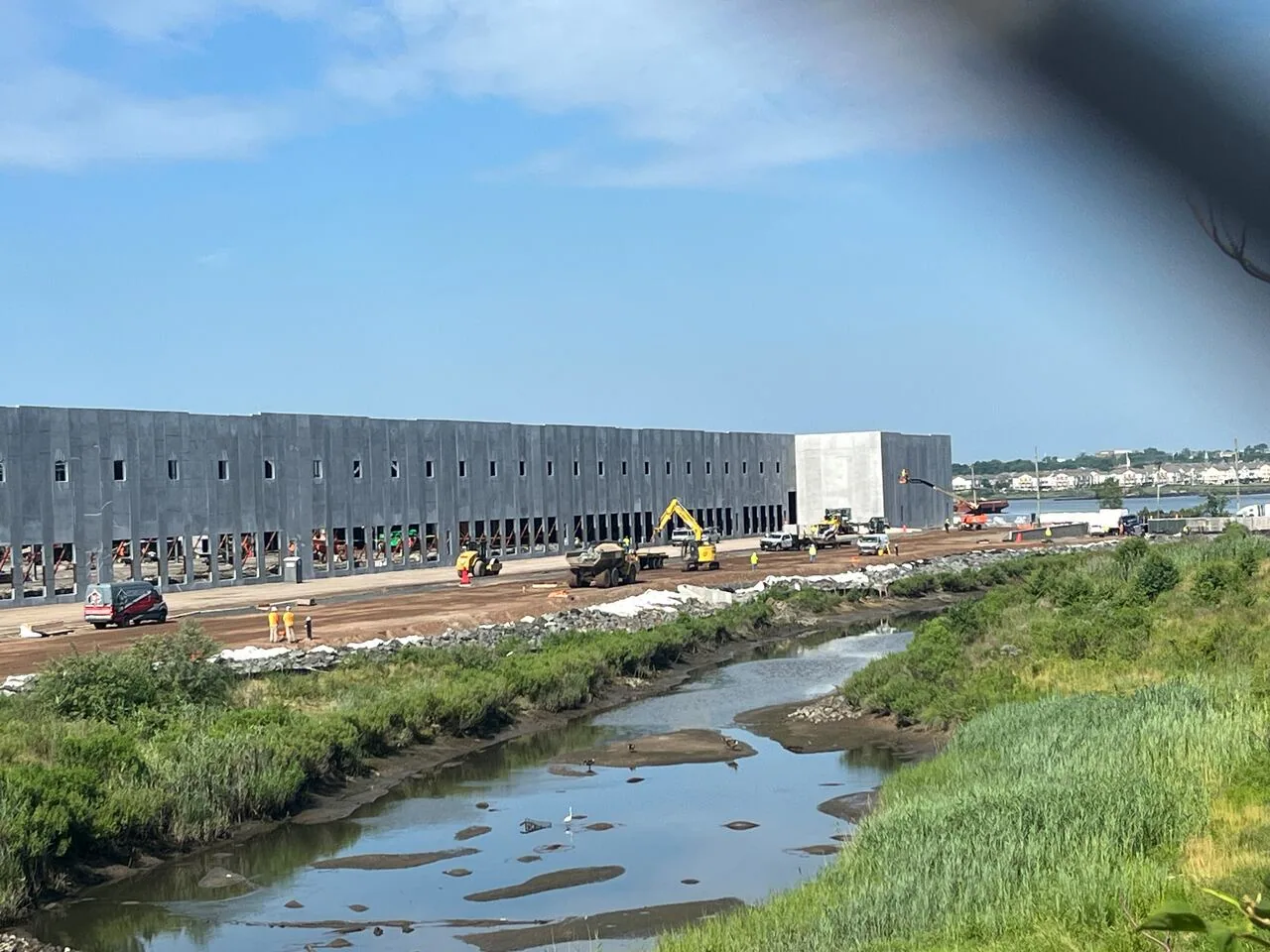
Most of Staten Island's industrial development sits on the West Shore, and in Bloomfield the Matrix Global Logistics Park opened in the fall of 2018 as a distribution center serving, among others, Amazon and Ikea. A former Gulf Oil storage terminal on a 440-acre site closed in 1998, its tanks have been demolished, and Gulf Avenue, a service road of the West Shore Expressway, took its name from it.
Until a core is cut, nobody knows what any one roof is made of, but a storage building in this belt is a low-slope, wide-span roof of the type where the findings repeat: ponded seams near drains, flashing at the dock canopies and fasteners backing out of old metal edges. A warehouse roof rewards a methodical walk more than a quick look.
The mix matters for the work. A distribution building like the Bloomfield park has dock-side canopies, rooftop units and long seam runs, while an older storage shed nearby may carry several layers of tar and gravel. Distribution center roofs and flex industrial roofs share the same West Shore ground, each with its own dock canopies and unit loads.
Where water sits
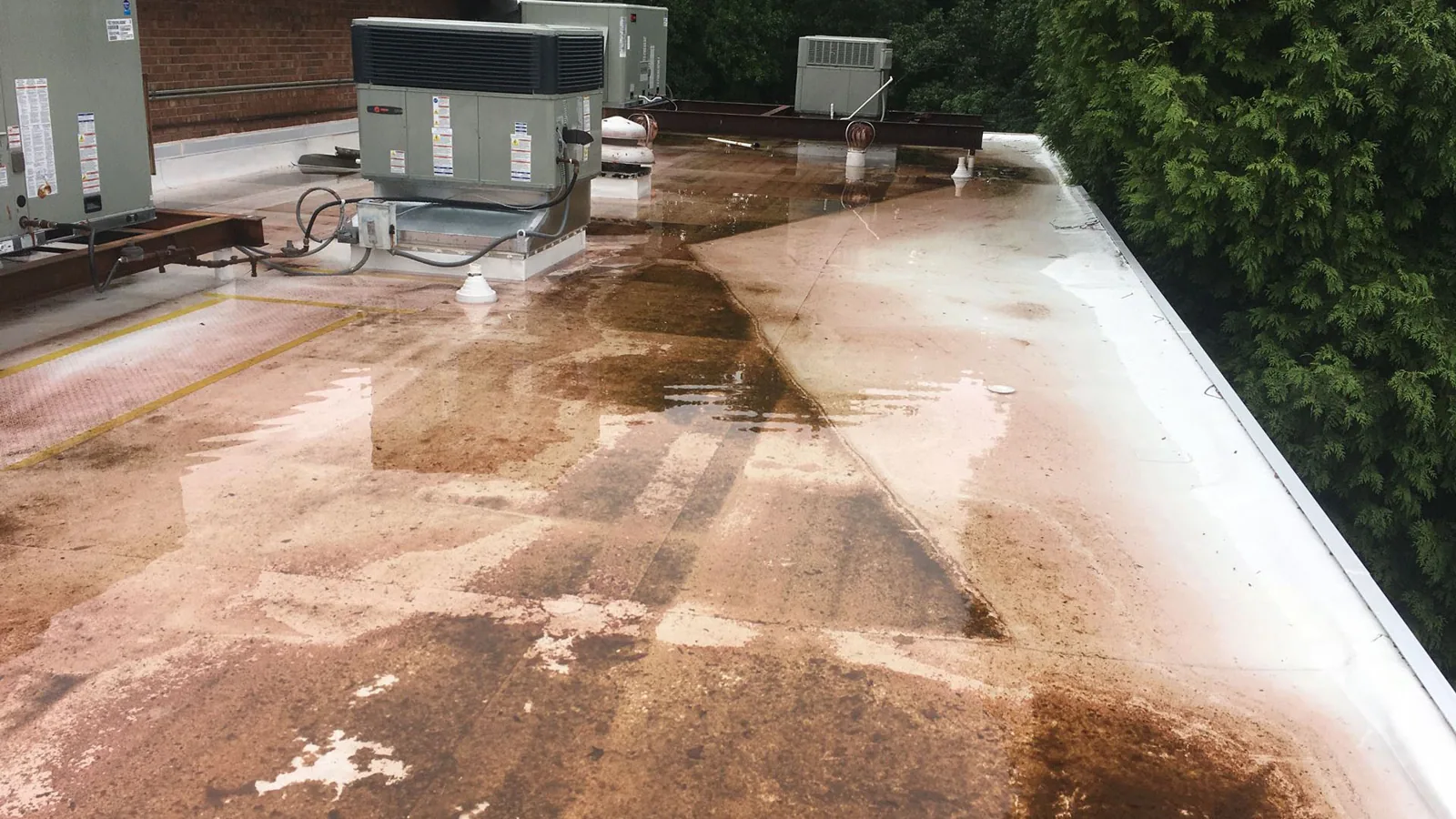
On a wide warehouse roof, the longest drainage run decides the outcome, and the inspector measures it from the high point to the nearest drain strainer. Water that sits more than a day or two after rain shows up as a pale ring of grit and a seam that has started to lift.
We mark every ponded seam on a sketch, measure depth with a straightedge and compare it with the last visit. A low spot that grows from one season to the next means the deck is deflecting or the insulation below is compressing, and that finding changes the repair from a patch to a tapered insulation plan. A ponding water repair that ignores the deck will return.
Drain strainers get the same attention. A strainer that is a third blocked still moves water in light rain and fails in a cloudburst, and the grit and leaf litter that collect around it are the first thing visible from the roof hatch. We clear each strainer, flush the line with water and note whether an overflow scupper exists in the parapet.
What a moisture scan finds
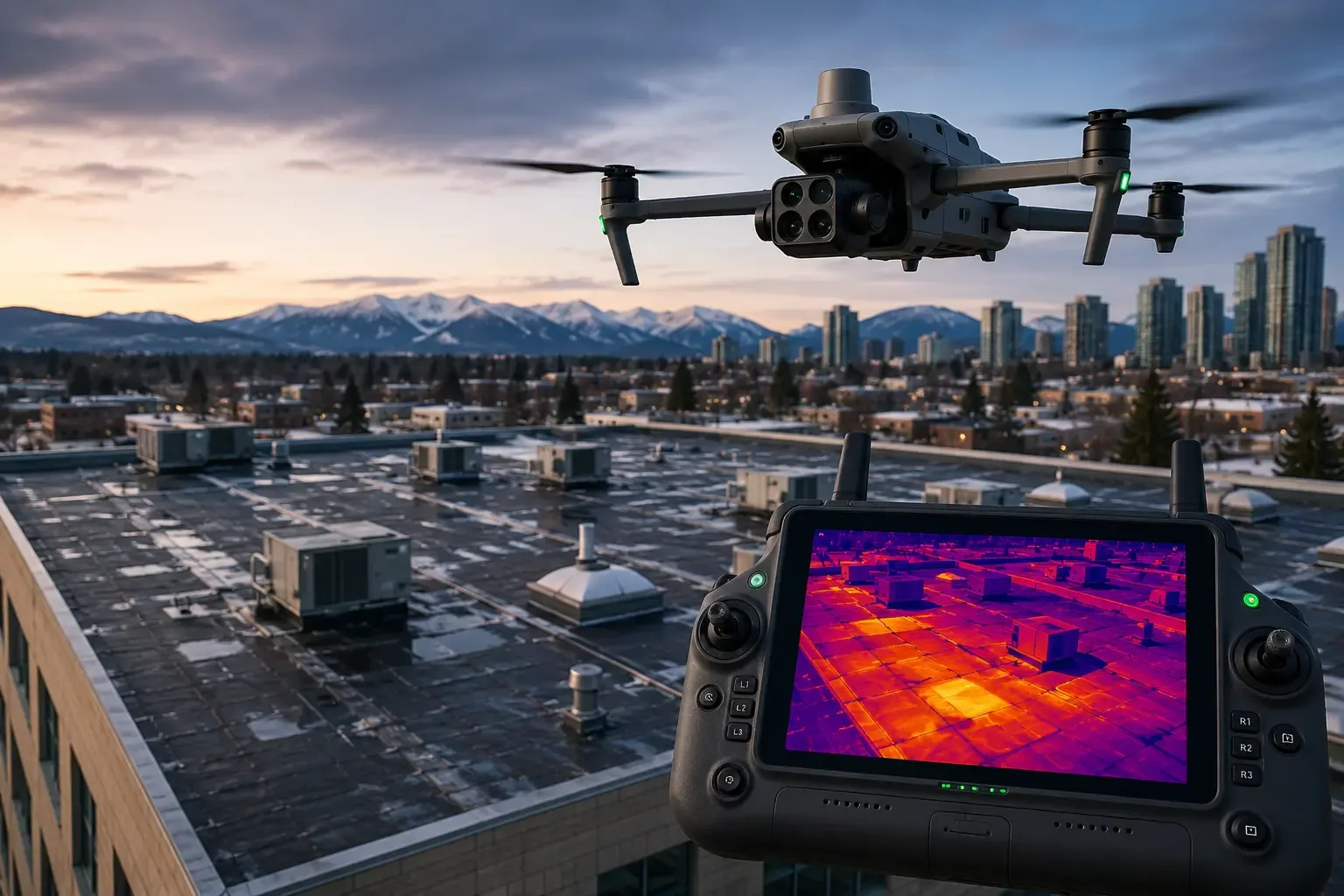
An infrared scan after sunset shows warm, wet insulation as a patch of different temperature, and a core cut beside it confirms the reading. The scan matters on a warehouse because the leak a forklift driver notices is rarely at the wet spot; water travels along the deck and drops at a joint thirty feet away.
An infrared moisture survey tells us how much of the roof is wet before we choose between a repair, a restoration and a replacement. Wet insulation is the largest cost on a warehouse roof, and finding its edge early keeps a partial cut-out from becoming a full tear-off.
Core cuts are small and patched the same day. Each one shows the layers: membrane, cover board, insulation, vapor layer and deck. Reading them side by side across the roof tells us whether a wet area is isolated, which makes a partial repair sensible, or whether moisture has spread through the whole assembly.
Storm and winter checks
Gusts of up to 80 mph came with Sandy in October 2012, and a wide warehouse roof has a lot of perimeter for wind like that to test. We check lifted parapet returns, displaced coping and fastener rows at the edges, because wind starts there and works inward across a wide span.
Winter adds its own findings. The city's snow averages 29.8 inches a year and reached 27.3 inches on January 23, 2016. On a long roof it sits for days, then melts toward a few drains, and a strainer iced shut converts a thaw into a ponded seam. The flash flood emergency Ida set off on September 1 and 2, 2021 is the benchmark for how fast scuppers and drains must clear a short, heavy burst.
Access and scheduling
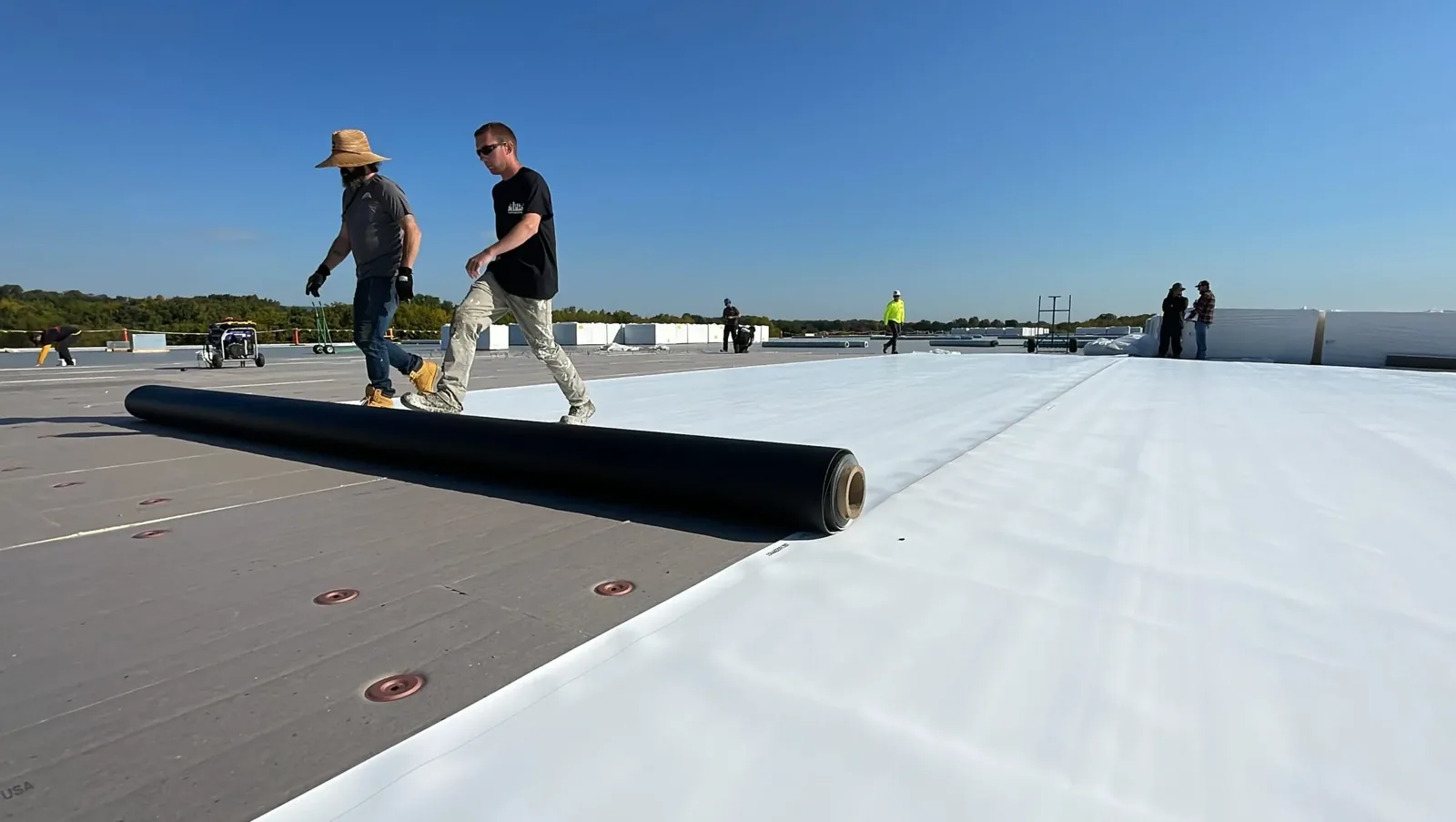
A working warehouse has trucks at the docks, so roof work is planned around loading hours. We stage materials away from dock lanes, hoist from a side yard where one exists and arrange crane dates around bridge-day traffic on the Goethals Bridge approach and the West Shore Expressway.
Tenants who store product directly under a leaking section are moved to a quieter bay for the week, and we close each section of roof the same day. Where racking sits close to the deck, we protect it with temporary cover before tear-off begins.
Hoisting needs a place to stand. A site with a side yard allows a crane or a boom lift directly to the roof, while a site with only dock frontage means material moves through a stairwell or an exterior ladder in small loads, and the schedule stretches accordingly.
A loading-dock roll door that sticks open after a storm tells the inspector which wall took the wind, so that wall is walked first and its edge metal tried by hand.
What goes in the log
For a warehouse the log lists roof area, membrane type, drain count, every ponded seam and every penetration, and each entry carries a photograph and a verdict: wait, schedule or fix now. Findings are ranked so a facility director can approve the urgent items now and place the rest in the next budget year.
A roof condition report built from the log also serves a lender or a buyer. The NYC Department of Buildings publishes the 2022 NYC Construction Codes, and any replacement scope is checked against the requirements that apply. Owners in Bloomfield and Travis get the same walk.
The log is updated after each visit, so the second walk shows what changed. Ponded seams that stayed the same are watched. Seams that grew move up the list.
Related Roofing Work
More roofing work that comes up alongside Warehouse Roofing.
Commercial Roofing Questions
Why does the leak show up at the dock door and not under the wet spot?
Water runs along the deck and through insulation joints before it drops. The entry point can sit thirty feet from the stain. We trace it from the ceiling upward and confirm with a scan.
Can a warehouse roof be coated instead of replaced?
Yes, if the membrane is sound and the insulation is dry. We confirm both with a moisture scan and a core cut. If the insulation is wet, coating hides the problem.
What do you check after a hard storm?
The perimeter first: parapet returns, coping and edge fasteners. Then drains, strainers and any rooftop units that moved.
How long does a warehouse roof inspection take?
A single large roof usually takes a day on the roof, with the report following in a few business days.
Do you work while the warehouse is operating?
Yes. We stage by section, keep dock lanes clear and close each area before the end of the day.