
Medical Office Roofing in Staten Island, NY
Medical office and clinic roofing in Staten Island, NY: leak tracing, infection control and low-odor repairs for practices in Clifton and New Springville.
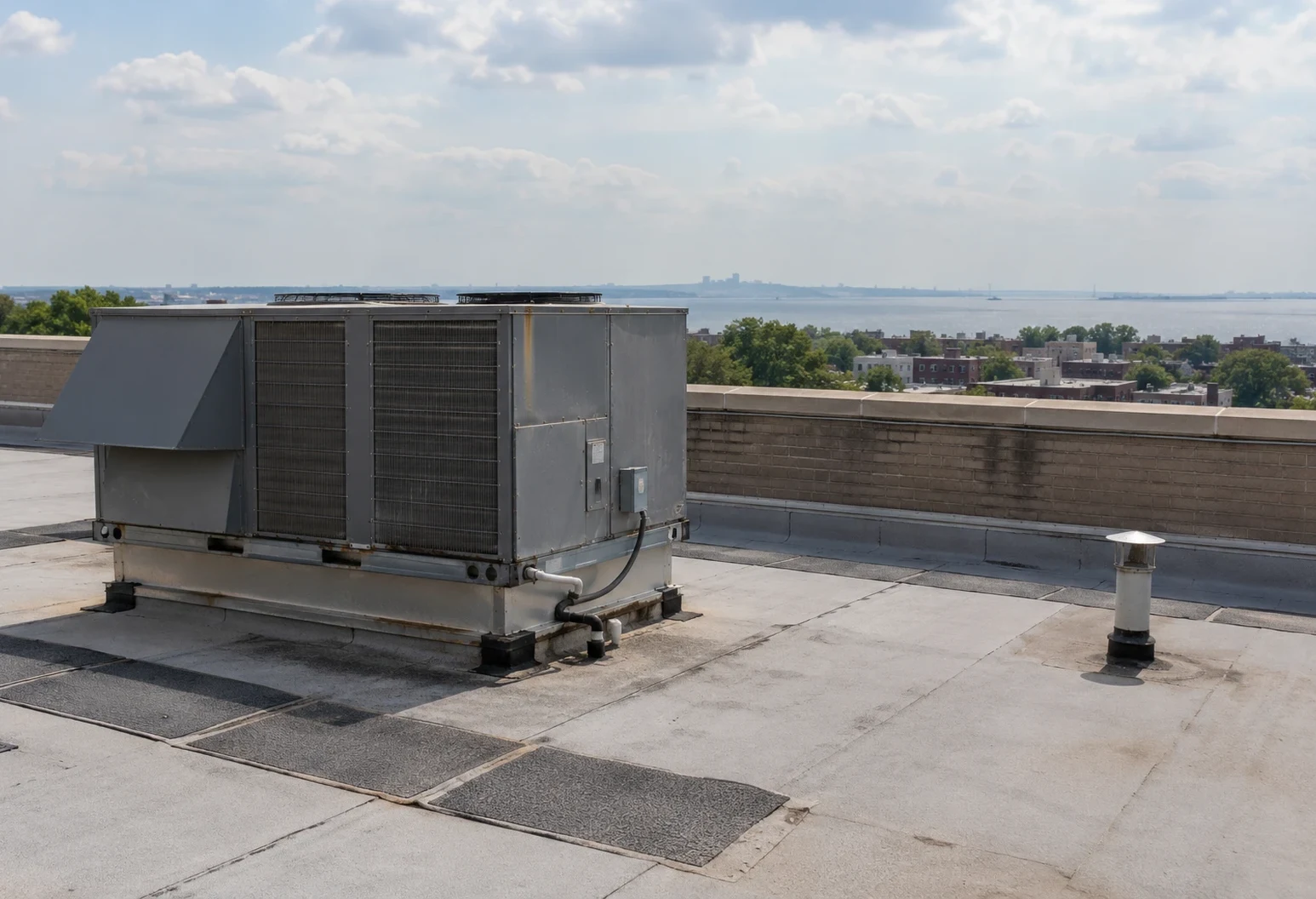
A dark streak of condensate running across the membrane beneath a rooftop air handler is what an inspector writes down on a clinic roof, because the same unit that keeps exam rooms comfortable is dripping onto a surface that was never meant to hold standing water. This matters now because a medical office cannot close a suite for a wet ceiling the way a retail space can, and a small roof fault tends to become a patient-care problem long before it becomes a repair order.
The roof of a clinic building is read from the inside out. We start with the room that reported the stain, ask what happens in that room and work upward to the cause.
Medical buildings on the island
Vanderbilt Avenue and Bay Street are Clifton's main corridors, and duplexes and attached homes have replaced much of the commercially zoned property there over the past decade, which leaves less commercial space for a practice to occupy. New Springville now rivals St. George as a commercial and administrative core, and a practice that rents in a mixed retail and office building there shares a roof with the other tenants. Since nobody knows what a medical building has on its roof until it is opened, the first visit is a survey. A small practice may occupy a single suite in a low-rise building, while a larger group may have a whole building with rooftop air handlers and exhaust. The roof questions are the same: where does the water go, and what is below it?
What lies below the leak
Exam rooms, procedure rooms, sterile storage, records rooms and imaging suites each carry a different cost if they are wet. A leak over a storage room is an annoyance. Over a procedure room it closes the room. Over an imaging suite it can put equipment at risk.
The practice manager marks the rooms that matter most on the plan, and every roof finding is then ranked by what stands beneath it. A leak repair over a sensitive room is scheduled first, with a temporary seal the same day if water is entering. The ranked list lets the director spend on the zones with the highest consequence.
Records rooms and pharmacy storage deserve their own mention. Paper and supplies absorb water quickly, and a slow leak above a records room can ruin a year of files before anyone notices. A moisture reading in the ceiling cavity, taken during the roof walk, tells us whether a leak has been active for weeks.
Air handlers, exhaust and condensate
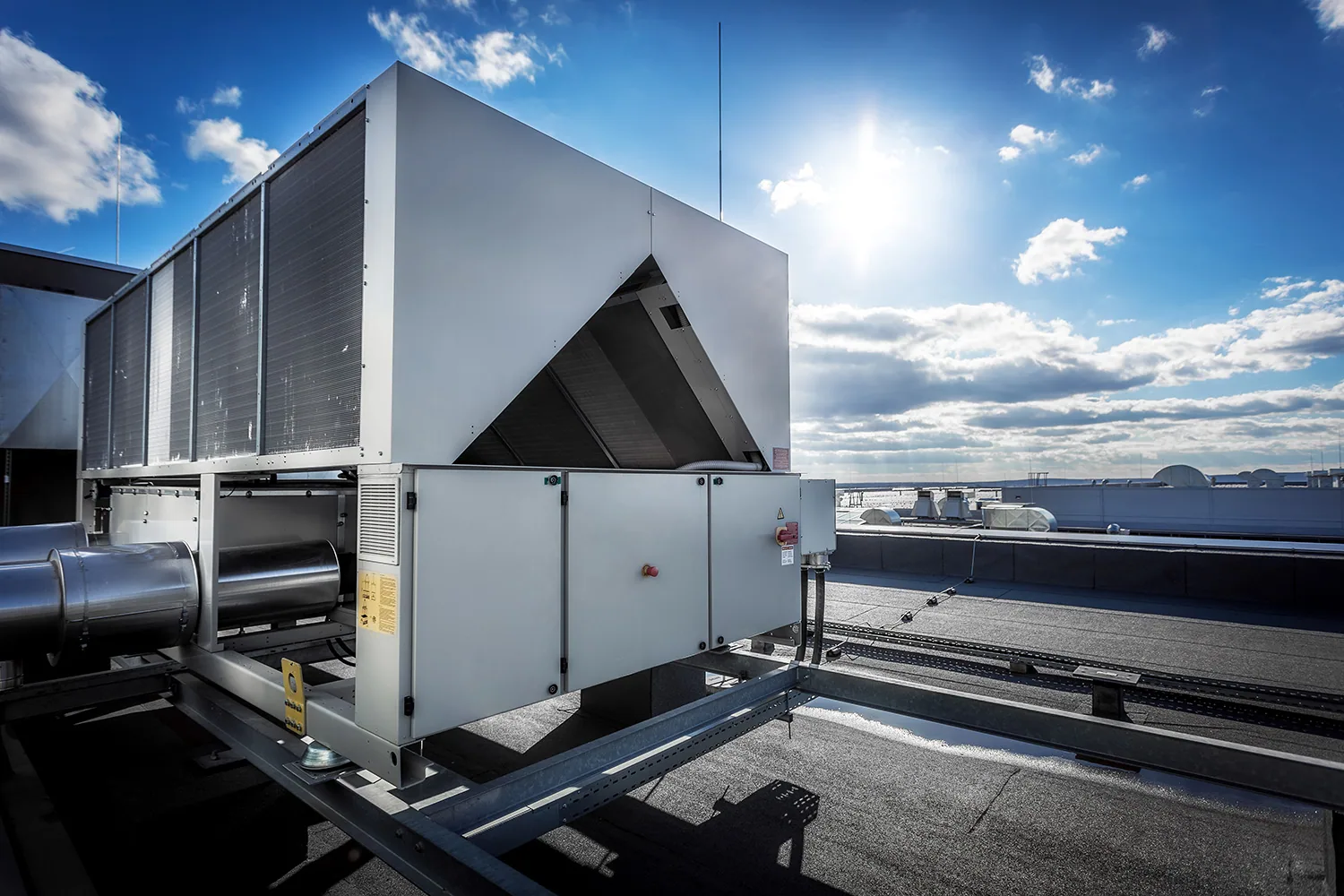
Medical buildings run more air than most: higher exchange rates, dedicated exhaust, sometimes heat recovery. That means larger rooftop units, more penetrations and more curbs. Each curb is a flashing, and each unit has a condensate line that can leak or overflow onto the membrane.
We check equipment curbs and supports for split sealant, loose covers and sagging frames, and we trace condensate drips to their source before blaming the membrane. A line routed to a drain and a pan that stays clean are small details that keep a wet spot from forming. Walk-pad wear shows which units are serviced most.
Medical gas and vacuum lines, where present, are another set of roof penetrations that cannot be disturbed. We mark them on the plan before work begins and keep tools and materials clear of them. Any shutdown of a line is arranged in writing with the practice, and nothing is cut or moved without that agreement.
Storm and winter checks
Sandy's 80 mph gusts of October 2012 and the downpour behind Ida's flash flood emergency in September 2021 set the standard for a storm walk, and after either kind of storm drains, parapet returns and rooftop equipment are checked first. Winter brings its own findings. Snow in the city totals about 29.8 inches in a year, while January 23, 2016 produced 27.3 inches in a day. Meltwater refreezes at a blocked drain, and a ponded seam in January is a leak in February. A medical office needs its roof checked before winter, not after.
July's mean daily high of 84.9 F across New York City keeps rooftop units working hard. We check that condensate lines flow and pans stay clear during the hottest weeks, since a blocked line floods a roof in a way that rain never does.
Infection control and low-odor methods
Roof work above an occupied clinic must not release dust, fumes or odors into patient areas. We choose low-odor systems: mechanically attached or cold-applied membranes, welded seams and water-based primers. We avoid torch and hot asphalt near intakes. We cover or seal air intakes during adhesive work and coordinate any shutdown with the building engineer.
Interior protection is part of the plan. We set plastic barriers below the work area when ceiling tiles come out, tell the practice manager the schedule and keep a contact on call. The aim is that a patient never notices the roof is being worked on.
Dust is controlled at the source. We cut insulation and membrane in a staging area away from intakes, sweep as we go and vacuum the roof at the end of each day. Debris leaves in covered containers by a route that avoids patient entrances.
Access and scheduling
Medical practices have set hours, so noisy tasks are done early, late or on weekends where possible. Parking and patient entrances are protected, and hoisting is planned for quiet hours. Cranes are booked around bridge-day traffic, since the Staten Island Expressway is among the busiest roads in the city.
If the practice shares a building with other tenants, we notify them as well, and we keep stairwells and lifts clear for patients.
If a roof job overlaps a clinic day, we keep the hold signal simple: a phone call from the practice manager stops work on the roof within minutes, and we reseal the open section before the crew steps away.
What goes in the log
The log lists the rooms below each roof zone, every curb and condensate line, each ponded seam and the moisture map, and a photograph accompanies every line so the urgency can be judged at a glance. A condition report built from the log supports a landlord, a lender or a buyer. Facility directors in Clifton and New Springville get the same walk, while larger campuses add the demands of a hospital roof and the mixed-use side resembles an office building roof.
For a group of practices in the same building, the log lists each suite separately, so a landlord can show a tenant the part of the roof above its space and the work done there.
Related Roofing Work
More roofing work that comes up alongside Medical Office Roofing.

Commercial Roofing Questions
Can a clinic stay open during roof work?
Usually yes, with low-odor methods, interior barriers and a schedule agreed with the practice manager.
How do you tell a condensate drip from a roof leak?
We check the timing. A drip that follows rain is a leak. One that follows cooling use is condensate. A hose test confirms it.
What is the safest system for an occupied medical building?
A mechanically attached or cold-applied system with low odor. The choice depends on the deck and existing roof.
Who decides which rooms matter most?
The practice manager or director. We rank findings by what lies below them.
How fast can a leak above a procedure room be stopped?
Same day: a temporary seal goes on first, and permanent work follows when the roof has dried.
Should the roof be checked before a lease renewal?
It helps. A dated inspection log tells both sides what condition the roof is in and who is responsible for what.