
Commercial Roofing in Clifton, Staten Island, NY
Commercial roof inspection, repair and replacement in the Clifton district of Staten Island, NY, along Vanderbilt Avenue and Bay Street.
Where a commercial building shares a wall with a neighbor, the roof edge is the line an inspector walks first, because that is where one owner's flashing meets another owner's masonry. Clifton, on Staten Island, NY, runs its commercial life along Vanderbilt Avenue and Bay Street, and the commercial roofs there sit in a neighborhood where housing has been replacing commercial property.
The commercial roofs that remain, and the mixed buildings that sit among the homes, get inspected, repaired and replaced by Commercial Roofing Staten Island. The work is smaller in scale than on the West Shore and tighter in access, and it asks for patience at the party wall.
A corridor that changed use
Many duplexes and attached homes have taken the place of commercially zoned property in Clifton over the past decade, and Bayley Seton Hospital's downsizing removed hundreds of local health care and social assistance jobs. Vanderbilt Avenue and Bay Street are still the main corridors, and several bus routes serve them.
For a roofer, a corridor in transition has a particular profile. Commercial buildings that remain stand closer to residential neighbors than they once did, and a building with unused space is the one where a slow leak does the most harm, since nobody is inside to see it. What any roof along these streets holds is for the walk to settle. Every one of them has a neighbor, and the neighbor's wall is on the checklist.
Where one roof meets a neighbor
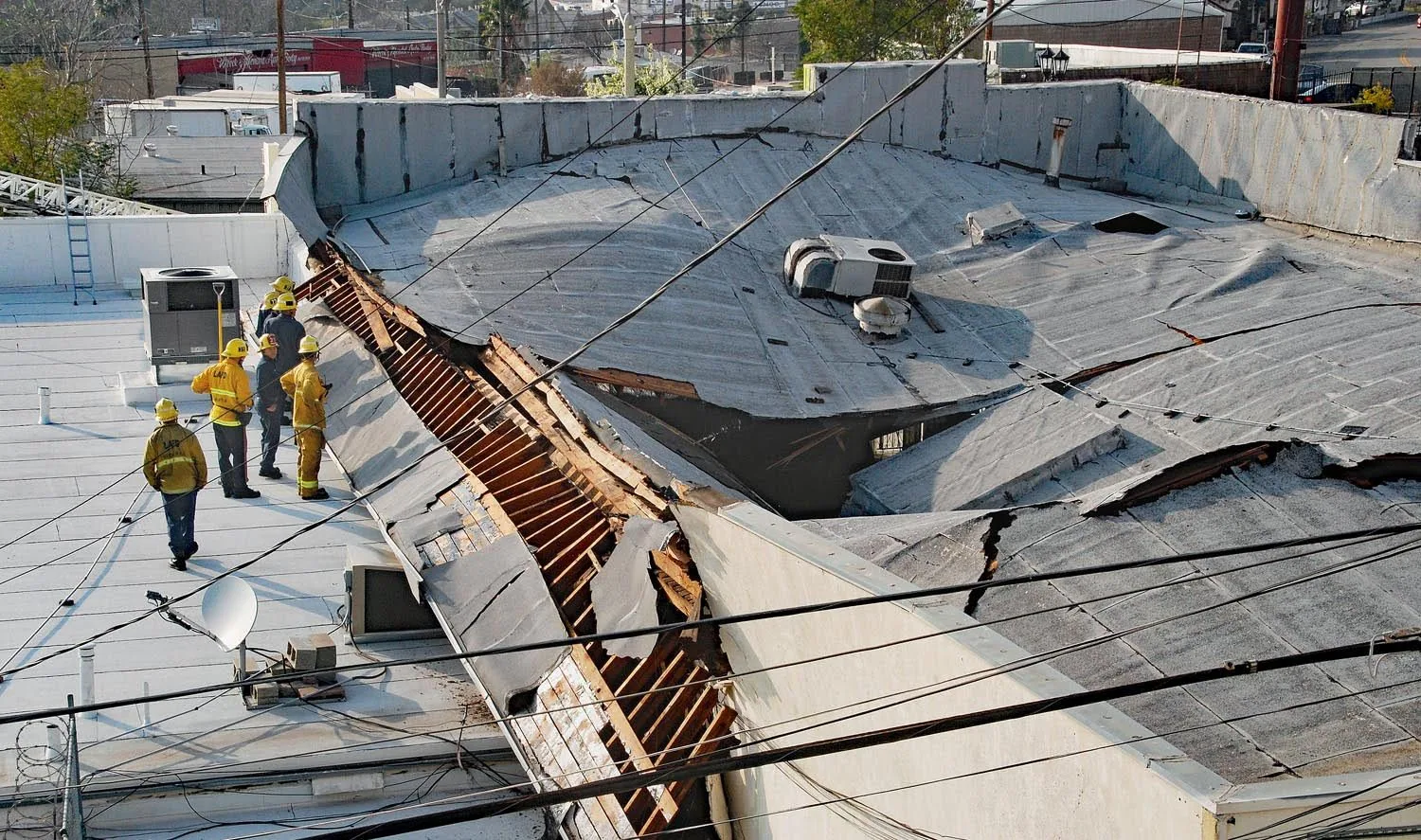
A parapet shared with an adjoining building, a roof that ends against a taller wall or a flashing tucked into someone else's brick are the weak lines on a small commercial roof. Water that gets behind a flashing travels down inside the wall and appears in a unit two floors below, often under a different owner's name. Disputes follow.
Every leak is followed to its entry point and recorded with photographs, so both owners work from one account. The repair rebuilds the detail where the roof meets the wall: counterflashing set into a clean mortar joint, a base flashing lapped over the membrane and a sealant joint that is checked, not just caulked. Our flashing failure repair is the routine for this work, and the same attention carries to coping and edge metal where a wall caps.
Shared drains deserve a note of their own. When two roofs feed one leader, a blockage on one side backs water onto the other, and the owner who never saw a drop of rain pays for the stain. We trace the leader, mark which roofs feed it and write the finding so each owner sees their share of the line.
Where a roof steps up to a taller neighbor, snow drifts against the higher wall and melts back toward the flashing. That step is checked every winter, along with the first few feet of membrane at its base, which is where the drift does its work.
What the inspector writes down
On a small low-slope roof the notes are brief and specific. A drain strainer sitting loose, a vent pipe with a split boot, a section of membrane that has lost its bond and rattles under a boot heel, a coping cap with a gap you could slide a card into. None is dramatic. All are the beginning of a leak.
We probe seams, press suspect areas and photograph each find against a landmark on the roof plan. A moisture scan follows when a stain inside suggests water has moved. The scan shows where the insulation is wet, which tells the owner whether a repair will hold or the section needs to come out. An infrared moisture survey is quick on a small roof and worth the time before any large spend.
Repair, restore or replace
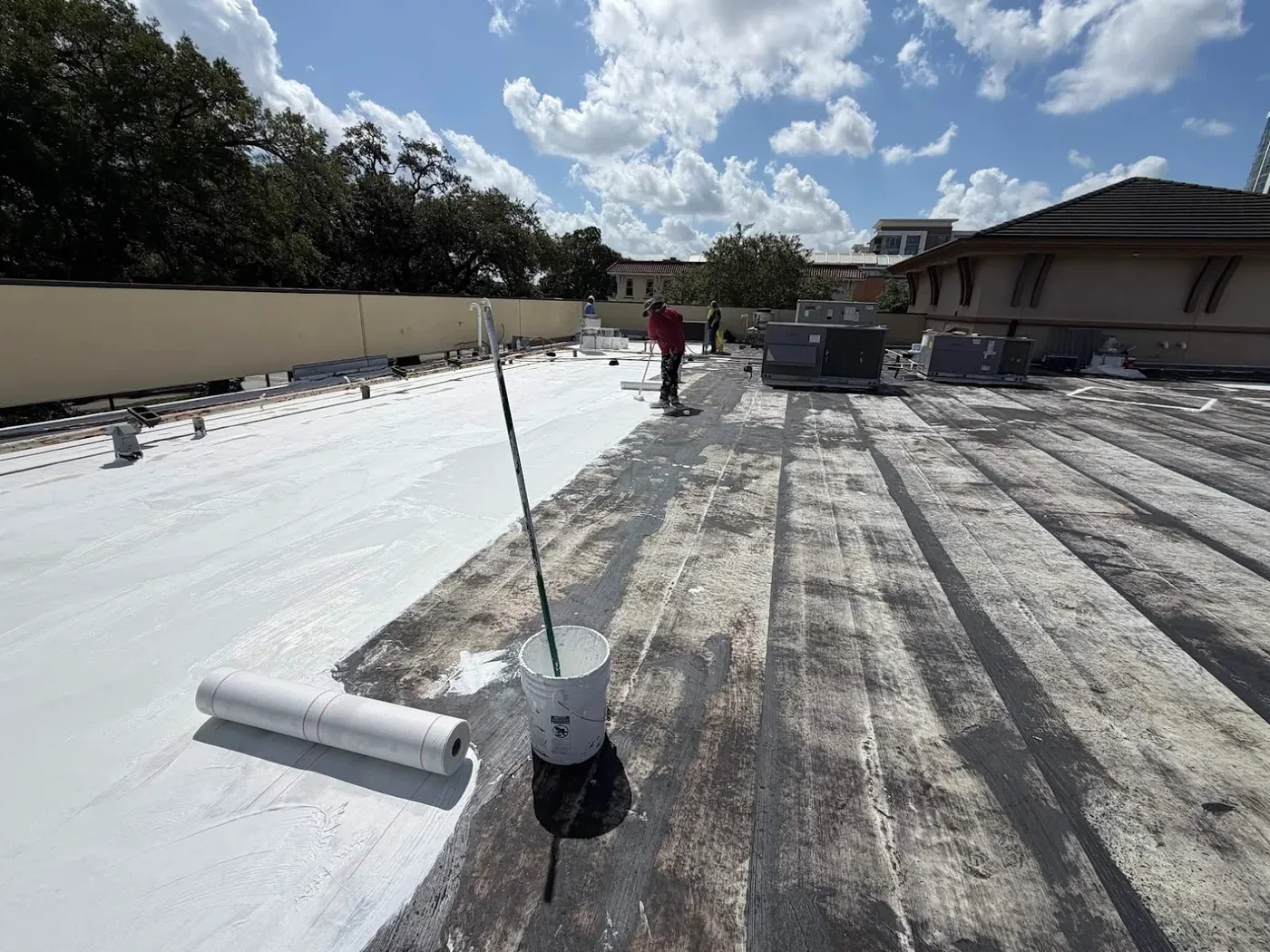
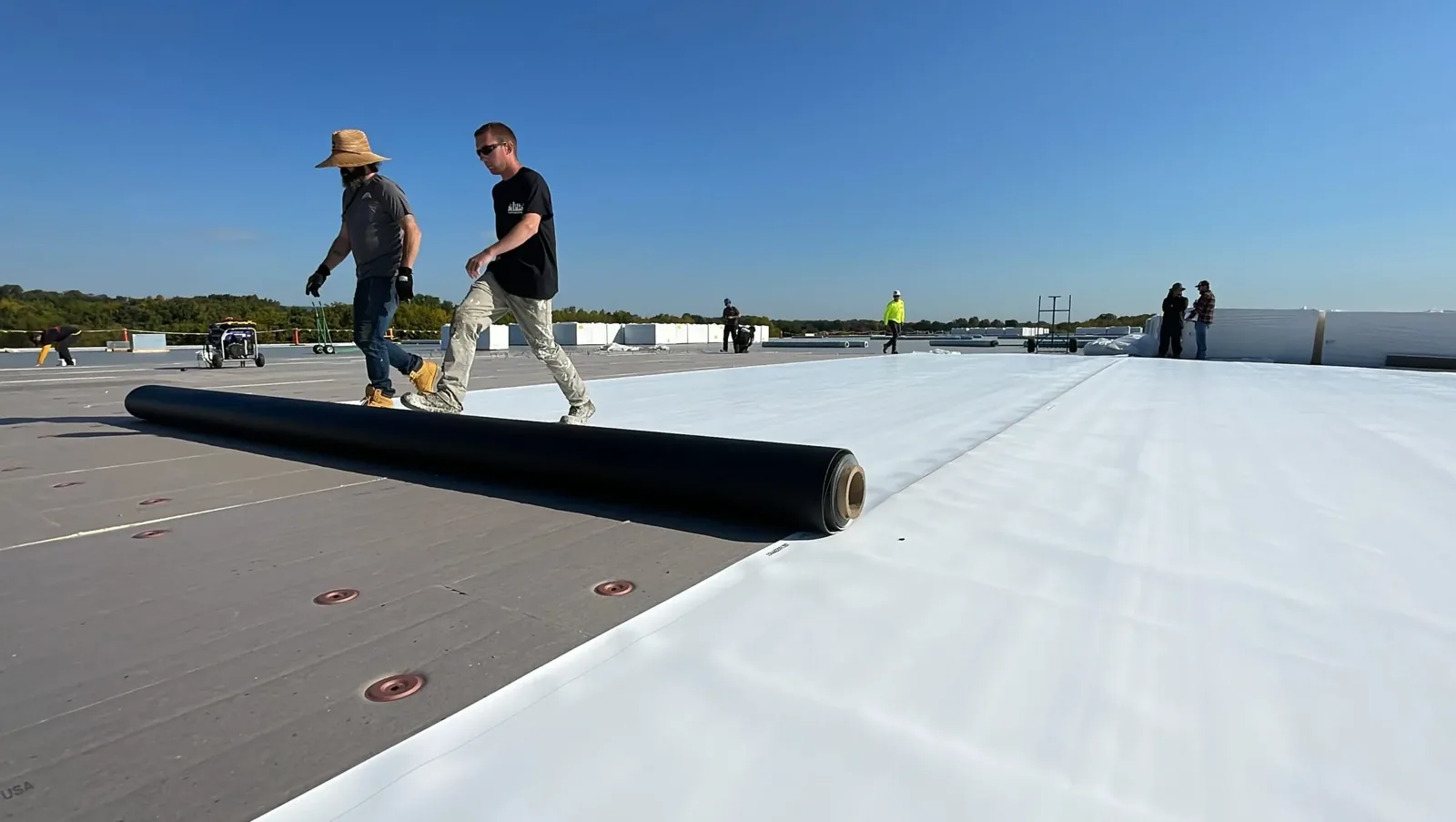
The choices follow the scan. A roof with a few failed details gets them rebuilt in matching material. A dry membrane with a worn surface can take a coating restoration. A roof with wet insulation, or one that has been recovered more than once, needs replacement, and the proposal sets that price beside the alternatives.
On small roofs, cost is driven by access, not area. A hoist from the street, a lane closure, a stair that cannot take rolls and a neighbor's wall that needs careful flashing add more than the membrane does. We list each as its own line so an owner can see which costs are fixed and which can be phased.
Owners of small commercial properties often want to know whether a repair now saves a replacement later. Sometimes it does. Dry insulation under a sound deck repays a good repair, and the log shows what was done. Wet board does not, and money spent on patches there only postpones the larger bill while the water keeps working. Phasing sits in the middle: the worst section is replaced and tied in to shed water by itself, the remainder gets a date for the next look, and an owner who cannot fund everything this year still has the leak stopped and a plan on paper.
Snow, ice and surge years
Winter loads small roofs through drains and parapets. The city's snow totals about 29.8 inches in a typical year, and January 23, 2016 showed how quickly 27.3 inches can bury a scupper. Ice at the drain turns a thaw into a pond, and a pond near a party wall finds the flashing. Sandy's 80 mph gusts of October 2012 and the Ida downpour of September 2021 both reached the island, and the checks after either one run the same way: edges first, drains second, then the wall flashings.
Access, neighbors and the calendar
Small buildings share sidewalks and driveways with their neighbors, and a hoist that blocks a driveway starts a complaint before the first roll is up. We agree the staging plan with the building's manager and give adjoining owners notice. Noise happens during reasonable hours, and anything that could drop debris on a neighbor's side is netted first.
The same approach serves nearby districts such as Tompkinsville, and an owner with property in both can keep one log for the pair.
Bay Street runs on to St. George, and a property owner with buildings at both ends keeps a single log format for the pair.
What goes in the log
The log is a roof plan with marked zones, photographs, scan results and a ranked list of repairs. A line beside each item says why it ranks where it does. It travels with the building from one owner to the next.
Related Roofing Work
More roofing work that comes up alongside Clifton.


Commercial Roofing Questions
Who pays when a neighbor's roof leaks into my unit?
That is a question for the deed and the lease. The water is traced to its entry, photographed, and written up in one report for both owners.
A building is partly empty. Does that change the inspection?
It adds a scan. Empty units hide leaks, so we map the insulation for moisture to see how far any water has spread.
How do you flash a roof to a neighbor's brick wall?
With a counterflashing set into a cleaned mortar joint and a base flashing lapped over the membrane. The joint is sealed and logged.
Can a small roof be done in one day?
Often a repair can, and a replacement of a small roof may take a few days. Weather and access set the pace, and we dry in the open area each evening.
What does the first visit include?
A full walk, photographs, probing of seams and flashings, and a moisture scan when a stain suggests water has moved. The written log follows.