
Commercial Roof Replacement in Staten Island, NY
Full tear-off and replacement of commercial roofs in Staten Island, NY, from West Shore warehouses to South Shore retail, planned around storms and tenants.
A core cut through a tired flat roof on Staten Island tells the story in about a minute: a membrane that has lost its flexibility, insulation the color of wet cardboard, and a deck with rust blooming at the fasteners. When an inspector writes those three findings in the same row of the log, repair money stops buying time and a full replacement becomes the sensible plan. Commercial Roofing Staten Island handles that decision for owners and facility directors across the island, from the warehouse belt in Bloomfield and Travis to the older brick on Bay Street. We tear off the old system, correct what is underneath, and install a new one sized to the building's exposure.
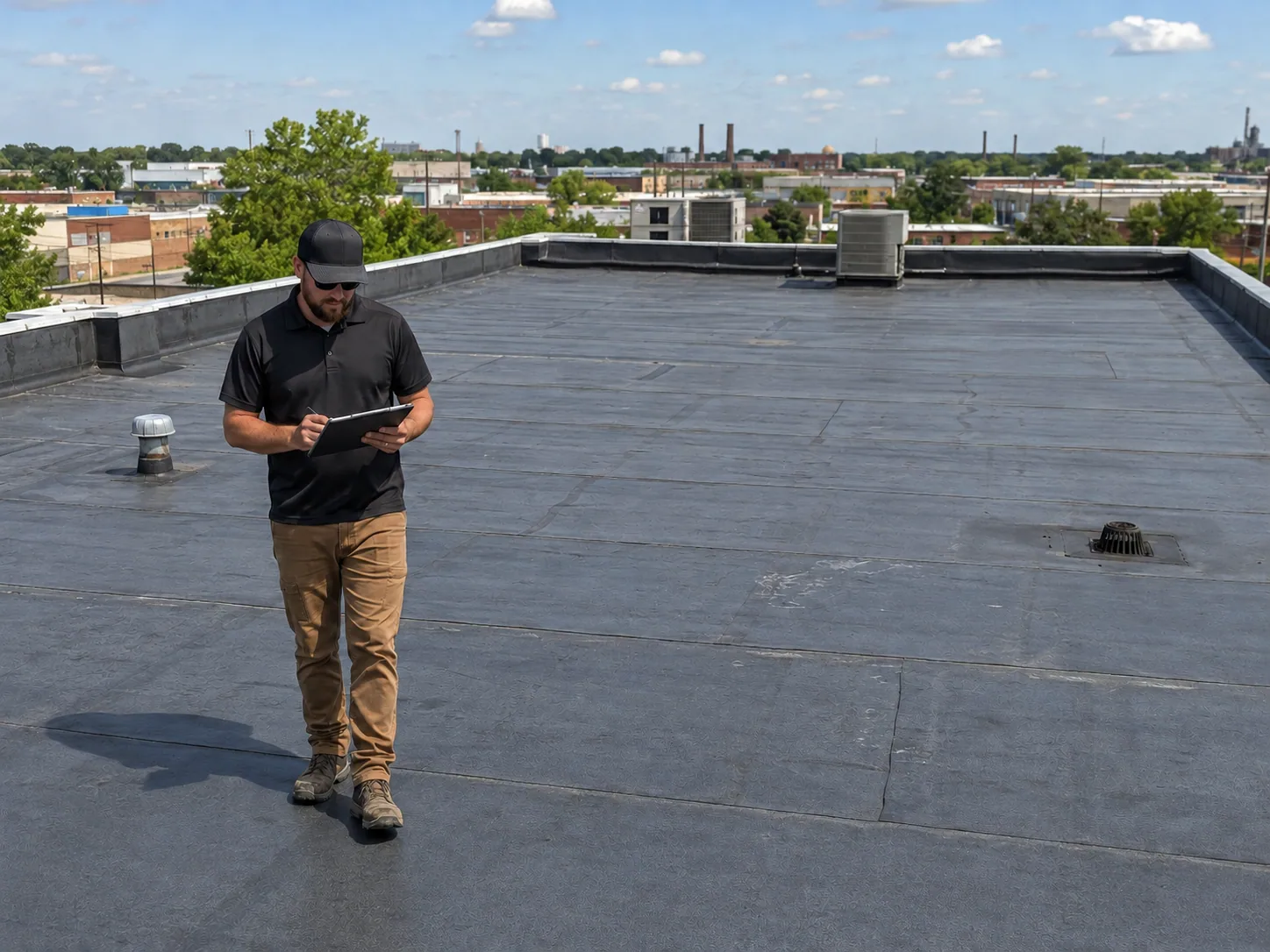
Replacement is the largest roof project a building sees, so it deserves a clear inspection record before anyone prices it. We walk the roof, mark every soft area, and give you a written scope that separates what must be removed from what can stay.
Findings that point to replacement
The first finding is repeat repairs. If the same corner of a roof has been patched three seasons running, the membrane around the patch is usually failing in all directions at once, and each new patch only moves the leak a few feet. The second is saturated insulation. We run a moisture scan across the field and confirm it with core cuts, and when wet material covers a large share of the roof area the deck and insulation have to come out, not just the membrane. The third is seam and flashing failure along the whole perimeter rather than at one detail.
Age matters less than condition, but age still frames the conversation. The city's 27.3-inch snow day in January 2016 and the Ida flash flooding of September 2021 loaded and flooded roofs in ways an original designer may not have assumed. We read the roof as it is today, with a hands-on roof inspection behind every recommendation.
Tear-off and what is under it
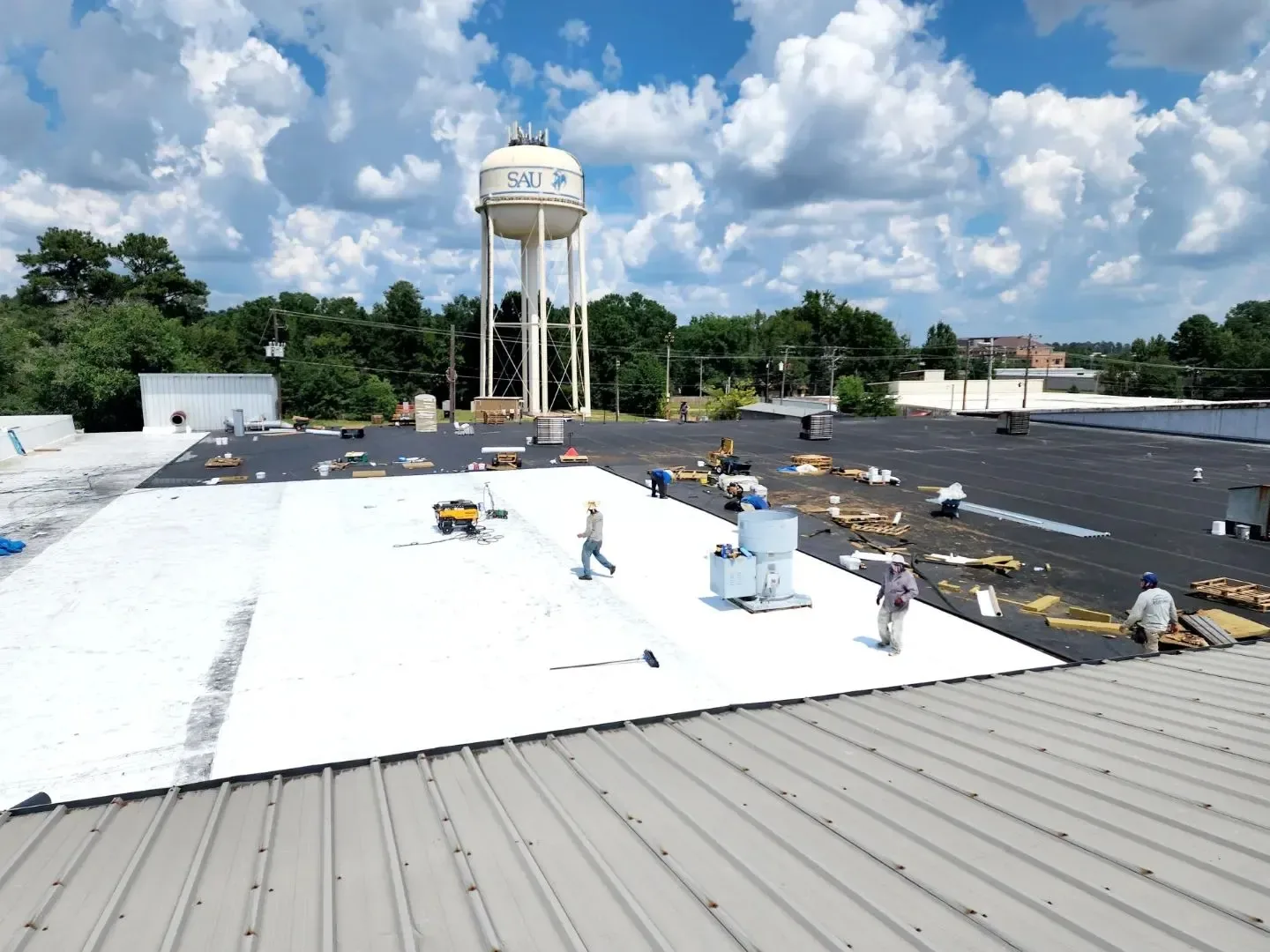
Tear-off is where most surprises show up, so we plan for them. Once the old membrane and insulation are cut away, we look at the deck panel by panel. Corroded steel decking gets replaced in sections, and any fastener that no longer bites is re-driven or swapped. Older buildings can hide uneven decks and patched penetrations from past tenants, and tear-off is where those finds surface. The 19th-century stock on Richmond Terrace in Port Richmond and the yards along the Kill Van Kull in Mariners Harbor are where that kind of survey starts. Each repair is photographed and logged so the owner sees what was found before the new roof covers it.
We schedule tear-off in sections that can be dried in by the end of each work day. A section that is open at sunrise is closed and sealed by evening, with temporary tie-ins at the edges. That discipline matters on an island where a harbor squall can arrive faster than a forecast suggests.
Choosing the new system
The new roof should match what the building does. A distribution building with few penetrations and wide open fields suits a single-ply membrane such as TPO, mechanically attached or fully adhered depending on wind exposure. A roof carrying heavy rooftop equipment and frequent foot traffic from service crews may call for modified bitumen for its toughness underfoot. Where rooftop equipment sits on curbs that will be replaced anyway, the replacement is the right moment to reset them with proper flashing heights.
Insulation and cover board deserve as much attention as the membrane. A cover board protects the insulation from foot traffic and hail-like impact, and added thickness can bring the building closer to the energy requirements in the 2022 NYC Construction Codes published by the Department of Buildings. We confirm the code path for your building before the scope is final, so the permit review does not hold up the schedule.
Wind and edges on the shore
Edges decide how long a new roof lasts in this harbor. Sandy's gusts reached 80 mph on October 29, 2012, while the surge climbed 9.56 feet above normal tide at the north tip, and wind at that speed finds any loose perimeter metal and peels back the membrane behind it. On a replacement we treat the perimeter as its own scope: new edge metal with continuous cleats, proper fastening patterns at corners and along the parapet return, and added attachment at the zones where uplift is strongest.
Because Sandy's floodwater took out whole blocks of houses in New Dorp, Midland Beach and Oakwood Beach, drains and scuppers on South Shore buildings get an upgrade check as well. If a roof backs up during a surge or cloudburst, water has nowhere to go but into the building. We size drains and overflow scuppers to the roof area, and we say so in the scope.
Working over people and inventory
A reroof here usually has to run with the building open. Retail along Richmond Avenue and Hylan Boulevard cannot close for a month, and the facility director at a medical office has patients arriving every morning. We plan staging away from entrances, route debris chutes around loading docks, and schedule noisy tear-off for the hours the building can tolerate. For tenants we provide a written schedule and a single phone contact who can pause a task when needed. Our approach to reroofing an occupied building starts with the tenant's calendar, not ours.
What moves the price
Price follows scope, and scope follows findings. The biggest drivers are how much insulation and deck must be replaced, how many penetrations and curbs need new flashing, the access to the roof, and whether crane or hoist staging is needed. A tight lot on a hillside in St. George costs more to stage than a wide-open yard on the West Shore. Disposal is another line item that deserves attention, and we show it separately. We do not quote a price before a roof walk, because a number built on a guess is the one that changes after tear-off.
Closeout and the inspection log
When the last seam is welded or the last flashing is set, we walk the roof with the owner or the facility director. Every drain is cleared, every penetration is checked, and the photo record from tear-off to finish goes into the log. That record is the roof's history from day one. It also supports warranty paperwork and any future insurance claim after a storm, and it gives the next person who manages the building a plain account of what lies under the surface.
Related Roofing Work
More roofing work that comes up alongside Commercial Roof Replacement.

Commercial Roofing Questions
How do I know a roof is past repair and needs full replacement?
Look for wet insulation across a broad area, a membrane that cracks or splits when flexed, and repairs that fail within a season or two. A moisture scan and core cuts settle the question with data. If saturation covers a large share of the field, replacement is usually cheaper than repeated repair.
Can a new roof go over the old one on Staten Island?
Sometimes, when dry insulation and a sound deck make it possible. A recover saves tear-off and disposal cost but adds weight and hides the deck. We decide that after a moisture survey, and the recover option is priced next to full replacement so you can compare.
How long does a replacement take for a typical retail or warehouse building?
Duration follows roof area, weather and access, so the schedule comes with the written scope after the roof walk. We build in weather days because a harbor storm can stop work for a day or two, and we dry in each section nightly.
Will work stop the building from operating?
Not in most cases. We stage away from entrances, schedule noisy tasks around your hours, and give tenants a written plan. Buildings with sensitive operations get an agreed stop list before the first day.
What paperwork should I expect at the end?
You receive the photo log from tear-off through finish, a list of materials installed, and the warranty documents tied to the system. We also leave the drain and flashing details marked on a roof plan for future maintenance.