
Commercial Roofing in Travis, Staten Island, NY
Commercial roof inspection, repair and replacement in the Travis area of Staten Island, NY: telecom and industrial park buildings and West Shore retail.
An industrial park given over mostly to Internet and telecommunications companies, retail strips along the West Shore Expressway service roads and freight rail running toward a container terminal give Travis in Staten Island, NY a roof list unlike any other part of the island. Walks here by Commercial Roofing Staten Island start from a question that matters more in this district than most: what sits under the roof that cannot get wet.
Travis has the former Fresh Kills landfill along its southern boundary and sits inside the West Shore belt, where most of the island's industrial development stands and the fewest residents live. Roofs here are work roofs, and a leak is an operating problem before it is a maintenance one.
The Teleport industrial park
At the eastern edge of Travis, the Teleport industrial park is home mostly to Internet and telecommunications companies. For a roofer, that tenant mix points to equipment inside the buildings that does not tolerate water, and to rooftop plant that keeps it cool: chillers, condensers, exhaust and antennas. Each roof is read by walking it.
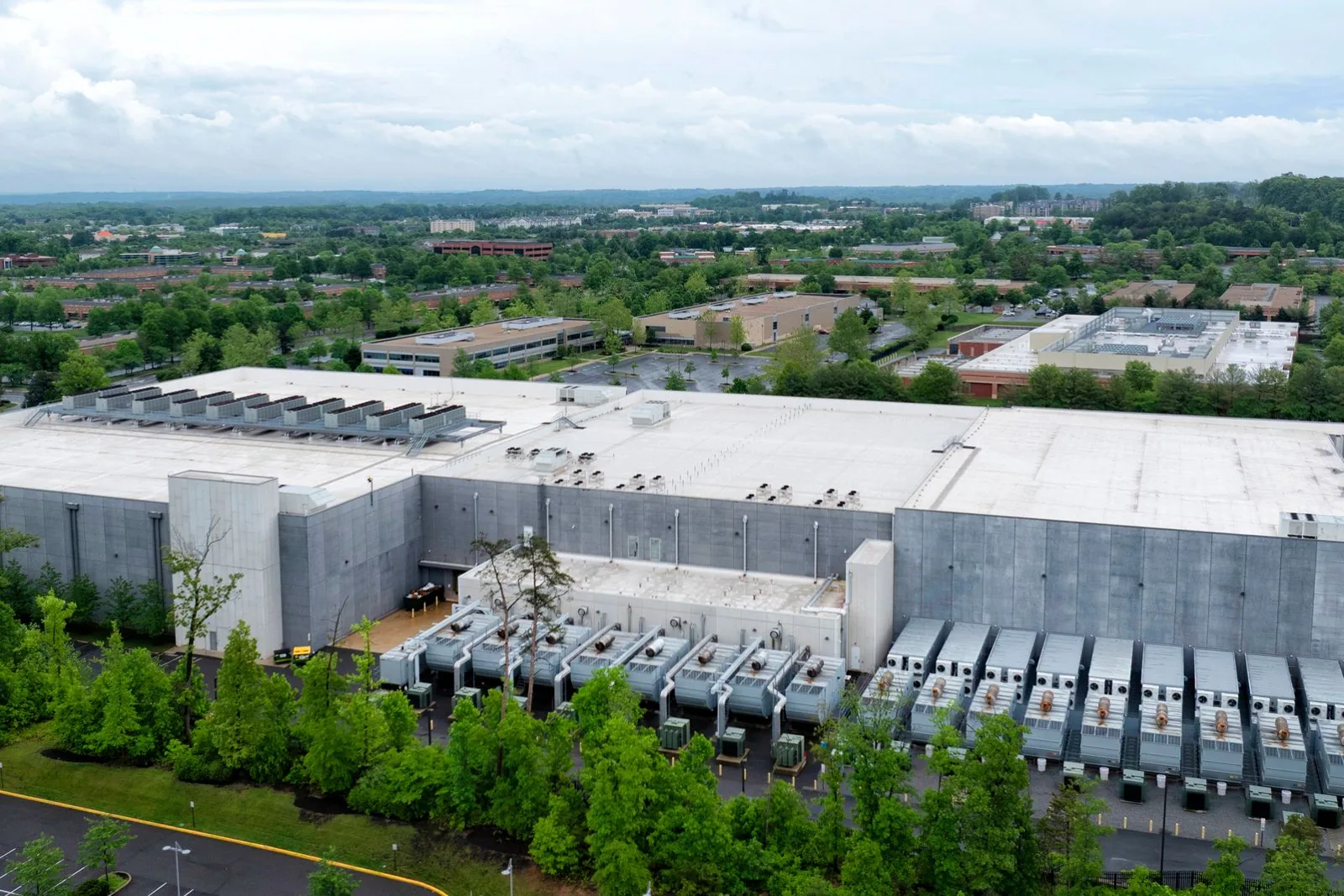
Where the contents are sensitive, the standard changes. A slow leak that a warehouse could live with for a season is an emergency over equipment, so we scan for moisture, cut cores at the doubtful spots and rank the findings by what lies beneath. Drains get a second route for water, with overflow scuppers set above the main drains. The same priorities guide our data center roofing work, and the log records the sequence for any repair.
Retail on the service roads
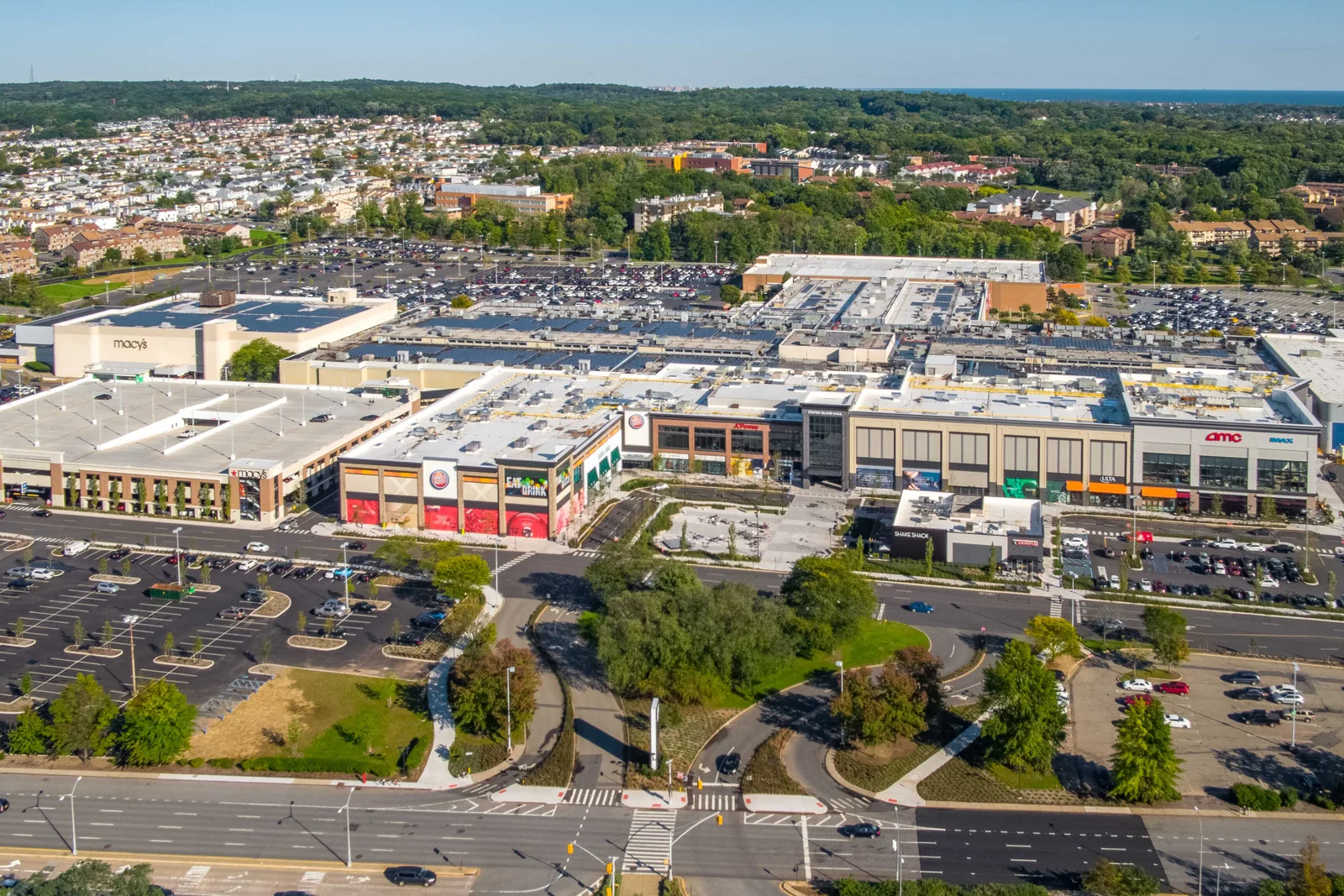
The West Shore Expressway service roads carry shops and other businesses, and nearby West Shore Plaza opened with Burlington Coat Factory as its lead store. A strip of this kind has many small tenants under one long roof, and a leak is often found in a tenant's space and fixed on the roof of another. Tracing is the first job: from the stain along the deck, past the party wall, to the entry point at a curb, a vent or a seam.
Rooftop units are the usual cause. Each tenant's equipment sits on a curb whose flashing ages at its own rate, and service crews walk the same routes until the membrane wears. We map every unit on the roof plan, mark the curbs that are sealed with sealant alone and set walk pads on the routes. Our shopping center roofing notes follow the same order.
Freight rail and the landfill edge
Freight trains reach the Howland Hook Container Terminal over the Travis Branch of the Staten Island Railway, so the district is a working corridor. To the south, the old Fresh Kills landfill, closed on March 22, 2001, is becoming Freshkills Park across about 2,200 acres. A district with open ground to the south is still checked for lift at edges and corners, as every island roof is.
Wind is the first test of a perimeter. A perimeter with loose coping is the first thing a wind like Sandy's finds, and its gusts reached 80 mph in October 2012. We check the fastener rows, the edge metal and the first few feet of sheet, and the edge metal and coping repair sets them right before the field work begins.
What the inspector sees
Every walk begins at the drains. A strainer left loose, a sump choked with grit or a scupper blocked by a packed leaf mat is the first line in the log. Next is the ponded seam beside the drain, a mark of settled slope and wet membrane. Then the penetrations, the curbs and the walk-pad wear.
On an industrial roof with mechanical plant, the quiet failures are the ones that matter. A condensate line that drains onto the membrane, a sealant bead dried to powder or a pipe boot cracked by sun is small, and each is a point where water finds the deck. The penetration flashing work replaces failing details with formed flashings set into a clean surface.
Storm and winter checks
The city's winter snow comes to roughly 29.8 inches, and 27.3 inches on January 23, 2016 loaded every roof and buried drains. The thaw is the time to look at ponded seams and lifted laps. A drain with no clear overflow route is how the rain behind Ida's flash flood emergency in September 2021 turned into leaks.
For buildings that cannot take a leak, we add a post-storm look to the spring and fall visits, with the drains and the equipment curbs first.
Repair, restore or replace
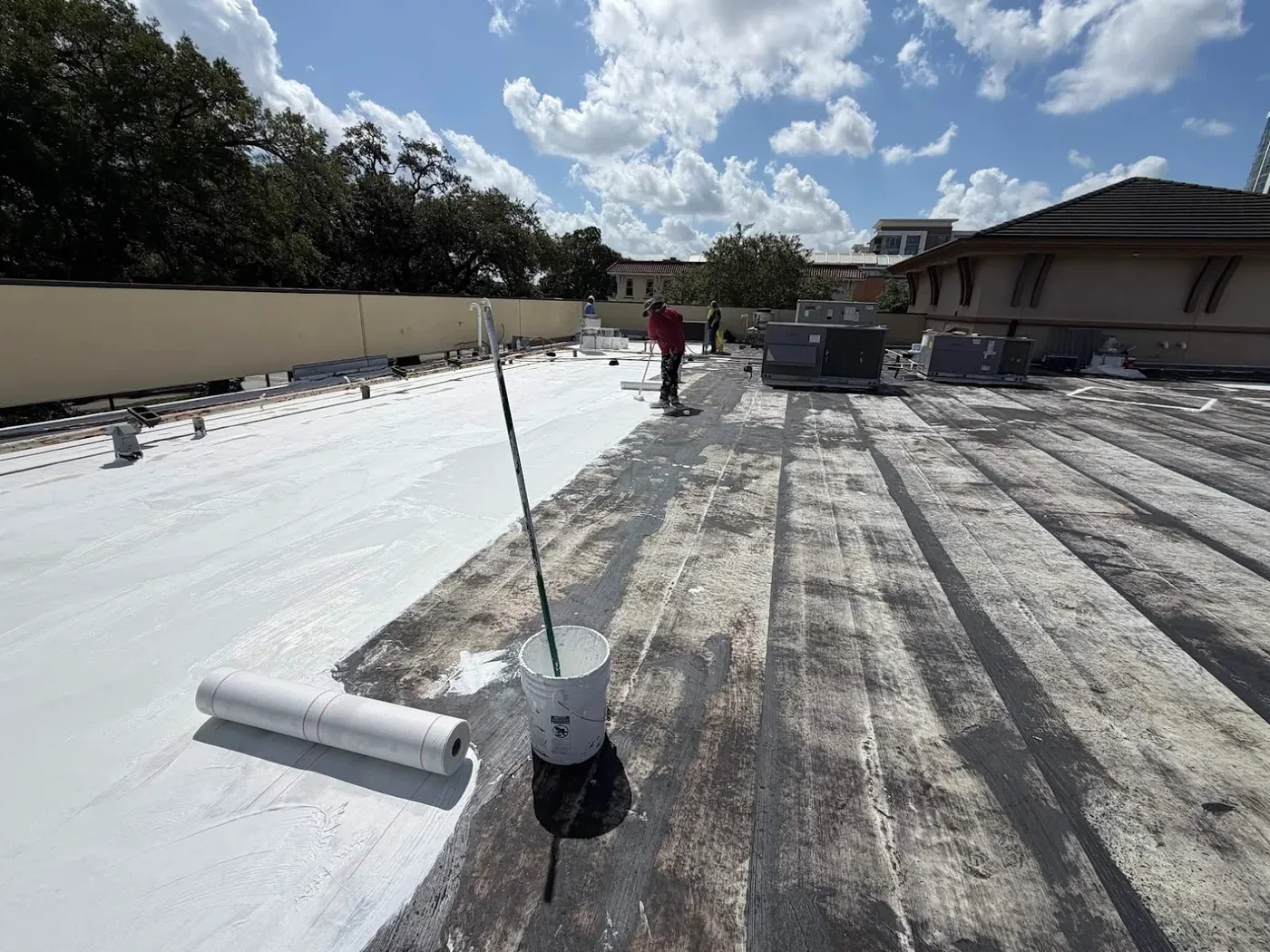
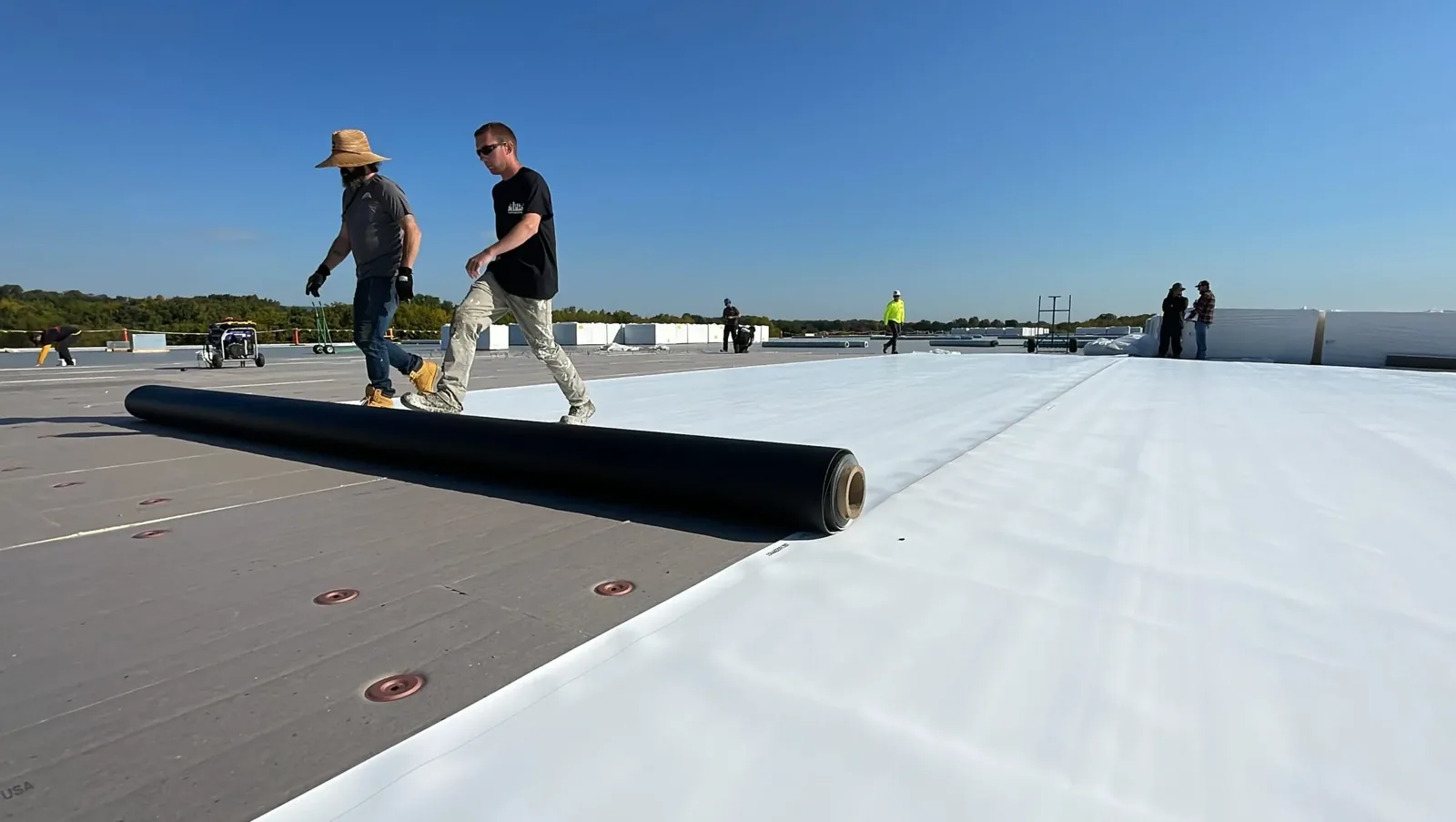
The owner's choices follow the findings. One damaged area on a sound roof gets a repair. Coating restoration may suit a dry membrane that is worn only at the surface. A roof with wet insulation, or one where several layers no longer bond, needs replacement. For telecom and industrial buildings, replacement is phased so that the roof over critical space is finished first and kept dry throughout.
Cost follows the details: the number of curbs and penetrations, the perimeter length, the deck's condition and the crane time required. Access, temporary protection and overtime for work scheduled around operations each get their own line on the proposal.
Access, change control and neighbors
A building with sensitive operations tends to keep its own rules for the roof: sign-in, escorts, notice before work and a set window for shutting down equipment. We follow them, plan around them and write the schedule into the proposal. The same expressway service roads that bring customers to the retail strips carry our trucks, so deliveries are timed early.
Owners with buildings nearby in Bloomfield or at Port Ivory can keep one inspection log for all of them, with the same photographs, the same scan format and the same ranked list.
A facility director can hand the log from each visit to a lender, an insurer or a tenant, and the next inspector can compare like with like instead of starting over. When repairs finish, a closeout walk adds the new seams, the reset edges and the cleared drains to the same pages.
Teams that manage several buildings in the district want one comparable report. The crew rates each roof on the same scale, lists the repairs in priority order and records who approved each step, so a manager can scan the district in a single sitting. Rail and landfill neighbors are noted where they affect access, dust or the timing of deliveries.
Related Roofing Work
More roofing work that comes up alongside Travis.
Commercial Roofing Questions
What changes when a building houses equipment that cannot get wet?
The ranking. Findings over sensitive space jump to the top, drains get a second route for water and the moisture scan is repeated after repairs to prove the roof is dry.
Can a roof near critical rooms be repaired during normal operations?
Yes, with protection below the open area, short sections and a plan for rain. We agree the shutdown windows for rooftop equipment with the building's staff ahead of time.
How do you find the source of a leak in a strip of small tenants?
We trace from each stain along the deck, past the party walls, and confirm with a moisture scan. Rooftop-unit curbs are the usual cause, and each one is logged.
Do roofs near open ground need extra wind checks?
They get the same perimeter checks as any roof, with extra attention to loose coping and fasteners. Open ground gives wind room, so edge metal is the first thing we test.
What does the first written report include?
The log carries a zoned roof plan, a photograph of every finding, scan results and a repair list ranked by urgency.