
Skylight and Penetration Flashing in Staten Island, NY
Skylight, curb, pipe boot and penetration flashing repair in Staten Island, NY: sealing the weakest points of commercial flat roofs early.
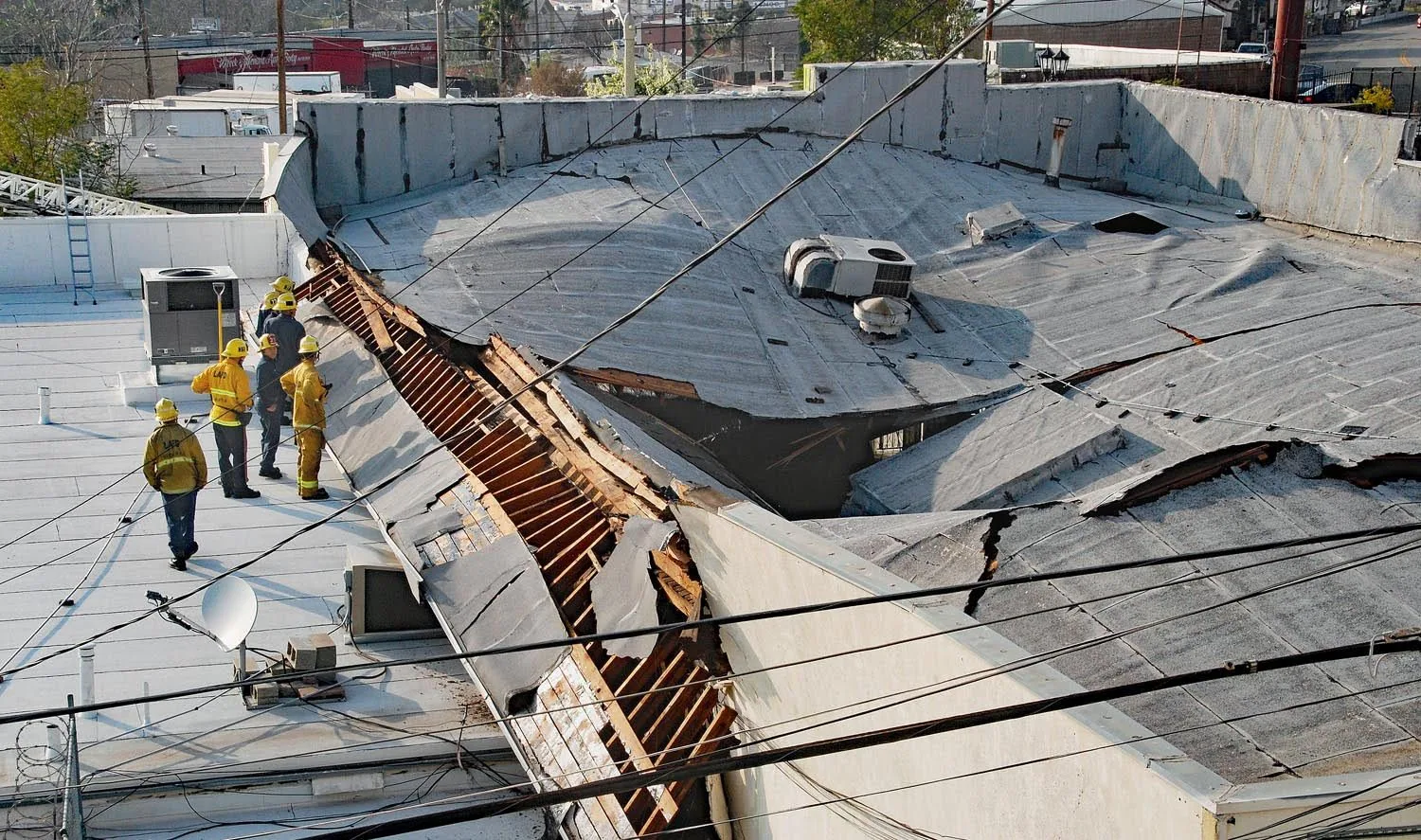
A pipe boot split along its collar, a skylight curb with sealant pulled away at the downhill corner, a pitch pan that has dried to a crust: every inspector on a Staten Island roof writes these down, because the hole cut through a membrane is the weakest place in it. Commercial Roofing Staten Island repairs and replaces skylight flashing, curbs, pipe boots, pitch pans, conduit supports and other penetrations on commercial roofs across the island.
Most leaks on a roof with a sound field membrane start at a penetration, and the repair is usually small if it is made before the insulation below has taken on water.
The penetration families
Penetrations come in a few families. Skylights and roof hatches sit on curbs with flashing on all four sides. Plumbing vents, exhaust stacks and conduit pass through the membrane with boots or collars. Pitch pans surround odd-shaped supports with sealant or pourable filler. Rooftop equipment curbs carry units, fans and ducts, and each one is a flashing detail of its own.
Each type ages differently. Rubber boots crack in the sun. Sealant dries and pulls away. Metal flashing corrodes at its fasteners, and pourable sealer settles and leaves a void at the edge. The list in our inspection log names every penetration on the roof, its type, its condition and a decision, since a roof with sixty penetrations has sixty small places to go wrong.
Skylights and roof hatches
Skylights leak in two ways: water gets under the curb flashing, or water gets through the glazing or frame itself. The first is a roofing problem and the second is a skylight problem, and the repair differs. We start with the curb, checking the flashing at each corner, the counterflashing, the sealant and the fasteners. Then we look at the frame, the gasket and the glazing.
An old skylight with a failed frame is often cheaper to replace than to repair, and the new unit is set on a rebuilt curb with fresh flashing. Roof hatches get the same treatment: the curb, the gasket, the hinge and the latch. Retail roofs in New Springville, where the island's largest retail center stands, can collect penetrations over years of tenant changes, and skylights are only part of that list.
Pipe boots, pitch pans and conduit
A pipe boot is a rubber or metal collar that seals the membrane around a pipe. It cracks where the rubber meets the sun, and its clamp ring loosens. Replacing a boot takes a few minutes if the surrounding membrane is sound, and the flashing failure repair that follows a survey can often clear a whole roof of cracked boots in a day. Leak repair often ends at a boot.
Pitch pans were common in older roofs, and they are poor performers because the filler shrinks. We replace them with prefabricated flashings or liquid-applied flashing resin where the geometry allows. Conduit supports and cable trays are tricky, since they carry loads and move; we use supports that sit on pads over the membrane and flash the base properly instead of cutting new holes.
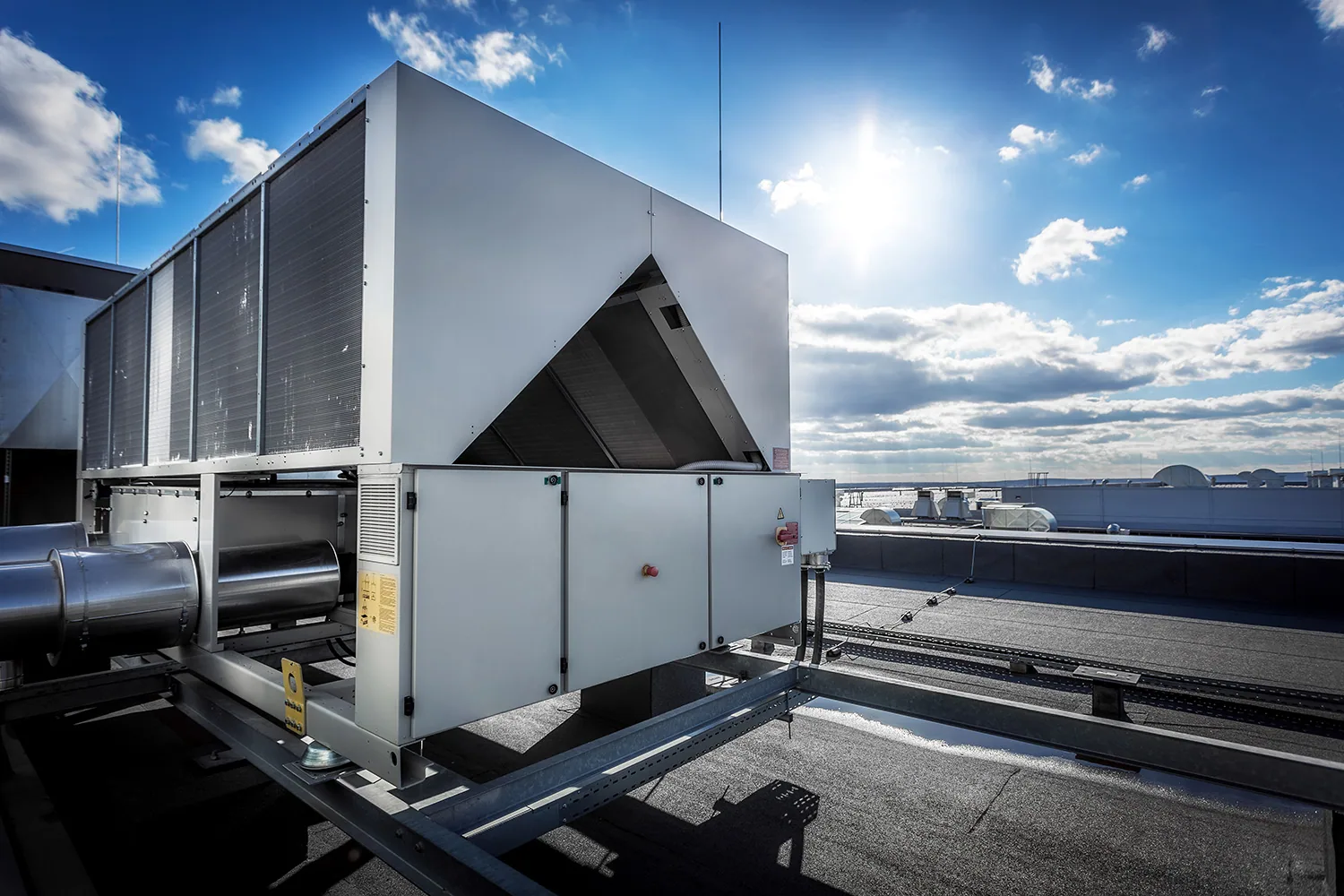
Curbs and the rooftop units they carry
Rooftop equipment sits on a curb, and the curb needs flashing that lasts as long as the roof. Moving or replacing a unit changes the curb and often breaks the flashing, so we check it whenever mechanical crews have been on the roof. Equipment curbs and supports are a topic of their own, and the flashing detail is where roofing and mechanical trades meet.
Walk-pad wear around curbs shows where service crews step, and the membrane there takes a beating. We add pads along service routes and mark the routes in the log. Condensate lines should drain away from the membrane, and we note any that drip onto it, since a steady drip wears a hole faster than weather does. A short length of pipe and a splash block fixes most of them and costs little next to a membrane patch.
Materials and methods
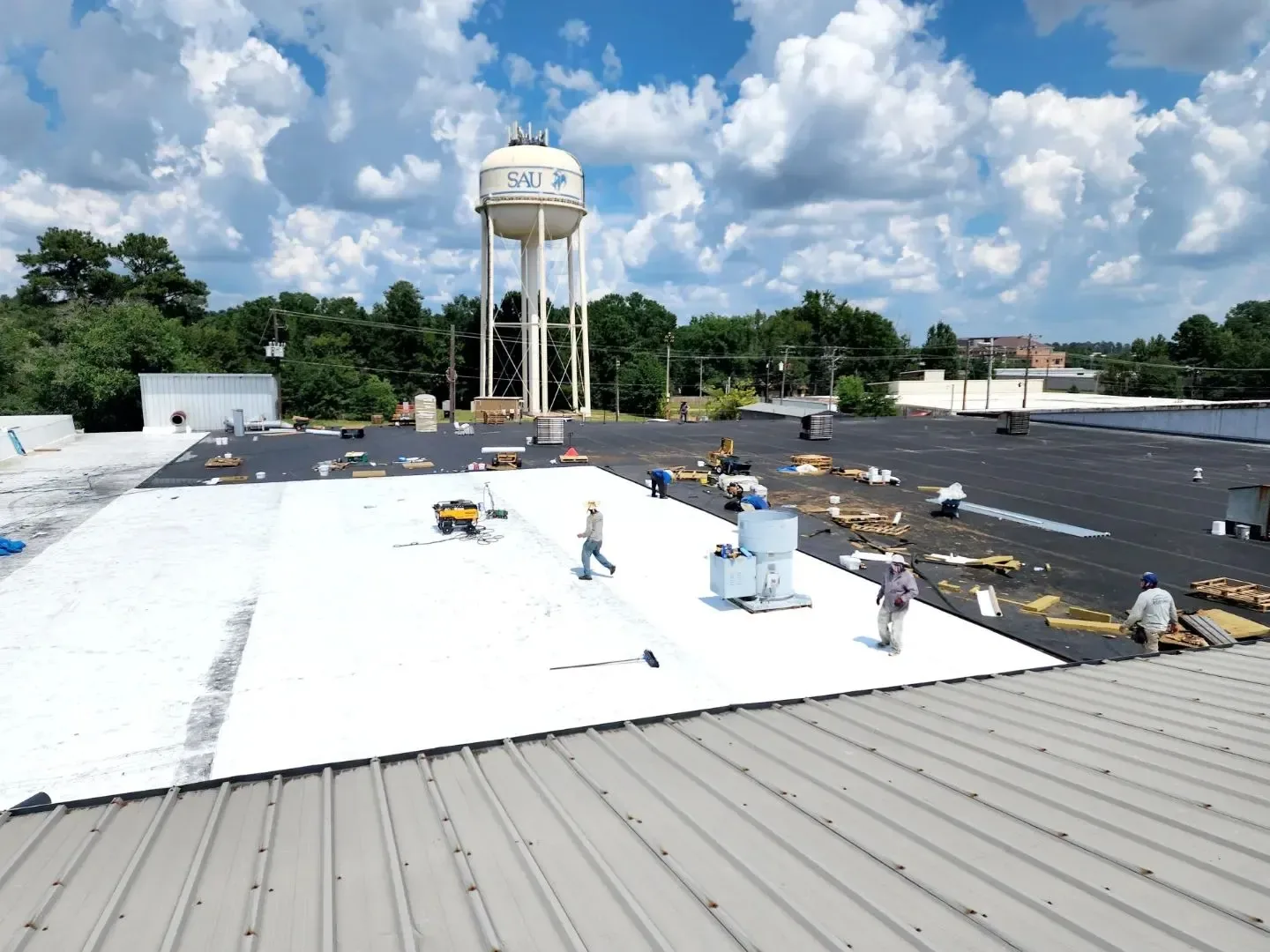
The flashing method follows the roof. On single-ply membranes such as TPO, prefabricated boots and welded flashings match the sheet, with hot-air welded seams around each collar. On modified bitumen and built-up roofs, flashing is built up in layers with a reinforced base and a cap. On metal roofs, penetrations use formed boots with sealant that tolerates movement. Liquid-applied flashing resin handles odd geometry where a prefabricated part will not fit.
Compatibility is the main rule. A sealant that attacks the membrane or a metal that corrodes against its neighbor will fail early, so we choose materials that suit the membrane and the exposure. On the South Shore, where Sandy's high water line reached 7.9 feet above ground in Oakwood in 2012, coastal exposure favors corrosion-resistant fasteners and flashing metals.
Storm, winter and the second look
Wind and rain test every penetration. Rain at the rate of Ida's flash flood emergency on September 1 and 2, 2021 shows which boots and curbs were already marginal. Snow adds weight on a skylight and drifts against curbs, and meltwater runs back along the curb face. Freeze and thaw opens sealant joints.
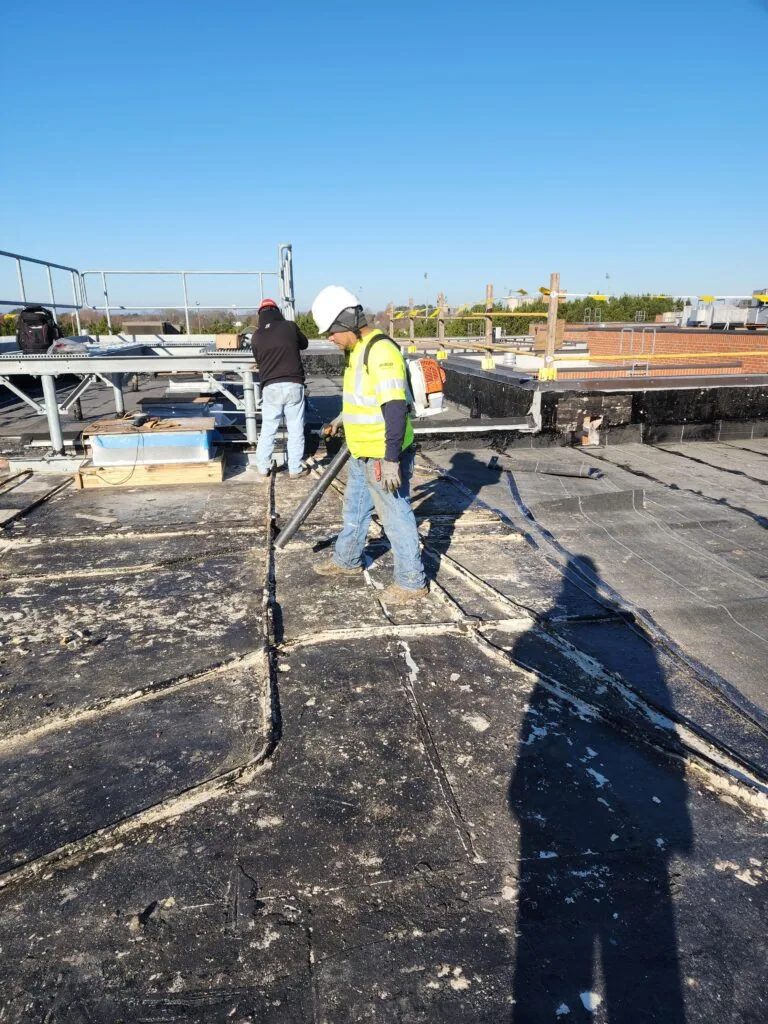
We recommend a penetration walk in spring and fall as part of preventive roof maintenance, and after any hard storm. Small items are repaired on the spot, and each repair is photographed before and after so the log shows what changed. Anything that needs a lift or a larger crew goes to the ranked list with a price. Where a skylight sits over an area that must stay dry, such as stored stock or a work floor, it moves to the top of that list, since a failed gasket there costs more than the repair.
Cost and scheduling
Penetration work is priced by the item. A boot or a single skylight is a small job, and a roof with many curbs is priced by count. The cost of ignoring them is wet insulation, which is priced by the square foot and does not come back. A single boot left cracked for a winter can wet an insulation board and stain a ceiling.
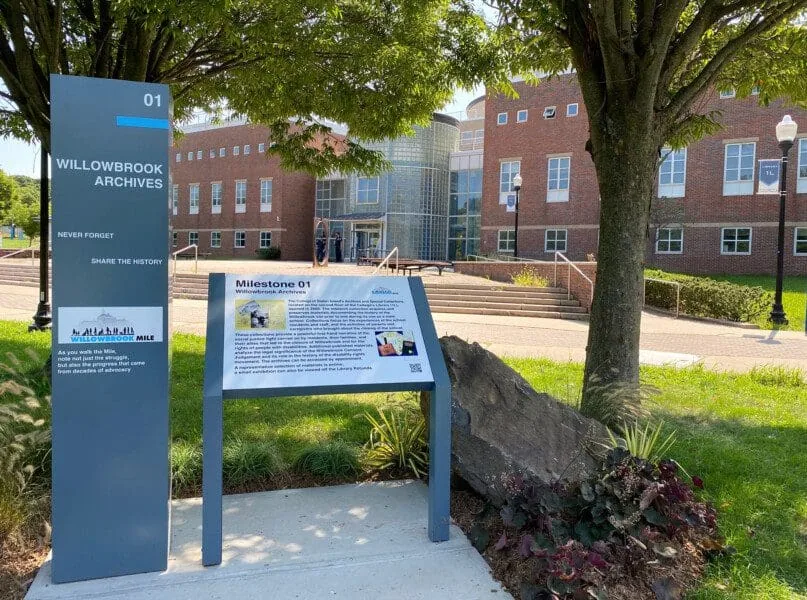
Scheduling is usually easy. Most penetration work is done in a day and can be arranged around tenants and operations. Work above a sensitive space, such as a clinic or a server room, includes ceiling protection and a plan for a dry day. The same sequence holds in Willowbrook, where a College of Staten Island campus occupies the former state school site, and along Richmond Avenue.
Related Roofing Work
More roofing work that comes up alongside Skylight and Penetration Flashing.

Commercial Roofing Questions
How do I know whether the skylight or the curb is leaking?
Check where the stain sits. Water at the edge of the curb points to flashing, and water running down the glazing or frame points to the skylight. We test both and report which applies.
Can a cracked pipe boot be patched?
A patch of sealant is a temporary fix. Replacing the boot takes about the same time and lasts longer, so we replace unless the surrounding membrane needs work first.
What replaces a pitch pan?
A prefabricated flashing or a liquid-applied flashing resin, depending on the shape. Both seal the opening without relying on filler that shrinks.
Do rooftop units need to be shut down for curb work?
Sometimes. Minor flashing repairs can be done around a running unit, while curb replacement needs the unit lifted and the building's mechanical contractor involved.
What does a penetration survey include?
A count and a photograph of every penetration, a condition note and a repair decision. It becomes the baseline for the next visit.