Commercial Roofing in Willowbrook, Staten Island, NY
Commercial roofing in Willowbrook, Staten Island, NY for campus, institutional and historic buildings, with parapet, drain and flat-roof repair.
A parapet cap loosened on a building that has stood since before the war, a flat roof on a campus classroom wing with a stain that returns every March, a hospital-era chimney base with sealant gone brittle: the inspector's notebook on a Willowbrook roof records buildings from several eras sharing the same ground. The district has held a state school, a military hospital, a sanatorium and a college, and the roofs reflect each chapter.
On institutional, educational and commercial buildings in Willowbrook, Staten Island, NY, Commercial Roofing Staten Island repairs and replaces low-slope and flat roofs, starting with the facilities director's answer to which buildings are original and which are additions.
Several eras on one piece of ground
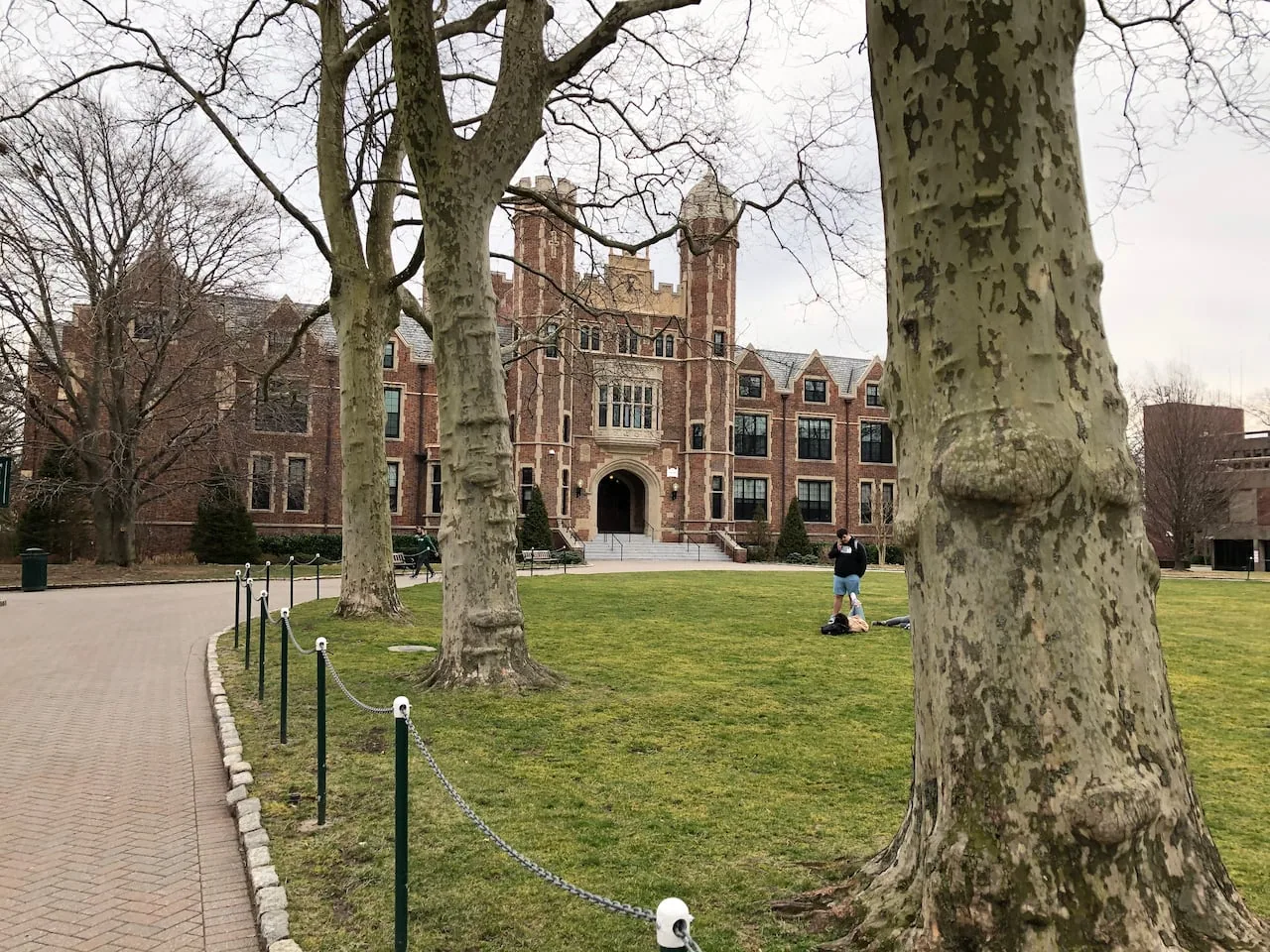
The state school that once stood in Willowbrook had shut by 1987, after a military hospital opened on the grounds in World War II, and today the College of Staten Island's campus occupies the school's site. Seaview Hospital, a former tuberculosis sanatorium in the district, was added to the National Register of Historic Places in 2005. A district with that history holds buildings of many ages and many construction types. Older masonry structures have parapets, cornices and flashing that need mason-grade care, while newer academic and administrative buildings tend to have single-ply or metal roofs and rooftop equipment. The roof walk records the system, the layers and the flashing for each, and the report ranks the buildings by risk.
Roofs on historic buildings
A National Register listing recognizes a property. It does not by itself set the rules for exterior work, so the first step is learning which agencies review a given project. We ask the owner for earlier approvals, photograph existing conditions and list what a repair would change in the roofline, the parapet or the visible materials. Work that stays out of sight and matches existing materials moves faster than work that changes what a visitor sees from the road, and a short submission with photographs and a material list usually keeps the review brief.
Repairs on older masonry include repointing, resetting loose coping, replacing counterflashing and sealing caps. Flashing failure repair at a parapet or a chimney base is the usual first step, and it prevents water from entering the wall. Where a roof must be replaced, materials are selected to match the existing profile and color, and a preservation consultant joins the review when the owner asks.
Campus roofs and the academic calendar
Campus roofs follow the academic year. Summer is the natural window for large work, with exam weeks, move-in and events marked off. A roof that cannot be finished in one summer is phased by building, and the first section is dried in before classes start.
Classroom wings, labs, libraries and athletic buildings differ in what they hold. A lab roof carries exhaust and sensitive equipment, a library roof protects collections, and a gym roof has long spans and few drains. The log ranks roofs by what sits below, and a facilities office can fund them in order of consequence. College and university roofing uses the same approach on any campus, and the report is written so a board can read it.
Flat roofs, drains and the March stain
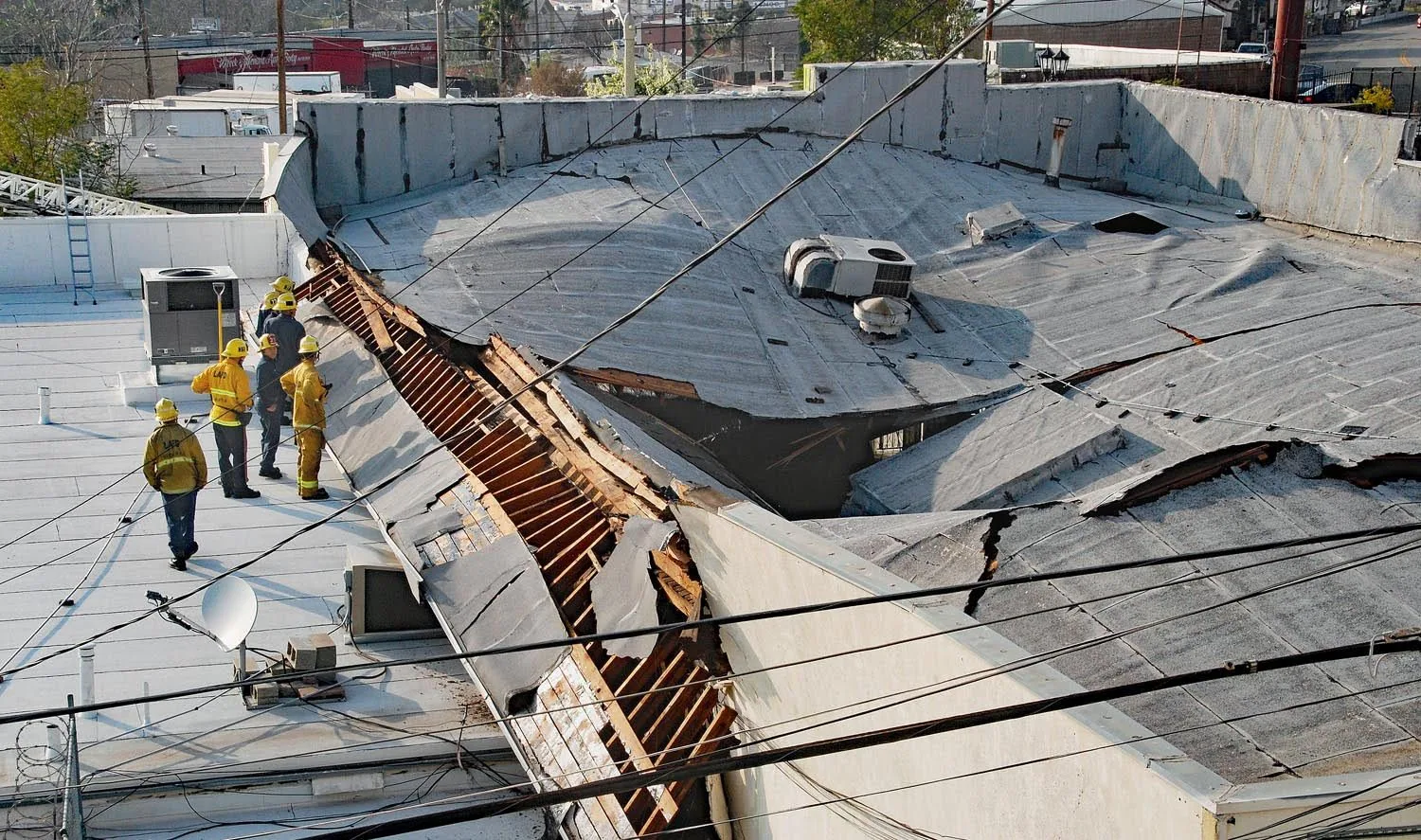
A stain that returns every March points to freeze and thaw. Water enters a small defect, freezes, widens it and thaws into the building. Roofs with ponded seams are the worst hit, since standing water sits against the membrane through the cold months. The stain marks the end of a long path, and the entry can be a drain, a curb or a parapet joint some distance off.
We trace from the high side, clear and flush drains, check curbs and flashing and scan for wet insulation after sunset. Winter loads are real: New York City gets about 29.8 inches of snow across a normal year, and 27.3 inches came down on January 23, 2016 alone. A tapered insulation layout can fix slope during a recover, and an overlay saves tear-off in an occupied building.
Occupied buildings and sensitive uses
Institutional buildings stay in use. Classrooms, clinics, offices and residence spaces cannot close for a roof job, and some hold sensitive equipment or records. We work in sections, dry in each daily, protect interiors under any opening and keep noise away from exams and clinical hours. Occupied building reroofing methods fit these buildings well.
Hoisting and staging are set away from entrances and paths used by students, patients and visitors. A named contact for each building handles questions, and the facilities office receives a daily note. Debris leaves by a service route, and dust and fumes are kept away from intakes. Neighboring New Springville and Travis follow a similar sequence for its commercial roofs.
Rain and storms on a low, wide district
Flat institutional roofs with few drains meet their test in rain like Ida's flash flood emergency of September 2021, and spring is the wettest season, in a city with about 49.5 inches of precipitation in a year. Sandy's gusts reached 80 mph in October 2012, and wind finds roof edges anywhere on the island.
We check drains, overflow and edge metal before storm season and walk the roofs after hard events. Temporary protection is staged in advance for buildings that cannot take water. Spring and fall give the steadiest windows for membrane and coating work, and the log records the dates so the next decision starts from facts.
Planning a campus-wide program
A facilities office with many roofs wants a program. We rate each roof, price repair, recover and replacement and spread the work across fiscal years. Historic buildings get their own track, with approvals built into the schedule.
Roof capital planning converts the log into a funding request, with photographs and cores to support each line. The cost drivers are named: roof area, wet insulation, access, historic requirements and the system chosen. A short summary page lets a board see the whole picture in a few minutes.
On any campus-style property, wind reaches roofs from several directions and leaves from nearby trees can end up in drains, so the fall walk includes gutters and scuppers beside tree lines. Where a historic building has a slate or tile roof, we inspect from a lift, photograph slipped pieces and flashing at chimneys and valleys, and arrange repairs with a craftsman suited to the material instead of forcing a flat-roof method onto a pitched one.
A campus with buildings from several eras needs a record that distinguishes them. The log groups roofs by era, lists the roof type and the last repair for each, and flags any building where a historic feature limits the choice of repair. Planners can then see where a single project could cover several roofs at once.
Related Roofing Work
More roofing work that comes up alongside Willowbrook.
Commercial Roofing Questions
Does a National Register listing stop us from re-roofing?
Not by itself. The listing recognizes the property, and the review path depends on the project and the agency involved. We document existing conditions and help the owner confirm what applies.
Why does our classroom wing leak every March?
Freeze and thaw widens a small defect each winter. We trace the entry, which is often a drain, curb or parapet joint, and repair it before the next winter.
Can roof work happen during the semester?
Yes, with a plan. Loud steps are timed away from exams and classes, interiors are protected and each section is dried in daily.
How are older masonry roofs repaired?
By repointing, resetting coping, replacing counterflashing and sealing caps. We match materials where the building is historic.
What does a facilities office receive?
A building-by-building log, a ranked list and a capital schedule with prices.