
Occupied Building Reroofing in Staten Island, NY
Reroofing Staten Island offices, retail and apartments while tenants stay in place: phasing, dry-in rules, noise limits and written notices.
On a reroof where the building stays open, the first page of the plan is a hoist location and a lane closure, because the street decides how fast a crew can move long before the weather does. The schedule carries as much weight as the membrane, and the calls that reach a facility director on this kind of job are about deliveries, noise and odor far more often than about water.
Commercial Roofing Staten Island reroofs offices, retail centers, apartment buildings and medical suites on the island while the people inside keep working, and we settle the phasing, the notices and the rain plan in writing before a crew is booked.
Buildings that cannot close
Different buildings tolerate different disruption. Tompkinsville's commercial streets are lined with tall brick buildings and numerous retail stores, the 900-apartment Urby complex opened in Stapleton in 2016, and Empire Outlets opened in St. George in May 2019 beside the waterfront. Residential, retail and mixed buildings of those kinds each need a phasing plan of their own.
Size and shape change the answer. A small mixed-use building on Port Richmond Avenue is a single crew on a single hoist, while a mall or a large apartment complex is taken in sections, so that only a few sections are open at a time and the tenants below see one corner of the roof change per week instead of the whole building.
Apartment owners face the quietest version of the problem, since residents are home all day and the top floor sits directly under the work. Our crews on an apartment roof keep to posted hours, hoist from outside and give the superintendent a daily note on what is open and what is sealed, which tends to be the thing residents ask about first.
Where these jobs go wrong
Four problems recur on occupied jobs. An open section is left uncovered after the last shift. Noise lands during a client call or a nap. Odor from adhesives or hot work drifts into a vent. And access fails, with a lane blocked or a fire exit crowded with pallets.
Each has a plain fix. We open no more roof than can be sealed before the weather turns, put loud work such as tear-off and fastening inside agreed hours, choose adhesives and methods that smell less and write down the route for materials. Tenants get a number to call and an answer the same day, and our crews are the ones who answer, so the facility director is not relaying messages between a tenant and a contractor.
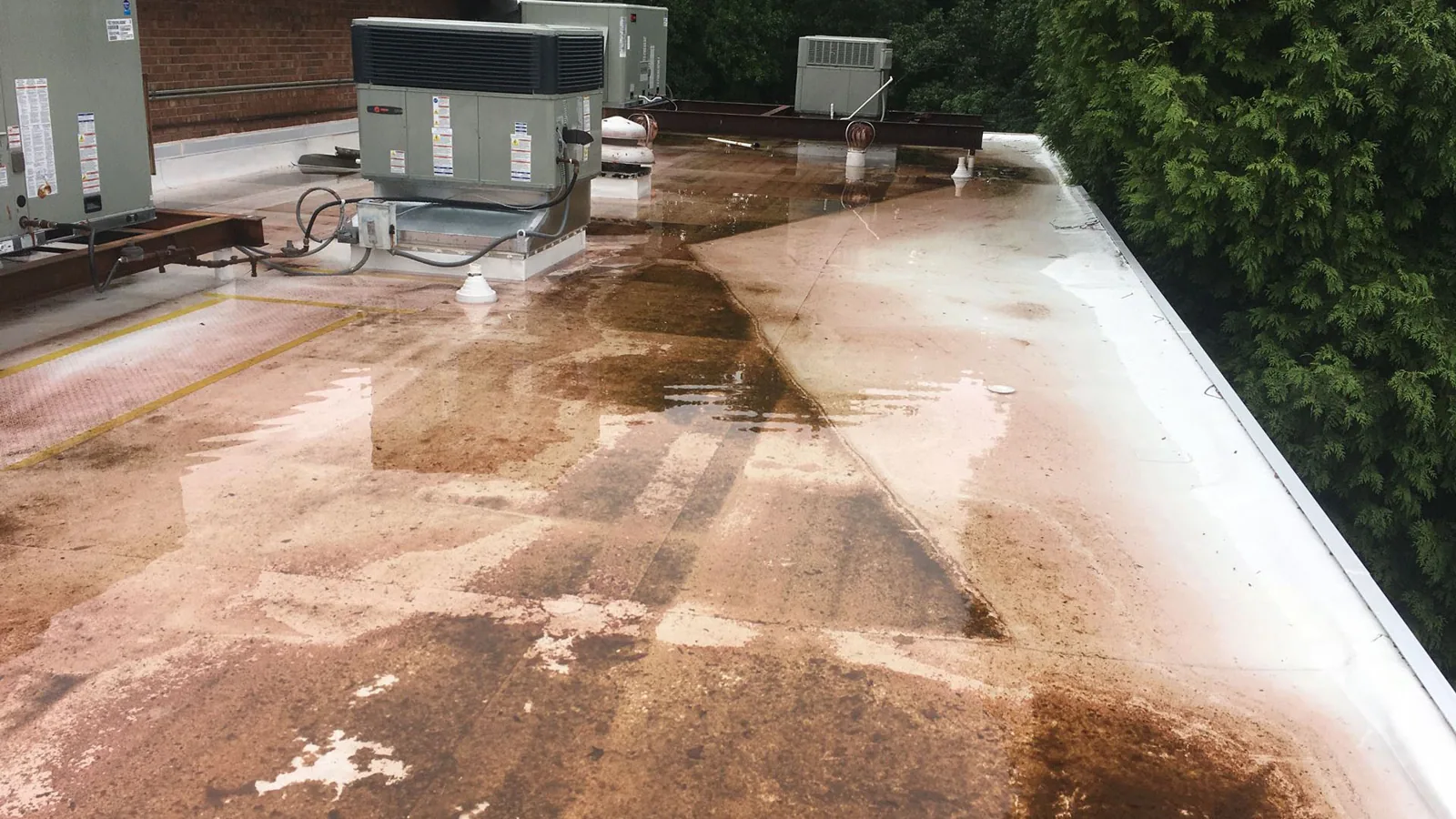
Nobody should discover a problem by looking up. A wet ceiling tile on the top floor is the usual first sign that a section was left open or a drain was covered, and the site lead checks the floor below each section before the crew goes home. Ponding water from a blocked drain during the job is treated as an incident and logged with a photograph.
The plan before the crew
The plan names the sections, the day each one is opened and sealed, the staging area, the haul route and the person on site who can stop work. It also names the shutdowns, if any, for rooftop units, and which tenants must be told twice.
- Phasing by section, with dry-in after the last shift.
- Quiet hours for tear-off, fastening and the hoist.
- A named contact for tenants and a posted notice with dates.
- Drains protected and a rain plan written before the first section opens.
Where the existing roof is dry, a roof recover over it cuts noise, dust and debris, since the old layers stay as a temporary cover; a moisture scan tells us whether that route is open. If the insulation is wet, tear-off is the sound choice and phasing becomes the main safeguard.
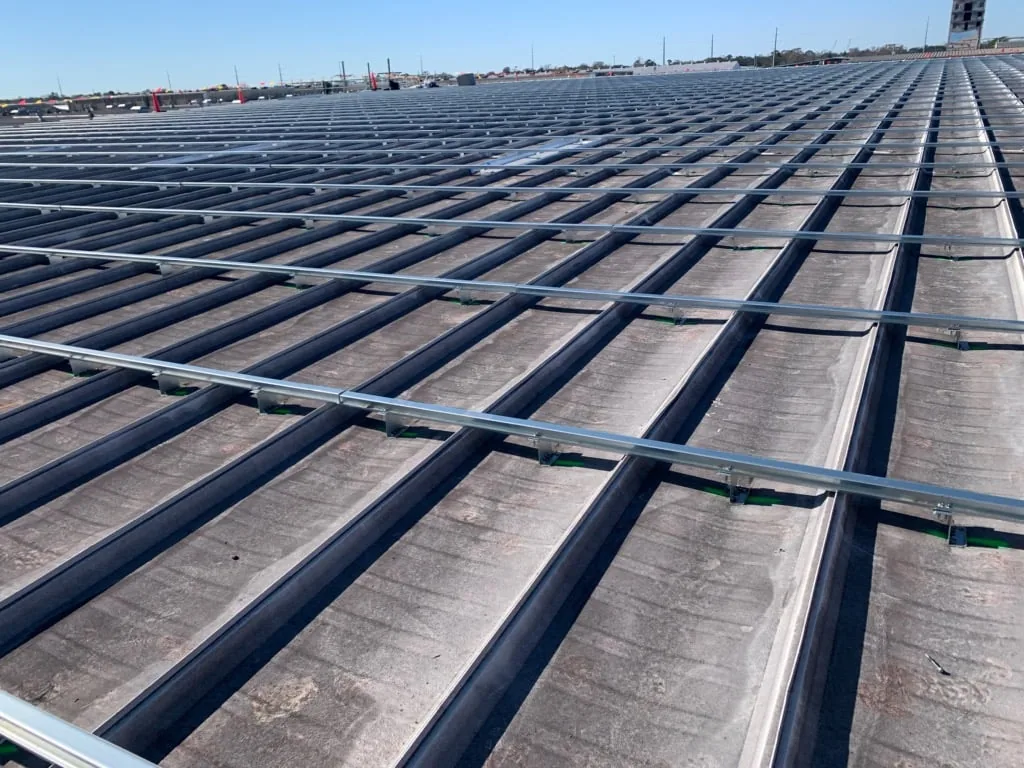
Insulation and cover board go down in the same shift as the membrane, so no bare deck sits exposed overnight. Where the building has rooftop units, the crew sets temporary supports so cooling stays on through the work, and curbs are flashed before the shift ends.
Rain, wind and cold
Ida's September 2021 rain set off the first flash flood emergency the Weather Service had ever declared for the city, which is reason enough not to plan an occupied reroof around a clear morning. Temporary tie-ins, tarps and protected drains stay in place until the permanent seal goes down, and the crew stops opening new sections when the forecast turns.
On the island, wind off the water matters as much as rain. Gusts reached 80 mph during Sandy in 2012, and a hoist or a crane near the shore stops when gusts rise, which is one reason jobs near the Kill Van Kull and the South Shore carry extra float. Cold limits adhesives, and a winter reroof takes longer, so we say so in the schedule instead of promising a date the weather will not honor.
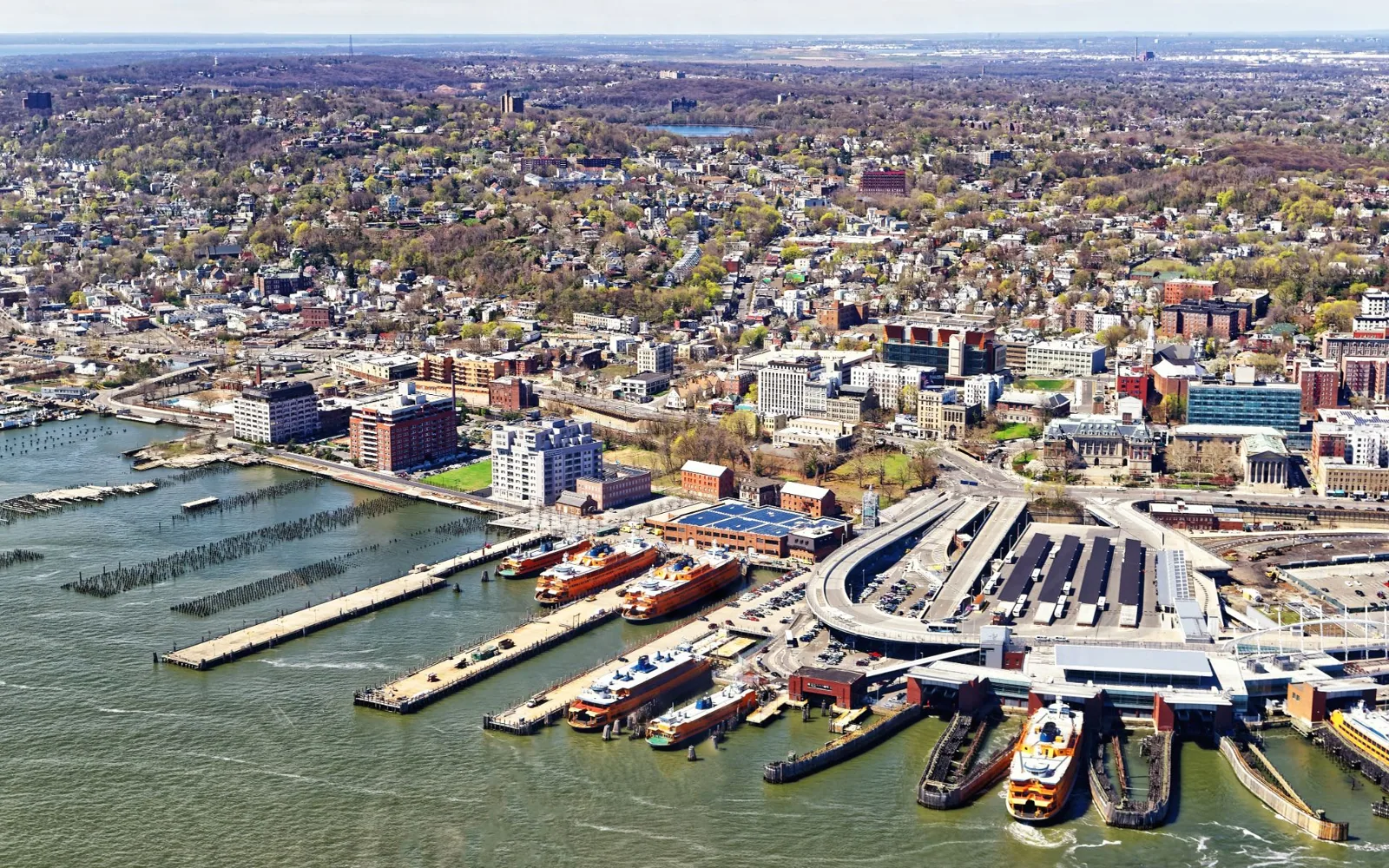
The island's older waterfront district, from St. George to Tompkinsville, has narrow streets where a crane or hoist needs a closed lane, so street permits and deliveries are booked early and weather days are written into the calendar, not guessed.
Notices, hoists and the lot
The facility director sees the schedule first, and tenants receive a written notice about two weeks ahead where possible, listing the start date, hours, affected areas and a phone number. A weather delay changes the notice the same day. Commercial tenants name their pressure points, a lunch rush or a call window for example, and the noisy work moves around them.
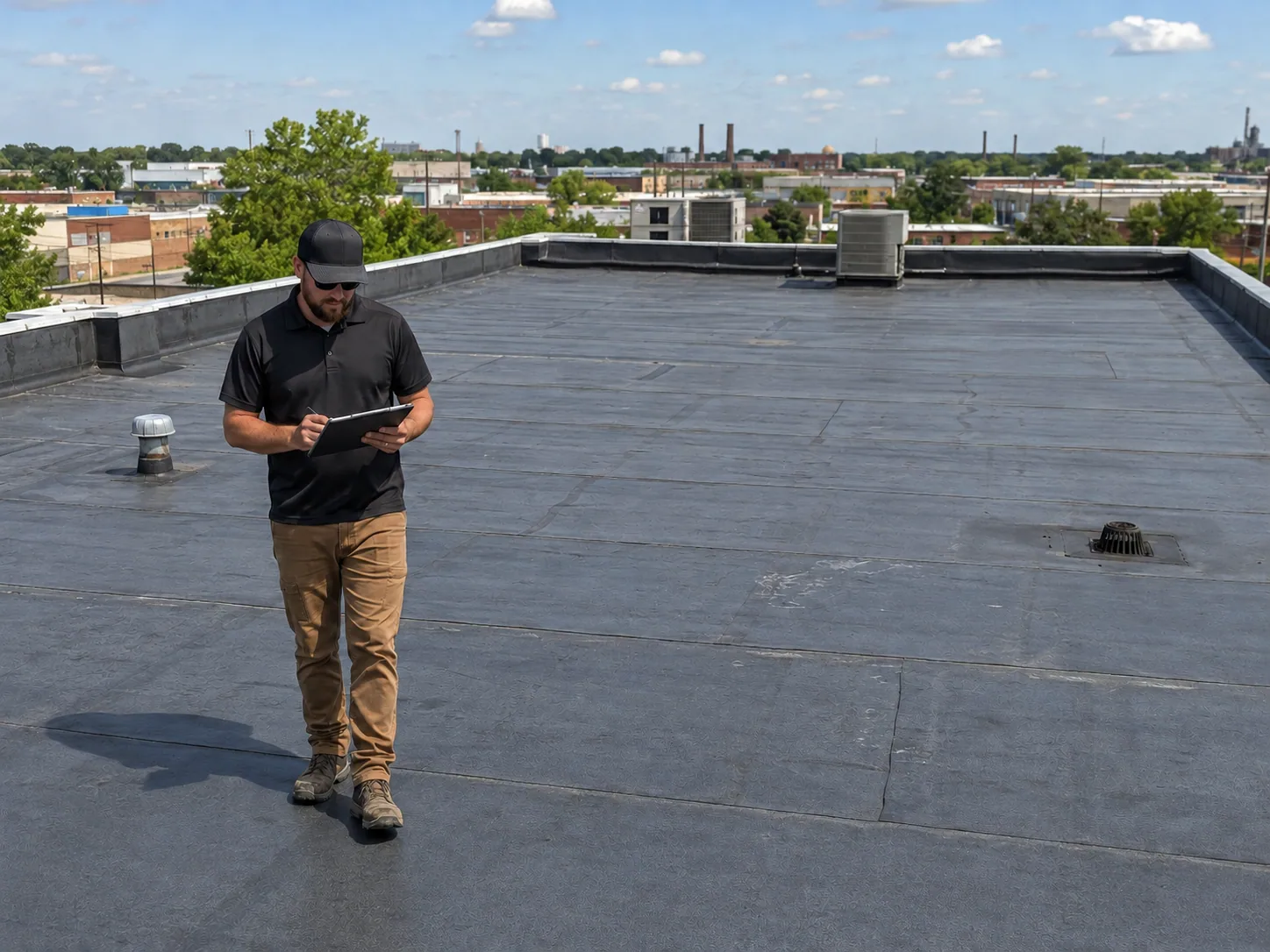
On the roof side, we confirm the hatch or bulkhead as the only crew route and keep it clear of tools. Materials are hoisted, not carried through hallways, and debris leaves through a chute into a covered container, with the lot swept every evening. Our commercial roof inspection reports are the starting record for the plan, and the closeout photographs go back into the same log.
Security matters on a building with a public lobby or shops at street level. Ladders are locked after each shift, the hatch is secured and the site lead keeps a list of who was on the roof. A property management company with several buildings can use the same notice form on all of them.
The log and the closeout
At closeout, the facility director receives dated photographs of each finished section, the material list, the dates and a clean walk with the site lead. That record backs a later warranty question and shows which tenants were notified and when. Permits and filings are confirmed with the Department of Buildings, which publishes the 2022 NYC Construction Codes, before the first section opens.
Owners in St. George and Stapleton can hand us the roof plan and the occupancy mix, and a written phasing plan comes back before the next storm season. An emergency roof repair call during the job reaches the same crew.
Related Roofing Work
More roofing work that comes up alongside Occupied Building Reroofing.

Commercial Roofing Questions
Can tenants stay for the whole reroof?
In nearly every case, yes. The work is phased, noise is limited to agreed hours and each section is sealed before the crew leaves. The exceptions are top-floor spaces with active damage, which may need repair or temporary relocation first.
How much notice should tenants get?
Around two weeks, followed by a short reminder just before the crew arrives. Each notice carries the dates, the hours, the areas affected and a phone number.
What if it rains during the work?
Open sections are sealed first and no new ones are opened. Temporary tie-ins and drain protection stay on until the permanent seal goes in.
Will a retail center lose customers?
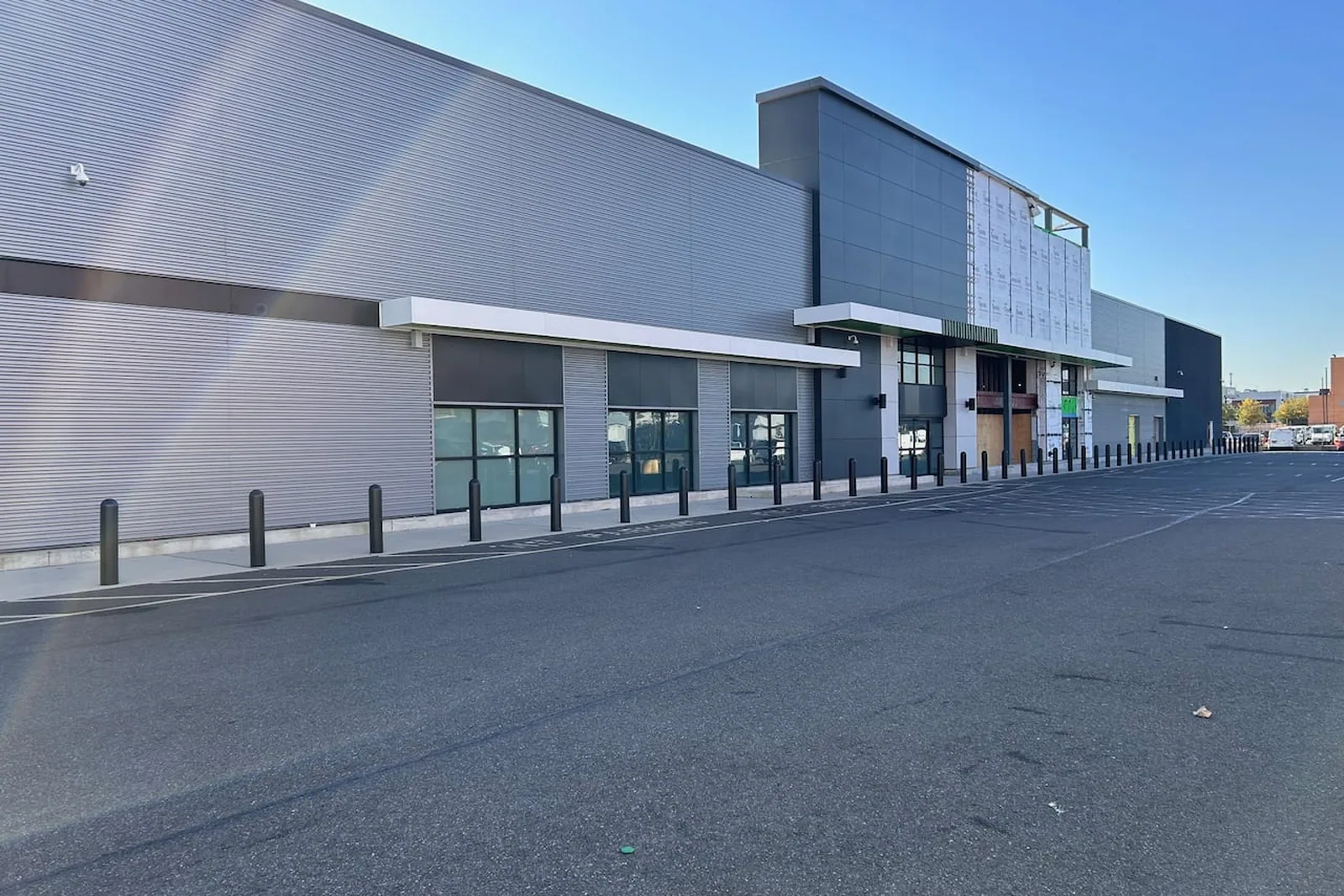
It should not. Entrances and parking lanes stay open, staging sits away from customer paths and noisy work avoids the busiest hours.
What records should the manager keep?
Notices, photographs, permits, the closeout letter and the materials list, in one file.