
Ponding Water Roof Repair in Staten Island, NY
Ponding water repair for Staten Island flat roofs: drain strainers, settled decks, tapered insulation, added drains and ponded seams. Request a roof inspection.
Standing water around a strainer that sits loose in its bowl with a mat of leaves and shredded membrane packed beneath it is what an inspector finds on the roof behind a retail strip, and the standing water around it is the reason the visit was called. Water that stays on a flat roof for more than a day or two is no longer weather. It is a load, a solvent and a slow leak, all working on the same square yard of sheet.
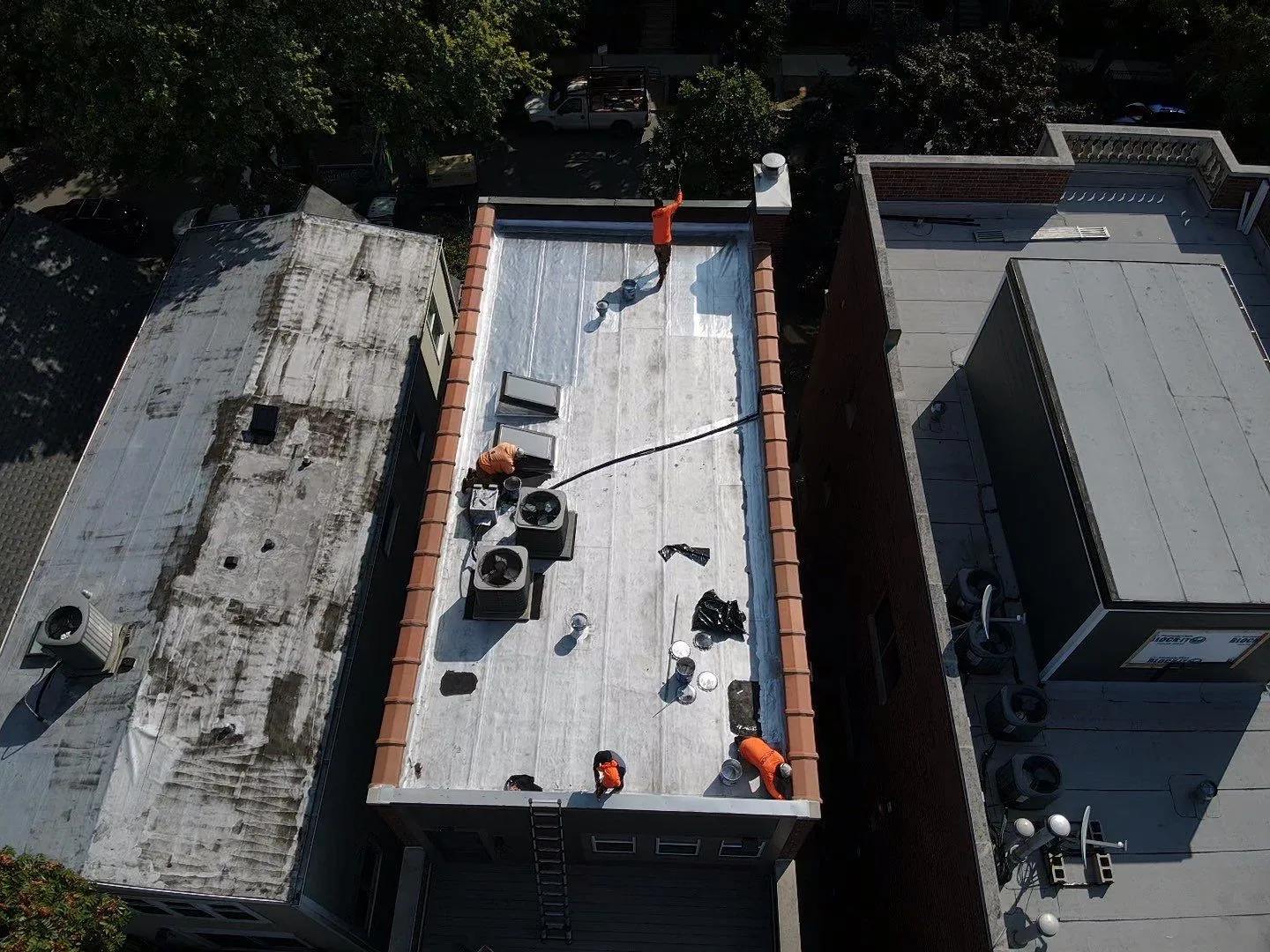
Commercial Roofing Staten Island repairs ponding on commercial roofs across the island by finding why the water stays, clearing or adding drainage, rebuilding slope where it has settled and repairing the seams that sat wet, and we write each finding into an inspection log.
Why water stays
A flat roof is not flat. It is built with a slight slope toward drains, and ponding means that something between the water and the drain has changed. The usual causes are a clogged strainer, a drain that was set too high, a deck that has deflected under equipment or snow, insulation that has compressed under traffic and a membrane that was installed over a low spot nobody corrected.
Each cause needs a different repair. A clogged drain needs cleaning. A deflected deck needs tapered insulation or a structural opinion. Compressed insulation needs replacement. Treating them all with a patch is how a roof ends up with the same pond every spring.
Age matters here as well. A roof laid decades ago was built to the tolerances of its day, and a settled deck on an older building may never have drained well. A roof that has ponded since it was built needs a different answer from one that began ponding last winter after a unit was added.
What a ponded roof does to the building
Standing water adds weight, about five pounds per square foot for every inch, and a roof that holds three inches across a bay is carrying a load the designer may never have counted. Water also ages the sheet faster, grows algae, collects dirt in a ring and works at every seam and fastener it covers, and some coatings soften under it.
Large flat roofs with long runs to each drain are the West Shore's stock in trade, since that is where most of the island's industry sits and where the Matrix Global Logistics Park began serving Bloomfield in 2018. A long roof with few drains has little margin when a strainer clogs, and when Ida's September 2021 rain set off the city's first flash flood emergency of its kind, slow drains kept that rain on the deck.
The seams are the first casualty. A ponded seam failure shows as a lifted edge under the waterline, and the water then reaches the insulation beneath. Wet insulation does not drain, it sits, and a pond that has been leaking slowly for a season can hold more water inside the roof than on top of it.
What the inspector measures
After a rain, we walk the roof and mark every pond with chalk, measure its depth and note how long it stays. We clear and test every drain and scupper, check overflow paths, look at the deck from below for deflection and probe the insulation under the pond for softness or moisture.
- Pond depth and the hours it takes to drain.
- Strainers, sumps and the leaders below them.
- Deck deflection, measured from the ceiling side where we can.
- Ponded seams, which are the first place a sitting pond leaks.
A pond that matches a drain location points to maintenance. A pond that sits between drains points to slope, and the repairs differ.
We also look at what feeds the pond. A rooftop unit that dumps condensate onto the membrane, a downspout from an upper roof that discharges onto a lower one and a leader that runs across the field all add water to a roof that already struggles to shed it. Moving those outlets is cheap and often solves the pond.
The repair in plain terms
Cleaning a drain is a morning's work and comes first. If the pond remains, we add drainage or rebuild slope. A new drain or scupper at the low point is the cleanest fix when the structure allows. Tapered insulation laid under a new membrane rebuilds slope across a whole bay, and localized crickets and saddles can steer water around a curb. These sit inside a larger commercial roof repair or a commercial roof replacement.
Where the sheet has sat wet, we inspect it for damage and repair seams that lifted. A pond that cannot be removed, because the structure will not allow a drain, is a case for silicone, the coating that tolerates standing water, with the owner told that the pond is managed, not cured.
Cost drivers are plain: the number of ponds, the cause behind each, the roof system and whether slope or drainage has to change. A drain cleaning costs almost nothing, a new drain costs a day of work and a slope rebuild belongs inside a replacement budget. We price them separately so the owner can start with the cheapest fix that stops the damage.
Rain, snow and ice at the drain
Ponding is a seasonal story. Spring is the wettest season in New York City, which averages about 49.5 inches of precipitation a year, and fall leaves load the strainers. In winter, ice can seal a half-open drain and turn a thaw into a pond. Snowfall in the city comes to about 29.8 inches in a typical year and reached 27.3 inches in one day on January 23, 2016, which is the case for clearing drains in November.
Midland Beach shows the other side of water. The coastal location has made flooding a long-running problem there, and the Bluebelt project aims to ease it along the low-lying northern edge. A roof in low coastal ground drains into systems that can back up, and overflow paths on the roof are checked for that reason.
We also coordinate with the plumber when a new drain ties into an existing leader, since the leader may be undersized for the added flow, and the connection is tested with water before the roof is closed.
What goes in the log
The log carries the date of each pond measurement, the depth, the hours to drain, photographs and the repair made. A year later the same pond is measured again, and the difference is the result. A membrane puncture found under a pond is repaired and noted in the same entry.
A building in Bloomfield or somewhere else on the West Shore begins with the roof plan and photographs of the drains. Adding drains or changing slope calls for a check with the Department of Buildings, source of the 2022 NYC Construction Codes, before the work is scheduled.
A preventive maintenance visit each fall clears strainers before the leaves and again in spring, and the log records every visit.
Related Roofing Work
More roofing work that comes up alongside Ponding Water Roof Repair.
Commercial Roofing Questions
How long can water sit before it is a problem?
More than a day or two after a rain is ponding. It adds weight and ages the sheet, so we measure it and find the cause.
Can a patch fix ponding?
No. A patch repairs a seam that sat wet, but the pond returns until drainage or slope is fixed.
Will tapered insulation always work?
It works when the roof is being replaced or recovered. On an existing roof, a new drain or localized saddles may be the practical choice.
What if the structure does not allow another drain?
We manage the pond with a coating that tolerates standing water and keep the area inspected. The owner is told it is managed, not cured.
How often should drains be cleared?
In fall after leaf drop, in spring after the thaw and after any major storm.