
EPDM Roofing in Staten Island, NY
EPDM rubber roofing for Staten Island mixed-use brick, apartments and small commercial roofs: seam tape, flashing, termination bars and replacement.
A termination bar that has lost two fasteners and left an inch of black rubber hanging free of the parapet is the line an inspector writes first on an EPDM roof, because the sheet itself, a single large piece of cured rubber, is rarely what is wrong. The trouble sits where the rubber turns up a wall, where it is cut around a pipe and where one sheet is taped to the next.
Commercial Roofing Staten Island installs, repairs and replaces EPDM on low-slope roofs across the island, and the system earns its place on the small, cut-up roofs of mixed-use brick buildings, where a few good details matter more than the square footage.
What EPDM is
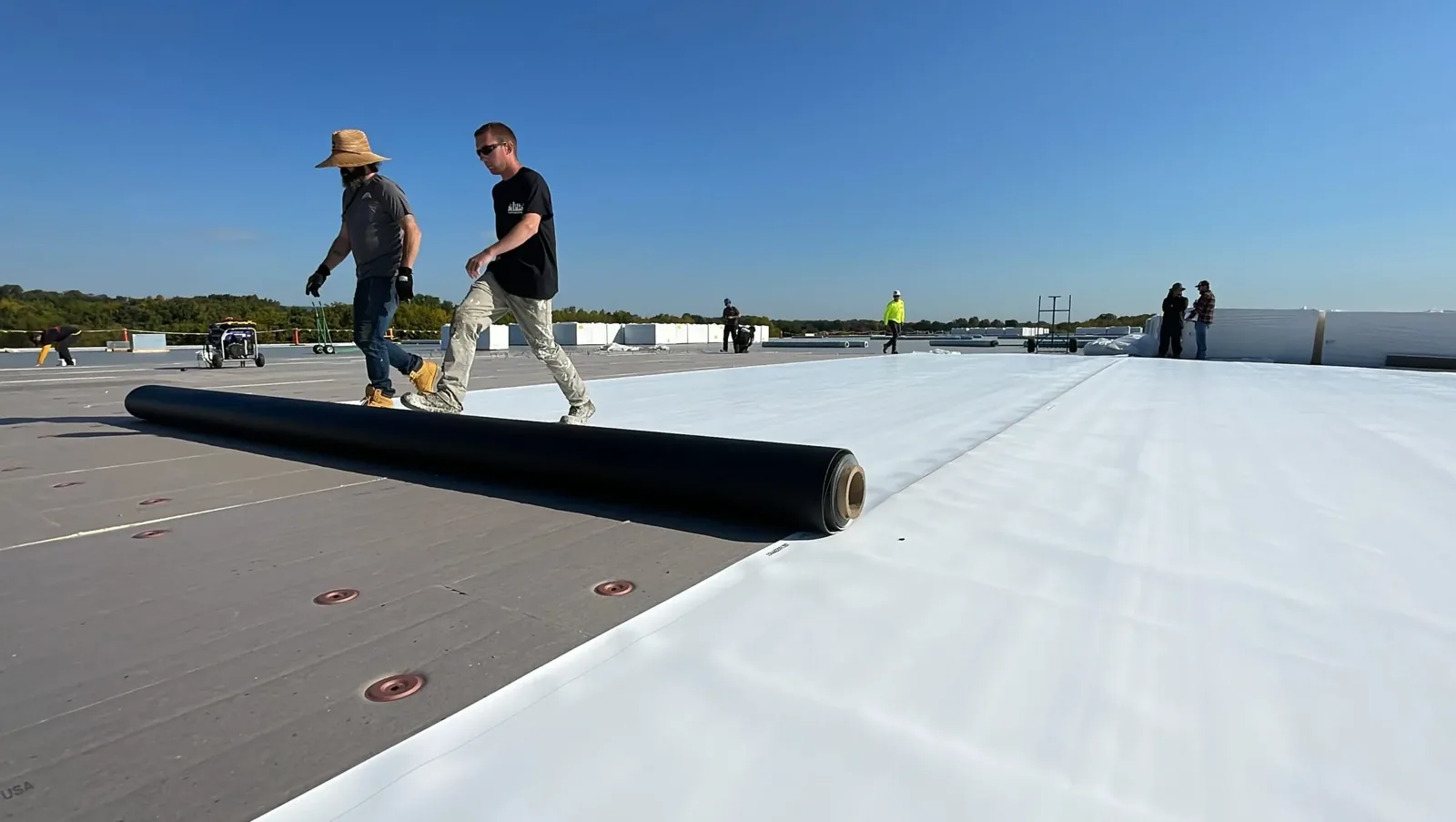
EPDM is a synthetic rubber membrane, black or white, supplied in very large sheets that are joined with seam tape or liquid adhesive instead of heat. Because the sheets are big, a small roof can often be covered with only a few seams, and fewer seams are fewer places to leak, which is the main reason EPDM has a long record on small buildings.
Three attachment methods are in use. Fully adhered EPDM is glued to the insulation and suits roofs that see wind. Mechanically attached EPDM is fastened through plates and suits larger open areas. Ballasted EPDM lays loose under stone or pavers, and it works only where the structure can carry the load, which older masonry buildings often cannot.
The insulation under the rubber is part of the system and gets read the same way. Polyiso that has taken on water loses its value, and on an older building the deck itself may be wood plank or lightweight concrete, each of which takes fasteners differently. We probe the deck at the edges before we quote a mechanically attached sheet, because a fastener plate in soft wood holds nothing.
Where EPDM fails first
Seams and flashings go first. Tape seams peel when dirt or moisture got into the splice at installation, parapet flashing shrinks over the years and pulls down from the wall, and the sheet tightens at corners and around pipes, where a patch that was glued in a hurry will lift. Punctures from foot traffic are the fourth cause, especially around hatches and condenser pads.
The brick commercial streets of Tompkinsville and Port Richmond Avenue, which was once a bustling commercial center and has been revived by small businesses, are where this matters, and Bay Street's 2019 rezoning for denser homes, shops and offices will keep those buildings in use. On a parapet roof over old brick, termination height and coping condition decide whether the flashing stays attached.
Ponding makes everything worse. A black sheet that holds water over a low spot for days ages faster there and carries a dirt ring that shows on the next walk, and a clogged drain or a settled deck is the cause. Parapet-side drains and scuppers are where we look first.
What the inspector checks
We walk every foot of the parapet and note flashing height against the water line, the state of the termination bar, the coping and the counterflashing. We probe seams for open edges, look for shrinkage at corners and press the sheet for soft spots that mean wet insulation.
- Termination bars, with missing fasteners marked by location.
- Seam tape, where edges that lift need cleaning and re-seaming.
- Drain strainers and the ponded seams beside them.
- Walk-pad wear and punctures around hatches and condensers.
The wall behind the flashing matters as much as the rubber. A parapet with loose coping lets water behind the sheet, and a repair that ignores the wall fails again within a season.
The inspection log records each finding with a photograph and a location on the roof plan, so a facility director can see the termination bar that lost its fasteners last spring and the one that lost them this spring, and decide whether the wall is the problem.
Repair or replace the sheet
A sound EPDM roof with failed flashing gets repaired: we replace the flashing, re-tape open seams and reset the termination bar. When the sheet is old, shrunk and cracked across the field, a patch will not hold, and a full commercial roof replacement is the better spend. Where the insulation is dry and the deck is sound, a roof recover may work, though EPDM should not sit on an old coated or tar-based surface without a separation layer.
Compared with TPO, black EPDM absorbs heat while white TPO reflects it, and EPDM costs less to patch. For a roof with heavy foot traffic or chronic ponding, we may recommend a tougher system such as modified bitumen, and we say so in the proposal.
Cost drivers on a small EPDM roof are the length of parapet, the number of penetrations, the condition of the wall behind the flashing and the hoist or crane access. The sheet is cheap relative to the details, and we price the details one by one so the owner sees where the money goes.
Storm and winter checks
Rubber stays flexible in the cold, but flashings still shift with temperature, and ice at a drain turns a thaw into a pond. The city averages about 29.8 inches of snow a year, with a 27.3-inch single day on record, and strainers are cleared in fall and again after the thaw.
Wind tests the rubber at the edges. Gusts reached 80 mph during Sandy on October 29, 2012, and a loose edge on a fully adhered sheet is usually a termination or coping problem, not a failure of the field. After any big blow we walk the perimeter first.
Tight lots and street-side hoists
Many old brick buildings have a single stair and a small roof, so rolls of EPDM are hoisted from the street or a rear lot, and the crew works around bulkheads and stair hatches. Rubber is heavy, and a hoist keeps weight off the stairs. In the dense streets from St. George to Stapleton there is little room for staging, so the plan names where materials sit and when they move.
Adhesives and tape need dry weather and moderate temperatures, so a cold, damp morning delays the work. For a building in Port Richmond or along Bay Street, the roof plan and the leak history start the process, and the list of flashing failure repair items returns with photographs.
At closeout we send seam photographs, flashing details and the date, which supports a later warranty or insurance question, and a yearly preventive maintenance walk keeps the strainers clear and the tape seams tight.
Related Roofing Work
More roofing work that comes up alongside EPDM Roofing.
Commercial Roofing Questions
How long can EPDM go before the seams need attention?
Tape seams and flashings show age well before the field. A walk once a year catches peeling edges early, and a seam that stays open through a winter often wets the insulation.
Can an old black EPDM roof take a white coating?
Sometimes. The sheet has to be clean, sound and dry, and the coating must be made for rubber. A coating over a cracked or shrunk sheet will not hold.
Why does EPDM flashing pull away from a parapet?
Shrinkage of the rubber, wall movement and a termination bar that came loose. The cure is to fix the wall and the termination, not just to glue the flashing back up.
Is EPDM good where there is foot traffic?
Yes, once walk pads line the routes. Left bare, the rubber punctures beside hatches and equipment.
How does a cold winter affect EPDM?
The rubber stays flexible. The risk is ice at drains and snow load on a weak deck, so drains and structure come first.