
Roofing for Logistics and 3PL Operators in Staten Island, NY
Roofing for logistics and 3PL operators in Staten Island, NY: peak-season scheduling, dock and canopy repair and leak-ranking by inventory and racks.
A pallet wrapped in plastic under a dripping sprinkler line, a dock door left up during a downpour, a peak-season blackout date written in red across the maintenance calendar: a logistics operator's roof file starts with inventory and dates. Commercial Roofing Staten Island works with third-party logistics operators and warehouse managers on the island, and our schedules are built backward from the weeks when a building cannot be disturbed.
A 3PL runs on service levels, and a roof leak is a service-level event. The roof plan has to protect the floor, the racks and the dock.
Ports, rail and bridges around the island
Staten Island sits where freight moves. The port side starts at Howland Hook Marine Terminal, 187 acres with three container-ship berths and a rail facility of seven tracks that CMA CGM operates under contract with the Port Authority. On the road side, the Staten Island Expressway links the Goethals and Verrazzano-Narrows bridges and ranks among the city's most congested roads, the West Shore Expressway meets it and runs south to the Outerbridge Crossing and north toward the Bayonne Bridge, and the new Goethals Bridge spans opened in 2017 and 2018.
A warehouse near those routes handles trucks, containers and rail. Congestion shapes delivery windows for roofing material too, so crane lifts and drops are planned for quiet hours. The buildings themselves are big, flat and exposed.
What a 3PL building asks of its roof
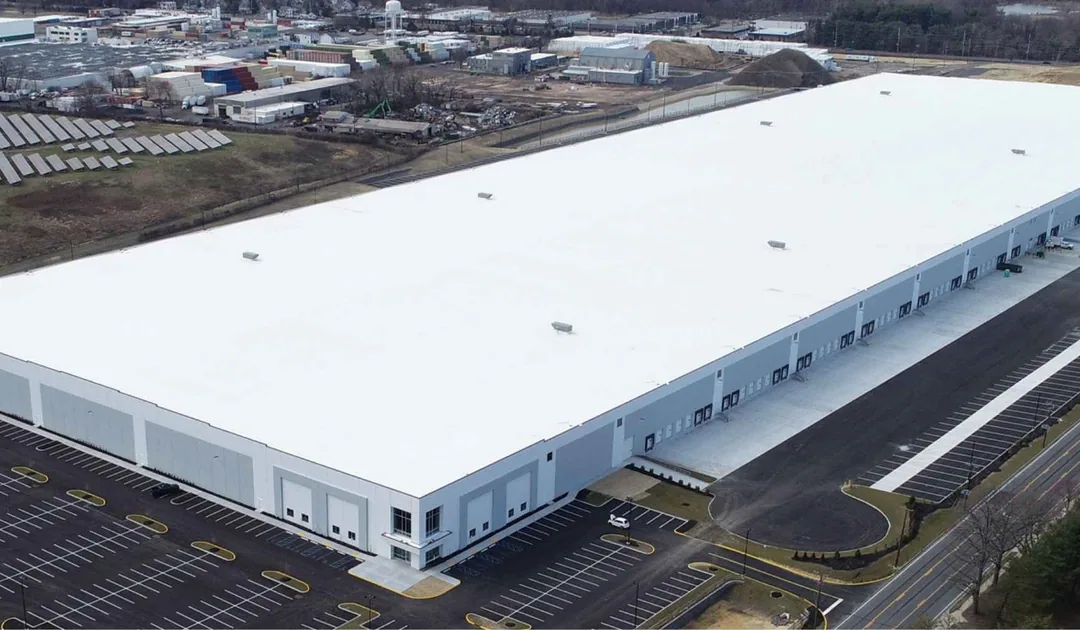
In Bloomfield the Matrix Global Logistics Park opened in 2018 as a distribution center for shippers such as Amazon and Ikea, within the West Shore belt where most of the island's industry sits. Roofs in this setting are wide, with few drains and many rooftop units, and the floor below holds product that belongs to someone else.
A third-party operator answers to its clients, so a leak carries a contract consequence as well as a repair cost. We rank findings by what sits below: racked goods, packing stations, dock lines, electrical rooms and sprinkler risers. A ponded seam over a client's racks outranks the same seam over an empty bay, and the log shows the reasoning in plain terms.
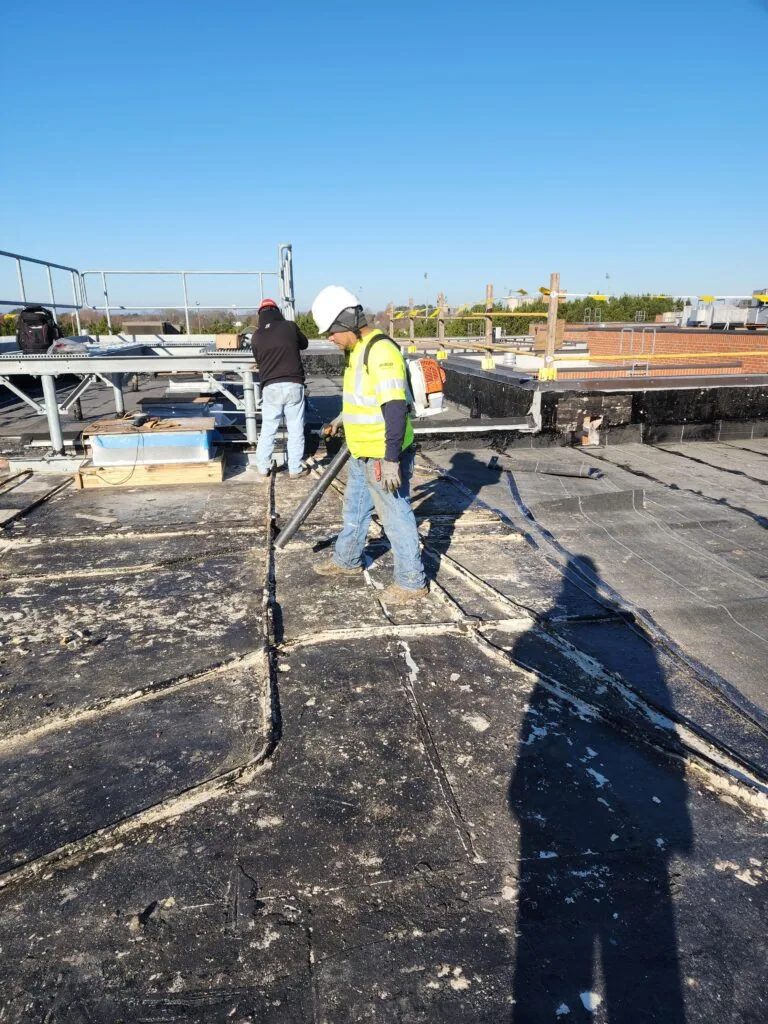
Every roof is walked in one order: drains and strainers, then penetrations and rooftop units, then the seams and laps of the field, and last the perimeter and the dock-side edge. Walk-pad wear along service routes is recorded, since technicians reach rooftop units on the same path every visit. Each finding gets a photograph and a bay number. The report that follows can be forwarded to a client without translation, which is often the reason an operator asks for it.
Peak season and blackout dates
Most logistics operators have a season when nothing can be disturbed. We ask for the calendar first, then build the roof plan around it. Large work happens in the quiet months, small repairs fit into the weeks around, and during peak season we do emergency work only, with temporary protection until the calendar opens.
A fall walk before peak season clears drains, checks curbs and edge metal and repairs anything that could fail in a storm. A spring walk catches winter damage. Preventive roof maintenance fits this rhythm and turns most leaks into scheduled small jobs. The log shows the operator which roofs were checked and when, which is useful when a client asks.
Shared buildings add a layer. When several operators or a landlord and a tenant share one roof, as is common in multi-tenant distribution parks, the log names who is responsible for each item. A building owned by a real estate investor and operated by a 3PL needs the owner's capital plan and the operator's service plan to agree, and the report lays them side by side. A manufacturer shipping through the same dock adds its own schedule to the mix.
Docks, canopies and traffic on the roof edge
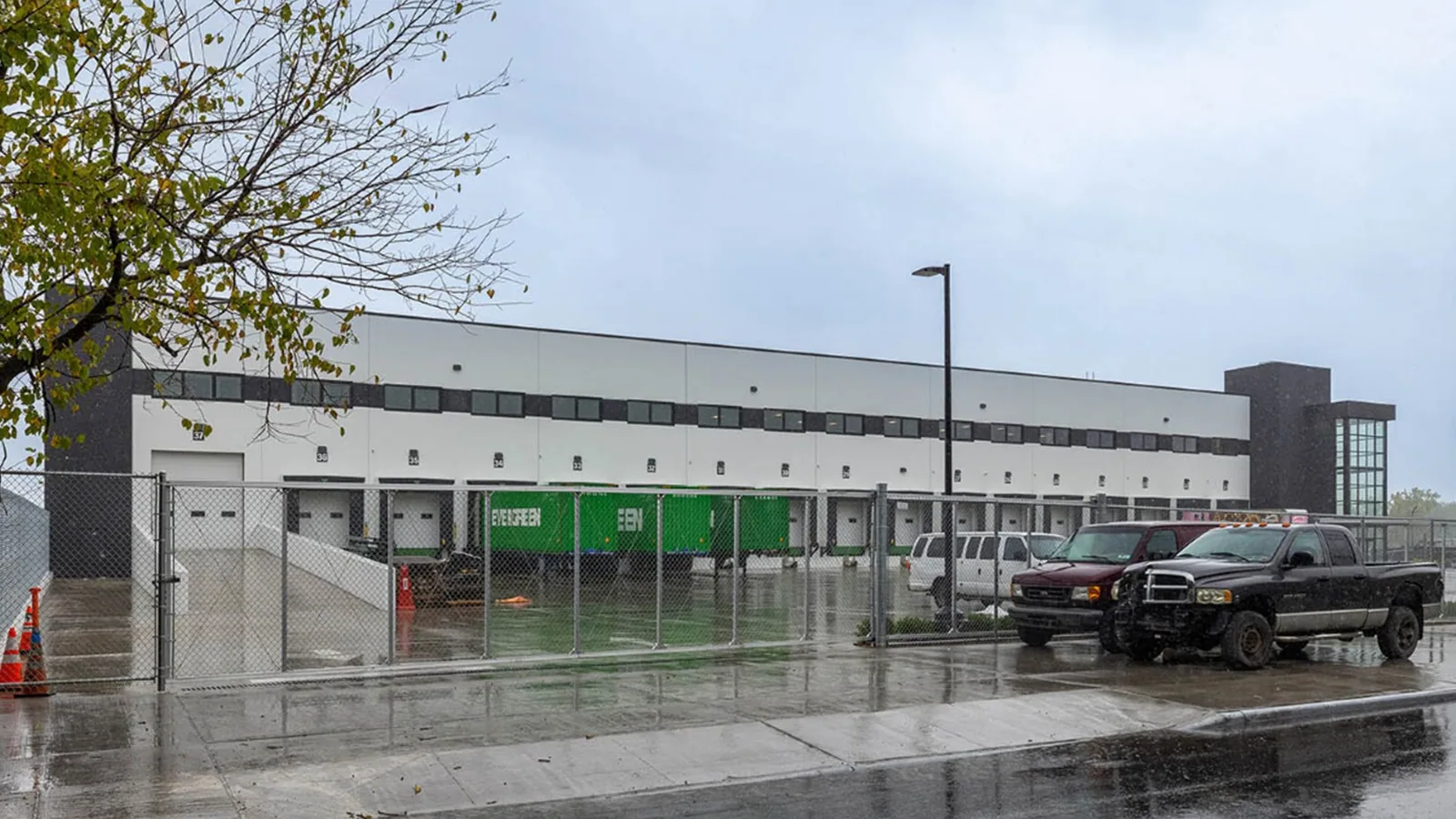
Loading docks concentrate the wear. Canopies leak onto the dock floor, edge metal above dock doors takes truck traffic and wind, and idling vehicles discharge exhaust near roof intakes. Trailers parked against the dock can hide leaks behind them.
We inspect canopies, flashing at the wall and drainage at the dock edge. A leaking canopy over a dock door is a safety issue as well as a product issue, because wet floors cause falls. Repairs are scheduled for off-peak hours so trucks are not blocked, and equipment is staged away from dock doors. Rooftop access ladders and hatches are checked for safety, since crews and maintenance staff use them.
Racking, sprinklers and what water reaches
High-bay warehouses stack product to the ceiling, and a roof leak above a rack column reaches many pallets. Sprinkler lines and risers run just under the deck, and a leak that hits them can trip the system or corrode pipes. Roof penetrations for sprinkler vents, smoke hatches and exhaust must be sealed with care.
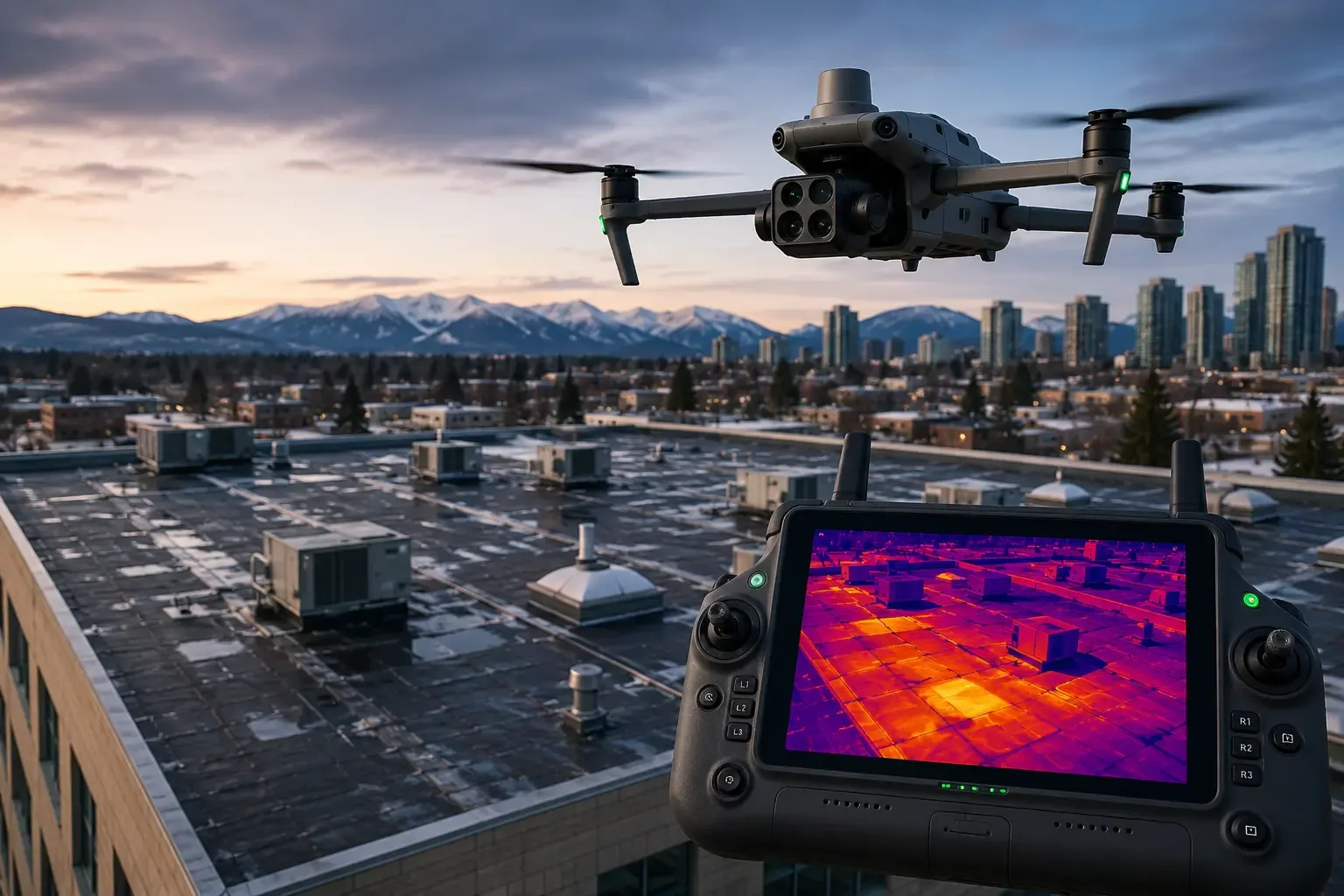
We map penetrations to bays and racks so the log ties each to inventory. A moisture scan after sunset shows wet insulation, and cores confirm it. If a leak is active, we place temporary protection before the report is written and tell the operator which racks to protect. Infrared moisture surveys are a regular part of the program for large buildings.
Storm, snow and drainage on wide decks
Wide, light roofs catch wind like the 80 mph gusts of Sandy in October 2012, and flat roofs with few drains are tested by rain of the size that brought Ida's flash flood emergency in September 2021. Winter adds snow, which averages 29.8 inches a year in New York City and reached 27.3 inches in one day, January 23, 2016. Drains, overflow and edge attachment are checked before storm season. Along Bloomfield and Travis service roads and near Port Ivory, large decks collect water quickly, and ponded areas show up first near rooftop units.
Programs across several buildings
A 3PL with several warehouses wants one report format and one calendar. We rate each roof, list repairs with prices and give a summary that ranks buildings by risk to inventory and service. Replacement is phased so no building loses its quiet season.
Clients sometimes ask for roof records as part of a lease or a service agreement. A dated log with photographs and scans answers them. Multi-site roof programs keep that record current across the network. Cost drivers are named: area, wet insulation, curbs, access and the system chosen, so a finance lead can compare options quickly. A coating over a sound roof, a fully adhered recover and a replacement are each priced for the same building, and the difference in expected service life is stated beside the price. Phasing by bay keeps the floor in use, and the contingency for weather is shown as its own line.
Related Roofing Work
More roofing work that comes up alongside Logistics and 3PL Operators.
Commercial Roofing Questions
Can roof work avoid our peak season?
Yes. We ask for the calendar first, do large work in quiet months and restrict peak-season work to emergencies.
What do you do when a leak hits racked goods?
We place temporary protection first, tell the operator which racks to cover and trace the entry. The permanent repair follows once the roof is safe to open.
How do you work around dock traffic?
We stage equipment away from dock doors, schedule loud work for off-peak hours and keep trailers and lifts from blocking trucks.
Do you scan large buildings?
Yes. Infrared scans after sunset map wet insulation, and cores confirm it. The scan guides the repair.
What do clients of a 3PL ask for?
Often a record of roof maintenance. A dated log with photographs and repairs answers.