
Roofing for Property Management Companies in Staten Island, NY
Roofing for property management companies in Staten Island, NY: portfolio logs, tenant-complaint tracing, lease-aware penetration records and capital schedules.
A portfolio sheet with eleven roofs, nine different installation years and a budget line last updated before the previous manager left is the first thing an inspector reads for a property management company, because the paperwork around a roof decides how fast a leak gets fixed. Commercial Roofing Staten Island works with property managers who run several buildings on the island, and the report format is built so a manager can hand one page to an owner and another to a tenant.
A manager does not need a lecture on membranes. The need is a clear answer to what is leaking, what it costs and when.
Many buildings, one calendar
A management company's roofs span ages, systems and owners. A retail strip on Hylan Boulevard, a small office building off Richmond Avenue and a mixed-use block of tall brick on Bay Street in Tompkinsville are three different roof problems on one portfolio sheet. The first task is to lay them out side by side: age, system, last repair, recent complaints and next planned action.
Our portfolio log does that. Each roof gets a page with photographs, a condition rating and a ranked list, and a summary page lists all of them in order of risk. The manager sees which buildings need money this year, the same view a real estate investor wants for an acquisition, which can wait and which need a closer look. Multi-site roof programs use the same structure for owners with ten or more roofs.
From tenant complaint to roof finding
A tenant complaint is a symptom. A stain over a suite might come from a drain three bays away, a rooftop unit installed last year or a parapet joint on the other side of the building. A manager who sends the complaint to a roofer without information gets a visit without a diagnosis.
We ask for the complaint log, the dates and any photographs, then walk the roof with the complaint locations marked on the plan. The finding links the stain to a cause, and the repair goes on the list with a price. Over time the log shows patterns: the same drain behind three complaints, the same unit behind two. Patterns justify repairs that a single complaint would not.
Leases, responsibility and tenant damage
Who pays for a roof repair depends on the lease. Triple-net leases pass costs through, gross leases leave them with the landlord, and tenant alterations may shift responsibility for penetrations. A manager needs facts to apply those clauses: who installed a unit, when it was flashed and whether the leak started after.
We record penetrations by tenant bay, photograph each one and note who installed it where that is known. When a tenant's unit causes damage, the photographs and dates support the claim. When it does not, they protect the tenant. Penetration flashing items are priced individually so each responsible party can be billed for its own.
Budgets, reserves and the owner conversation
Owners ask three questions: what does the roof need now, what does it need over the next five years and what will it cost. A manager who answers with a ranked list and price ranges gets decisions faster than one who answers with a general worry.
We separate maintenance, repair and replacement in the numbers and phase replacements across years when roofs reach the end of their life at different times. A short reserve schedule shows the annual amount needed to avoid surprises. Roof capital planning pulls the portfolio log into a multi-year plan that fits the owner's reporting cycle, and the photographs support lender or insurer requests.
Storm season, ice and after-hours calls
A management company gets the call at night. Sandy's gusts reached 80 mph in October 2012 and its floodwater carried away blocks of houses in Midland Beach and New Dorp, and Ida's September 2021 rain set off a flash flood emergency across the city; after storms like those, a manager with a log knows which roofs to check first.
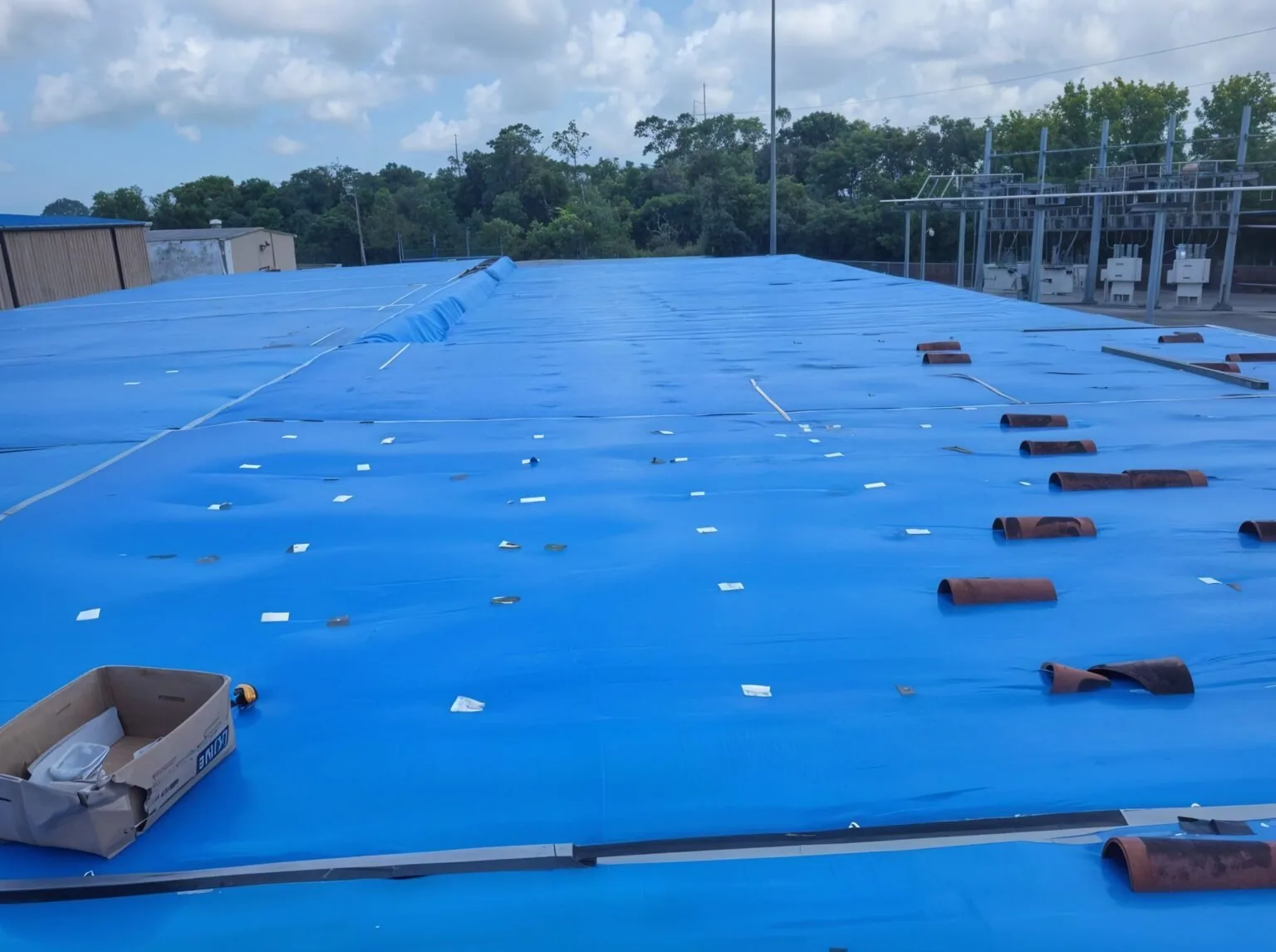
We keep a short list of each building's weak points ahead of storm season: drains, edge metal, units and known leak spots. After a storm, we walk in that order. Emergency roof repair is available around the clock, and the manager gets photographs of the temporary protection and the entry point for the owner and the insurer. When a claim follows, the same photographs go to the adjuster and restoration team without a second visit.
Snow in the city averages 29.8 inches a year, and 27.3 inches fell on January 23, 2016 alone. Property managers see the effects: ice at drains, gutters pulled off walls, ceilings stained after a thaw. A fall walk that clears drains and notes weak spots does more for a portfolio than a winter scramble.
We schedule fall visits across a portfolio in a single run, so a manager gets all the reports at once. Roofs with known ponded seams are flagged for a post-thaw walk, and any building with heavy snow on a flat roof gets a call if the structure or drains look stressed. The log from the fall visit sets the winter plan.
What the first walk delivers
A first walk across a portfolio follows one sequence on every roof. Drains first, since a blocked drain changes how everything else behaves. Then penetrations, curbs and units, each photographed and tagged to a tenant bay where that is known. Then the field, where soft spots are pressed and blisters, laps and splits are marked. The perimeter comes last, where flashing, coping and edge metal meet the wall. After that a moisture scan is run on roofs with complaint history.
The manager receives the log within days, with a summary page that ranks the roofs and a page per building. Each repair item carries a price range, a priority and a note on whether it can wait. If a roof needs an urgent temporary repair, we say so the same day and place protection before the report is written. The point is a decision tool: a manager reading the summary can tell an owner in two minutes which roofs need money and why.
Access, vendors and tenants
Managers deal with tenants, security, insurance certificates and vendor lists. We supply certificates of insurance when requested, follow building rules for roof access and notify tenants in writing before work. Sign-in at the hatch, a clear route for materials and a plan for debris are agreed before the first day.
Work is scheduled around tenant hours: retail before opening, offices in the evening or on weekends, residential in daylight. Occupied building reroofing methods keep businesses open. A named contact for each building makes questions short, and a close-out report with photographs ends every job.
Related Roofing Work
More roofing work that comes up alongside Property Management Companies.

Commercial Roofing Questions
What should a manager send first?
The building list, roof ages and any complaint log. We walk the roofs and return a ranked list for the portfolio.
How do you handle many buildings at once?
One calendar, one report format and one summary page. The manager sees every roof side by side.
Can you help settle who pays for a leak?
The log shows penetrations, installers and dates. The lease decides who pays, and the photographs back the manager's position.
Do you provide after-hours service?
Yes. Emergency calls get a response at night and on weekends, with photographs of the temporary protection.
How do we plan roof spending for the owner?
With a ranked list and a multi-year schedule that separates maintenance, repair and replacement.