Roofing for Insurance Adjusters and Restoration in Staten Island, NY
Roof damage documentation for adjusters and restoration contractors in Staten Island, NY: cause-of-loss photos, moisture maps and line-item estimates.
A claim number on a clipboard, a roof plan with arrows for the direction of the wind, a restoration crew waiting on word about the deck: the first notes on an insurance roof job are about who needs what from the roof and by when. Commercial Roofing Staten Island works with adjusters, restoration contractors, public adjusters and carriers' vendors on storm and water losses to commercial roofs on the island, and our reports are written so each reader can find their section without reading the rest.
An adjuster wants cause and extent. A restoration crew wants a dry building. The roof file serves both.
Cause of loss, in terms an adjuster can use
The central question on a roof loss is what caused the damage and what pre-dated it. We document the roof's condition with dated photographs, note the direction of damage, record fresh scars against weathered surfaces and compare them with the storm's recorded path where it is known. Bent metal in the direction of wind, displaced ballast, torn membrane at corners and fresh punctures point to a storm. Uniform cracking, widespread blistering and old fastener backout point to age.
The report states both, with photographs of each. Where the evidence is mixed, we say so and show the split. A carrier reviewing a wind loss from a storm in the mold of Sandy, whose gusts hit 80 mph in October 2012, reads a report that separates wind from wear with more confidence than one that credits the storm with everything.
Extent: moisture mapping and core cuts
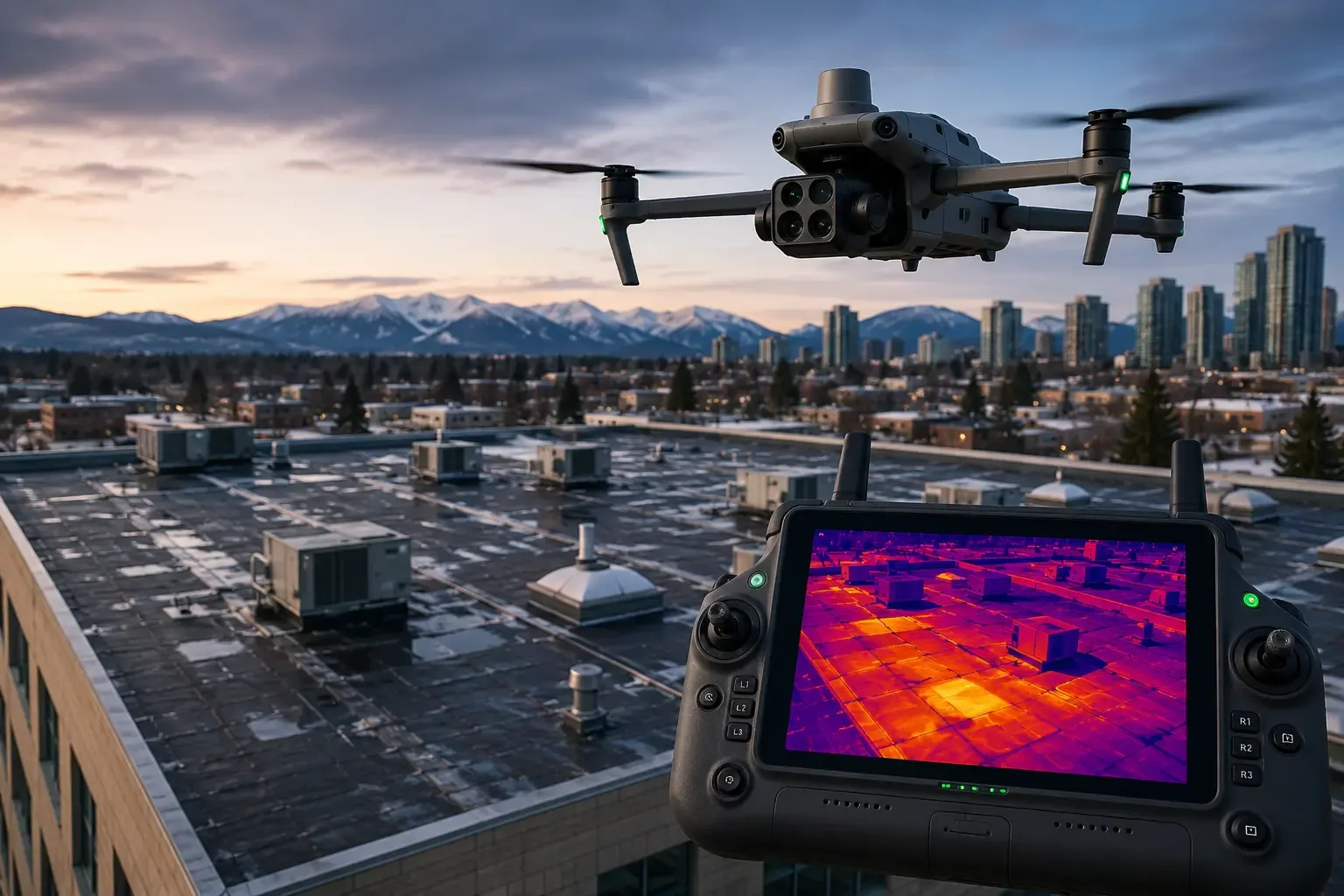
Visible damage is only part of the loss. Water travels under a membrane and soaks insulation far from the opening, so a stain on a ceiling can sit twenty feet from the hole in the roof. We run an infrared moisture survey after sunset, mark wet areas on a roof plan and confirm with core cuts. The map shows the extent of wet insulation, which drives the scope: patch, partial replacement or full replacement.
A drone flight adds a documented overview of large roofs, and its photographs are tied to the plan. Photographs are numbered, dated and stored with the plan so they can be produced on request. The core results give layer counts, insulation type and moisture content. For a carrier, the map and cores turn a debate about extent into numbers. For a restoration crew, they say which ceiling cavities to open and dry.
Access, safety and the adjuster on the roof
Adjusters and engineers walking a damaged roof need safe access. We provide a ladder or lift, fall protection at edges, a competent person on the roof and a route that avoids soft areas. Damaged decks can be unsafe, and we mark the places not to step before anyone else goes up. Where a roof cannot be walked, a drone gives the carrier a documented view and a plan of the damaged areas.
The walk is scheduled with the building contact, and we share the plan and the photographs in advance so the visit is short. We note the weather and surface conditions at the time of the walk, since a wet roof hides defects and a dry one shows them. Photographs carry dates and plan locations. If a second visit is needed after a supplement, the same route and the same photographs make the comparison easy, and the adjuster sees the change without guessing.
Emergency protection and mitigation coordination
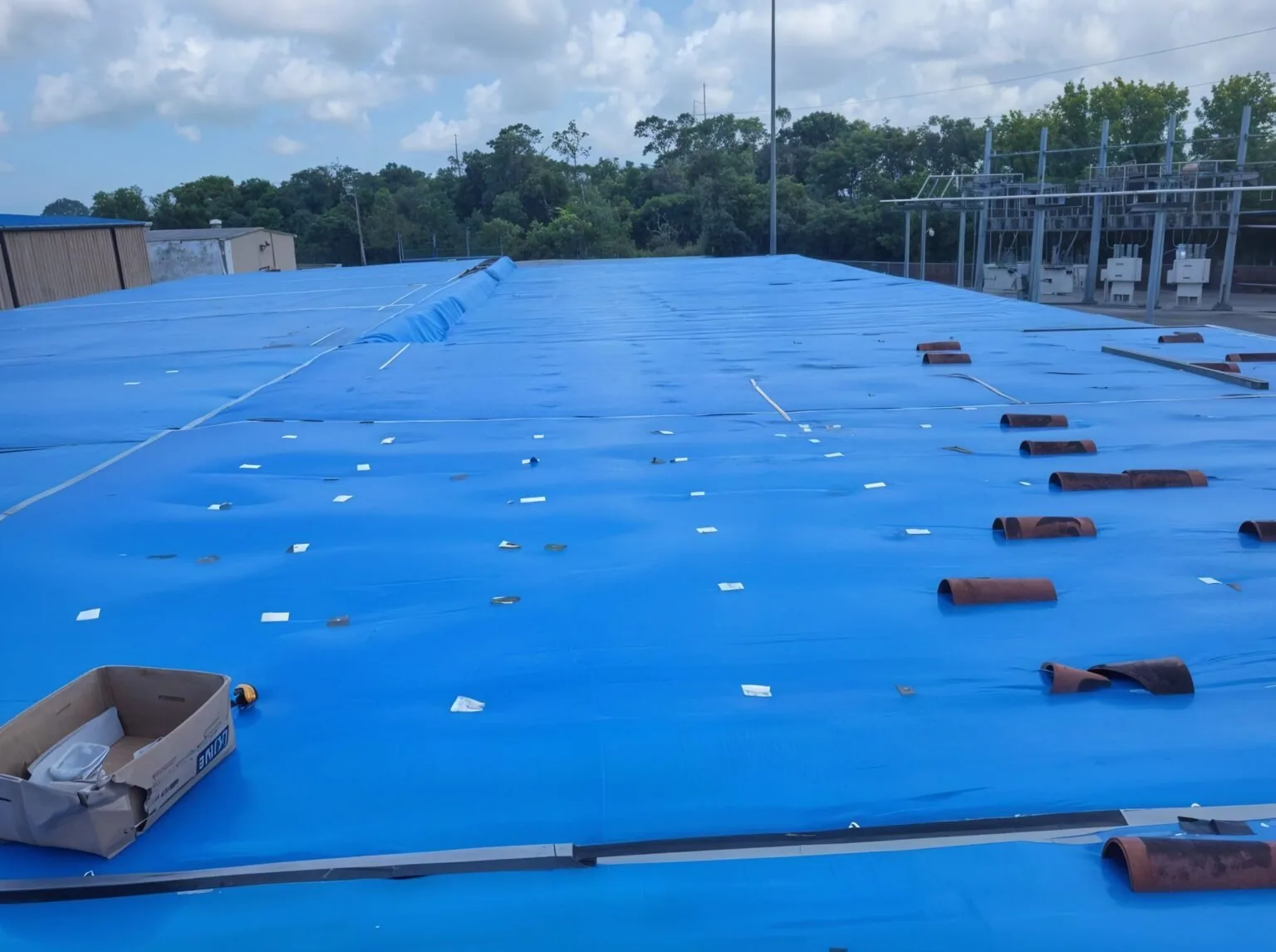
Restoration contractors dry interiors, and the roof has to stop adding water. Their drying equipment cannot catch up while rain keeps coming in. Emergency roof repair places temporary membrane, sealed tarps and edge securing over the entry points, documented with photographs and a cost. We coordinate with the mitigation crew so ceiling openings, dehumidifiers and roof protection happen in the right order.
The temporary work is scoped as its own line, because carriers pay for reasonable emergency measures and want to see what was done. We keep receipts, photographs and a short note on why each measure was needed. The permanent repair waits for the adjuster's visit or approval, and the temporary protection holds until then.
Line-item estimates that stand up to review
An estimate that will be reviewed needs specifics. We list the work by area and system, give quantities and unit prices and describe the method. Edge metal is by the linear foot, membrane by the square, flashing by the detail, drain work by the unit and insulation replacement by the area found wet. The result can be compared line by line with the carrier's own.
When the evidence shows the loss reaches beyond the first estimate, a supplement follows with new photographs and a scan. We keep a running record of changes, with dates, so the file shows how the scope grew and why. Roof insurance claim assistance for an owner uses the same estimate format.
Where losses cluster on the island
Wind losses concentrate on exposed buildings, among them the large decks along the West Shore Expressway and shoreline buildings. Flood-line losses on the South Shore are a different matter: Oakwood recorded the highest water line Sandy left in the state, 7.9 feet above ground, and across Midland Beach, New Dorp and Oakwood Beach the flood took whole blocks of houses. A roof claim in those areas stands apart from the flood claim and rests on wind damage, debris punctures and drain failures. Rain losses cluster at drains and penetrations after intense events, and flat roofs with clogged or undersized drains took on water when Ida set off the city's first flash flood emergency of its kind on September 1 and 2, 2021. Snow losses follow heavy storms such as the 27.3 inches that fell on January 23, 2016. Buildings in Midland Beach and Bloomfield show how different those cases are.
Codes, upgrades and supplements
The Department of Buildings publishes the 2022 NYC Construction Codes, and a repaired or replaced roof is checked against the requirements that apply. Whether a policy pays for code-driven upgrades depends on its terms, so we list code items separately in the estimate. Typical examples are insulation thickness, drainage and attachment details that differ from the roof being replaced.
Separate lines let the carrier, the owner and the restoration contractor see which items are repair and which are upgrade. Permits and filings are confirmed with the Department of Buildings before larger work starts. Public agencies and property managers with several damaged buildings get one report per building and a summary for the whole loss.
Adjusters and owners both work from the same file when the roof record is clear. The report lists cause, extent, emergency protection, the proposed repair and the cost of each step, and photographs are labeled by roof zone so a reviewer can follow the damage across the building without a site visit.
Related Roofing Work
More roofing work that comes up alongside Insurance Adjusters and Restoration.

Commercial Roofing Questions
Can you attend the adjuster's inspection?
Yes. We bring the roof plan, photographs and scan results, and walk the same route we used. We also bring a copy of the temporary-protection log, so the adjuster sees what was placed, when and why. Questions about the roof's construction and repair method get direct answers.
How do you separate storm damage from age?
By fresh scars, direction of damage and pattern. We photograph both and state the split in the report.
What do you provide a restoration contractor?
A moisture map, temporary protection and a note on which ceiling cavities are wet. The roof stops adding water so drying can proceed.
How are supplements handled?
With new photographs, a new scan and a dated note on what changed. The file shows the growth of the scope.
Do you handle many buildings in one loss?
Yes. One report per building and a summary for the whole loss.