College and University Roofing in Staten Island, NY
College and university building roofing in Staten Island, NY: campus-wide surveys, summer-break replacements and repairs for buildings of many ages.
A hairline crack across the coping of a stair tower, with a pale salt streak running down the brick beneath it, is what an inspector writes down on a campus roof, because the crack is the beginning of a path for water and the streak is proof the water is already moving through the wall. This matters now because a campus collects buildings of many decades, and the roofs on the old ones and the new ones fail in different places. The first job on a campus is to see the whole set at once, so the inventory is sorted by who sleeps, studies or stores something valuable under each roof.
A campus built in layers
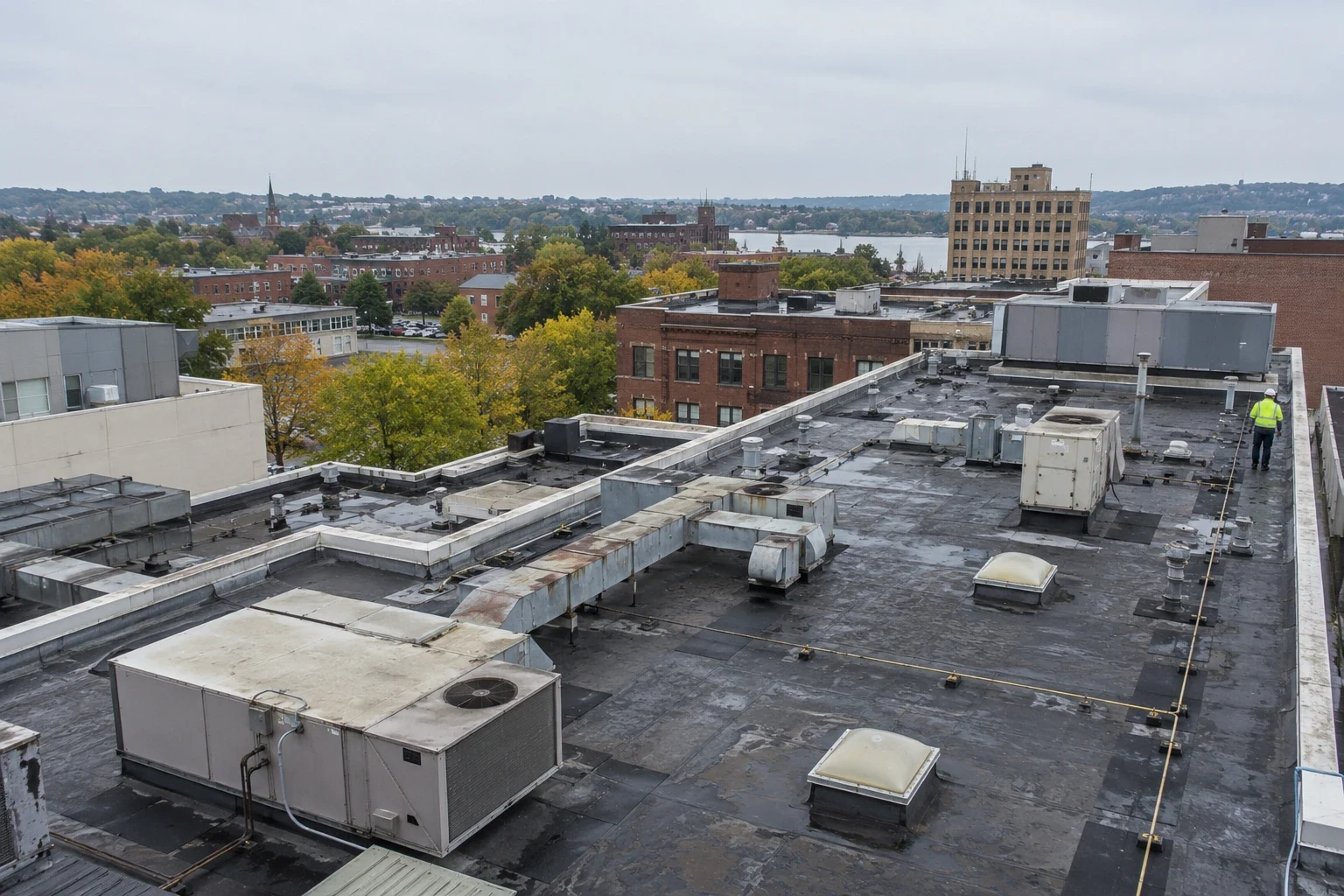
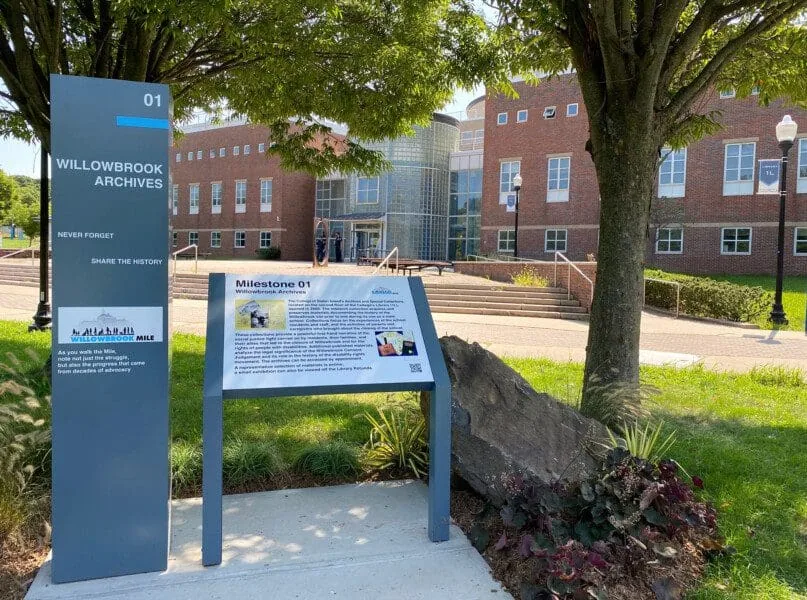
The College of Staten Island campus opened in the early 1990s on the site of the former Willowbrook State School, which had closed by 1987. A military hospital had opened on the property during World War II, and Seaview Hospital, a former tuberculosis sanatorium, sits in Willowbrook and joined the National Register of Historic Places in 2005. A site with that much history has buildings of many ages and many uses, and a campus is never treated as one roof. A lecture hall, a library, a laboratory, a residence hall and a gym each have different loads, equipment and drainage. The survey treats every roof on its own merits and then ranks them together.
Reuse of old buildings leaves its mark. When a building changes from one use to another, its roof often keeps equipment, skylights and penetrations that no longer serve anything. Each is a leak path with no purpose. The survey lists them for removal and closure, which cleans up the roof and lowers the number of details to maintain. A hospital roof campus faces the same mix of old and new wings.
Old masonry and newer blocks
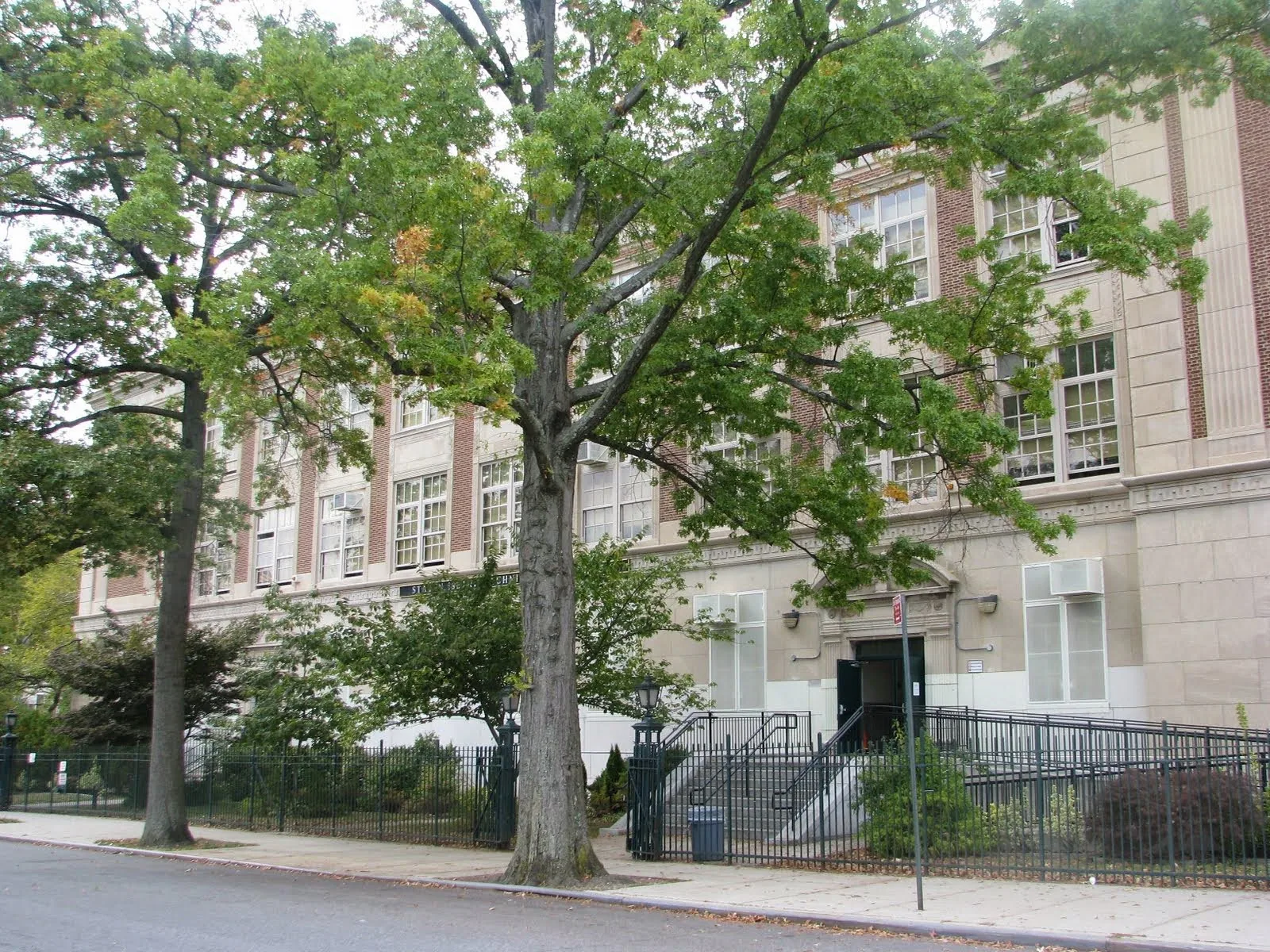
Older masonry buildings carry parapets, cornices and coping stone. Their roofs usually sit behind a wall, and the wall is where the trouble starts: loose coping, failed counterflashing and soft mortar. Newer blocks tend to have lighter parapets, larger rooftop units and more penetrations, and their failures cluster at curbs and flashings.
For the old buildings we repoint, reset coping and flash the wall base before touching the membrane. For the new ones we examine every curb, boot and seam. In both cases, a core cut tells us what is under the surface, and a moisture scan shows how far any wet insulation extends.
Stair towers and bulkheads are the details people forget. They sit above the main roof, take the most wind and carry their own small roofs, doors and louvers. We check each: door sill height, louver flashing, the cap and the base. A bulkhead with a failed base flashing drains into the building through the stair.
Labs, libraries and residence halls
A roof over a science lab carries exhaust stacks, fume hoods and often specialty equipment. Chemicals in the exhaust can affect certain membranes, so we check what each stack discharges and choose materials to suit. A library roof protects books and archives, and a leak above stacks is a loss that cannot be priced. A residence hall roof has people sleeping below and a calendar that is tied to the term.
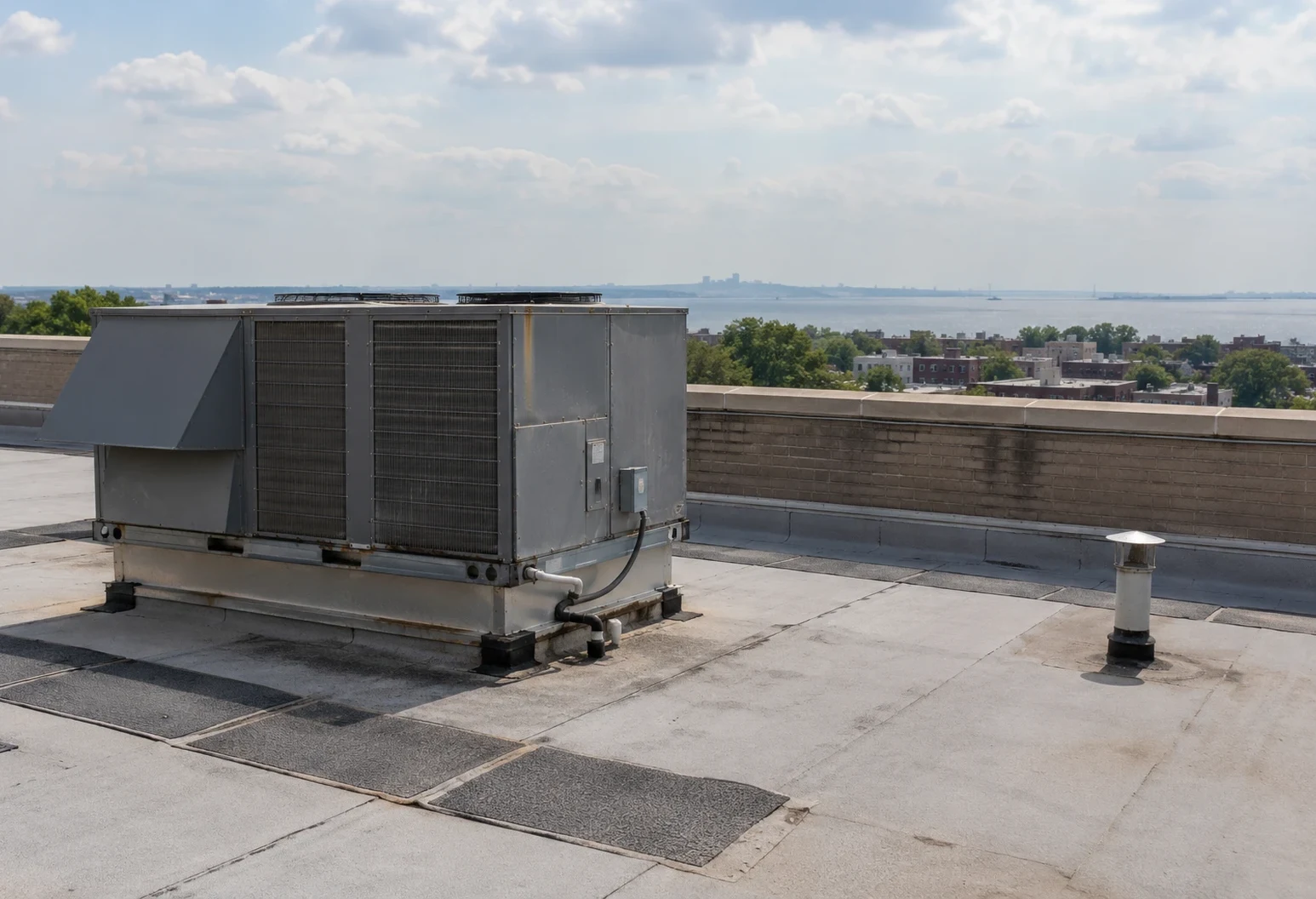
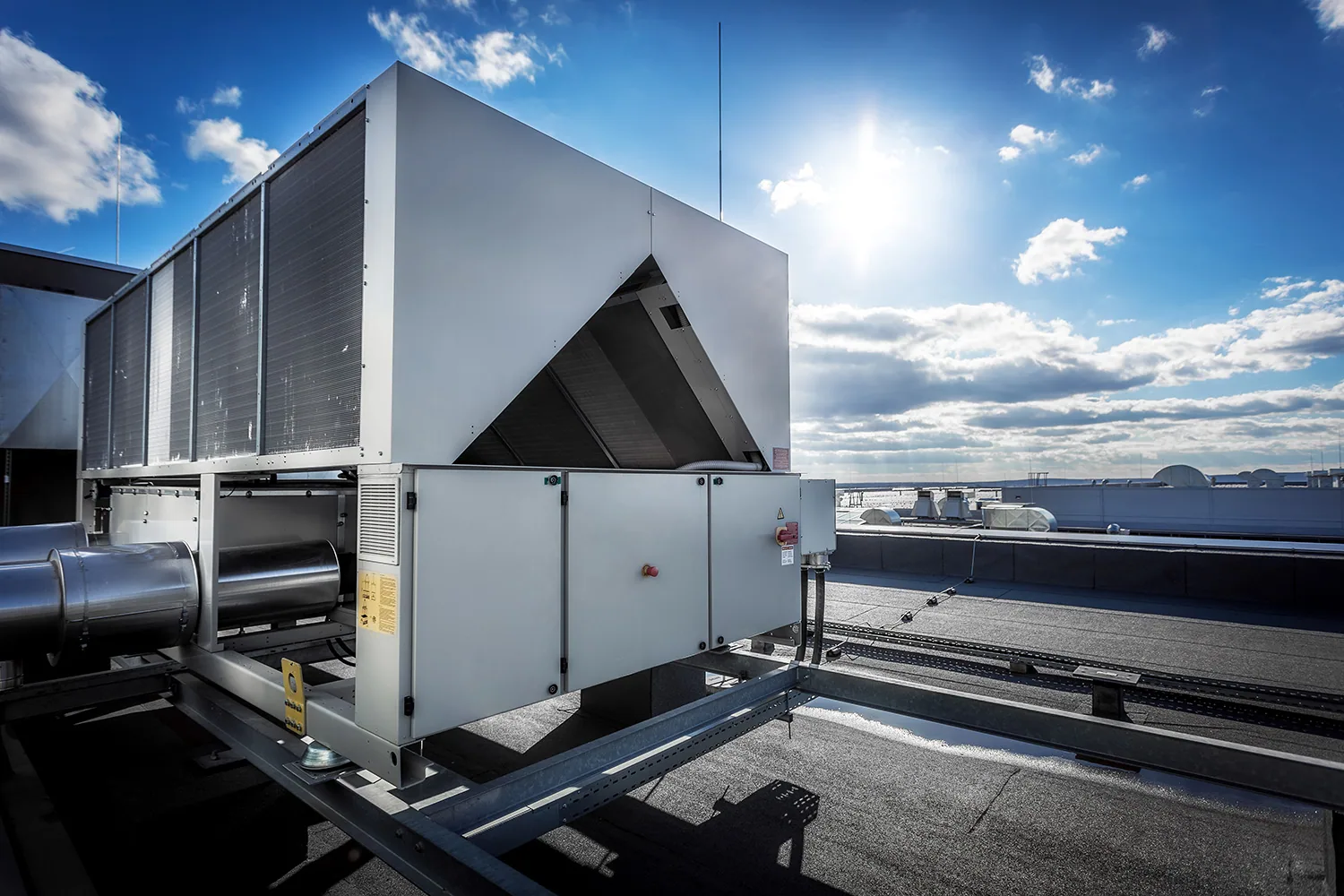
We rank every building by what lies underneath it and by when it is occupied. The ranked list helps a director use the summer break for the highest-consequence roofs. Rooftop equipment on labs and libraries is mapped, and each curb is reviewed with the equipment curbs and supports checklist.
Residence halls add a particular call: tenants who are also students. Complaints arrive at night and on weekends, so the log lists a contact for urgent calls and a plan for temporary protection. A dripping ceiling at midnight is handled with a tarp and a bucket, and the roofer arrives the next morning to find the entry.
Storm and winter checks
After a storm on the scale of Sandy, whose gusts reached 80 mph in October 2012 and whose floodwater took out blocks of houses in Midland Beach and New Dorp, or the rainfall behind Ida's flash flood emergency in September 2021, every campus roof gets walked, starting with those over sensitive collections and equipment. Winter loads count as well, with New York City snow averaging 29.8 inches a year and reaching 27.3 inches in the single day of January 23, 2016. Snow loading and meltwater are checked before winter, and drains and scuppers are cleared in autumn. Any roof near trees collects leaves in the drains from October on.
The break calendar
Campus roof work follows the academic calendar. Summer is the long window, with winter and spring breaks for repairs. Residence halls and labs are scheduled first, since they have the strictest limits. We survey in the winter, bid in the spring and order materials before May, so crews arrive when the buildings empty.
A multi-building project is phased across summers, with each year closing the highest-risk roofs. A multi-site roof program keeps the survey, the schedule and the records in one file across years.
Fall move-in is a hard stop. Every roof job scheduled for summer must be dry and cleared in time for students to arrive, and the calendar is built backward from that date, with allowances for weather. We hold a float of dry days in the plan for the same reason.
Access and campus rules
Campuses have their own rules: security check-in, parking permits, crane approvals and fire-lane limits. We submit the plan early and work inside the campus approval process. Delivery routes avoid pedestrian paths and class changes, and crane picks are scheduled for quiet hours. Because the Staten Island Expressway is among the city's busiest roads, bridge-day traffic belongs in the delivery plan.
Historic buildings may fall under review. We confirm status early and put any approval time in the schedule.
Grounds crews and facilities teams share the roof access routes, and a locked hatch is a common delay. We confirm keys and escorts before each work day, and we keep a log of who is on the roof.
Facilities staff change, and the roof record outlasts them. Each walk produces a dated entry that lists what was found, what was fixed and what was left for the next break, so the person who inherits the buildings can start from the file and not from memory.
What goes in the log
The log lists each building and roof level with its age and system, every ponded seam, drain and curb, and the moisture map, and each item gets a photograph and a timing decision. A capital plan places the work across years. Directors near Willowbrook get the same walk, and a school roof in K-12 runs on a similar calendar.
Related Roofing Work
More roofing work that comes up alongside College and University Roofing.
Commercial Roofing Questions
How do you survey a campus with dozens of roofs?
With one form and one rating scale for every roof. A sample gets a moisture test, the rest are walked, and all of them are ranked together.
Can a lab roof be repaired safely?
Yes, after we check what the exhaust discharges and coordinate with lab safety staff. Work areas are fenced and exhaust is managed.
Do historic buildings change the plan?
They can. We confirm review requirements early and add approval time to the schedule.
When does a campus roof plan start?
In winter, for the summer break. Survey, scope, bid and order before May.
How do you protect collections under a roof?
We rank them first, check the roof above them most often and put temporary protection below any open section.