
Rooftop Equipment Curbs and Supports in Staten Island, NY
Curb flashing, equipment rails and pipe supports on Staten Island flat roofs, from Richmond Avenue retail to West Shore warehouses. Request a roof inspection.
A gap at the corner of a curb flashing wide enough to slide a pencil into is the kind of line an inspector writes down before anything else on a rooftop-unit roof, because every cubic foot of air that moves through the unit above it is sitting on that corner. Water finds the gap during the first hard rain of the season, runs along the deck and shows up as a stain in a ceiling tile that is nowhere near the unit.
Commercial Roofing Staten Island repairs, rebuilds and replaces curbs, equipment rails and pipe supports on flat roofs across the island, and we flash each one into the membrane so a facility director is not paying twice for the same leak.
Curbs, rails and supports
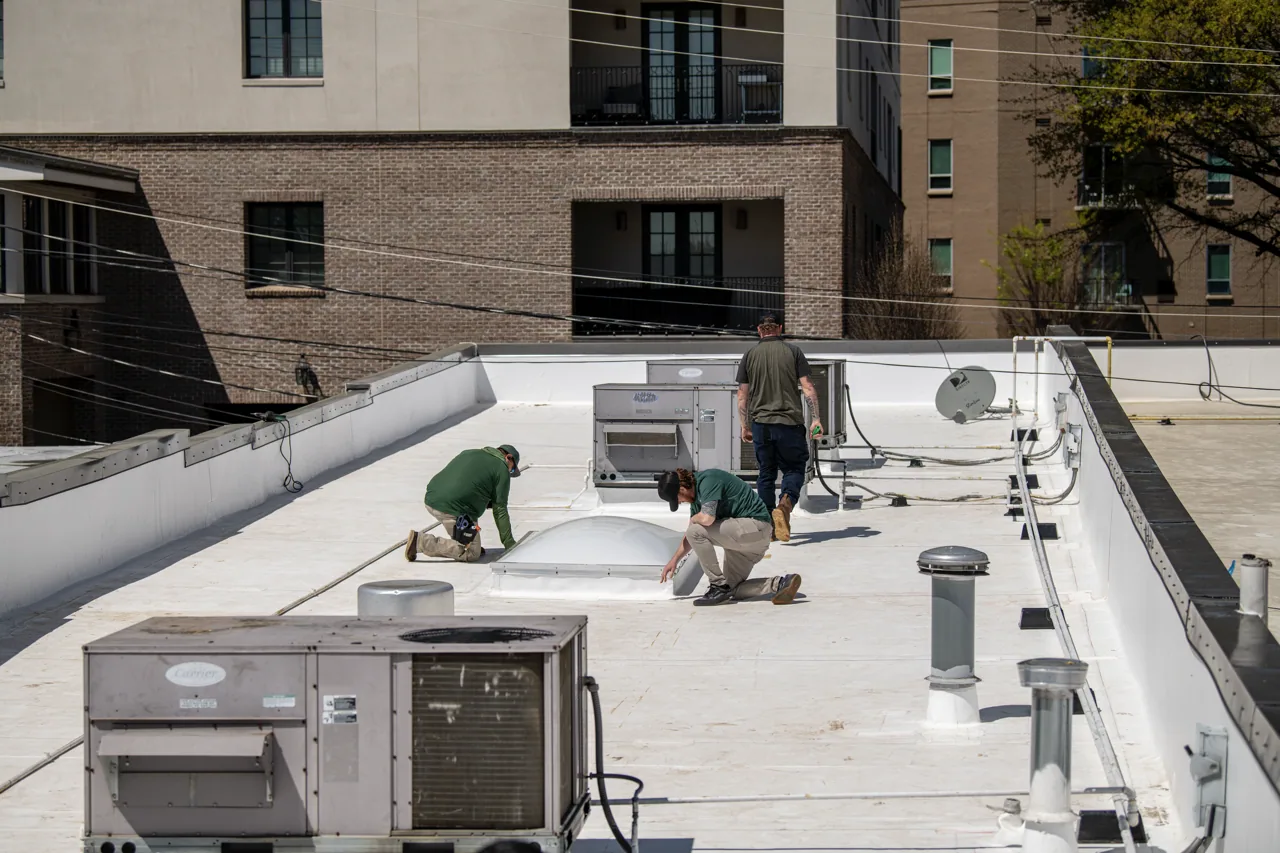
A curb is a raised frame that lifts a unit above the water line of the roof, with the membrane carried up its sides as base flashing and a metal cap shedding water over the top edge. A rail or a sleeper does a different job, spreading the weight of a condenser or a gas line across the insulation so the point load does not crush it and stretch the sheet.
Both turn up on almost every commercial building along Richmond Avenue and Hylan Boulevard, where the roofs carry heating and cooling equipment for the tenants below, and on the long box buildings of the West Shore, where a single roof may hold dozens of units installed by different trades in different years.
Shopping centers like the ones that grew along Hylan Boulevard from New Dorp Lane after the 1960s, with Hylan Plaza the largest, put several tenants under one roof, and each tenant has its own idea about where a unit should sit, so the inspection log is how a landlord keeps track of who put what where.
Where water gets in
The corners of a curb go first, because the membrane is cut and folded there and a thin seam has to follow the movement of the roof through every freeze and thaw. After the corners, the top edge of the flashing loosens behind its cap, and then the low side of the curb collects meltwater that sits against the wall until it finds a way through.
The city's snow runs about 29.8 inches in an average year and reached 27.3 inches on January 23, 2016, and whatever drifts against a unit and melts on a sunny afternoon ends up exactly where the flashing is weakest. A ponded seam beside a curb is the surest sign that slope has settled around it.
Bloomfield and the rest of the West Shore add a second kind of curb problem, because a distribution building, the type the Matrix Global Logistics Park brought there in 2018, can pick up heating, exhaust and fire protection equipment long after its roof was laid. A curb added after the roof was laid is the curb most likely to have been flashed in a hurry.
What the inspector writes down
On a rooftop walk we put a hand and a probe on every curb, note the height of the flashing above the finished roof, check the termination at the top, press the sealant at the corners and look at the fasteners that hold the unit to its frame. Each one is photographed and numbered on a roof plan, so the inspection log reads curb by curb.
- Flashing height against the standing water around it.
- Pitch pockets and pipe boots that have dried and opened.
- Loose hold-downs that let a unit vibrate against the flashing.
- Walk-pad wear where mechanical crews have crossed the sheet for years.
Pipe and conduit runs get a pad under every leg, because a line that rests directly on the membrane wears a hole as the building moves.
We look just as hard at what is stored near the units, because spare filters, cut ductwork and abandoned conduit left on a roof hold water against the sheet and hide the seams we need to see.
The repair in plain terms
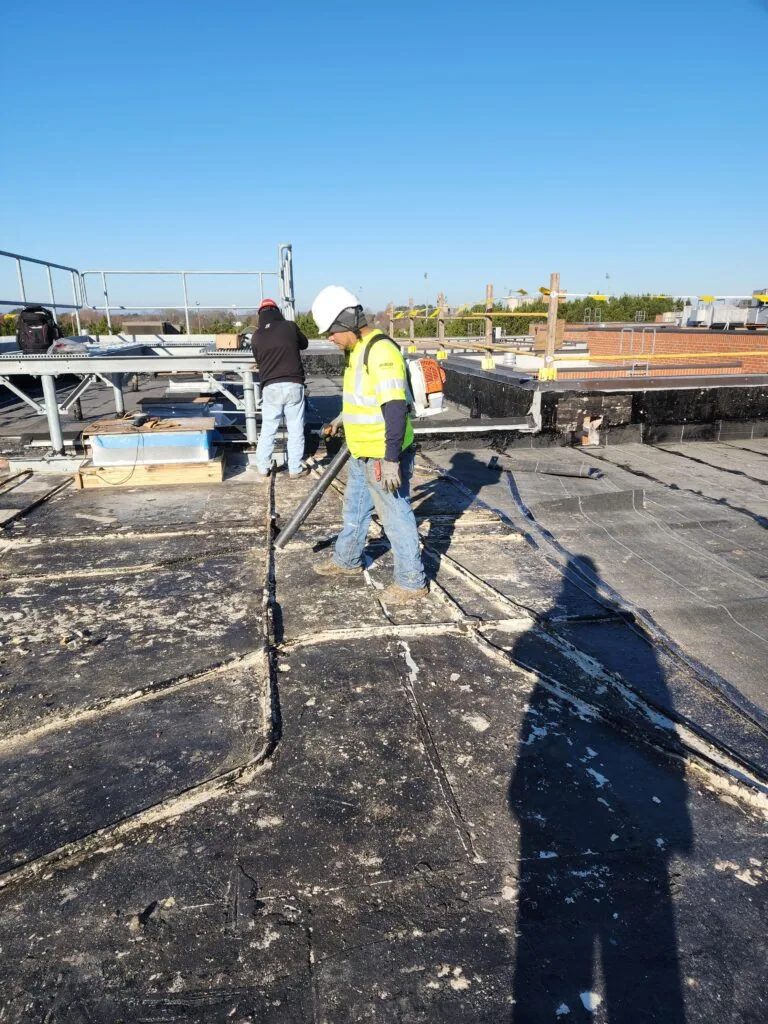
When the curb is sound and only the flashing has failed, we cut out the old base flashing, set new membrane up the sides, rebuild the corners and cap the top with metal, which is ordinary commercial roof repair and usually finishes in a single visit. When the wall of the curb is rotted or too short, we rebuild it, and when a unit is being replaced we insist the curb is replaced in the same work order, since a new unit set on an old curb inherits every leak the old one had.
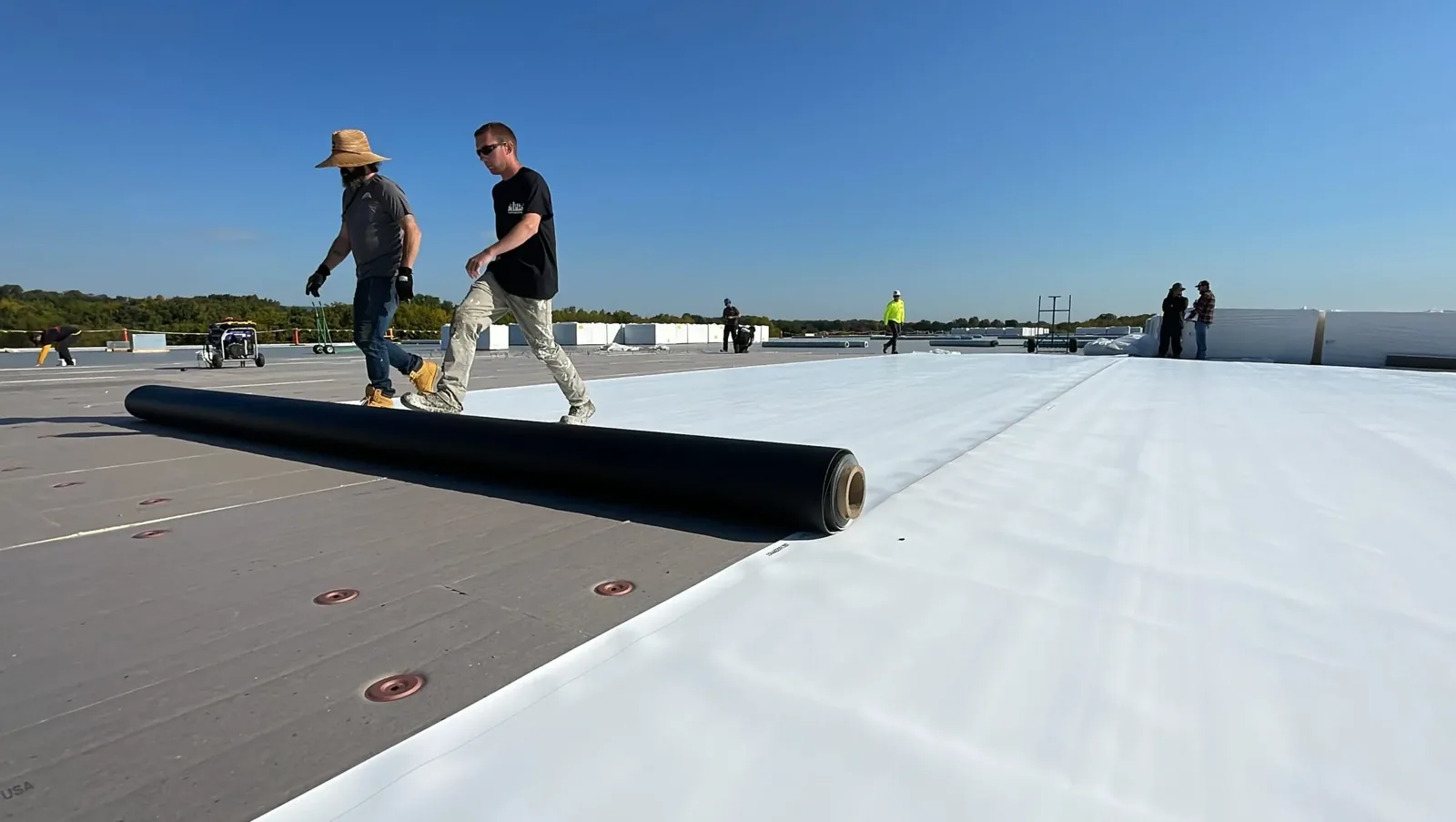
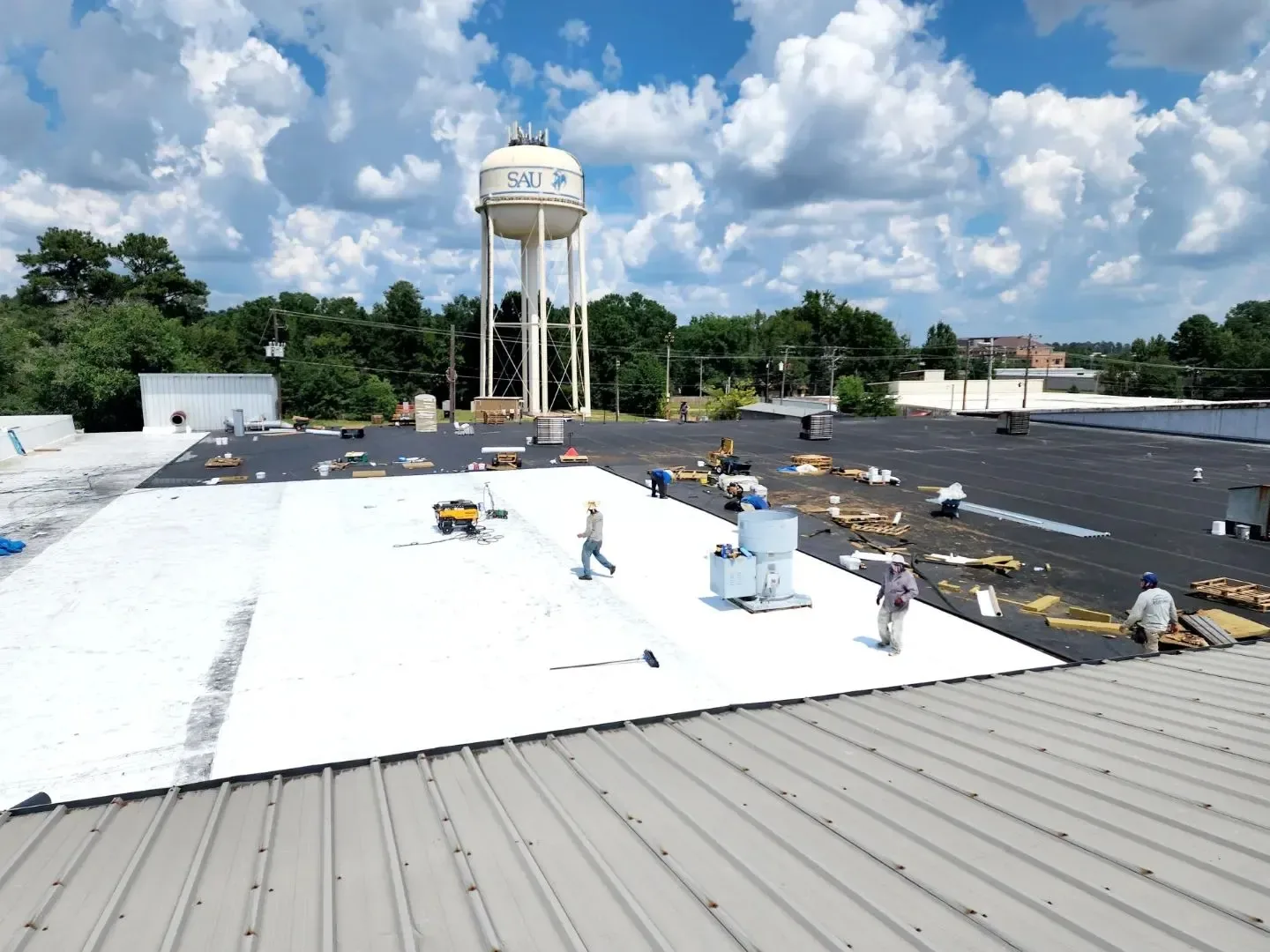
On a roof close to the end of its life, rebuilding a dozen curbs is money spent twice, so we fold them into the scope of a full commercial roof replacement. Where the membrane is TPO or another single-ply sheet, we flash with the same material so the seams bond cleanly.
Wind and winter on the island
Sandy's gusts to 80 mph in October 2012 are the wind that rooftop equipment on the island has to be held down for, along with ordinary weather. Loose hold-downs and thin counterflashing are the first things a gust works at, which is why storm checks on this island start at the units.
After a big rain, the strainers near each curb get cleared, because Ida in September 2021 showed how fast a clogged drain turns an ordinary storm into an interior leak, and a curb sitting in standing water is a curb that will not last the season. A short preventive maintenance visit each spring and fall catches both.
Lifts, trades and the lot
Curb work puts us next to the mechanical contractor, and the sequence matters, because the unit has to be disconnected and lifted aside before the frame can be rebuilt. We book the lift together, keep the building without cooling for as short a time as we can and flash the opening the same day so no deck sits exposed overnight.
Access on the island is usually by roof hatch or ladder, and on busy retail strips we stage materials away from the front lot and from bridge-day traffic on the delivery side. Our flashing failure repair crews carry walk pads for the haul route and leave the roof clean, with a dated photograph of each finished curb for the log.
Owners in New Springville and the Richmond Avenue corridor can send the roof plan and a list of units, and we will walk it.
Related Roofing Work
More roofing work that comes up alongside Rooftop Equipment Curbs and Supports.

Commercial Roofing Questions
Does a leaking curb mean the roof has to come off?
Rarely. If the membrane around it is dry and sound we re-flash the curb, rebuild the corners and water-test the area. Wet insulation spread across the deck changes the answer, and the moisture scan tells us which case we have.
Who flashes a new rooftop unit?
The roofer should, and the contract should say so before the unit arrives. We coordinate the lift with the mechanical contractor and flash the curb on the same day.
How often should curbs be checked?
Twice a year, once in spring and once after the snow season, plus after any storm that moved loose items on the roof.
Does a heavy unit need extra support?
Often. Rails spread the load onto the structure so the insulation and sheet are not crushed. The building engineer supplies the load, and we build the support to match.
What should be done with a dead unit nobody uses?
Take it off and close the opening with new deck and membrane. An abandoned unit still sits on seams that leak, and the open duct below is a path for water.