Shopping Center Roofing in Staten Island, NY
Shopping center and strip retail roofing in Staten Island, NY: tenant-by-tenant leak tracing, phased repairs and storm checks on Hylan Boulevard.
A row of tenant signs bolted through a parapet cap, each with its own bead of dried sealant, is what an inspector writes down along the roofline of a strip center, because every bolt is a hole and every hole has an owner who may not be the landlord. The reason to care this season is that a strip roof is a shared surface with a dozen tenants, and a leak in one suite is often caused by equipment or work belonging to another. Complaints arrive by suite, so the walk goes zone by zone, from the first stain to the nearest curb.
Hylan, Richmond and the retail strips
The city calls Hylan Boulevard its longest commercial roadway, about 14 miles from Rosebank to Tottenville. Shopping centers began lining it from New Dorp Lane in the 1960s, five in all with supermarket and department-store tenants, and Hylan Plaza, opened in 1966, was the biggest. Richmond Avenue carries Graniteville's main commercial strip and some of the heaviest automotive traffic on the island. Nobody knows what a given center has on its roof until it is opened. A center that dates to the 1960s may have been re-roofed since, and an inspector looks for layers: tar and gravel under a later membrane, patches of different ages and flashing that was never rebuilt. The history on the roof is the first thing a walk reveals.
A supermarket tenant adds refrigeration condensers and heavy exhaust to its section of roof, and a grocery store roof needs its own review. A restaurant tenant adds grease and heat, which a restaurant roof review covers in detail. The landlord sees all of them on one plan.
Tenant-by-tenant leak tracing
A strip roof is continuous, so water can travel from one suite to the next before it drops. We collect complaints from tenants, plot them on a plan and walk the matching roof zones. A cluster of complaints at one end of the row points to a drain, a wall junction or a curb in that zone.
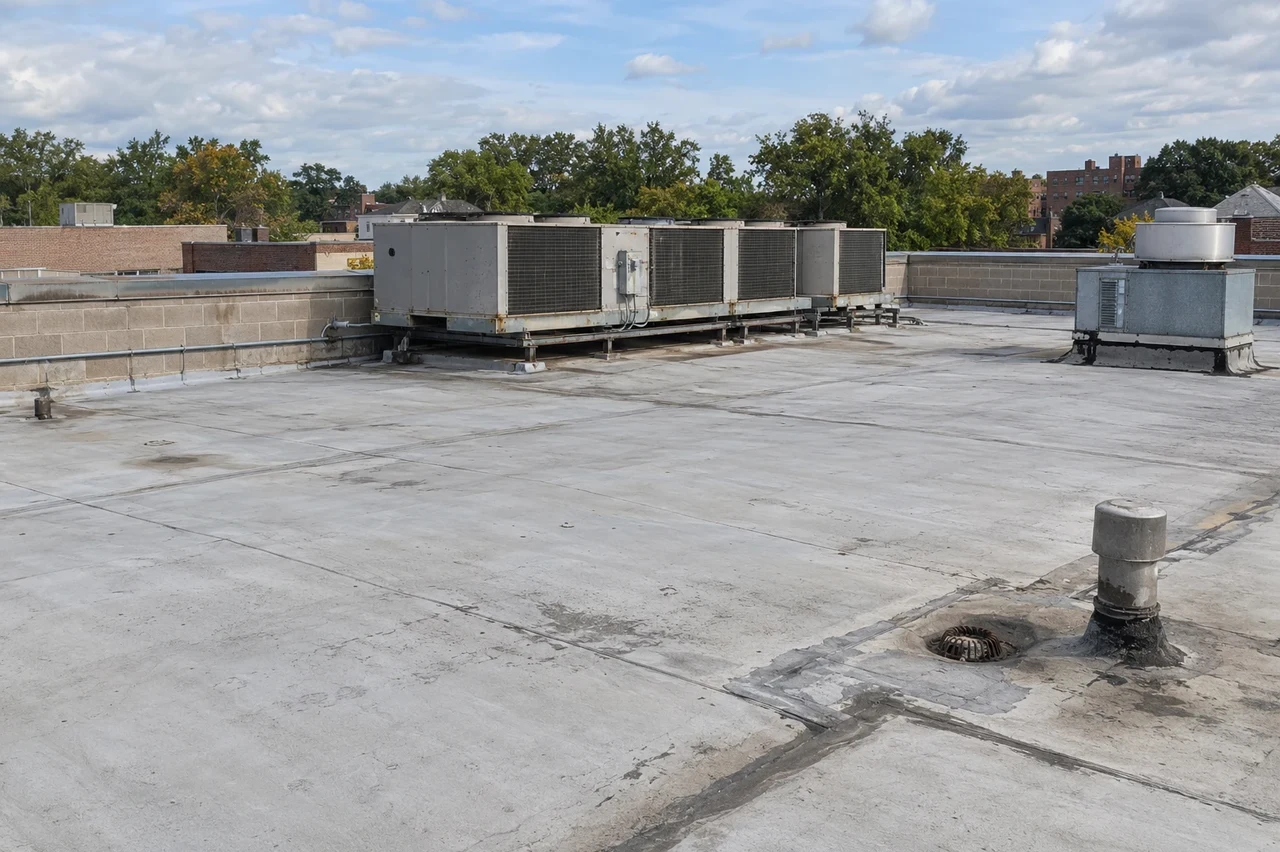
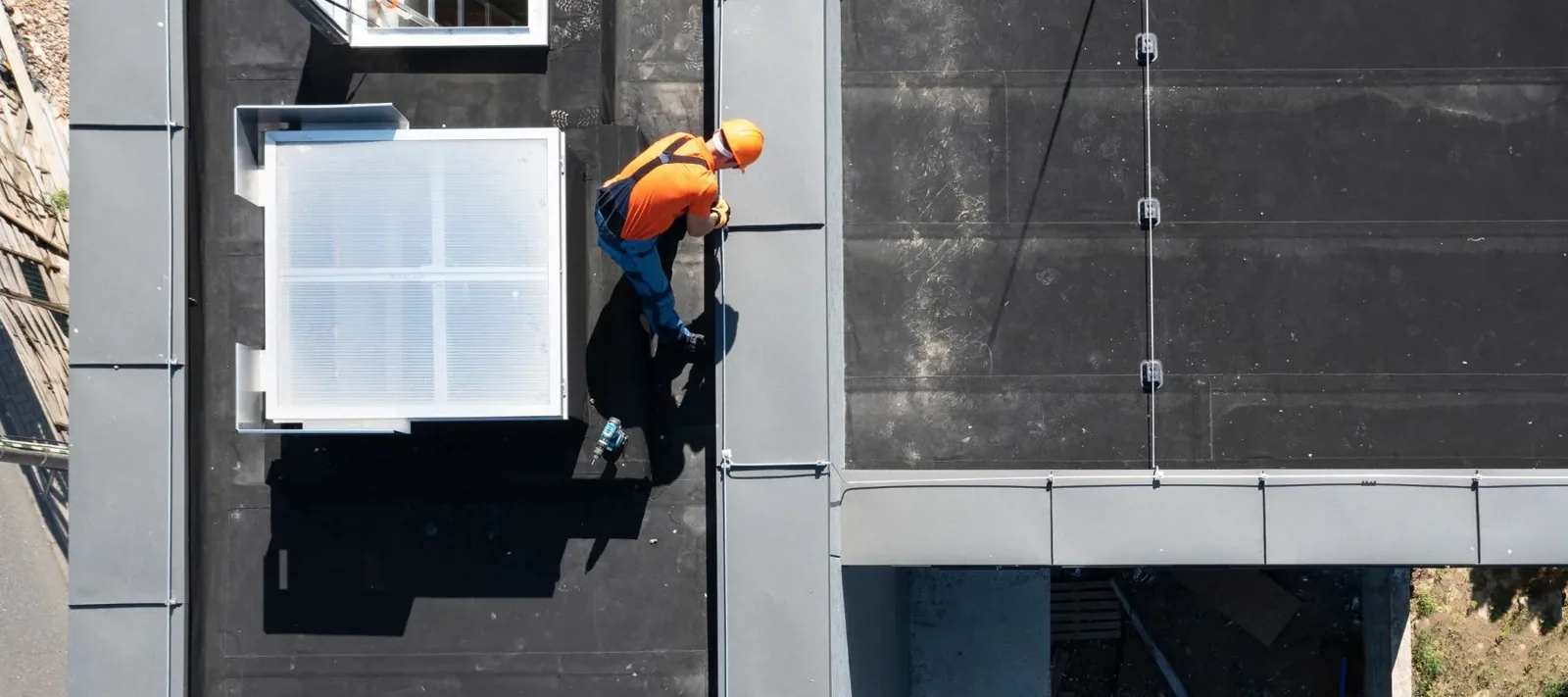
Tenants add equipment, signs and exhaust as they move in, and the roof carries the record of every one. We inventory each penetration, note who owns it and check sealant, curbs and supports. A restaurant exhaust, a nail salon vent and a cell-phone antenna are three different owners on one roof, and a leak repair that names the cause lets the landlord assign cost correctly.
Sealant is the repeating cause. A bead at a curb, a sign bolt or a pipe collar lasts a few years and then shrinks and cracks. We list every sealed joint on the plan, mark its age if known and schedule a resealing round before the dry bead fails. A resealing round costs a small fraction of the ceiling tiles it protects.
A short tenant notice goes out before each visit, listing the day, the zone and a phone number. Tenants who know a crew will be above them tend to move stock and cover shelves without being asked.
Large centers and open-air layouts
Larger centers show the range a retail director may face. The Staten Island Mall in New Springville, open since 1973, is the island's only indoor mall and its biggest retail center. Bricktown Centre at Charleston is an open-air lifestyle center, and Empire Outlets, in St. George, opened beside the waterfront in May 2019. Indoor and open-air layouts, big stores and small stores, long runs of canopy and many separate roofs all need a different approach. An open-air center tends to have more edge, more canopy and more drain locations per tenant, while an indoor mall puts its roof area into a smaller number of large sections.
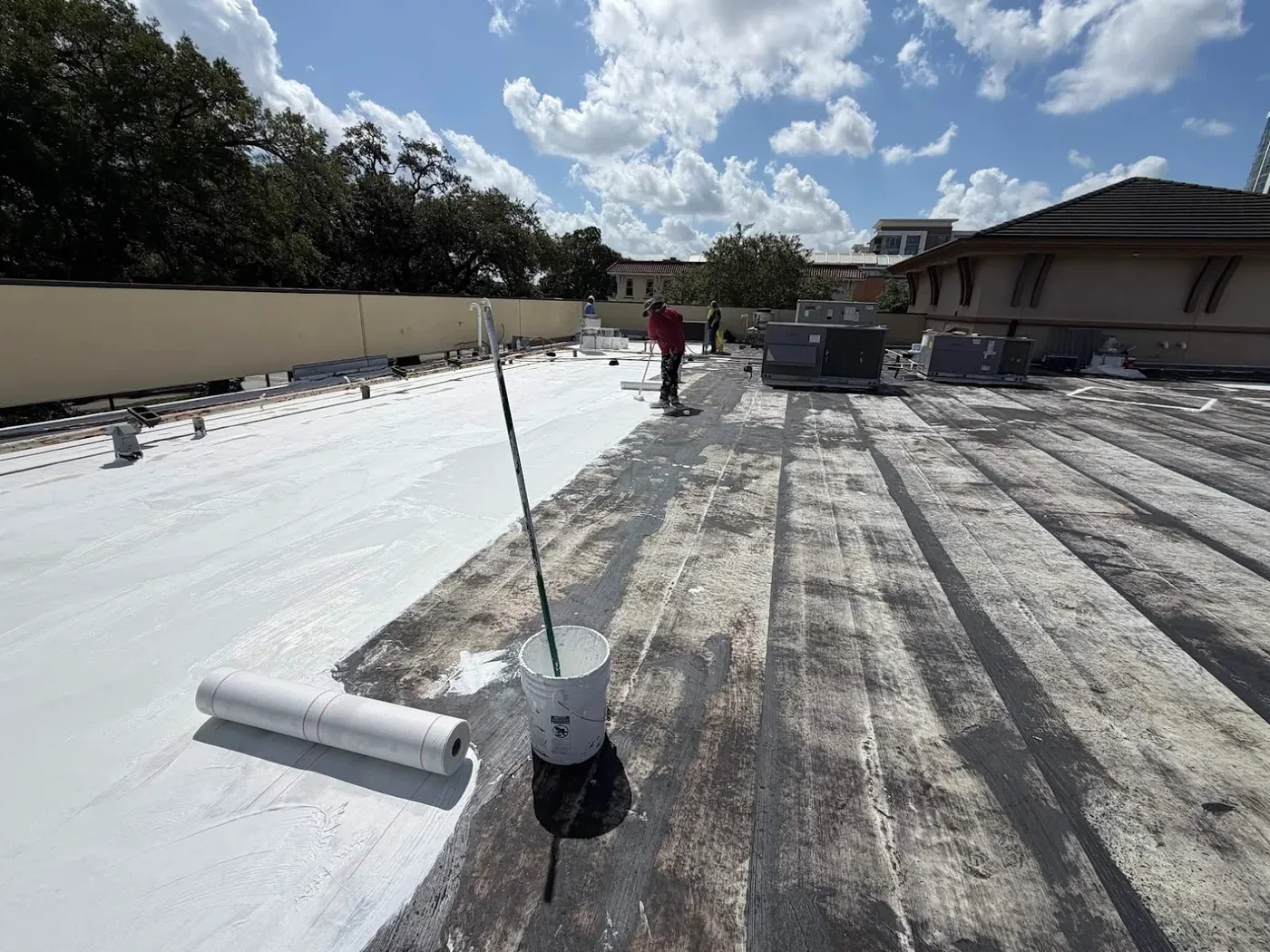
On a large retail roof, drainage runs are long and the slope is shallow, so a clogged drain can hold water over a wide area. We measure ponding depth, count drains and check overflow scuppers. A coating restoration is often a good fit for a sound retail roof, because it can be done in sections with stores open.
Storm and winter checks
After a storm canopy edges, signs and rooftop units get checked first, since wind catches them, and Sandy's gusts of 80 mph in October 2012 set the bar. A drain that clogs in a downpour like Ida's flash flood emergency of September 2021 sends water over the parapet flashing. Snow adds a load of its own: New York City averages 29.8 inches a year, January 23, 2016 brought 27.3 inches, and snow slides off a high roof onto a low one, overloading the low roof's drains.
Canopies and fascias take wind first. A canopy edge that has lost fasteners lifts in a gust, and the loose metal becomes a hazard to customers below. We re-secure the edges, replace corroded fasteners and photograph each run.
Access and scheduling
Retail work follows the sales calendar. We avoid the holiday season, work early mornings or nights where lease terms allow and protect customer paths and loading areas. Cranes and trucks are staged on service lanes, and bridge-day traffic on the Staten Island Expressway shapes delivery windows.
Each section is closed before the crew leaves, tenants receive a notice of the schedule and noisy work is timed away from the busiest hours. Restaurants and food tenants get special attention for odors and exhaust.
Parking lots matter. A lift or crane needs a flat, clear area, and a lot full of cars does not provide one. We arrange closed bays with the landlord, put out cones and signs and restore the lot at the end of each day.
Holiday freezes are written into the schedule. Many landlords rule out roof work from mid-November through the new year, so the main season for large retail jobs is spring through early fall, with repairs only in winter. Landlords who plan in January avoid the crush.
A leak in a shopping center is rarely one lease's problem. The landlord, the tenant and the insurer each want to know where the water entered, and the roof record settles that argument with photographs of the curb, the seam or the drain. We trace the stain along the deck to the entry point, mark it on the plan and date the entry. The same record helps when a tenant leaves and a new fit-out changes the penetrations, because the next crew sees what was cut and where it was sealed. Common-area roofs, canopies and the back-of-house roofs over loading doors are all walked on the same schedule, so no section is left to the tenant who happens to complain first.
What goes in the log
The log lists each tenant zone, every penetration and its owner, each ponded seam and drain, and the moisture map, with a photograph on every line and a call on how long it can wait. A condition report supports a landlord, a lender or a buyer. Directors in New Dorp and New Springville get the same walk, while the large-format stores nearby follow the pattern of a big-box retail roof.
Related Roofing Work
More roofing work that comes up alongside Shopping Center Roofing.

Commercial Roofing Questions
Why does a leak in one suite come from another tenant's equipment?
Roofs are continuous and water travels. We trace each stain to the roof zone and name the penetration or curb responsible.
Who pays for roof repairs in a strip center?
The lease says. Our log shows which penetration failed and who owns it.
Can repairs be done without closing stores?
Yes, by section, with customer paths and loading areas protected and noisy work timed away from peak hours.
Should the roof be checked before the holiday season?
Yes. Autumn drain cleaning and a walk before November prevent leaks during peak sales.
What about signs bolted through the parapet?
Each bolt is resealed or the sign remounted on a flashed bracket. Unsealed signs are a steady source of leaks.