
Grocery Store Roofing in Staten Island, NY
Grocery and supermarket roofing in Staten Island, NY: refrigeration condensers, exhaust, leak tracing and phased repairs that keep cold cases and aisles dry.
An oily sheen on the membrane under a bank of refrigeration condensers is what an inspector writes on a supermarket roof, because compressor oil, condensate and wash-down water all land on the same few square yards, and the surface there ages faster than the rest of the roof. The urgency is that the equipment keeping the dairy case cold stands on the roof, and a leak at its feet reaches the sales floor and the stockroom at once.
The roof is read from the equipment outward. We find the condensers, trace the lines that serve them and walk the surface around each.
Where the supermarkets sit
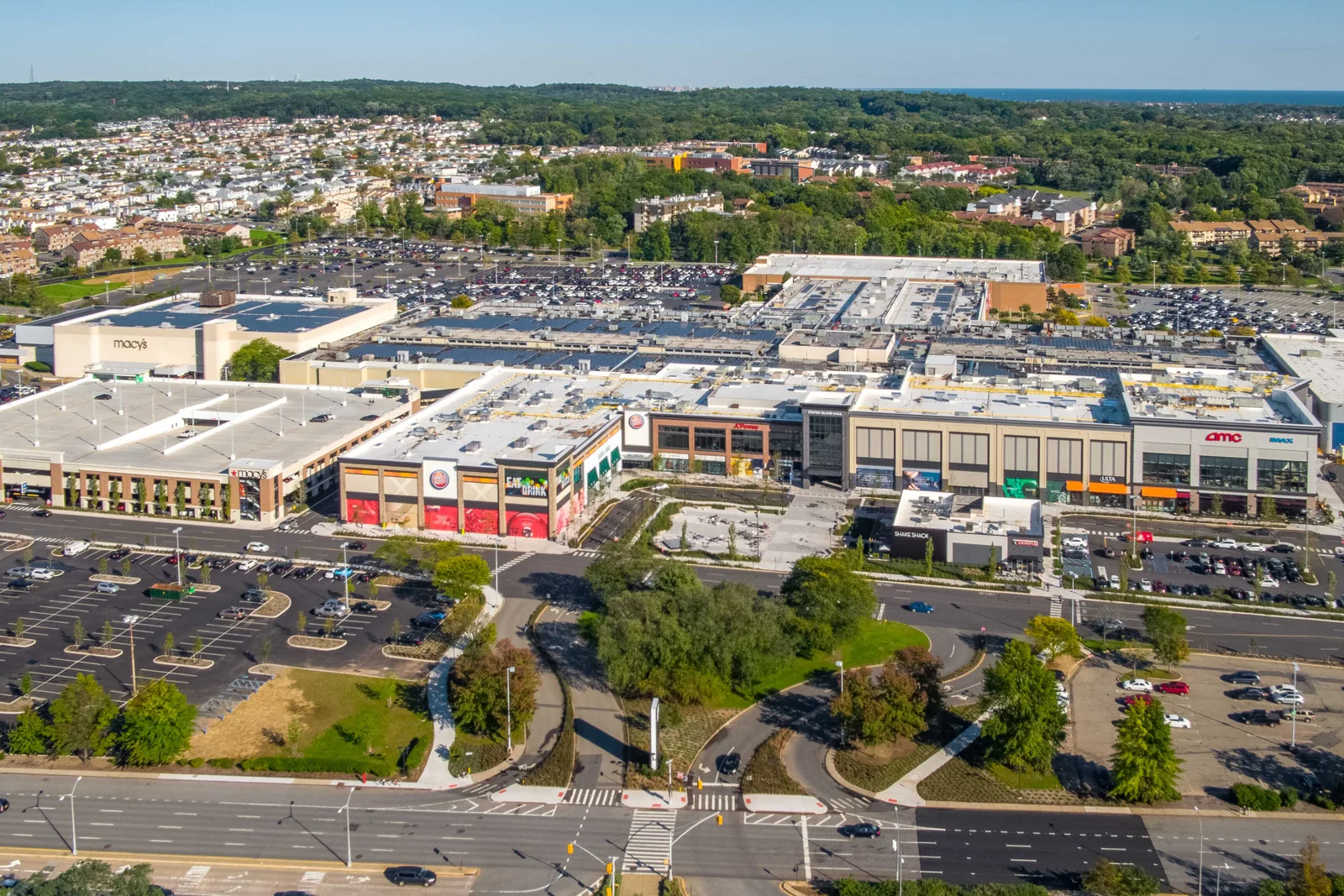
Supermarkets cluster where retail does. Hylan Boulevard grew five centers with supermarket and department-store tenants from New Dorp Lane starting in the 1960s, the largest being Hylan Plaza of 1966. Eltingville's commercial area runs down Richmond Avenue, Arden Heights got a shopping center beside the Village Greens development, and Rossville opened a 26,000-square-foot center in 1992 for its neighborhood. Until a roof is opened nobody knows what a given supermarket has on it. A supermarket in a multi-tenant center may share its roof surface with other tenants, so the tenant boundaries matter. The walk begins with the plan of the center and the lease lines.
Large-format stores in the same centers share the problem. A big-box store roof in the next bay has the same rooftop units, but a supermarket adds the cold-case load, so its equipment is denser and its penetrations more numerous. We count them by bay and mark the ones that serve refrigeration separately from the ones that serve comfort cooling.
Condensers, lines and penetrations
A grocery store carries more rooftop mechanical equipment per square foot than most retail: condensers for coolers and freezers, air handlers, exhaust from the bakery or deli, and a web of refrigerant lines, conduit and drains. Each line enters the building through the roof, and each entry is a flashing.
We map the lines, check their supports for sagging or chafing and look at every sleeve where a line passes through. Insulation on the cold lines sweats in summer, and the drip lands on the membrane. A penetration flashing check at every sleeve is the largest single task on a grocery walk.
Line sets deserve a close look at the wall as well. Where a line turns from the roof into the building, the wall flashing, the insulation and the sealant all meet at one point. If that point cracks, water follows the line down into the ceiling space above the cooler, where it freezes on a cold pipe and builds ice that nobody sees until a panel drops. We open the cover on each wall penetration and look.
Oil, grease and the surface
Some membranes soften with oil. Bakery and deli exhaust adds grease, and compressor service adds oil. The result is a patch of softened, discolored sheet around the unit, sometimes with the surface lifting from the one beneath.
We look for softening by pressing a gloved thumb on the sheet beside each unit. Soft sheet gets replaced with a chemical-resistant membrane or covered with a protective pad, and a drip pan goes under any line that sweats. The drain strainers near the equipment are checked first, since oil and grit clog them quickly.
The bakery and deli exhausts are the greasy end of the roof. Hot, oily air condenses on the cooler stack and drips onto the membrane in a pattern that points to the fan. A grease trap under the fan catches most of it if somebody empties it. We check whether the traps exist and whether they are full, and we recommend a simple schedule: weekly in busy seasons, monthly the rest of the year.
Storm and winter checks
A dry roof keeps one hazard away from the equipment inside. After any storm, condenser covers, line supports and drains get checked, and the benchmark is Sandy's 80 mph gusts in October 2012 and the downpour that brought Ida's flash flood emergency in September 2021. Snow around condensers restricts airflow, and meltwater runs back over the equipment, so the drains near the units are cleared before winter, with the city's snow averaging 29.8 inches a year. Heat matters as much as cold. The mean daily high in July is 84.9 F in New York City, and a condenser running in 90 F air throws more heat onto the roof around it. A reflective surface and a clear ventilation path help the equipment as well as the membrane.
Access and trading hours
A supermarket opens early and closes late, and deliveries are constant. We plan roof work around receiving hours, work in sections, protect the loading area and keep customer parking clear. Where refrigeration must stay running, we protect lines with covers and plywood runways and coordinate any shutdown with the refrigeration contractor.
Food safety rules apply. We keep dust, debris and odors away from fresh food areas, cover intakes during adhesive work and clean the roof at the end of each day. Delivery times are set around bridge-day traffic on the Staten Island Expressway, one of the busiest roads in the city.
Pallets of materials cannot cross the sales floor, so access is from the lot or a side stair. We plan the hoist location with the store manager, protect the building edge and keep the receiving dock clear. Debris leaves in covered containers through the same route in the early morning hours.
Refrigeration changes what an inspector looks for. Condensate lines, refrigerant line sets and the sleeves they pass through are traced one at a time, and the crew checks that each sleeve is sealed and that no line is resting on the membrane.
What goes in the log
The log lists each condenser and the condition of the sheet beneath it, every line sleeve and drain, each ponded seam and the moisture map, and a photograph and a timing call go with each line. A condition report serves a landlord, a lender or a grocery chain's facilities team. Directors in Eltingville and Arden Heights get the same walk, and a store inside a center shares the roof as on a shopping center roof.
The log is shared with the store's refrigeration contractor when the owner agrees, so the roof record and the equipment record agree about where lines run and which unit serves which case.
Related Roofing Work
More roofing work that comes up alongside Grocery Store Roofing.


Commercial Roofing Questions
Why does the roof under the condensers wear out first?
Oil, condensate and foot traffic all land there. We protect the area with a resistant sheet or pad and a drip pan.
Can roof work happen while the cases stay cold?
Yes, with protected lines, coordination with the refrigeration contractor and no shutdown without a plan.
How do you keep dust off the food?
Intakes are covered, debris is contained and the roof is cleaned daily.
What is the first sign of a roof problem in a supermarket?
Stained ceiling tiles near the back wall or the stockroom, often over an exterior wall where flashing is weakest.
What happens if a roof leak reaches a freezer case?
We stop the water first, with a temporary seal on the roof, and protect the case with covers. The permanent repair follows once the roof is dry and the refrigeration contractor has cleared the area.
Can the condensers be moved for a replacement?
They can be lifted and set on temporary supports, which is a job for the refrigeration contractor. We coordinate the timing so the cases are down for as short a time as possible.