
Restaurant Roofing in Staten Island, NY
Restaurant roofing in Staten Island, NY: grease-resistant repairs, exhaust curbs, waterfront exposure checks and leak tracing that keeps dining rooms open.
A rooftop grease pan that has filled and spilled onto the membrane is what an inspector writes down on a restaurant roof, because the spill is both a roof problem and a fire problem, and it tells you how long it has been since anyone climbed the ladder. The timing matters because a dining room cannot hold a service with a bucket on the floor, and a roof leak at an exhaust curb tends to show up on the busiest night.
The roof is read from the kitchen outward. We find the exhaust fan, trace the duct and walk the surface around it before we look at the rest.
Eateries across the island
Eateries sit in tall brick blocks on Tompkinsville's commercial streets, where Bay Street was rezoned in 2019 for denser mixes of homes, shops and offices, and along Port Richmond Avenue, which small businesses have revived since the late 20th century. On the South Shore, Sandy destroyed the Coral Bay Cafe at Tottenville Beach, a sign of how exposed a waterfront dining room can be.
A restaurant roof depends on where the restaurant sits. A restaurant in an older brick block may have a flat roof behind a parapet, shared walls and an exhaust duct that was added later. A free-standing shoreline restaurant may have an open roof that meets the wind and a kitchen vent close to the edge. We read each setting before we choose a repair.
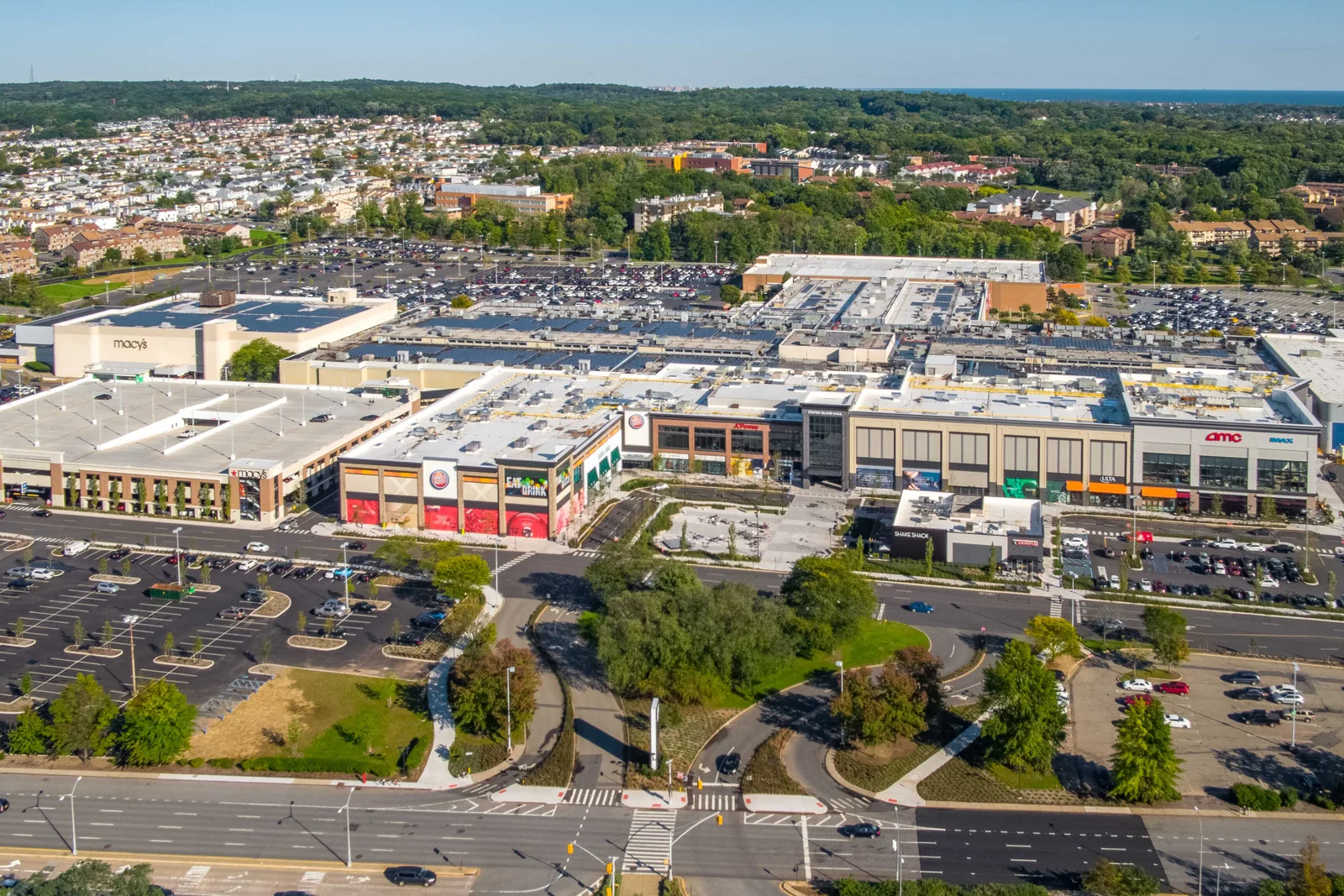
Eateries inside a larger retail center share a roof with the other tenants, and that changes who answers a leak. The shopping center roofing approach of mapping each tenant's zone applies to a restaurant too: the landlord needs to know whether the stain came from the kitchen, the next tenant or the common roof.
Exhaust fans, grease and curbs
A commercial kitchen sends hot, greasy air up through a fan, and the grease lands on the roof. Some membranes soften under it. Curbs crack from heat and vibration. Sealant dries out. The result is a dark, slick patch around the fan and a stain on the ceiling inside.
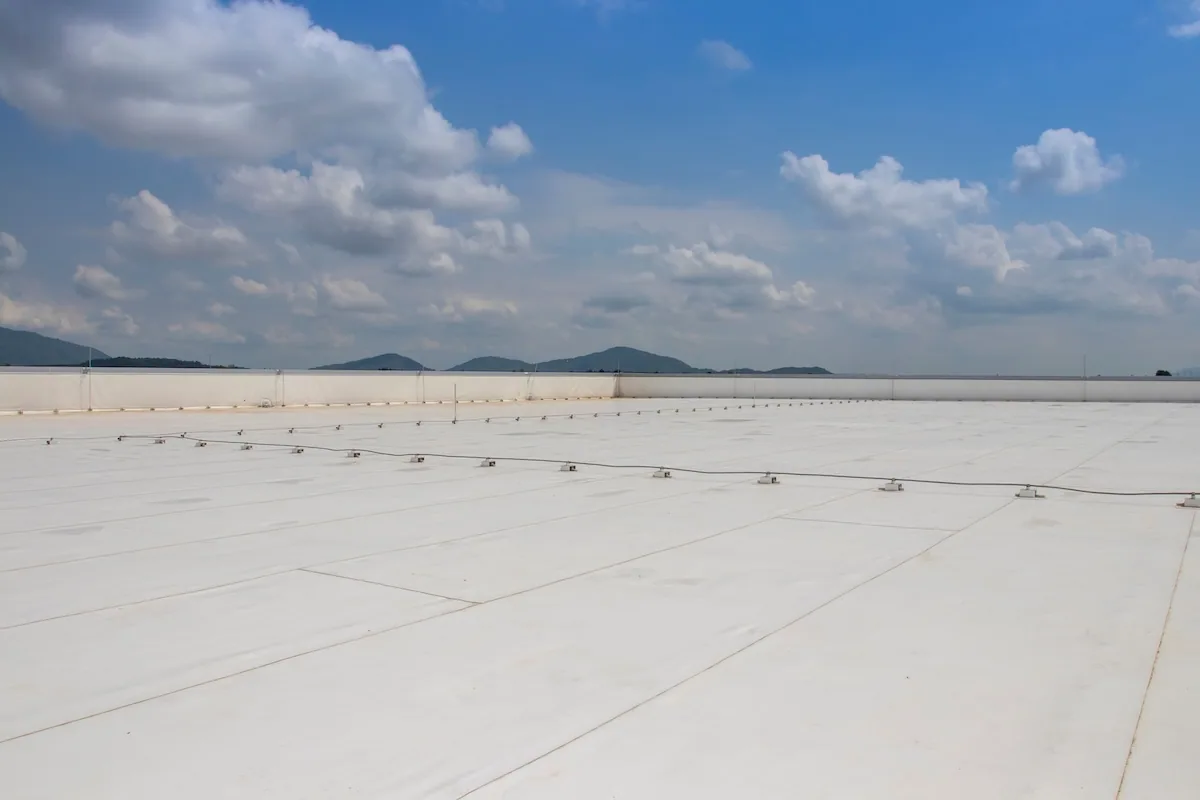
We inspect each fan, curb and duct. We check the grease pan, the curb height, the rain cap and the sealant. Where the sheet has softened, it is replaced with chemical-resistant membrane or shielded by a pad. A PVC roof is a common answer near kitchen exhaust, since its welded seams and surface resist oils.
Duct penetrations are the second concern. The duct passes through the roof deck inside a fire-rated sleeve, and the flashing around it must handle heat. A cracked sleeve or a loose collar lets grease-laden air and rain into the ceiling space. We check the collar, the sleeve and the fascia above the hood, and we note any gap that should go to the mechanical contractor.
Grease, fire and the insurer
Grease that builds up on a roof is combustible. An insurer who sees a greasy roof may ask questions, and a kitchen fire that spreads through the exhaust and onto a membrane is a much larger loss than a leak. We note grease buildup in the log, recommend cleaning schedules and check that grease containment is in place and in good order.
Roof work near an exhaust fan follows hot-work rules. Torch use is avoided, and welded or mechanically attached systems are preferred. We coordinate with the kitchen so the fan can be off while the crew works nearby.
Cleaning is the fix that costs least. A degreasing wash of the roof surface around the fan, done by a crew that knows which cleaners harm which membranes, removes the grease before it softens the sheet. We recommend a schedule tied to the kitchen's volume and put it in the log.
Storm and winter checks
Waterfront restaurants get wind-lifted edges and loose equipment checked first, with Sandy's 80 mph gusts and the floodwater that cleared houses from Midland Beach and New Dorp in October 2012 as the measure. On a small flat roof a clogged drain turns an ordinary storm into a ceiling stain over the dining room, and Ida's flash flood emergency of September 2021 is the example. Drains are cleared in autumn, scuppers checked before the first freeze, and the city's 29.8 inches of snow a year are kept in mind. Summer compounds the kitchen's own heat: July highs in New York City average 84.9 F, and a dark roof over a hot kitchen runs much hotter. A reflective surface cuts the cooling load and slows the aging of the sealants around the fan.
Tracing a leak above a dining room
A dining room ceiling tells us where the water came out, not where it came in. We note the stain, mark the nearest exhaust, drain and wall and walk the matching roof zone. A hose test at the suspected entry, with someone watching inside, confirms the cause. An infrared moisture survey maps wet insulation that a ceiling stain only hints at.
Repairs aim to be fast. A temporary seal can go on in the morning, before service, and the permanent repair is scheduled for a slow day. We keep the restaurant open throughout.
Kitchen condensation also drips from cold ducts in summer, and a drip from a duct looks like a leak. We check the timing: a drip that follows the cooking day is condensation, while a drip that follows rain is the roof. A hose test and a look at duct insulation settle it quickly.
Access and service hours
Restaurants open late and close late, so we schedule roof work for morning and early afternoon, protect the entrance and keep the dumpster area clear. Odors from adhesives are managed with low-odor products, and the kitchen's air intakes are covered while the work is under way. The delivery window is timed to bridge-day traffic on the Staten Island Expressway, where congestion is routine.
On a shared roof in a mixed building, we coordinate with the landlord and the other tenants, so the crew's access does not interfere with anyone else.
Staff parking and delivery times matter to a restaurant. We stage materials away from the delivery door and schedule lifts between deliveries, so the kitchen's supply never waits on a crane.
What goes in the log
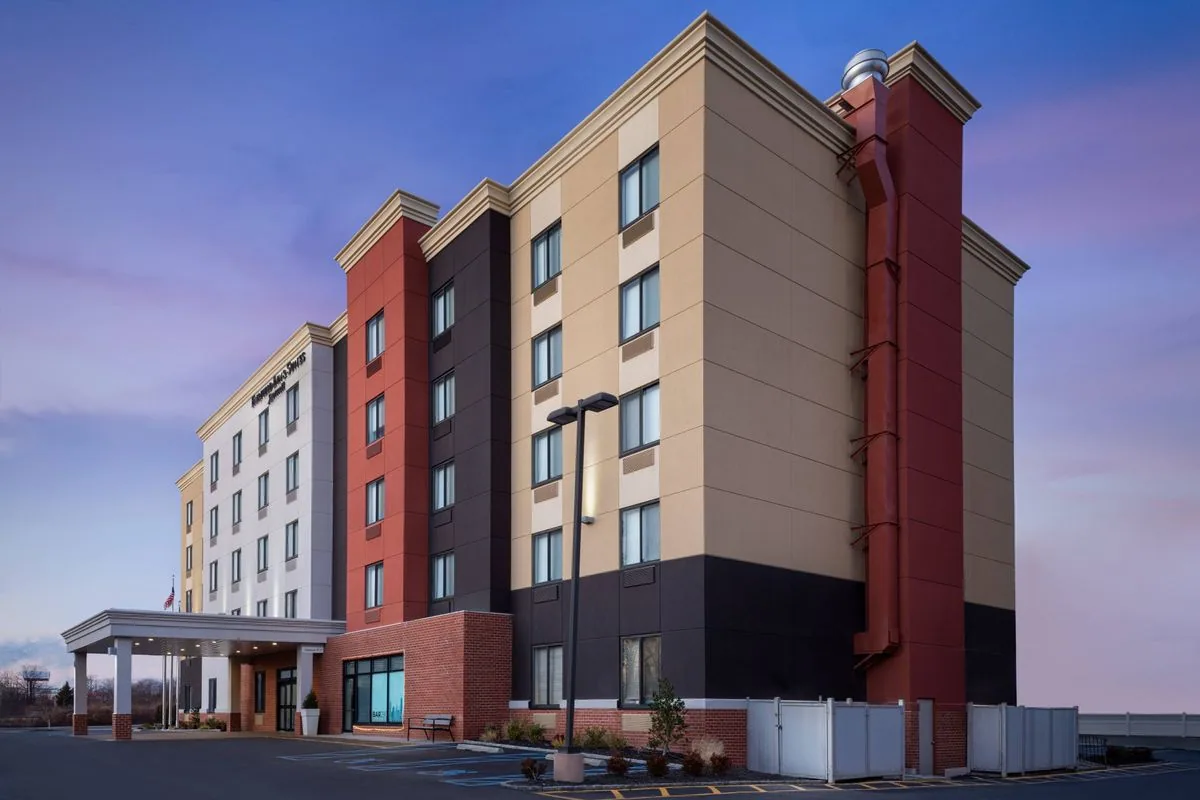
The log for a restaurant lists each exhaust fan, curb and grease pan, every drain and ponded seam, and the moisture map, and every line gets a photograph and a verdict on how long it can wait. Owners in Tompkinsville and Tottenville get the same walk, and the larger kitchens in lodging buildings follow the pattern of a hotel roof.
Related Roofing Work
More roofing work that comes up alongside Restaurant Roofing.


Commercial Roofing Questions
Can grease damage a roof warranty?
It can, if the warranty excludes oils. We read the terms and recommend protection before the next warranty review.
How often should grease pans be emptied?
Weekly in busy seasons, monthly otherwise. A full pan spills onto the membrane.
Can a leak be fixed while the restaurant stays open?
Yes. Temporary seals go on before service and permanent repairs are timed for a slow day.
What roof system suits a kitchen?
A chemical-resistant welded sheet near the exhaust is a common choice. The deck and the exposure also matter.
Does a waterfront restaurant need special details?
Yes: stronger edge metal, closer fasteners and secured equipment for wind.
How long does an exhaust-fan curb repair take?
A single curb is usually a morning's work, including the new flashing and sealant.