
Hotel Roofing in Staten Island, NY
Hotel and lodging roofing in Staten Island, NY: guest-floor leak tracing, quiet-hour scheduling, laundry and kitchen exhaust checks and storm readiness.
A rusted fastener head on a coping cap above the top-floor guest corridor is the line an inspector writes on a hotel roof, because the stain that appears on a corridor ceiling at midnight starts with a small thing like that and ends with a room taken out of inventory. The cost matters this season because every wet guest room is a room that cannot be sold, and a roof leak in lodging is counted in nights.
The roof is read by floor. We start from the rooms that reported water and trace the path upward through the building.
Where lodging sits on the island
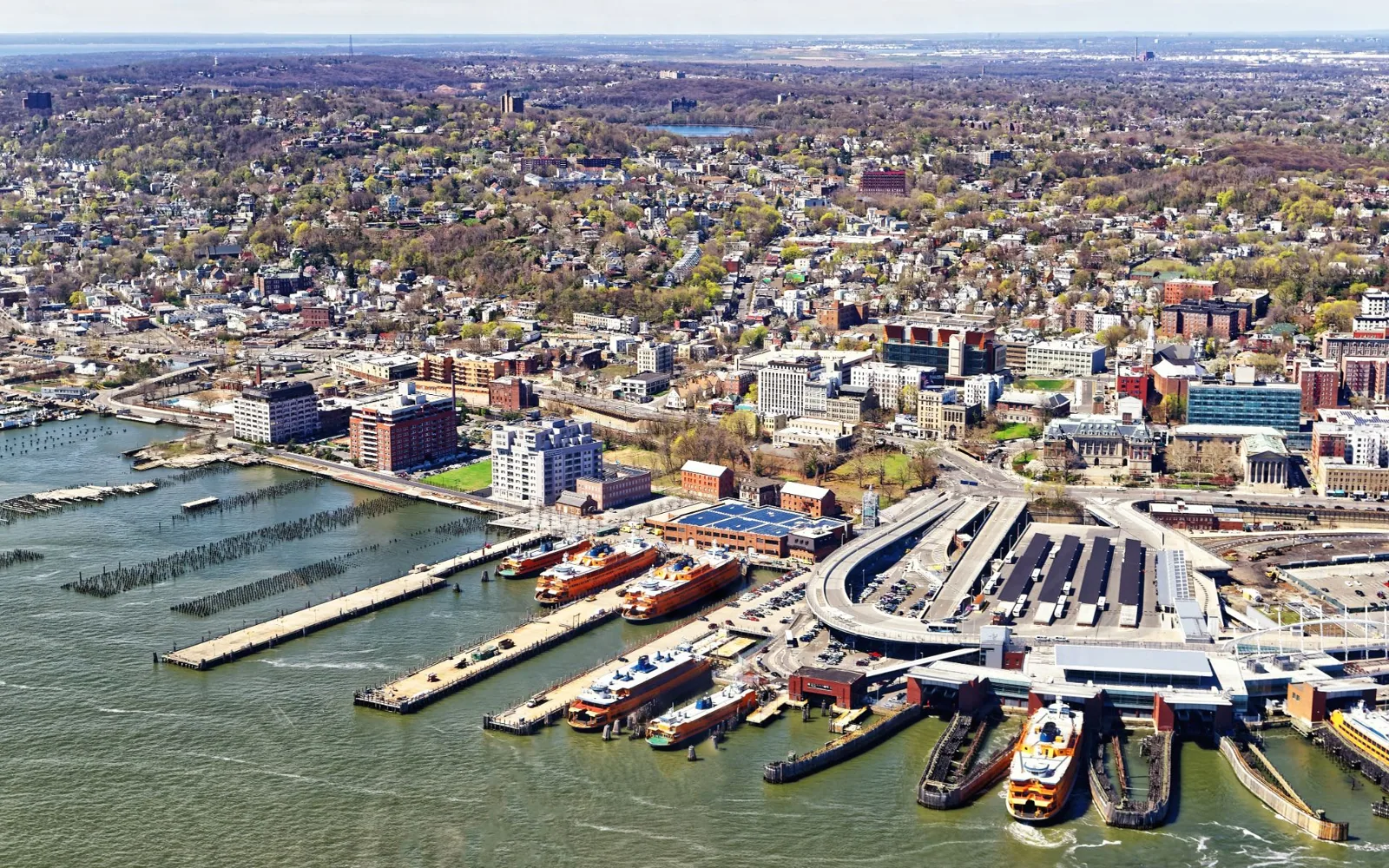
Lodging gathers where visitors arrive. St. George has its ferry, rail and bus terminal, dating to 1886 and last renovated in 2005, and Empire Outlets opened there in May 2019 beside the waterfront. New Springville holds the island's largest retail center, and four bridges, the Verrazzano-Narrows, Outerbridge, Goethals and Bayonne, link the island to Brooklyn and New Jersey. Until a roof is opened nobody knows what a given hotel has on it. On a hotel near a ferry terminal, a mall or a highway exit, we look for a flat or low-slope roof, rooftop mechanical plant and kitchen or laundry exhaust, and those are the items the survey covers.
St. George sits on a steep hillside above the waterfront, and ferry-side wind reaches the upper floors of buildings near the terminal. Roofs there get the perimeter checked first: coping, parapet returns and edge metal. A hotel on high ground or near the water shares the same exposure as any other building in those places.
Guest floors and the rooms below
A hotel loses revenue at the speed of a leak. A stain over a guest room takes the room offline, a stain over a corridor can close a wing, and a stain over a ballroom can cancel an event. We ask the front office for a map of the top floor and the rooms that matter most, then rank every roof finding by what lies beneath.
A leak repair over a revenue room goes first, with a temporary seal the same day. The ranked list gives the general manager a plain order of work, and the log shows which rooms are protected and which are waiting.
Wet insulation is the quiet cost. A leak that stops with the rain still leaves water in the roof, and wet insulation keeps releasing it into the ceiling cavity for weeks. A moisture scan after the repair confirms the roof is dry. Without it, the same room is back on the maintenance list within a month, and the hotel pays for the same stain twice.
Kitchen, laundry and pool exhaust
A hotel carries more exhaust than most buildings: kitchen hoods, laundry dryers, bathroom risers, and sometimes a pool dehumidifier. Each is a rooftop penetration with its own heat, lint or moisture. Laundry exhaust leaves lint on the roof that clogs drains. Kitchen exhaust leaves grease that softens some membranes.
We map the exhausts, check each curb and fan and inspect the surface around them. Lint around a dryer vent is a drain-clogging risk, and we clear it. Grease around a hood is a surface-softening risk, and we recommend a pad or a resistant sheet. The restaurant roofing checks apply to any hotel kitchen.
Roof access for engineering staff matters too. Engineers cross the membrane daily to read gauges and reset equipment, and walk-pad wear shows where. We install pads on the routes and mark them on the roof plan.
Storm and winter checks
Guests arrive in all weather, and a hotel needs its roof sound before a forecast, so coping, parapet returns and rooftop equipment are checked after any big wind, with Sandy's 80 mph gusts of October 2012 as the yardstick. One clogged drain can pond a hotel roof within the hour, as Ida's flash flood emergency of September 2021 showed. Drains are cleared in autumn and scuppers checked before the first freeze, since ice at a strainer is how a thaw becomes a ceiling stain, and New York City snow runs 29.8 inches in an average year. Hot summer days add their own checks. July highs in the city average 84.9 F, and rooftop chillers and exhaust fans run hardest then. We look at curb sealant and walk pads in late summer, when the heat has had its effect.
Quiet hours and guest comfort
Guests sleep late and check in early, so roof work is planned around them. Tear-off, hoisting and hammering happen in mid-morning to mid-afternoon, when most rooms are empty. We avoid the floors below the work on the busiest nights, keep the entrance clear and use low-odor adhesives or mechanically attached systems.
The front office receives a daily schedule and a phone number. If a guest complains about noise, the general manager can ask the crew to stop within minutes, and the open section is closed before the crew steps away.
Events and conferences set the calendar. A ballroom booked for a wedding is not the week for tear-off above it. We take the event calendar from the sales office and plan around it, with extra protection on the weeks that matter.
Access and deliveries
A hotel's loading dock serves the kitchen, laundry and engineering team, so roof deliveries must share it. We book windows with the receiving manager and stage materials off the main drive. Arrival times follow bridge-day traffic on the Staten Island Expressway, among the busiest roads in the city, so deliveries come in the early hours.
Material travels by the freight lift where possible. Material rides up in small loads, and debris leaves by the same route, covered, before the lobby fills.
Security and guest privacy come first. Crews wear visible identification, use a single route and never enter guest floors without an escort from the front office.
What goes in the log
The hotel log lists the rooms below each roof zone, every exhaust curb, ponded seam and drain, and the moisture map, with a photograph of each and a note on how soon it needs attention. A capital plan places the larger work in the off-season. General managers near St. George and New Springville get the same walk, and a residential tower with similar roof levels follows the pattern of an apartment roof.
A guest who finds a stain over the bed does not write a work order, a review follows instead. The crew therefore keeps a short list of rooms below each roof zone, so a leak reported at the front desk can be matched to a roof area before the next walk, and the repair is booked for the quietest hours the manager can offer.
Related Roofing Work
More roofing work that comes up alongside Hotel Roofing.


Commercial Roofing Questions
Can a hotel stay open during a roof replacement?
Yes, with daytime work, floor-by-floor planning, low-odor methods and a schedule shared with the front office.
What do you check first after a leak is reported?
The room and the path upward, then the nearest drain, curb and wall junction.
Does laundry exhaust damage the roof?
The lint clogs drains and the heat can soften some membranes. We clear lint and protect the surface.
When is the best time for roof work?
In the off-season, planned in advance. Winter is for repairs and spring to early fall for larger work.
How do you protect guest rooms below the work?
We close sections the same day, cover open areas and keep rooms below the work out of the schedule when possible.
What if a leak is found during a sold-out weekend?
We apply a temporary seal the same day, move the affected room out of inventory if needed and schedule the permanent repair for the next quiet window.