
Commercial Roofing in Tottenville, Staten Island, NY
Commercial roofing in Tottenville, Staten Island, NY for Main Street and Page Avenue storefronts and old shoreline sheds, with wind, edge and drain repair.
Wind-peeled coping on a Main Street storefront, a flat roof on the Page Avenue side with a drain that has not been cleared since the leaves came down, a former factory shed on the Arthur Kill shoreline with a patched corrugated roof: the inspector's notebook on a Tottenville roof lists weather from three directions. Tottenville is bounded on three sides by water, and every commercial roof in it is exposed.
On retail, service and light-industrial buildings in Tottenville, Staten Island, NY, Commercial Roofing Staten Island works on low-slope and metal roofs, and the first thing to settle is which way a building faces the water.
Water on three sides
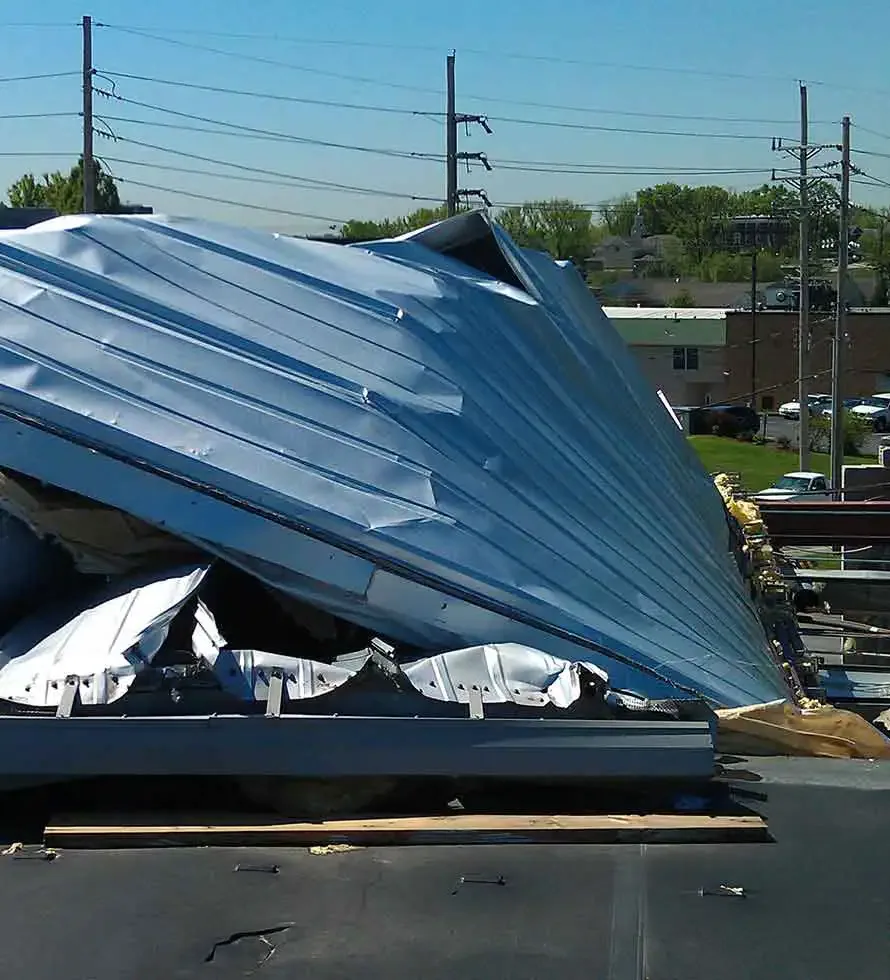
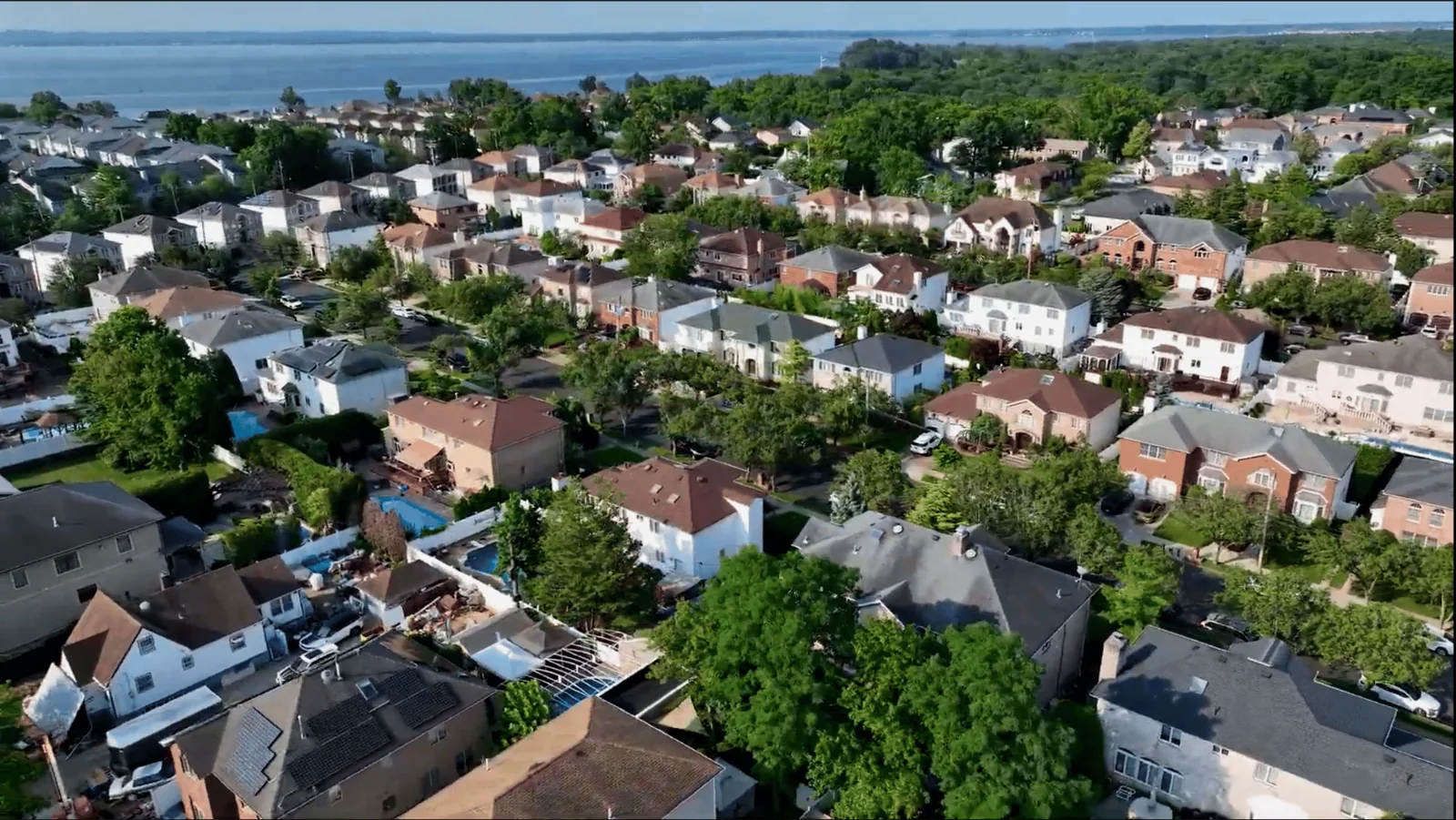
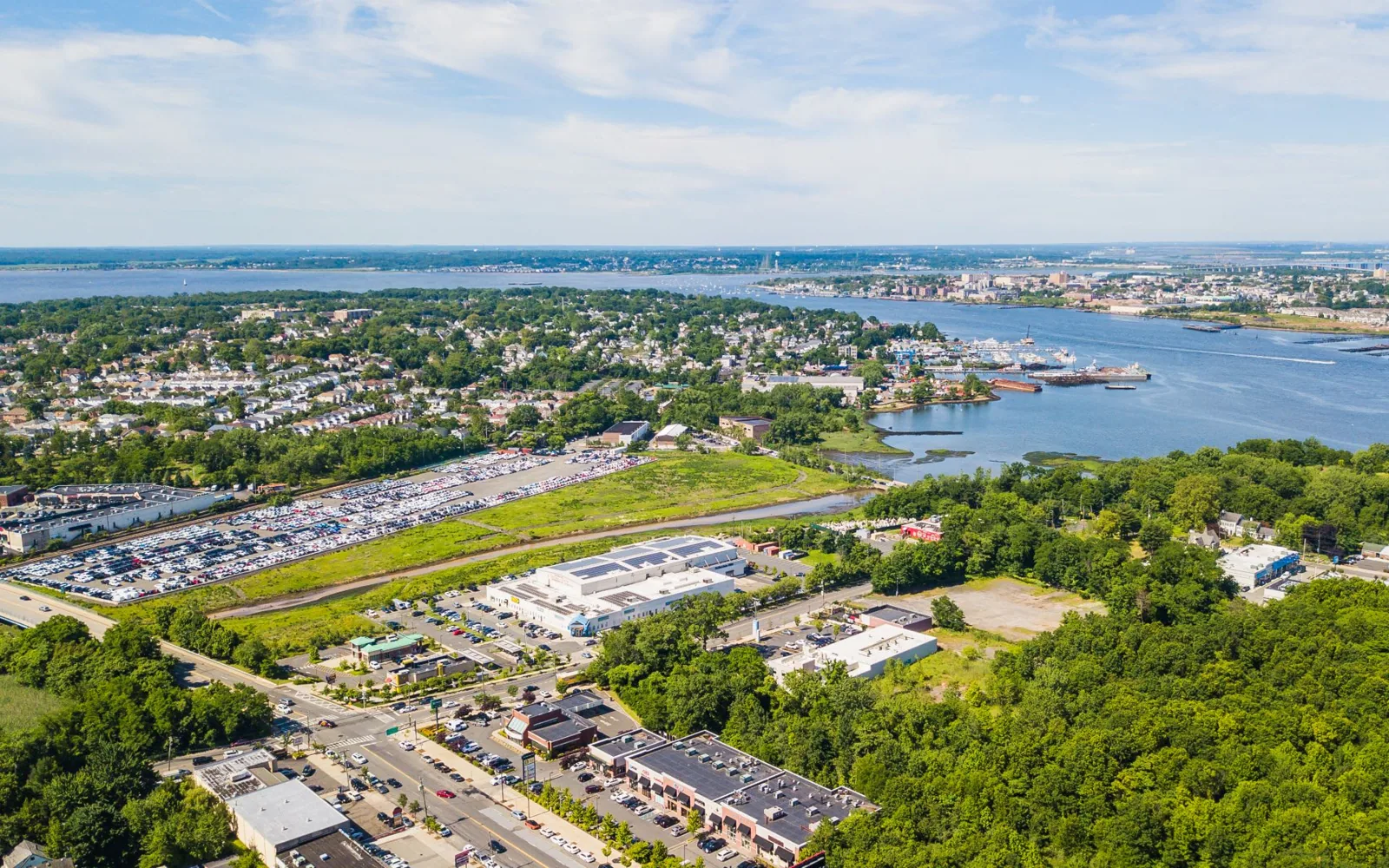
Water borders Tottenville on three sides, and many small factories once lined the Arthur Kill shoreline, though most no longer operate. In 2012 Sandy destroyed the Coral Bay Cafe at Tottenville Beach, a reminder of how exposed the shoreline is, and the storm's gusts reached 80 mph. With water all around, wind of that kind reaches every edge, so the perimeter is the first concern on every building. Edge metal is tried by hand, sealant at laps is probed, fastener spacing at corners is measured and rust below fasteners is noted. Repairs start at the edge, because the edge gives way first, and the field membrane peels away from it.
Main Street and the Page Avenue core
Commercial development in Tottenville was largely confined to the Main Street corridor until the 2000s, when a second core emerged along Page Avenue. The Outerbridge Crossing opened in 1928 and links the area to Perth Amboy, New Jersey. Two commercial cores mean two generations of roofs: older buildings on Main Street and newer ones on Page Avenue.
On older storefronts we look for flat roofs behind a parapet with years of repairs. On newer buildings we look for younger membranes with early weak spots at penetrations and edges. We rate each roof separately and give the owner a list that ranks them. Wind damage repair and flashing work are the common items on both.
Old shoreline factories and what the roofs hold
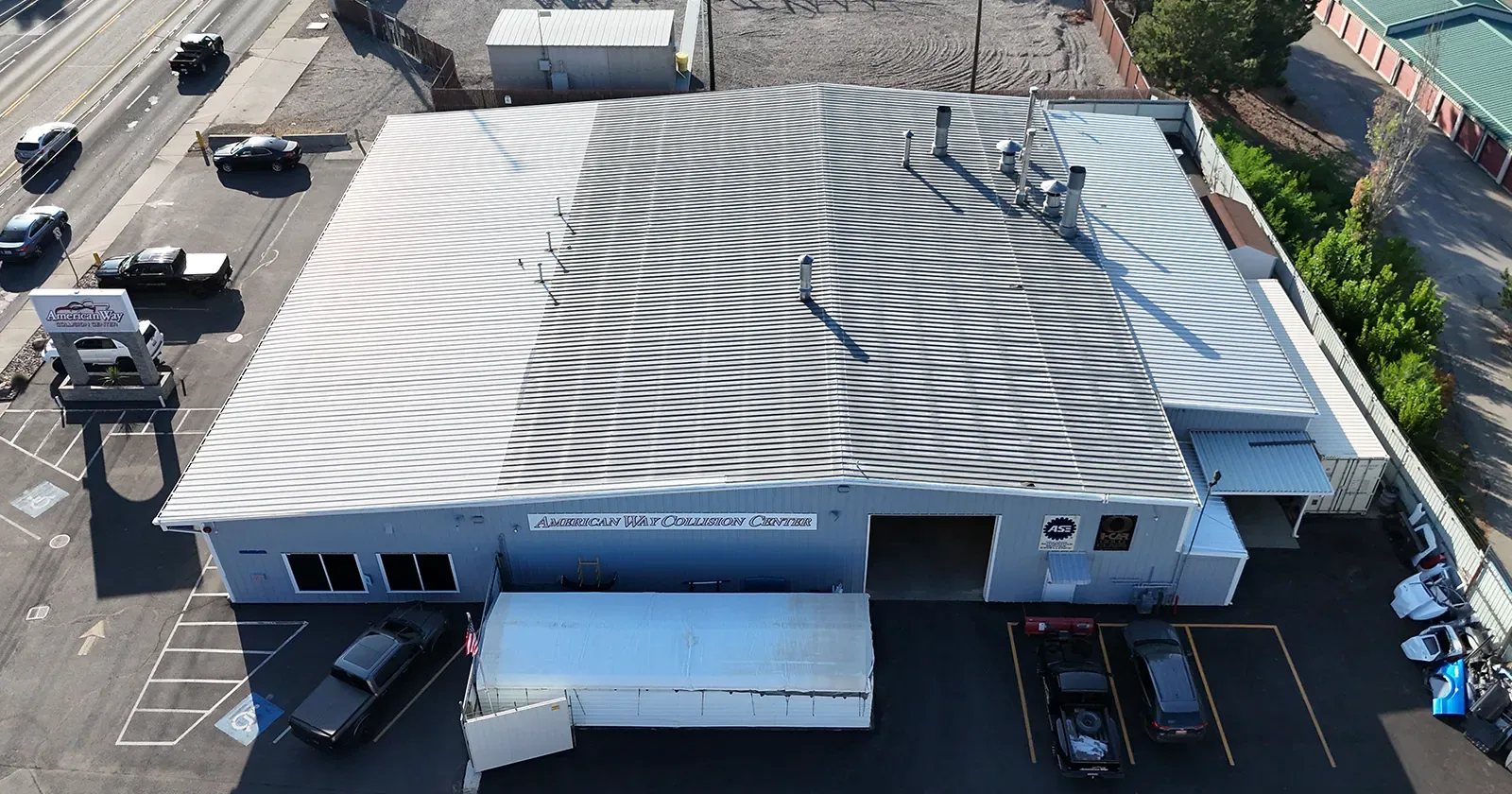
The small factories that once lined the Arthur Kill shoreline were light industrial buildings, and some have been reused for storage, shops and small businesses. Their roofs are often layered corrugated metal or built-up membranes patched many times. Roofs of that age hold water, and the structure may be lighter than a modern deck.
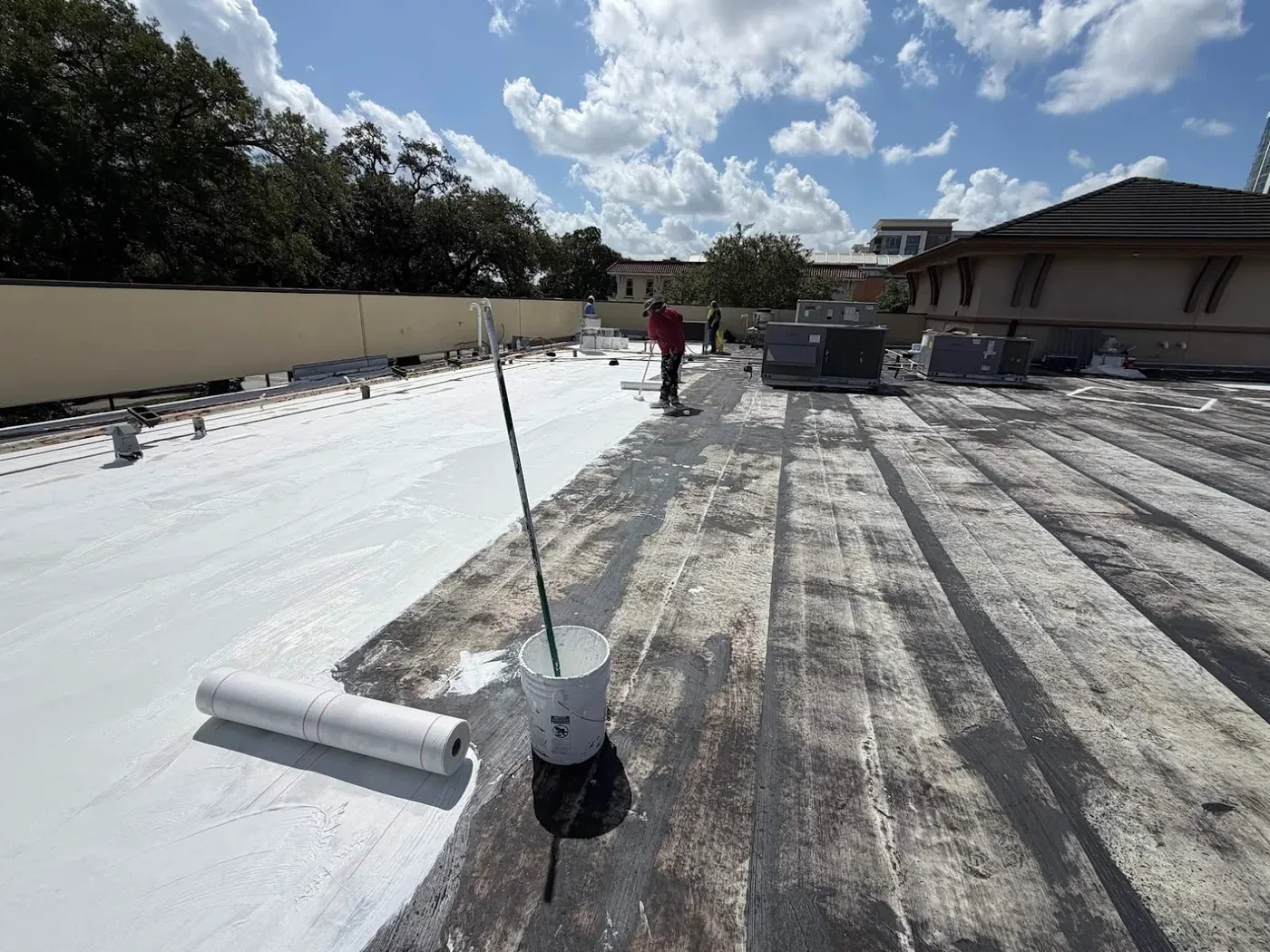
We cores are pulled, wet insulation is scanned and the deck is tested. A coating suits a sound metal roof once rust is treated and fasteners are replaced. Metal roof retrofit adds a new panel over an old one when the structure allows. If cores show saturated layers, sections come off, and the replacement is phased so the business keeps running. The report shows the evidence and prices each option for the same roof.
A first walk on any of these roofs follows one order. Drains first, since a clogged drain changes how every other defect behaves. Then every penetration, bracket and curb, then the seams and laps across the field, then the parapet, coping and edge metal. On a metal roof we probe fasteners and laps by hand and look for rust streaks below screw rows. A scan after sunset maps wet insulation on membrane roofs. Every finding gets a photograph and a repair class, and the owner sees what can wait and what cannot.
Storefronts, shared roofs and restaurants
Main Street and Page Avenue storefronts often carry apartments or offices above, which puts several uses under one roof. A food tenant vents grease, a shop hangs a sign bracket and an apartment above needs a vent stack, and each of those is a hole in the membrane with a different owner. Every one is traced to its tenant, its flashing photographed and rated, and penetration flashing repairs carry separate prices so each party pays for its own. Grease near fans calls for pads and a cleaning schedule. The landlord's list keeps roof items apart from tenant items, which shortens disputes and keeps repairs moving.
Drains, ponding and the rain
Many small flat roofs depend on a single drain. When it clogs, water backs against the parapet. A drain with no overflow had no margin when Ida's rain brought on a flash flood emergency in September 2021, and spring, the wettest season in a city that takes in about 49.5 inches of precipitation a year, tests drains again every year. Strainers are cleared and photographed, leaders flushed and slope measured; overflow scuppers go in wherever the parapet allows. Drain and scupper work is the least expensive repair on a small roof and the one that most often heads off the next call. Water standing two days after rain can be a drain, a leader or a settled deck at fault.
Winter and the planning window
Snow averages 29.8 inches in a New York City winter, and January 23, 2016 dropped 27.3 inches in a day. Drifts pile against parapets and thaw toward the wall, which makes March the month for base flashing, and ice in a drain bowl forces water back up behind it. Shoreline businesses keep their own seasons, and roof work fits the quiet ones: late spring through early fall suits membrane and coating work, while winter repairs stay temporary. The neighboring districts of Prince's Bay and Charleston keep similar calendars. A fall walk clears drains and checks edges before storm season.
What goes in the log
Every roof gets its own page of photographs, a rating, scan results and a repair list ranked by urgency with prices, while a summary puts the buildings in order of risk. Each visit adds a dated entry, so after a storm the same record shows what changed, and an owner spends less time proving what the wind did and more time fixing it. Price on a small commercial roof moves with wet insulation, penetration count, access and system, and each of those is named so a repair, a coating and a replacement can be compared for the same building. Temporary protection is staged ahead of storm season for roofs that cannot take water, material for emergency patches is kept ready, and each owner receives the crew list for after-hours calls before the season opens.
Older buildings carry patches from many hands, so the log marks every earlier repair it can find. A photograph of the old patch, a note about its condition and a plan reference tell the next crew whether to trust it or replace it. Over several visits that history shows where water keeps returning.
Related Roofing Work
More roofing work that comes up alongside Tottenville.
Commercial Roofing Questions
What does three-sided water mean for a roof?
Wind arrives from several directions, so the whole perimeter gets checked. We start with edge metal, fasteners at corners and sealant at laps.
Our old shoreline shed has a patched metal roof. Is it worth saving?
If the panels are sound, a coating after rust treatment and new fasteners can extend it. If they are failing, a retrofit or replacement is better.
A fan on a Main Street storefront drips into the apartment above. Who pays for the fix?
The lease decides who pays. The roof record names the entry point, the curb and the installer, so landlord and tenant argue from the same photographs.
When should the roof be walked after a storm?
Right after the footing is safe. Loose edges and lifted laps are easy to miss from the ground, and a few days is all water needs to find the weakest detail.
What goes in the first message?
The site plan, the roof types and any leak history; each roof is then walked and a ranked list comes back.