
Wind Damage Roof Repair in Staten Island, NY
Wind damage repair for Staten Island commercial roofs: lifted edge metal, displaced ballast, peeled flashing and torn membrane. Request a roof inspection.
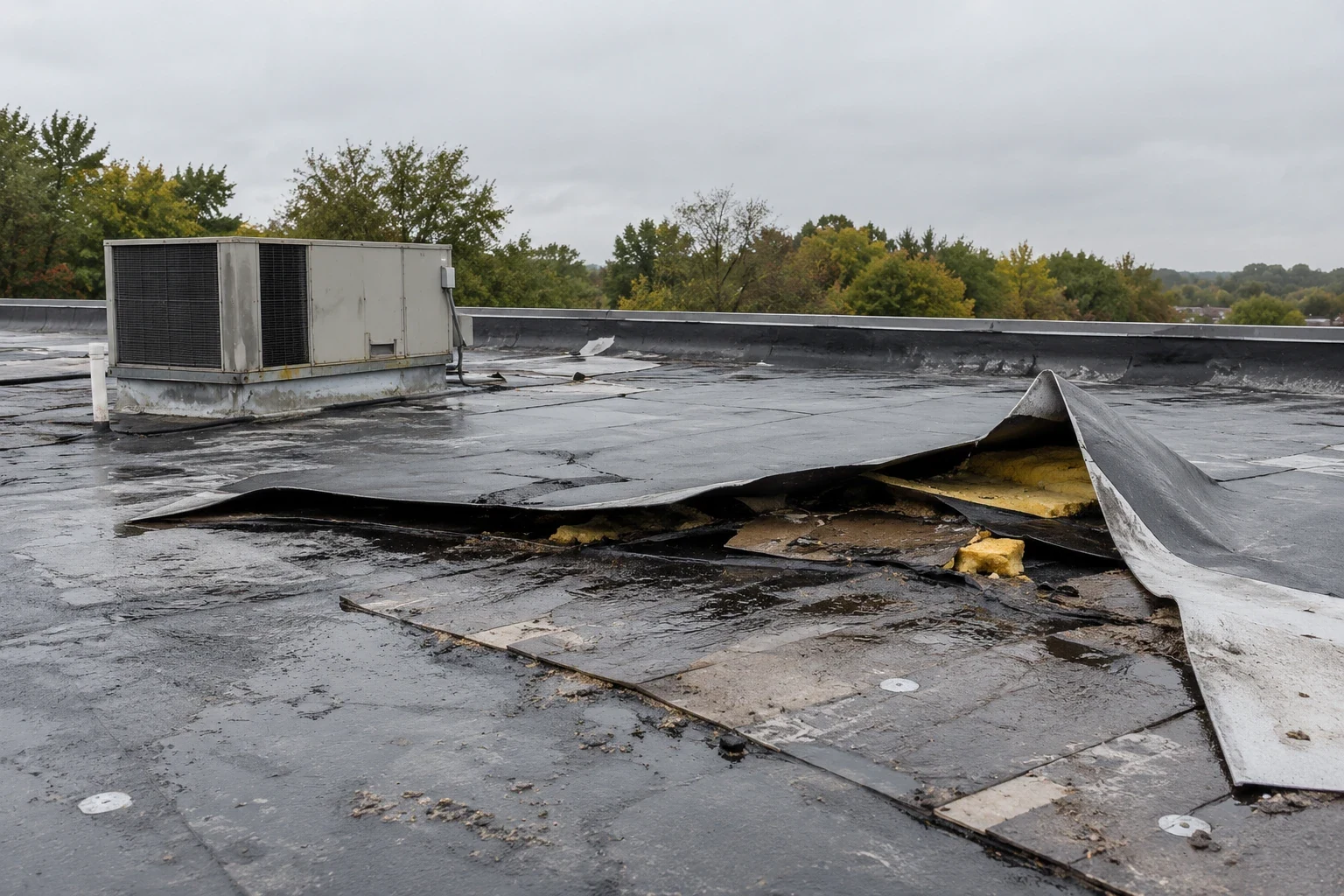
A length of coping metal lying in the parking lot with its cleat still bent around a fastener is the entry an inspector makes first after a windy night, because the edge is where a roof begins to fail and the lot is where the evidence lands. Wind rarely tears a roof from the middle. It finds a loose edge, gets under it and peels the membrane back along the line of least attachment, often across a whole roof section before anyone notices.
Commercial Roofing Staten Island repairs wind-damaged commercial roofs across the island, starting with the perimeter and working inward, and we record every finding in an inspection log so the owner and the insurer read the same account.
How wind takes a roof
Wind does not push a roof down. It flows over the building, drops the pressure above the roof and pulls the membrane up, and the pull is strongest at the corners and along the edges. A sheet is only as strong as its attachment at those points, so a loose termination, a thin edge fastener pattern or a ballast layer that has shifted gives the wind a place to start.
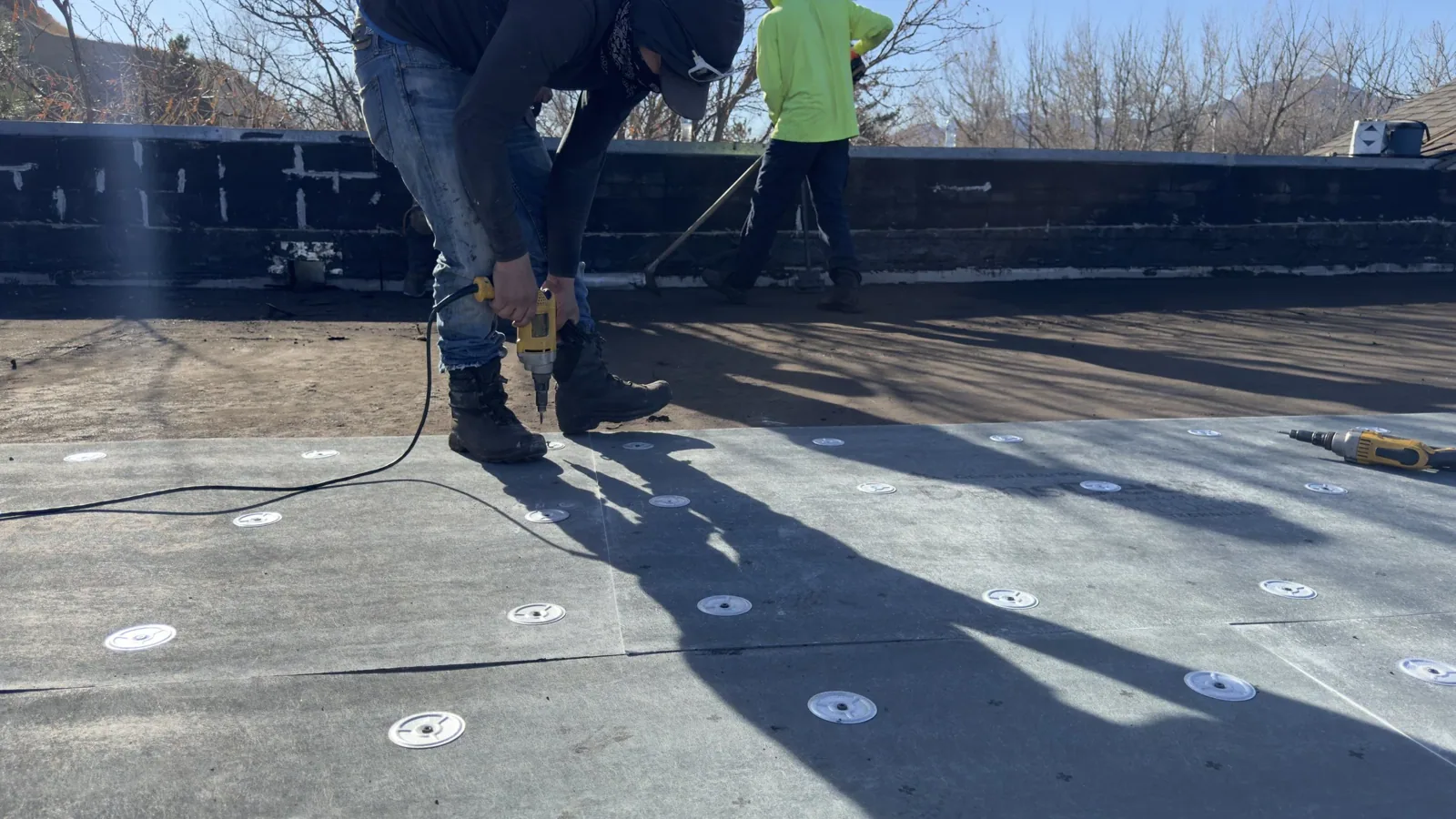
Different systems fail differently. Mechanically attached single-ply billows and tears at the fastener plates. Fully adhered sheets lift where the adhesive let go. Ballasted roofs lose their stone from the edges inward, and the loose stone becomes debris that damages the sheet and whatever stands below. Metal roofs lose trim first, then panels, and a lifted panel is a sail.
Rooftop equipment adds its own wind story. A unit that was never strapped to its curb, a hatch cover left unlatched and a sign on a bracket all become projectiles once the wind rises, and they land on the roof they came from. The check after a storm includes every loose item that could have moved, whether or not it shows damage.
Where it shows up on the island
Staten Island is exposed on every side. Sandy's gusts reached 80 mph in October 2012, with a 9.56-foot surge at the north tip, which is why South Shore and shoreline roofs get checked for wind-lifted edges first. Tottenville is bounded on three sides by water, and Sandy destroyed the Coral Bay Cafe at Tottenville Beach, which shows the exposure of that shoreline.
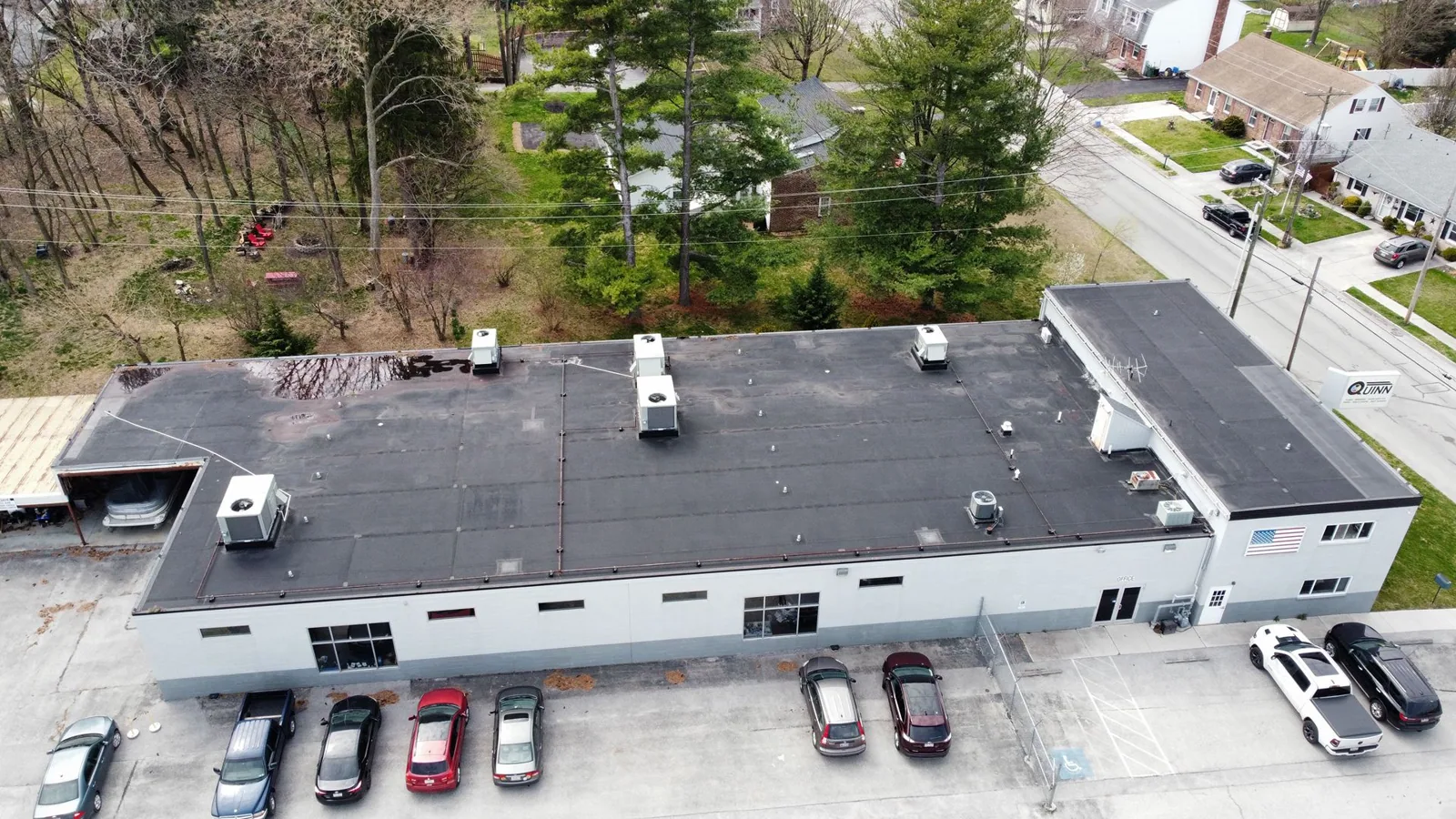
On the north side, the Kill Van Kull runs along Port Richmond and West New Brighton, where Richmond Terrace faces open water and the working waterfront. At St. George, ferry-side wind comes off the harbor against a terminal complex that dates to 1886. A flat roof near open water is always checked at its perimeter before anything else. Great Kills sits on a harbor with private marinas, and the shorefront at Great Kills Park needed extensive work after Sandy damaged it in 2012, a reminder that wind and water reached that side of the island too. Roofs there are checked in the same order as any shoreline roof, from the edge inward, and a hurricane damage scope sits beside the wind scope when a storm brought both.
What the inspector writes down
After a wind event we walk the whole perimeter first, then the corners, then the field. We note every lifted termination, displaced coping or edge metal, missing or shifted ballast, billowed sheet, torn flashing and loose rooftop item. We photograph each against a roof plan and mark which way the damage points, since the direction shows where the wind got in.
- Edge metal and coping, lifted, bent or missing.
- Ballast displacement, with bare spots mapped.
- Billowed or torn membrane at plates and seams.
- Loose rooftop items, such as hatches, vents and signs.
Debris that hit the roof from outside, such as branches or other buildings' material, is collected and photographed, since it separates storm damage from wear.
Interior signs are a clue to the direction of failure. Stains that line up along one wall point to an edge on that side, and a wet corner usually means the wind lifted the membrane at the corner and drove rain under it. We tie each stain to a roof location before we cut into a ceiling.
The repair in plain terms
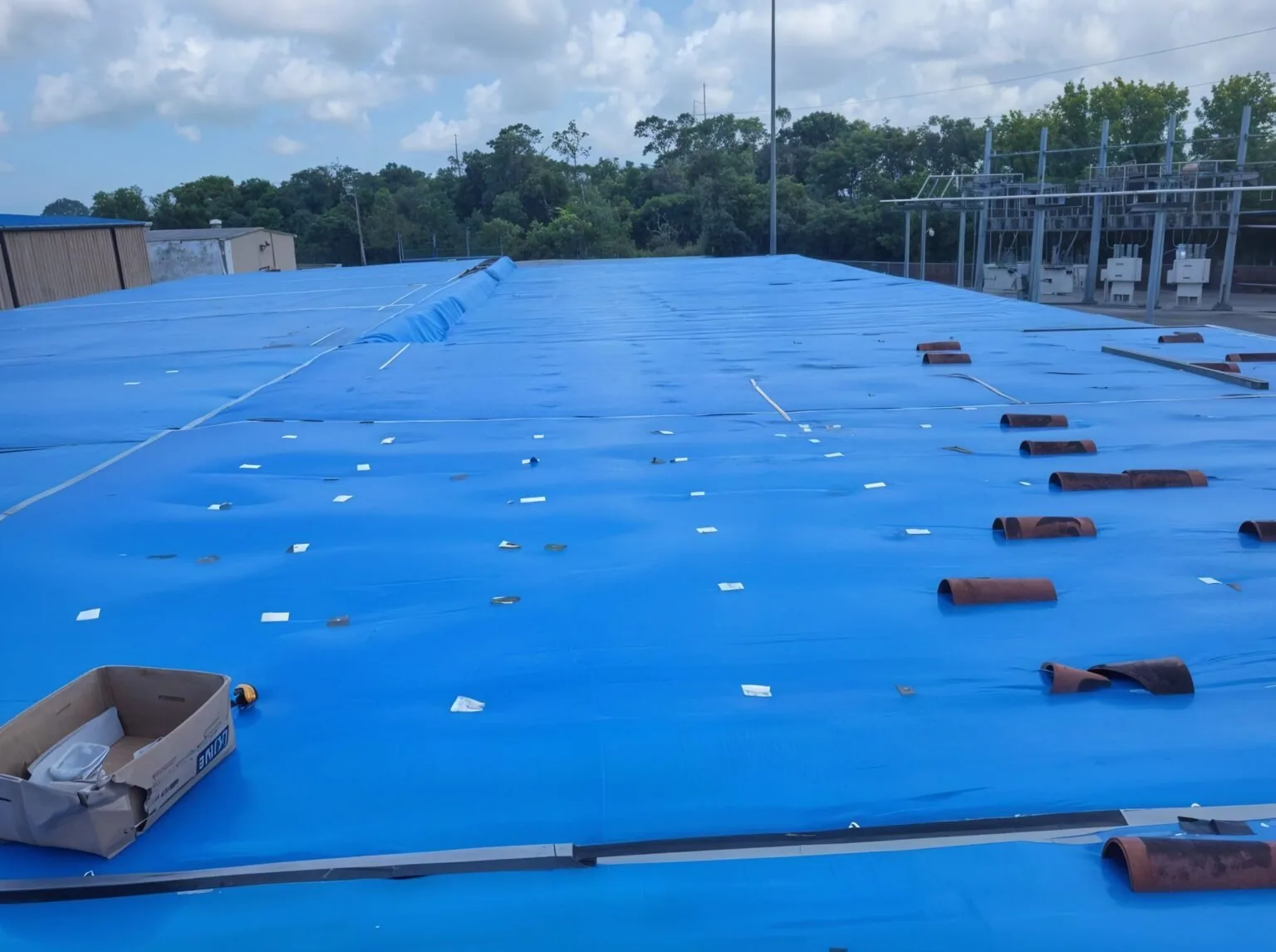
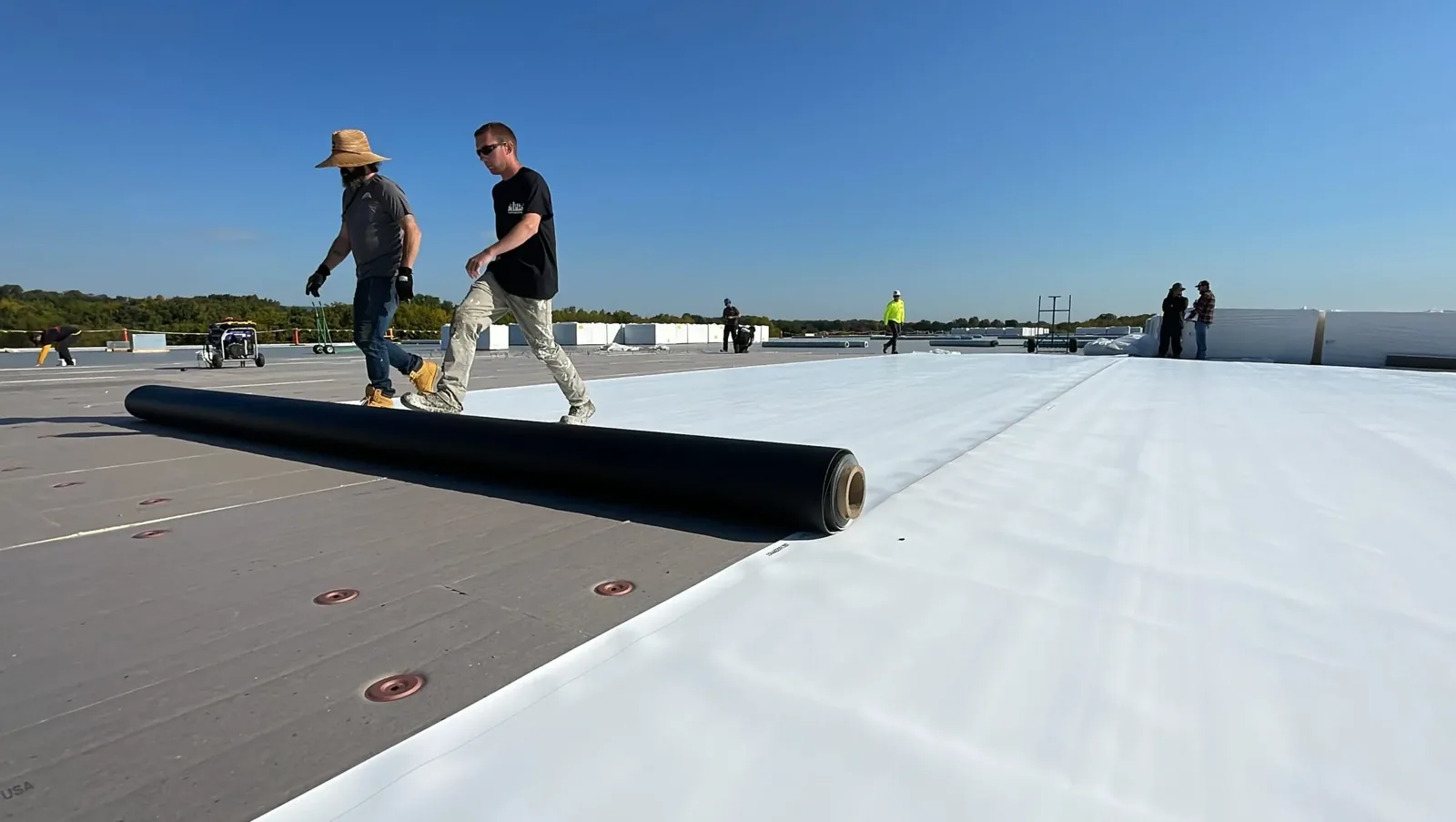
First comes temporary protection. Torn areas are covered, loose edges are secured and openings are sealed so the next rain does not make the loss worse, which is an emergency roof repair job done around the clock. Then the permanent work begins at the edge: edge metal is replaced and re-fastened to the rating for the site, termination bars are reset, and torn sheet is cut out and replaced with welded or adhered patches.
If the damage is widespread, the question becomes repair or commercial roof replacement, and the moisture scan decides. A sheet that lifted but did not tear can often be re-adhered, while a roof with wet insulation under a torn area needs the wet section cut out. Our storm damage roof repair estimate lists each item so an adjuster can follow it line by line.
Where a seam opened under wind load, the repair is a seam failure repair with a welded or taped patch, and the attachment pattern around it is checked for the same weakness. Fixing one seam in a roof whose fasteners are all marginal buys a season, so we say when the pattern itself has to change.
Storm and winter checks
The best wind repair is the one made before the wind. A spring walk checks edge metal fasteners, termination bars and ballast, and the fall walk repeats it before the nor'easter season. Items that are close to failing are replaced then, not after a gust.
Winter loads matter too. New York City snow comes to about 29.8 inches in a typical year, with 27.3 inches on its record day, and ice can push edge metal loose before a storm does. Ida in 2021 showed that rain can overwhelm a roof as well, so strainers and scuppers are cleared as part of the same visit.
Edge details are rebuilt to the wind rating for the site, not the rating of the original roof, since a roof built to an older standard can be upgraded at the edge for a small part of the cost of a replacement.
What goes in the log
Each visit after a wind event yields dated photographs, a roof plan with the damage marked, a timed list of the temporary measures and a priced scope covering the permanent repair. The log also records the age and type of the roof and its prior repairs, since an adjuster will ask. The Department of Buildings publishes the 2022 NYC Construction Codes, and the filings for larger wind repairs are confirmed with it. For a building in Tottenville or anywhere along the South Shore, the roof plan and the storm date start the process. Related failures, such as a failed flashing that the wind exposed, are fixed in the same visit so the roof is not opened twice.
A short preventive maintenance plan keeps edge fasteners and terminations on a calendar, and the log carries the dates.
Related Roofing Work
More roofing work that comes up alongside Wind Damage Roof Repair.
Commercial Roofing Questions
How can I tell wind damage from ordinary wear?
Wind damage is fresh, local and directional. Edges are clean, debris is present and damage points one way. Wear shows shrinkage, crazing and dirt lines.
Should we wait for the adjuster before tarping?
No. Reasonable temporary protection to stop further loss should go in right away, with photographs and times recorded.
Does a ballasted roof fare worse in wind?
It can, if stone has shifted from the edges. We re-set the ballast and check the sheet for scuffs before the next storm.
Will repairs bring the roof up to a higher wind rating?
They can, if the edge details are rebuilt to the current rating. We state the rating in the scope.
How soon after a storm should the roof be inspected?
Within a day if possible. Rain and foot traffic change the evidence, and wet insulation spreads.