
Storm Damage Roof Repair in Staten Island, NY
Storm damage roof repair in Staten Island, NY: edge and wind damage, drain and flood-line checks, documented repairs for facility directors and insurers.
Read the debris on the ground before climbing: where the wind dropped gravel, bent metal and torn membrane edges tells an inspector which corner of a Staten Island roof to reach first, and the notes start while the water is still standing in the lot. Commercial Roofing Staten Island assesses and repairs storm damage on commercial roofs across the island, and the first job after any hard blow is to separate what needs a tarp tonight from what can wait for a proper repair next week.
The island takes weather from every direction, and a roof that survived the last storm may have lost something the owner has not seen yet.
The first walk after the storm
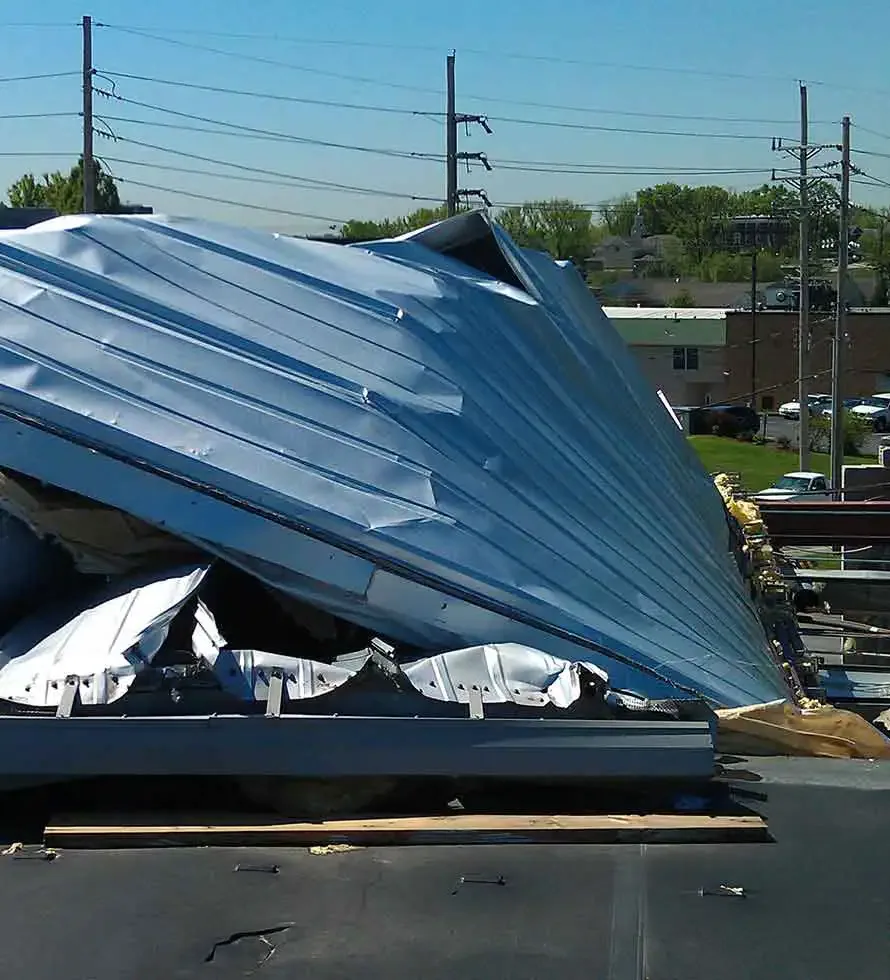
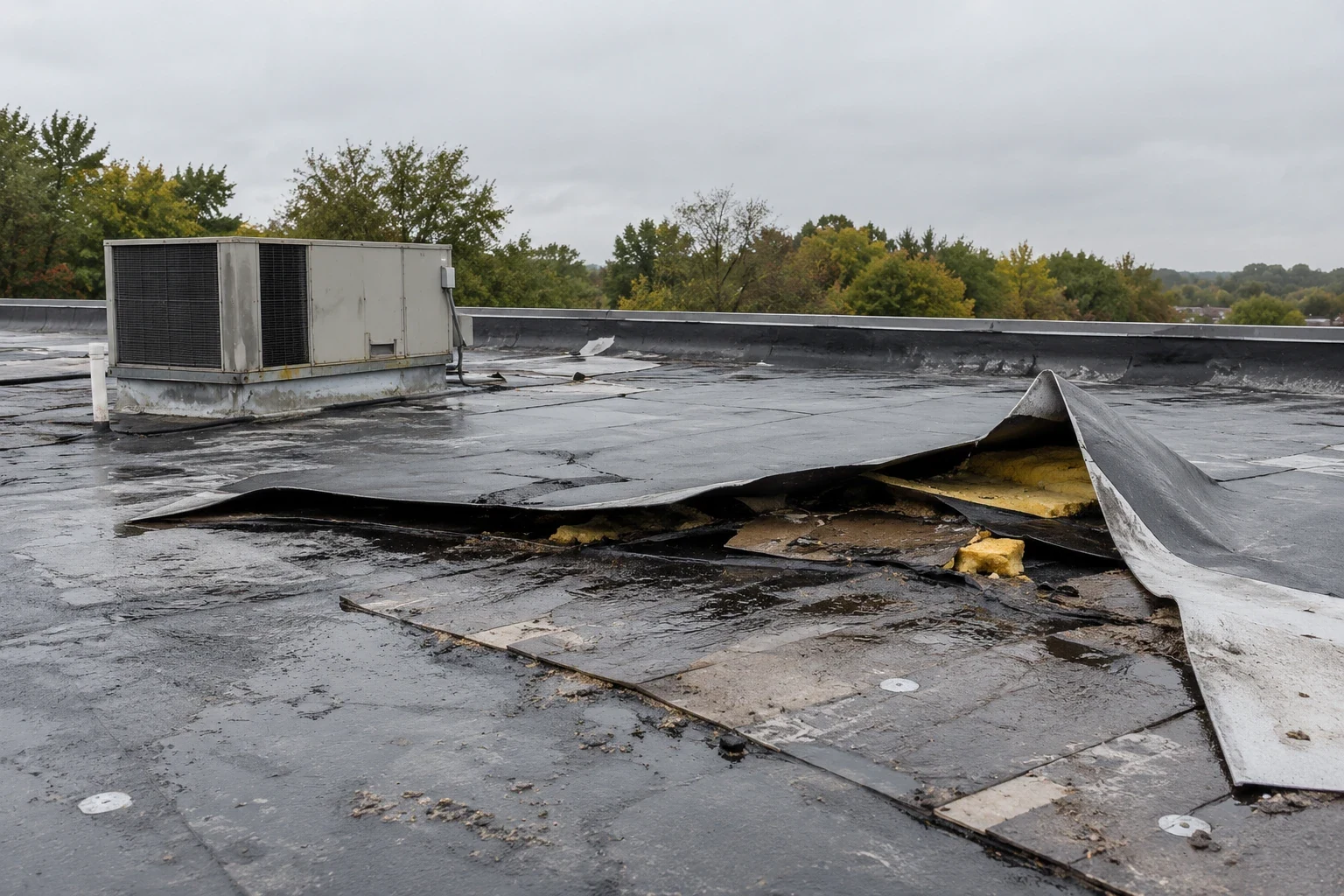
The storm walk follows a fixed order. We start at the perimeter, because wind begins its work at edges and corners, and check edge metal, coping, parapet returns and the membrane within a few feet of each corner. We then look at the field for punctures, tears and lifted laps, and at drains and scuppers for debris and displaced strainers. Last, we check rooftop equipment, because a shifted unit can tear flashing around its curb.
Every finding gets a dated photograph and a note, and we mark items that need emergency protection. If water is entering the building, we place temporary protection first and document it, so the permanent repair is planned on a stable roof and the record is ready for an insurer.
Wind and the perimeter
Sandy's gusts reached 80 mph on October 29, 2012, alongside a 9.56-foot surge at the north tip, and wind at that speed is the benchmark for edge work. Uplift grows at corners and along the perimeter, and a weakened edge fails first and then lets the field membrane peel back.
Repairs begin with wind damage repair at the edge: replacing bent or missing metal, re-securing fasteners, resealing laps and checking the seams within reach of each corner. Where a roof has lost ballast to wind, we check how much gravel has moved and whether the membrane under it was damaged by shifting stone.
Flood lines and the South Shore
In Oakwood, Sandy left the highest water line in the state, 7.9 feet above ground, and floodwater carried off whole blocks of houses from Midland Beach, New Dorp and Oakwood Beach. Surge damage is mostly at ground level, but the same storm leaves roofs with their own problems: drains clogged with debris carried by wind, flashing loosened at equipment curbs and any penetration made in a hurry during recovery.
Anything added in a hurry is a candidate for a leak, so shoreline buildings get a second look at every such detail. The Midland Beach and New Dorp areas, along with the rest of the South Shore flood line, get a closer look at drain bodies, edges and equipment mounts.
Emergency protection while the repair is planned
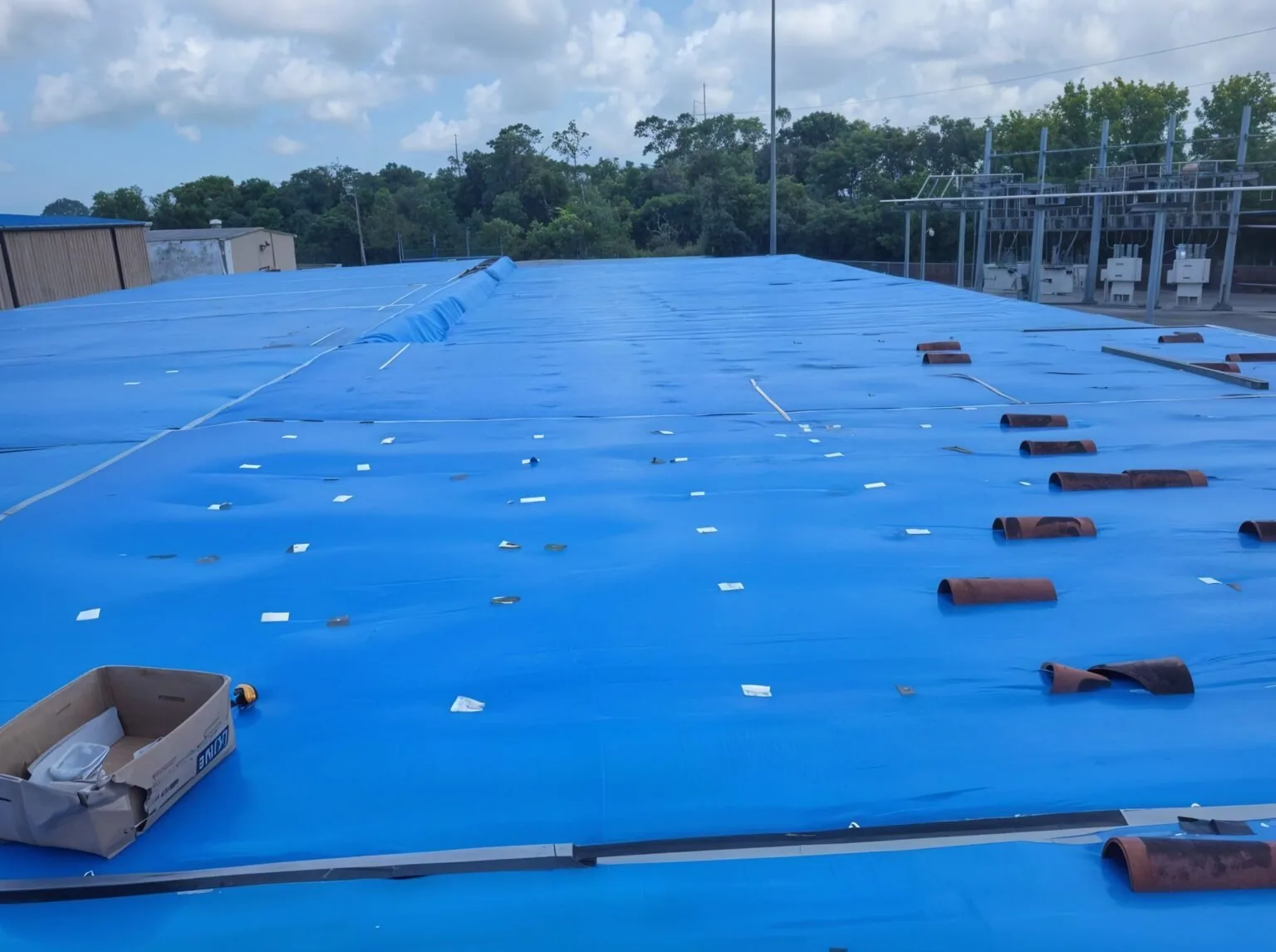
When water is entering the building, the first job is to stop it, and that is a different job from the permanent repair. Emergency roof repair uses temporary membrane patches, sealed tarps and ballast-free fastening that can be removed without further damage, placed over the entry point and tied into sound roofing beyond it. The temporary work is photographed and noted in the log so the permanent repair knows what lies beneath it.
We keep temporary protection simple. A large tarp that flaps in wind does more harm than none, so we cut to the area, fasten at the perimeter of the patch and seal the edges. Interior protection is handled by the owner's staff or a restoration firm, and we coordinate access to the ceiling cavity where the leak can be seen from below.
Cloudbursts, snow and ice
On September 1 and 2, 2021, Ida brought a flash flood emergency, the first that the National Weather Service had ever declared for New York City, with flash flood watches reaching Staten Island. Rain at that rate overwhelms scuppers and undersized drains and drives water under flashings that shed ordinary rain without trouble.
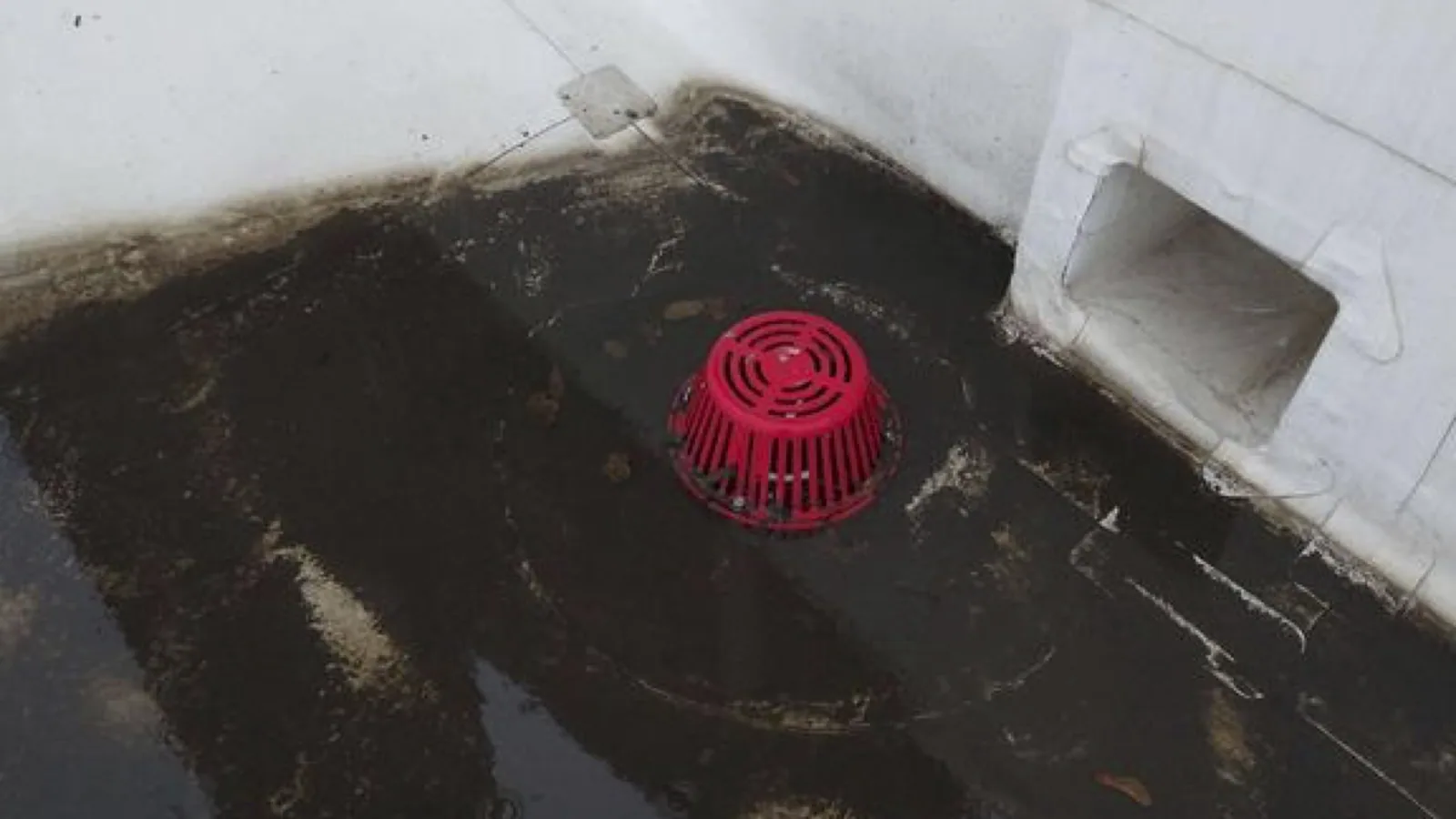
After a cloudburst we check where water stood, for how long, and where it entered. A pond still standing two days after rain usually means a clogged drain or a settled deck, so the strainer is cleared, the leader flushed and the slope checked. Drain and scupper work is the most common permanent fix after a heavy rain, often with an added overflow at the parapet.
The 27.3 inches of snow recorded for New York City on January 23, 2016 piled weight and then meltwater onto flat roofs in short order. After a snowstorm we look for sagging at the deck, cracked or displaced flashing at parapets, ice damage to gutters and scuppers and punctures from falling ice or shoveling. Roofs with ponded seams are at higher risk, since water freezes and expands in the seam.
We do not recommend owners shovel roofs themselves. A membrane cut by a shovel is a leak waiting for a thaw. Our crews can clear drains and critical paths and note where snow has pulled away flashing. The follow-up walk in spring checks what the freeze left behind. Warehouse decks on the West Shore, the part of the island that holds most of its industry, have long drain runs, and a snow load that melts in a day can swamp them, so those drains come first.
The permanent repair in plain terms
Permanent repair starts with the moisture scan. An infrared moisture survey after the storm shows where water traveled under the membrane, and core cuts confirm it. Dry areas get surface repairs: new edge metal, replaced flashing, patched punctures and resealed seams. Wet areas get the insulation cut out and replaced, with the membrane tied back into the surrounding roof.
If wind has damaged a large share of the field, the choice moves to a recover or replacement, and the report lays out both with the evidence. For hurricane-scale events, the approach in hurricane damage roof repair applies, with attachment upgrades at the perimeter so the next storm meets a stronger edge.
Documentation for the claim
Storm repair and insurance run in parallel. We photograph every item with dates, record the roof age and condition before the storm where the log exists and write a summary of damage and repair scope. Roof insurance claim assistance goes further, with a line-item estimate and notes for the adjuster, and our work stays on the roof side of the claim.
Owners who have an inspection log from before the storm are in a better position, since the record shows what changed. The Department of Buildings publishes the 2022 NYC Construction Codes, and larger repairs and replacements are checked against the requirements that apply, so permits and filings are settled before the bigger work starts.
Related Roofing Work
More roofing work that comes up alongside Storm Damage Roof Repair.

Commercial Roofing Questions
What should we do first after a storm if the roof leaks?
Protect the interior, then call. Move stock, place containers under drips and photograph the damage. We arrive, place temporary protection on the roof and document the entry.
Can storm damage be repaired without a full replacement?
Often, yes. Edge metal, flashing, punctures and local membrane damage are repairable when the insulation is dry. A moisture scan after the storm shows how far water traveled.
How soon should someone get on the roof after a storm?
As soon as footing is safe. Lifted laps and loose edges hide in the field and at the corners, and water needs only a few days to find the weakest detail.
Will insurance cover the repair?
That is between the owner and the carrier. We supply photographs, a damage summary and a written estimate, and we answer the adjuster's questions about the roof.
Do we need a permit for storm repairs?
Some repairs do, and the rules depend on the scope. We confirm the filing requirements with the Department of Buildings before larger work starts.