
Roof Drains and Scuppers in Staten Island, NY
Roof drain, scupper and cricket work in Staten Island, NY: strainer clearing, overflow scuppers and ponding correction for flat commercial roofs.
Loose strainers, a scupper mouth half filled with grit, a cricket that was never built behind the rooftop unit: on a Staten Island flat roof, these are the entries that explain a leak better than any membrane test. Water has to leave a low-slope roof by one route or another, and every defect in that route shows up as a pond, a stain or a ceiling tile on the floor below.
Commercial Roofing Staten Island clears, repairs, replaces and adds drains, scuppers and crickets on commercial roofs across the island, and we start every roof inspection at the drain for that reason.
Why the drain is the first stop
A blocked drain changes how every other part of a roof behaves. Water that cannot leave stands against seams and flashing, freezes in winter, and loads the structure with weight it was not meant to carry for days at a time. A roof with a healthy membrane and a blocked drain will leak sooner than a roof with an aging membrane and clear drains.
Our drain walk follows the water. We find each outlet, clear the strainer, photograph what came out, flush the leader where we can and check the deck around the sump for a low spot. We then walk upslope to see where water collects and whether the slope delivers it. The log records the ponding pattern, since the shape of a pond tells us whether the cause is a drain, a deck or a missing cricket.
Strainers, sumps and leaders
Most drain failures are small and cheap to fix when found early. A cracked or missing strainer lets debris into the leader. A sump bowl that has settled below the membrane leaves a ring of standing water around the outlet. A clamping ring with loose bolts lets water slip under the flashing at the bowl.
We replace strainers, reset sumps, re-flash drain bodies and clear leaders with a camera or a flush when the blockage is below the roof. Leaders that run through the building and show repeated backups need a plumber's attention, and we note the finding for the owner. A drain that works in a light rain and fails in a heavy one is usually a leader or a sump problem, not a membrane problem.
Scuppers, overflows and the second route
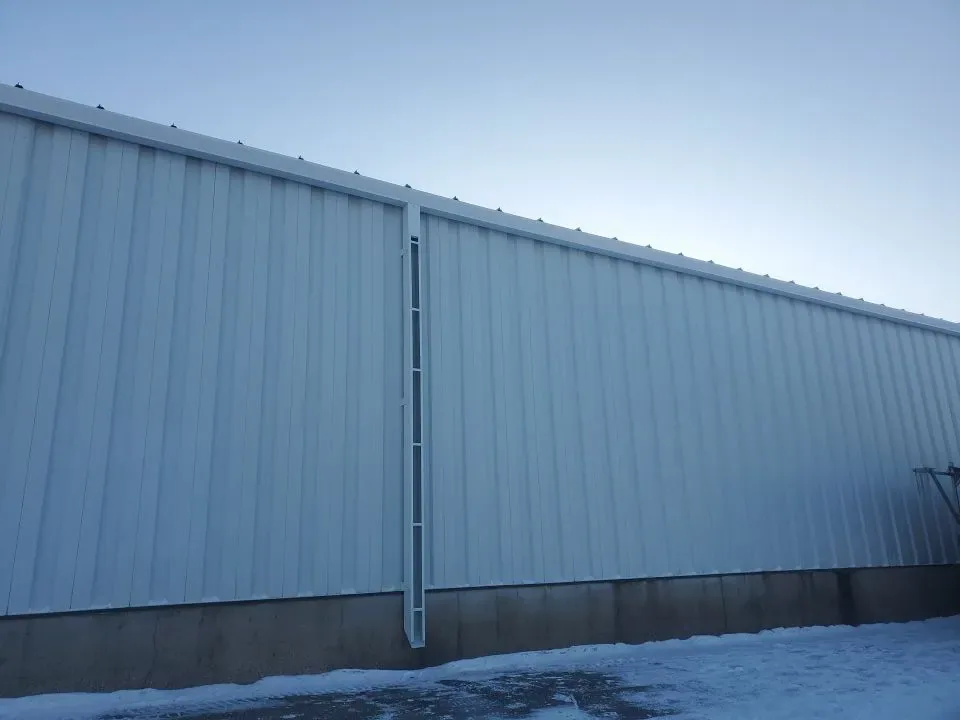
A scupper is an opening through the parapet that lets water leave the roof sideways, and it serves either as the main outlet or as an overflow when the drains are blocked. Overflow scuppers protect the building: if the drains clog during a cloudburst, water rises to the scupper height and leaves the roof before it reaches a height that stresses the parapet flashing.
On September 1 and 2, 2021, Ida brought the National Weather Service's first flash flood emergency for New York City. A roof with a drain and no overflow has one route out, and when that route clogs, the water stands. We install and repair scuppers with a liner and a flange that tie into the membrane, sized to the roof area, and we position overflow openings so water exits at a safe height. Edge metal, coping and gutters often need work in the same visit.
Crickets, tapered insulation and ponding
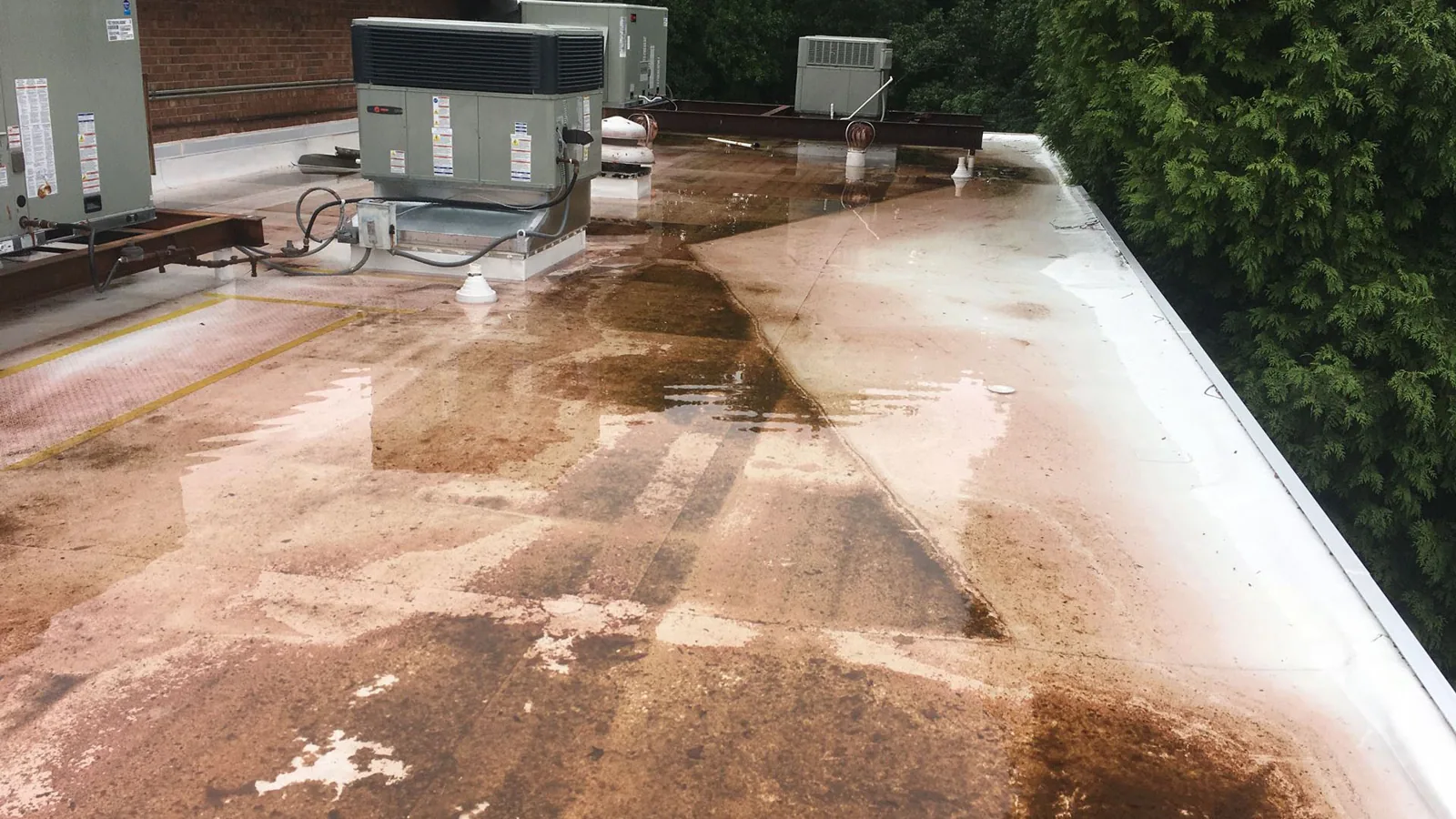
Ponding is the result of slope that does not reach the drain. It shows up as a stain-ringed pond that stays two days after rain, and it begins in places where the roof deck has settled, where a curb blocks the flow or where tapered insulation was never installed. A cricket is a small, sloped saddle built behind a curb or in a valley that sends water around an obstacle toward a drain.
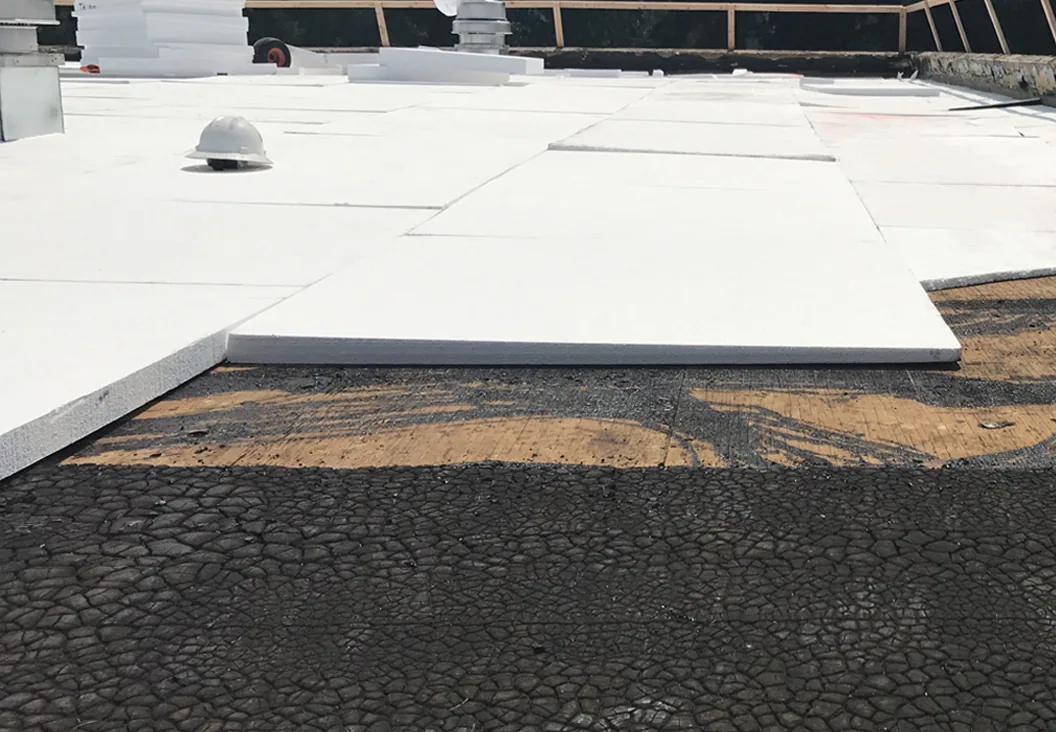
We build crickets from tapered insulation, shape them to the equipment they serve and cover them with the same membrane as the roof. For larger problems, a tapered insulation system installed during a recover or replacement corrects the slope across the whole roof. The ponding water repair options range from clearing a drain to re-sloping a deck, and the report says which applies.
Snow, ice and the January drain
New York City gets 29.8 inches of snow in an average year, and January 23, 2016 alone produced 27.3 inches. Meltwater from a snowpack arrives all at once, and it needs open drains to leave. Ice at a scupper or drain bowl backs water up behind it, and freeze and thaw will lift flashing around an outlet when the water refreezes.
We recommend clearing drains in fall and again after the last hard freeze, and we flag any outlet where ice has formed in past years. Heat trace cable on a drain bowl is an option on roofs with repeated ice problems. A walk in March catches what winter did before spring, the wettest season in a city that averages about 49.5 inches of precipitation a year, gets going.
Which buildings hit the problem first
A large flat roof funnels water to a handful of outlets, and on the West Shore, where the island's industry is concentrated, one clog in Bloomfield or Travis shows quickly. Retail roofs along Richmond Avenue and around New Springville can carry many curbs, each of which can block flow. On older brick buildings along Bay Street, we check whether leaders run inside the walls, since a backup there shows up as a stain far from the roof.
For each type, the recommendation differs. Warehouse owners need overflow and capacity, retail owners need crickets behind units and clear paths, and older buildings need leader checks and flashing at old drain bodies. Warehouse roofing programs include strainer cleaning on a schedule.
Cost, timing and what waiting costs
Drain clearing is the cheapest roof service there is and often prevents the most expensive one. Replacing a strainer or resetting a sump is a small job. Adding a drain or an overflow scupper costs more because of cutting, flashing and sometimes plumbing, and re-sloping a roof with tapered insulation is a larger project usually bundled with a recover. The tapered boards come from the insulation and cover board package, and each board is drawn on a plan before anything is cut.
What waiting costs is wet insulation. Water that stands against a seam finds its way in, and insulation that stays wet loses most of its value and can fail the deck. We price drain work as individual lines so the director can fund the critical items first and plan the larger ones in the capital budget. When a drain failure has already produced a stain, leak repair follows the water to its entry, and the drain fix goes in the same visit so the leak does not return. The ranked list shows both on one page.
Related Roofing Work
More roofing work that comes up alongside Roof Drains and Scuppers.


Commercial Roofing Questions
How many drains should a roof have?
The number follows the roof area and the slope, and local plumbing and building rules set the minimum. We count what the roof has, check each one and recommend an overflow where the existing arrangement is thin.
Why does our roof pond only in heavy rain?
The drains handle light rain and fall behind in heavy rain. That points to a partly blocked leader, a settled sump or too few outlets. We clear and flush first, then measure slope.
Can a scupper be added to an existing parapet?
Yes. We cut the opening, install a liner and flange and tie it into the membrane. The height is set so the roof sheds water before it stresses the flashing.
Do crickets fix all ponding?
No. They correct water behind obstacles and in valleys. A broadly settled deck needs tapered insulation or a new drain.
How often should drains be cleared?
Fall and spring at minimum, and after storms. Roofs under trees or beside busy roads need more visits.