Hurricane Damage Roof Repair in Staten Island, NY
Hurricane damage roof repair for Staten Island commercial buildings: wind-driven rain, torn membrane, debris impact, ponding and claim-ready records.
A rooftop unit nudged half off its curb, leaving an open curb that takes a storm's worth of rain into the building, is the entry an inspector makes after a hurricane, ahead of the sheet itself, because wind-driven rain finds every weakness at once and spreads the damage across a building in ways one leak never does. The water came from above, sideways and sometimes from below, and the roof is only one of the places it entered.
Commercial Roofing Staten Island repairs hurricane-damaged commercial roofs across the island, starting with emergency protection and ending with a record an insurer can read line by line.
What a hurricane does to a roof
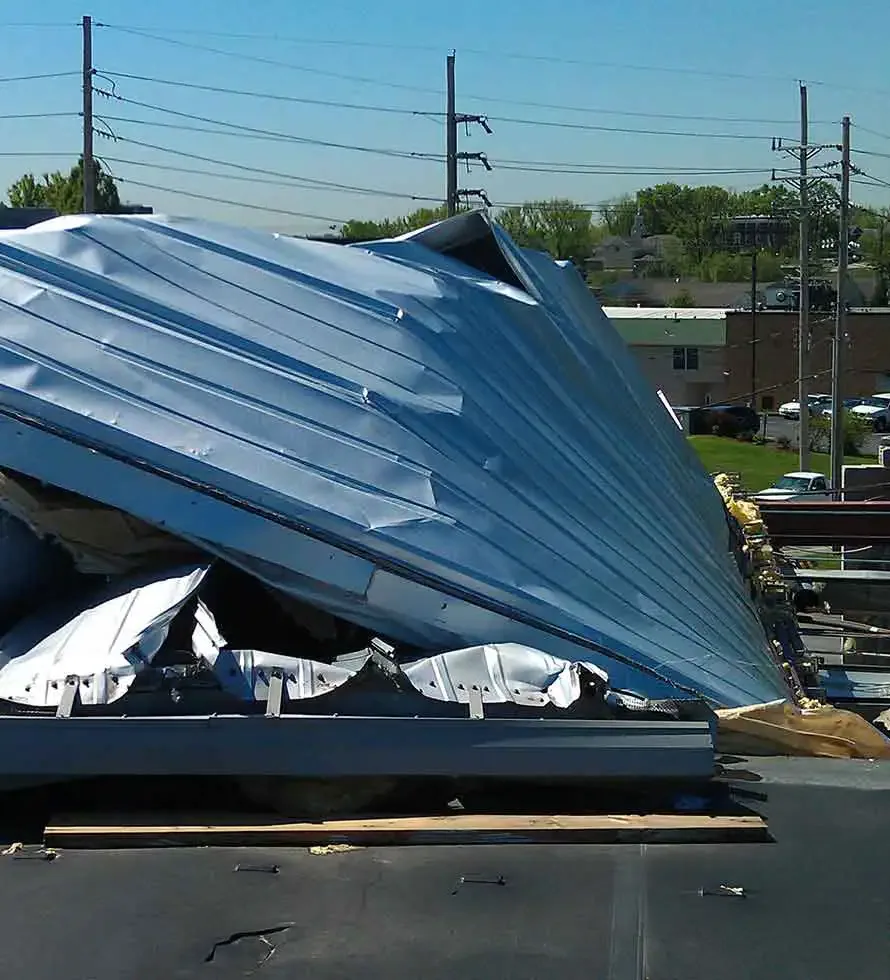
A hurricane attacks a roof in four ways at once. Wind lifts edges and tears membrane. Rain driven sideways gets behind flashings, under coping and through any gap in a seam. Debris from other buildings and trees strikes the sheet and cuts it. And rainfall rates overwhelm drains, so water ponds on a roof that drains well on an ordinary day.
The damage is often hidden. A roof that held through the storm may have taken water into the insulation through small openings, and the stain on a ceiling can show up days later, after the weather has cleared and the roof looks dry. That delay is why a post-storm moisture scan matters even when nothing is visibly torn.
Rooftop equipment takes its share. Units shift on curbs, fan blades strike housings and conduit pulls loose from its supports, and a displaced unit leaves an open curb that lets in a storm's worth of rain in an hour. Checking every unit and every opening is part of the first walk, before the sheet itself gets attention.
What Sandy showed the island
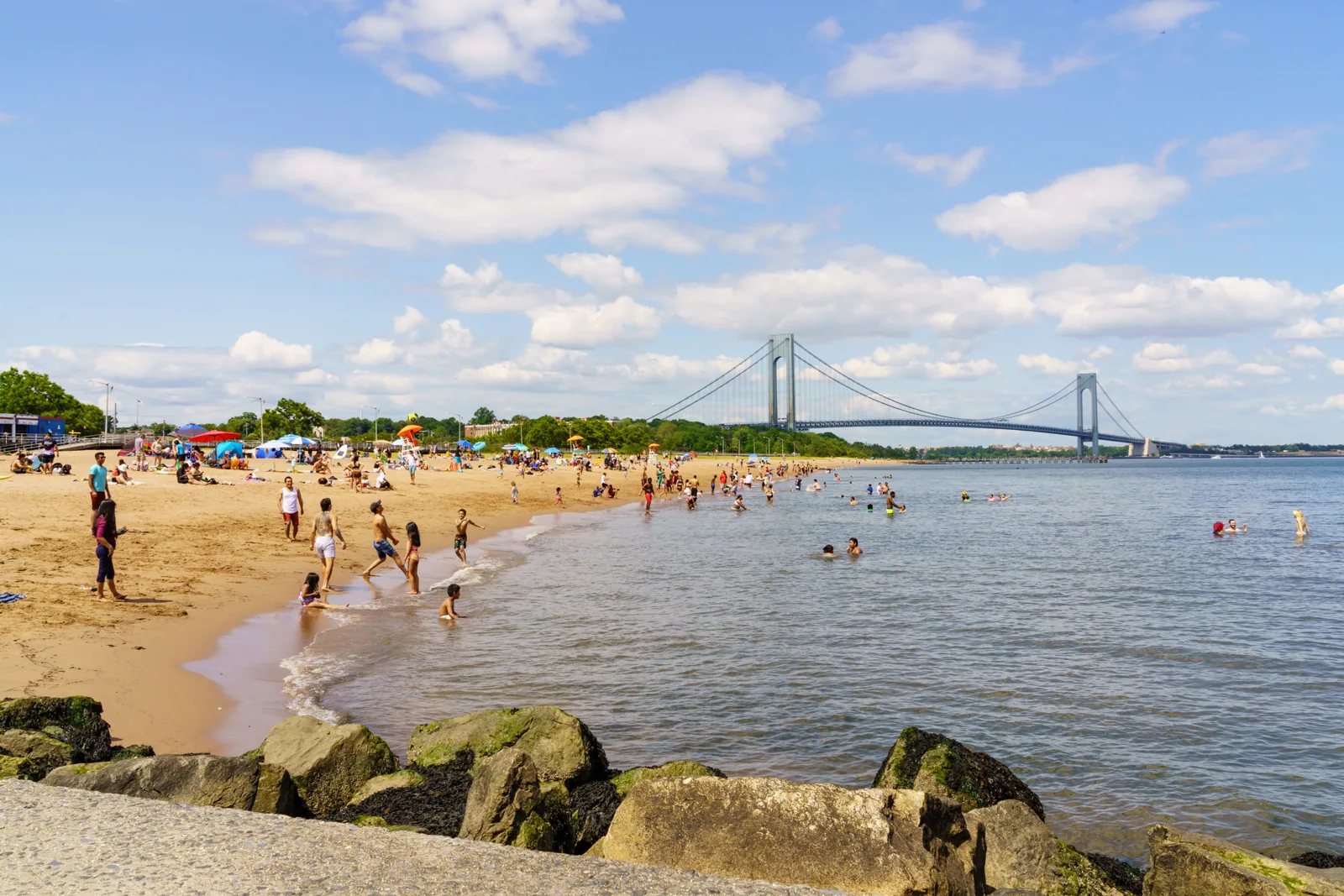
Sandy reached the island on October 29, 2012, with gusts to 80 mph and a surge of 9.56 feet above normal tide at the north tip. Oakwood measured the highest water line anywhere in the state, 7.9 feet above ground, and entire blocks of houses were carried off in Midland Beach, New Dorp and Oakwood Beach. Great Kills Park needed extensive work on its shorefront afterward, and the storm destroyed the Coral Bay Cafe at Tottenville Beach. Surge is a ground-level story, and the roof tells a different one: wind takes edge metal on sites the water never reached, and rain finds openings on all of them. Both the north tip and the South Shore took the storm, so roofs near the shore are checked first.
On the north shore, Richmond Terrace faces the Kill Van Kull from Port Richmond to West New Brighton, and the St. George Terminal dates to 1886, so waterfront roofs there were in the storm's path from the beginning. The Staten Island Mall and the retail along Richmond Avenue sit further inland, and an inland roof still took wind and rain, though not the surge.
What the inspector checks after the storm
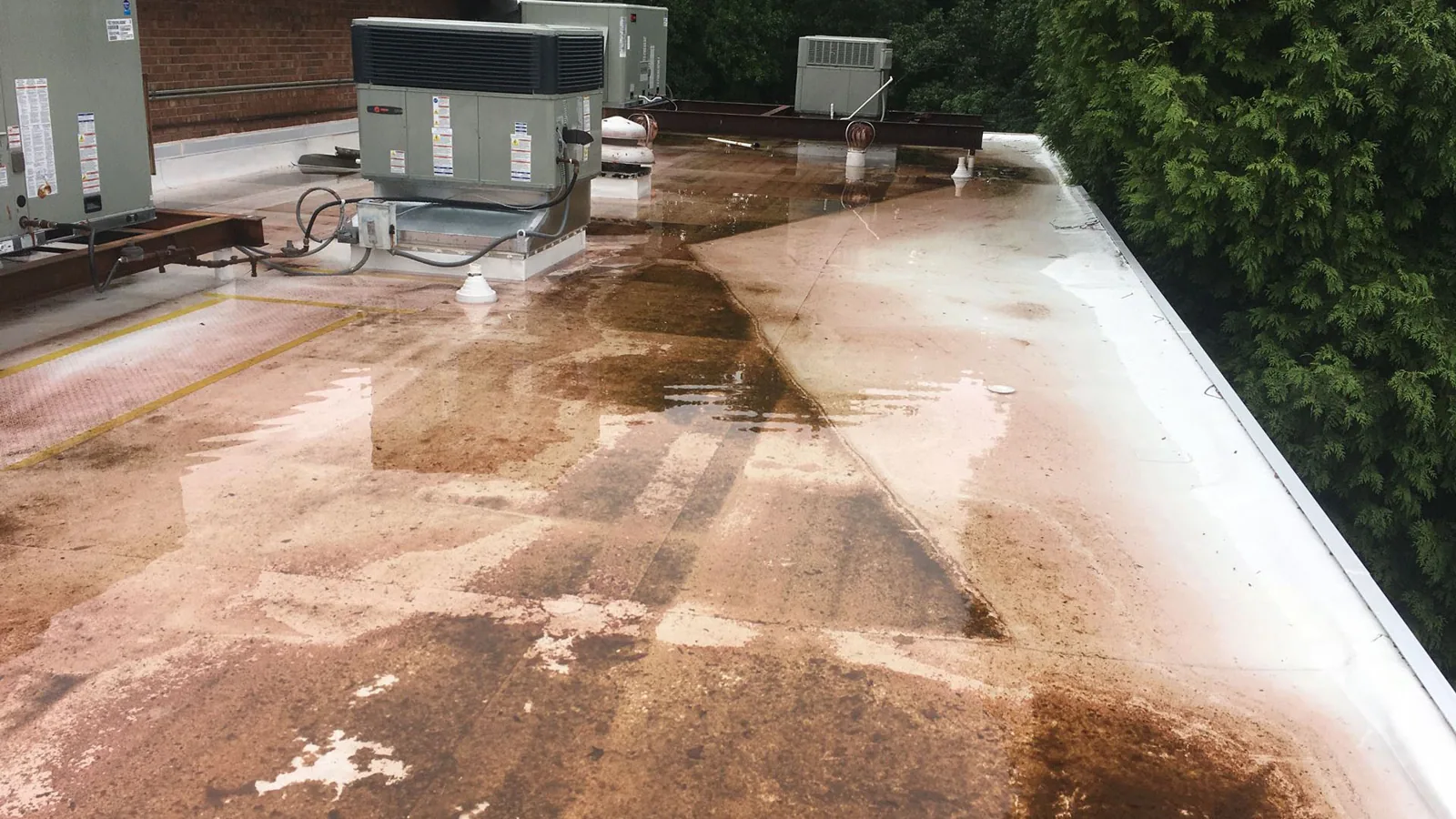
We begin with temporary protection, then walk the perimeter, then the field. We note torn or lifted membrane, displaced ballast, damaged edge metal, flashing pulled loose, impact marks from debris, damaged rooftop units and any item that moved. Ponded areas are measured, and strainers are cleared and tested.
- Edges and corners, where wind starts the damage.
- Flashings and terminations, where driven rain gets in.
- Impact marks and punctures from debris.
- Moisture, mapped with a scan and confirmed by core cuts.
The moisture map decides how much of the insulation is lost. Wet insulation left in place grows mold and fails the next roof.
We also check the roof's drains against the storm. A drain that was clear in September and clogged with debris in November is a storm finding, while one that was packed with leaves before the storm is a maintenance finding, and the difference matters to an adjuster. The inspection log from before the storm is the evidence that settles it.
The repair in plain terms
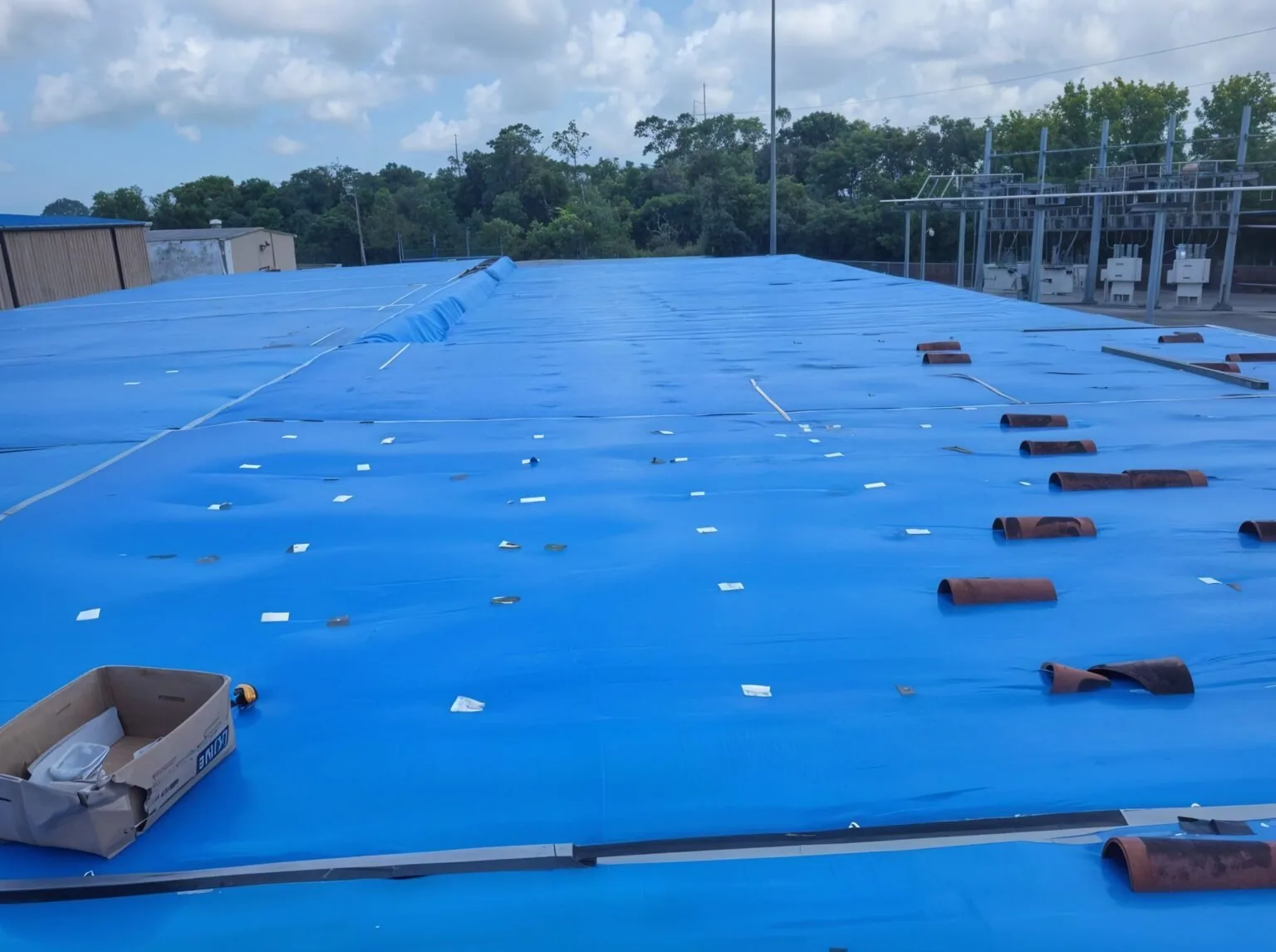
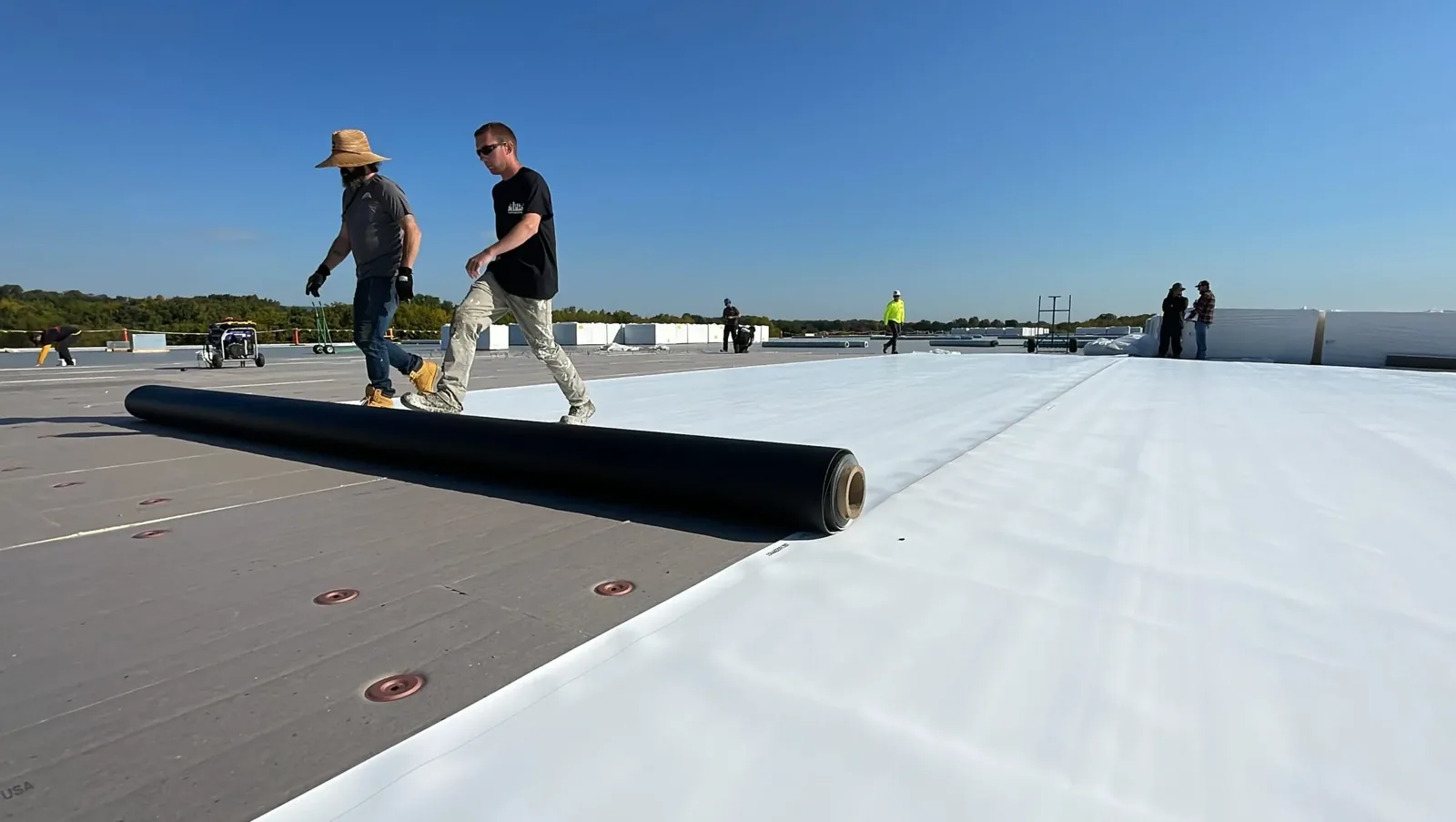
The order is protect, document, repair. Temporary protection goes in first, through emergency roof repair crews that work around the clock. The damage is photographed against the roof plan. Permanent repair then follows: edge metal replaced and re-fastened to the wind rating for the site, flashings rebuilt, punctures patched, wet insulation cut out and replaced, and seams re-welded.
Widespread damage turns the question into repair or commercial roof replacement, and the moisture scan and the age of the roof settle it. Our storm damage roof repair estimate separates storm items from pre-existing wear, so an adjuster can follow each line, and the wind damage items are listed apart from the water items.
Cost drivers are plain: the area of torn membrane, the extent of wet insulation, the edge metal to replace, the access and the temporary protection already spent. Hurricane scopes often include a code upgrade at the edge, and we price it as its own line so the owner sees what the storm caused and what the upgrade adds.
Getting ready before the next one
Preparation is cheaper than repair. Before the season, edge metal, terminations and ballast are checked, drains are cleared and loose rooftop items are secured. Rooftop units are strapped, hatches are latched and signs are braced. A roof that was inspected in the spring has an inspection log to compare against after the storm, which helps an insurer separate new damage from old.
Ida in September 2021 showed the other side of the season. Its rain set off a flash flood emergency across the city, and flash flood watches covered Staten Island along with the other boroughs, with rates that overwhelm scuppers sized for ordinary storms. Clearing drains matters as much as securing edges.
After a storm, a sweep of the roof picks up loose items before the next wind moves them, and a second visit after the first week finds ceiling stains that were not there on day one.
What goes in the log
After a hurricane the log keeps dated photographs from the first visit, a roof plan marking the damage, the moisture map, the temporary measures with their times and a priced permanent scope. It also holds the pre-storm condition when we have it, and the age and type of the roof. Code requirements for larger repairs are checked with the Department of Buildings, whose 2022 NYC Construction Codes set the rules. For a building in Midland Beach or along the South Shore, the roof plan and the date of the storm get the process going. A ponding water problem found in the same visit goes in the same entry.
A short preventive maintenance plan keeps the pre-storm record current, and the next hurricane starts with a log instead of a guess.
Related Roofing Work
More roofing work that comes up alongside Hurricane Damage Roof Repair.
Commercial Roofing Questions
How soon after a hurricane should the roof be inspected?
As soon as it is safe. Rain and wind change the evidence, and wet insulation spreads.
Can damage appear days after the storm?
Yes. Water in the insulation can take days to reach a ceiling. A moisture scan finds it before the stain does.
Is temporary protection part of the claim?
Reasonable temporary protection to stop further loss is usually included. We document it with photographs, times and costs.
What is the difference between wind damage and water damage?
Wind lifts and tears the roof. Water enters through the openings wind creates and through weak flashings. A hurricane usually brings both.
How can an owner prepare a roof before hurricane season?
Check edges and terminations, clear drains and secure rooftop items. An inspection log from spring gives a baseline.