
Commercial Roofing in Prince's Bay, Staten Island, NY
Commercial roofing in Prince's Bay, Staten Island, NY for small bayside retail and office buildings, with edge, drain and penetration flashing repair.
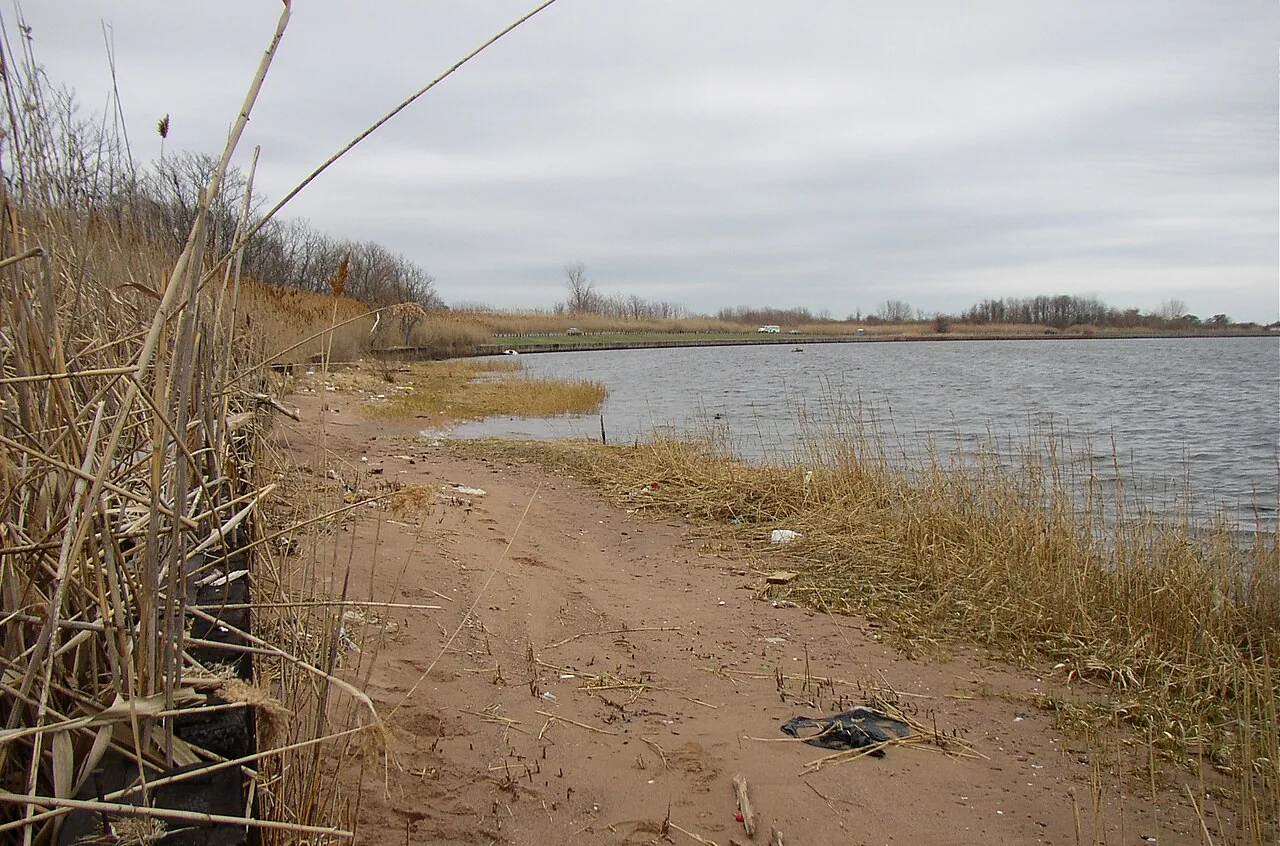
A gutter pulled loose on a bayside storefront, a flat roof over a small office with a drain strainer packed with grit, a rooftop unit curb with sealant gone chalky: an inspector's notebook on a Prince's Bay roof is short and specific because the buildings are modest and the exposure is not. Raritan Bay borders Prince's Bay to the south, and local buses run on Seguine Avenue and Hylan Boulevard, the two streets where commercial roofs concentrate.
Small retail, office and service buildings in Prince's Bay, Staten Island, NY, rely on Commercial Roofing Staten Island for low-slope roof repair and replacement, and an owner is asked first how long the roof has gone without a drain visit.
A bayside neighborhood with an industrial past
The S.S. White Dental factory at the foot of Seguine Avenue was once the neighborhood's largest employer. It closed in 1972, and its site has sat empty since because of ground contamination. What remains is a commercial base that is mostly small, on busy streets, with each building under a roof of its own. A small building can still carry a roof with several layers, a dozen penetrations and a drain that never worked, so every roof gets the full walk, with its system, layers, penetrations and flashing recorded and a risk rank at the end.
Wind off Raritan Bay
With Raritan Bay to the south, buildings near the water meet wind with little in front of them. Sandy's gusts of 80 mph in October 2012 set the standard, and Sandy's highest water line in the state, 7.9 feet over the ground, was logged at Oakwood farther along the South Shore. Coping and drip edge are tried by hand, sealant at laps is probed and fastener spacing at corners is measured. Repairs under edge metal, coping and gutters use corrosion-resistant fasteners and heavier-gauge metal where the wind load calls for them, and the roof is walked each fall before the season and after each storm.
Gutters on bayside buildings take wind-driven rain and debris, and downspouts that empty against a wall soak the cladding, so brackets are reset, sagging runs replaced, leaders cleared and downspouts extended to a splash block or a storm connection. Ice in a gutter adds weight in winter and forces water back under the roof edge, which earns shaded and north-facing runs a second look in fall.
Seguine Avenue, Hylan Boulevard and the shops
Buses run along Seguine Avenue and Hylan Boulevard, and the shops and offices beside them share a pattern: a small flat roof, a street-side parapet, one or two drains and rooftop equipment for each tenant. A food tenant vents grease, a service office carries a small unit and an apartment above has a vent stack. Each penetration is traced to its tenant and its flashing rated, and penetration flashing repairs are priced item by item. Grease near fans gets pads and a cleaning schedule, and restaurant roofing repairs are timed outside meal rushes.
The walk goes from the drains to the curbs and boots, across the seams of the field and out to the parapet and edges. After sunset a scan finds the wet insulation behind a tenant's stain, and a core confirms it. A page per roof comes back within days with a repair class and a price range on each item, so the landlord can approve urgent work and schedule the rest, and a roof that scans dry and walks sound earns a clean entry and a date to look again.
Drains, ponding and a small roof under a big rain
A small flat roof with one drain has no margin. A strainer packed with grit cannot pass the rain behind Ida's flash flood emergency of September 2021, and spring, the wettest season of the year, is the time to check. The strainer gets cleared and photographed, the leader flushed, the slope measured, and an overflow scupper goes in where the parapet will take one. Drain and scupper work costs less than any other small-roof repair and often prevents the next call. A pond still there two days after an ordinary rain means a drain, a leader or a settled deck is to blame.
Contaminated ground and what it means for the roof
The empty factory site is a reminder that ground conditions vary. For a roof job that bears on staging and drainage, not on the roof itself: material stays on paved or approved ground, roof runoff is controlled and debris leaves by an approved route. Each owner is asked about known site conditions and any limits on staging or excavation, and the plan works around them. Roof work rarely disturbs the ground, and the scope stays on the roof. If a project needs a crane pad or a lift on soil, the owner and the engineer confirm the location before the permit is filed.
Snow, ice and the planning window
New York City snow totals 29.8 inches a year, and the single day of January 23, 2016 added 27.3. Drifts press against parapets and curbs, while ice at a drain bowl pushes water back up behind it. Fall is for clearing drains and checking edges, and spring shows what winter did. Late spring through early fall is the window for membrane and coating work, and cold-weather repairs stay temporary until adhesives and welds can cure.
On a small commercial roof the price moves with wet insulation, penetration count, access and system. Stopping an active leak is quoted first, a coating or recover second and replacement last, each with its evidence, and many small roofs fare better replaced in sections over two seasons than patched through five winters, with both paths priced side by side. The neighboring districts of Tottenville and Great Kills run on the same calendar, with preventive roof maintenance turning the visits into a record.
Small roofs deserve a plain record. After each walk the owner receives a short page that lists the strainer, the edges, the curbs and the seams in the order they were checked, with a photograph beside every finding that needed attention. Items that can wait are marked with a season, and items that cannot wait carry a price. The next visit starts from that page, so a repair made in the spring is checked again in the fall. When a building changes hands, the buyer or lender receives the same dated pages, which show the roof as it stood on each visit instead of as someone remembered it.
Owners of several small buildings in the neighborhood can combine the visits into one trip. That keeps the cost per roof low, and the pages for each building sit side by side, so the worst roof is easy to spot.
Related Roofing Work
More roofing work that comes up alongside Prince's Bay.

Commercial Roofing Questions
How does a bayside location change a small roof's care?
Wind and spray reach the roof. Edge metal, fasteners and sealant get checked first, and repairs use corrosion-resistant parts.
Does the empty factory site affect roof work nearby?
It affects staging and runoff, not the roof. We plan staging on approved ground and control drainage and debris.
One drain serves our whole roof. Is that a problem?
It leaves no margin. A packed strainer holds the whole roof in a pond. We clear it and add an overflow scupper where the parapet allows.
Who pays for a leak from a tenant's fan?
The lease and the record settle it. We trace the water, photograph the curb and show who installed the fan.
What should arrive first?
The roof plan, the roof's age and the leak history, after which the walk and a ranked list follow.