Commercial Roofing in Great Kills, Staten Island, NY
Commercial roofing in Great Kills, Staten Island, NY for harbor-side marina buildings, Hylan Boulevard storefronts and restaurants, with wind and drain repair.
Corroded screw heads on a boat shed panel, a gutter sagging along a harbor-side wall, a rooftop condenser on a Hylan Boulevard storefront with sealant long past its life: the inspector's notebook on a Great Kills roof splits into two lists, one for the waterfront and one for the commercial streets. Great Kills Harbor forms the neighborhood's southern boundary, with several private marinas nearby, and the shops sit on Hylan Boulevard, Arthur Kill Road and Amboy Road.
Marine, retail and service buildings in Great Kills, Staten Island, NY, get their roofs repaired and replaced by Commercial Roofing Staten Island, with the owner asked first how far the building sits from the water.
The commercial streets and what they hold
Hylan Boulevard and Arthur Kill Road run alongside Amboy Road as the neighborhood's major commercial streets. Buildings along them are mostly small to mid-size commercial structures: storefronts with apartments above, small offices, restaurants and service shops. Their roofs are low-slope, with parapets on the street side, a few drains and rooftop equipment.
Failures follow a pattern. Drains clog, parapet flashing loosens, and tenant equipment pierces the membrane in ways the roof was never designed for. We walk each roof in the same order: drains, penetrations, parapet and edges, then the field. The report gives the landlord a ranked list with prices, and each tenant's equipment is logged by bay.
Marinas and harbor-side buildings
Great Kills Harbor has several private marinas nearby, and Great Kills Park includes a beach, trails and the Nichols Marina. Marina buildings are working structures: shops, storage, offices and club space, some with metal roofs and others with flat decks. Boats, tools and stored equipment sit beneath them, so a leak has an immediate cost.
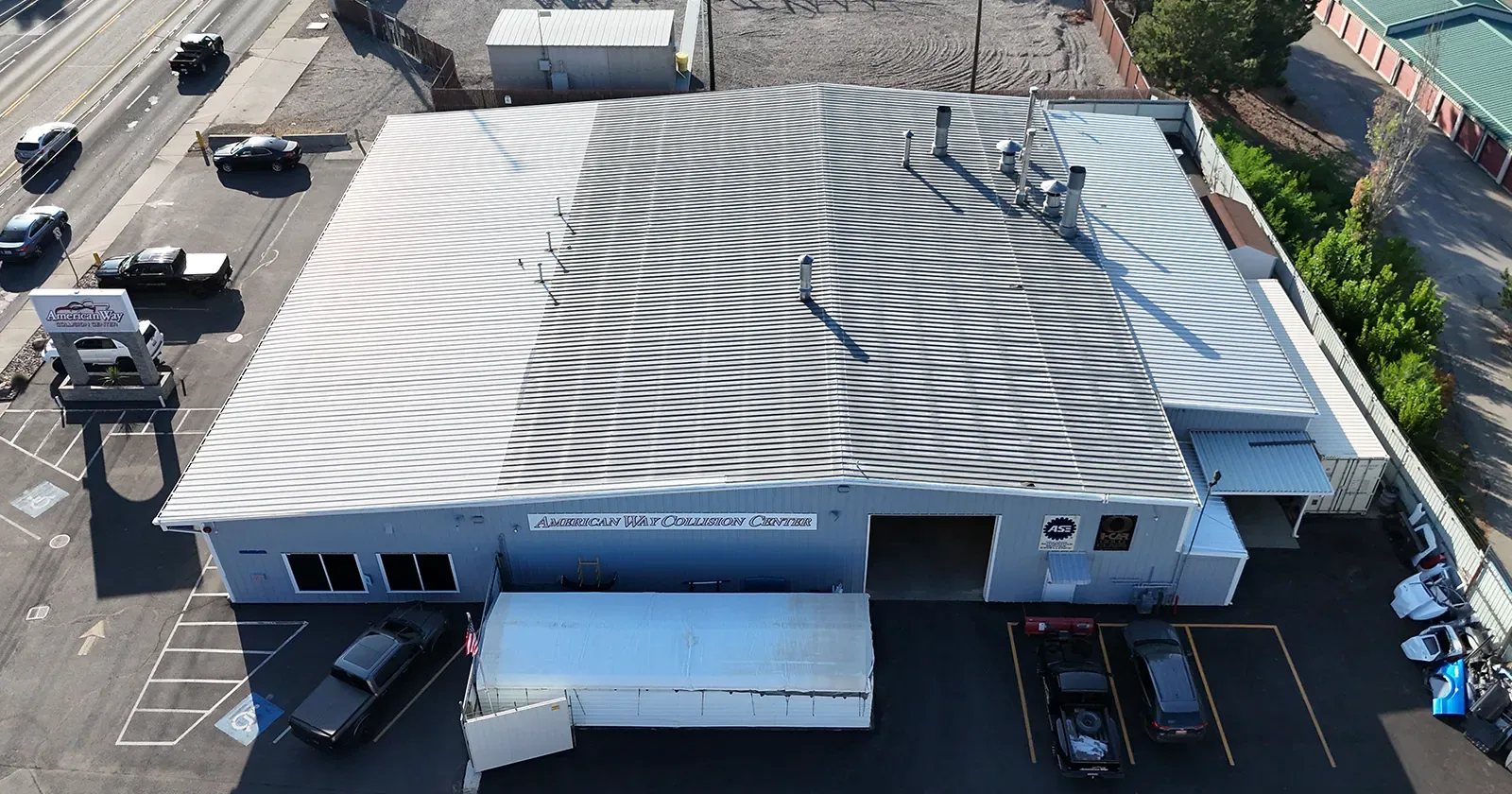
Metal roofs near water need regular attention at fasteners, laps and ridge caps. Exposed fasteners back out as panels move, rubber washers crack, and rust starts at screw heads. A metal roof retrofit lays new panels over old ones where the framing can carry them, while a coating extends panels that are still sound. Repairs use stainless or coated fasteners and sealants rated for marine exposure.
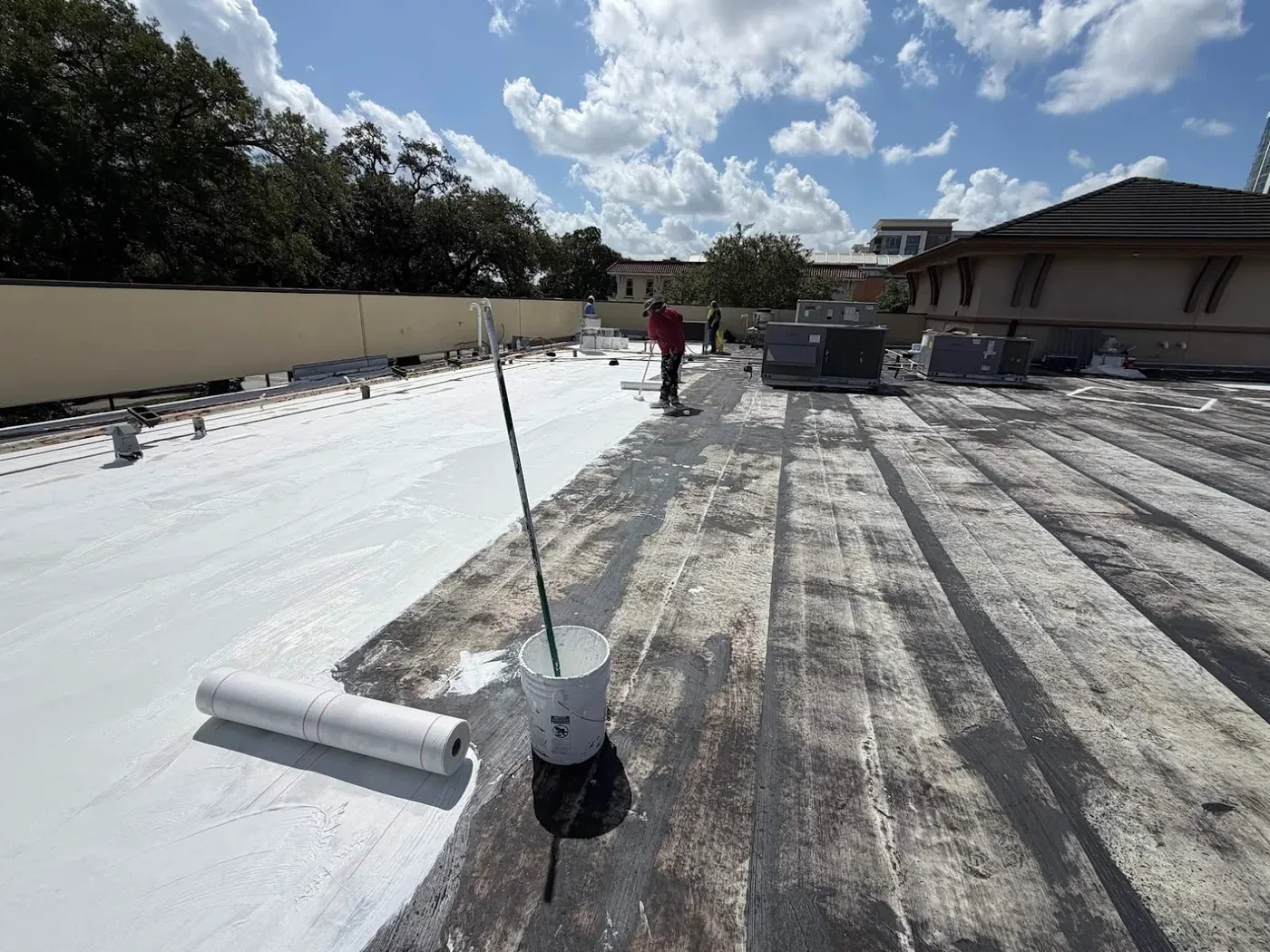
Flat roofs on marina offices and clubhouses are walked the same way as any commercial deck: drains first, then penetrations, seams and the perimeter. A decked clubhouse roof used for events needs walk pads and a drain check before the season opens. Over boats or electronics, a moisture scan after sunset maps the wet insulation so the repair follows the map and not the whole roof. A fall walk before storm season and a spring walk after the last freeze keep the list short.
The shorefront after Sandy
The shorefront at Great Kills Park needed extensive work after Hurricane Sandy damaged it in 2012. Sandy's gusts reached 80 mph in October 2012, while the top water line it left statewide at 7.9 feet over ground was logged in Oakwood, along the South Shore, which shows how exposed this side of the island is.
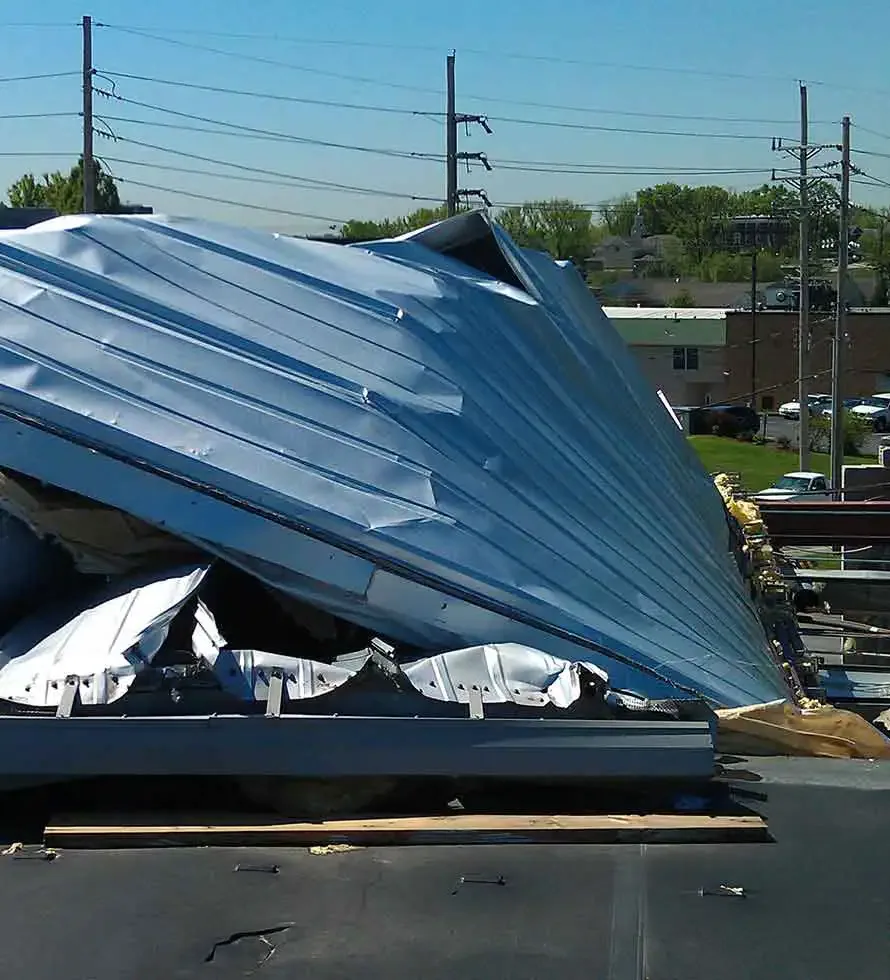
Surge is a ground-level problem, but the wind that comes with a storm lifts roof edges everywhere. We test edge metal by hand, check fastener spacing at corners and probe sealant at laps. Repairs under wind damage repair start at the perimeter, since a weakened edge fails first and lets the field membrane peel back. A roof near the harbor is walked each fall before the season and again after any blow.
Storefronts, restaurants and shared roofs
Storefronts with apartments above share roofs between uses. A restaurant on the ground floor sends exhaust through the roof, a shop adds a sign bracket and an apartment above has a vent stack. Every penetration is a way in for water, and each one has a different owner. Each is traced to a tenant, its flashing photographed and rated. Grease near exhaust fans shortens membrane life, so those areas get pads and a cleaning schedule. Restaurant roofing repairs are timed outside meal rushes with the manager's approval. Landlords receive a clean list separating their repairs from the tenants' items, which keeps disputes short.
Drains, ponding and the harbor-side deck
A small flat roof often has one drain. When it clogs, the roof holds water against the parapet until the membrane or the wall gives way. A single drain with no overflow leaves no margin for an hour of rain like the one behind Ida's flash flood emergency in September 2021. The strainer is cleared and photographed, the leader flushed and the slope measured, and overflow scuppers go in where the parapet allows. Drain and scupper work is the cheapest repair on a small roof and most often heads off the next call. With snow in the city averaging 29.8 inches a year, ice at the drain bowl gets a look in March.
Seasons on a working waterfront
Marine businesses have seasons. Boat storage fills in fall, launch season keeps shops busy in spring and summer, and winter is the quiet period. Roof work belongs in the quiet months where possible, with small repairs fitted into the weeks between. We ask for the calendar first and plan around it.
Retail roofs follow trading hours and the holiday period. Work happens before opening or after closing, hoists stay clear of customer paths and interiors are protected. Neighboring Eltingville and New Dorp follow the same schedule logic. Late spring through early fall gives the best conditions for membrane and coating work.
What goes in the log
Each roof gets an entry with photographs, a condition rating, scan results where relevant and a ranked repair list with prices. Marina owners receive a log that separates metal-roof items from flat-roof items. Landlords receive a log that separates their items from tenants'.
A summary page lists the properties in order of risk. The record supports insurance reviews and lender requests, and it helps the next owner understand what the roof has been through. A dated entry after every visit keeps the picture current, so the next decision starts from facts.
Price follows the roof itself. A metal roof on a harbor-side shop may cost less to coat than to retrofit, while a flat storefront roof with wet insulation costs less to replace than to patch for another winter. Each option is priced for the same roof beside its expected service life, so an owner without a roofing background can choose with the numbers in hand.
Related Roofing Work
More roofing work that comes up alongside Great Kills.
Commercial Roofing Questions
How close to the water does a roof need extra care?
Within sight of the harbor, assume wind and spray reach the roof. We check fasteners, edge metal and sealant first and use corrosion-resistant parts for repairs.
Our marina shop roof rusts at the screws. Is it done?
Not necessarily. If the panels are sound, we replace fasteners, reseal laps and coat. If the panels are failing, a retrofit or replacement is the better route.
A restaurant tenant's fan leaks into the apartment above. Whose repair is it?
Start with the lease and the record. We trace the water, photograph the curb and flashing and show who installed the fan. The landlord and tenant then settle it with facts.
When is the quiet window for a marina roof?
Winter, usually. We ask for your calendar and plan large work then, with temporary protection ready for any section left open.
What should an owner send first?
A site plan, the roof ages and the recent leaks. A walk of each roof returns a ranked list.