
Commercial Roofing in New Dorp, Staten Island, NY
Commercial roofing in New Dorp, Staten Island, NY for Hylan Boulevard shopping centers, supermarkets and offices, with drain, curb and membrane repair.
Rooftop units on a shopping center deck that have been swapped three times, a drain bowl at the low corner of a strip that serves five tenants, a stockroom ceiling that stains in the same place after every long rain: an inspector's notebook on a New Dorp roof is a list of shared problems. Hylan Boulevard began filling with retail from New Dorp Lane in the 1960s, and the roofs that came with it are old enough now to force real decisions. For shopping centers, stores, offices and service buildings in New Dorp, Staten Island, NY, Commercial Roofing Staten Island repairs and replaces the low-slope roofs, and the property manager is asked how many tenants share each one.
Five shopping centers along Hylan Boulevard
The 1960s retail push from New Dorp Lane left five supermarket and department-store shopping centers on Hylan Boulevard, with Hylan Plaza, opened in 1966, the largest. The New Dorp station of the Staten Island Railway and many bus routes serve the commercial core.
Centers of that vintage have roofs that have been repaired, recovered and patched for decades. A shopping center roof is shared by several tenants, owned by one landlord and usually covered by a lease that splits the cost. We rate each section separately and show the landlord which parts are in good order and which are carrying the problems.
Roofs of 1960s vintage and what is under them
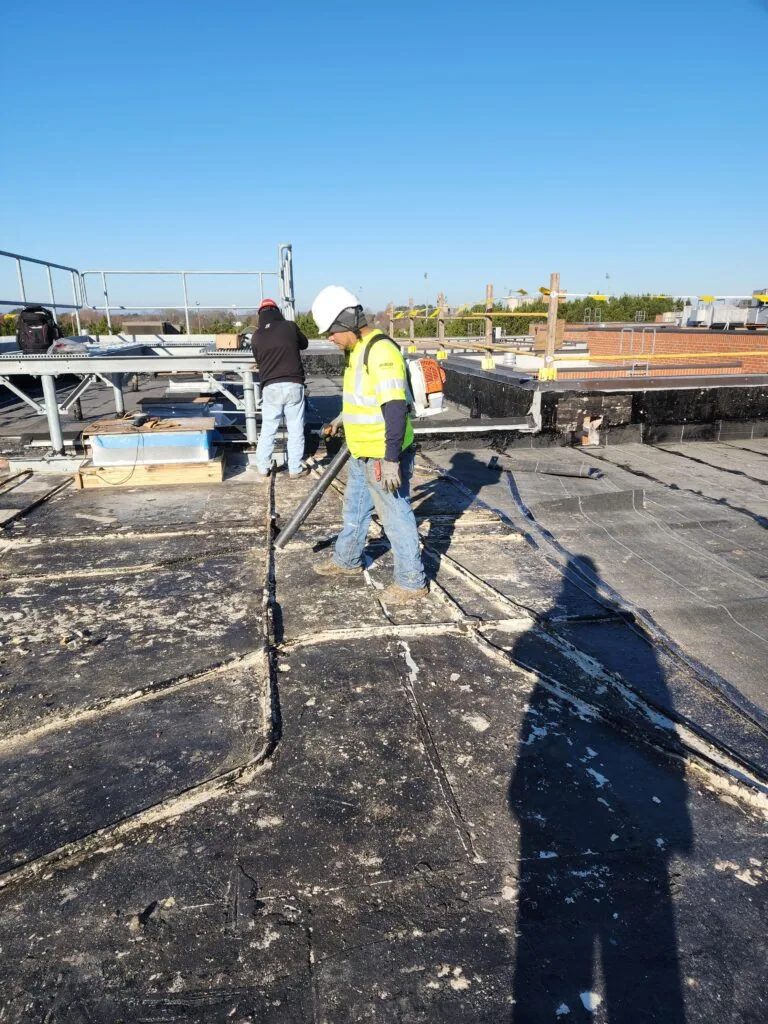
An old retail roof often holds layers: an original built-up membrane, a recover from a later decade, patches over both and a coating on top. Each layer traps moisture from the one below. Gravel hides blisters and splits, and a walk on foot is the only way to find soft spots. We press, probe and mark, then pull cores where the roof feels spongy to count wet plies.
If the layers are dry, a fully adhered recover over cover board saves tear-off cost and mess. If they are wet, they must come off, because new roofing over saturated insulation fails at the seams within a few seasons. Built-up roofing remains a durable choice for a new roof on these decks, alongside modified bitumen and single-ply, and the choice depends on access, weight and fire rules.
Tenants, supermarkets and rooftop equipment
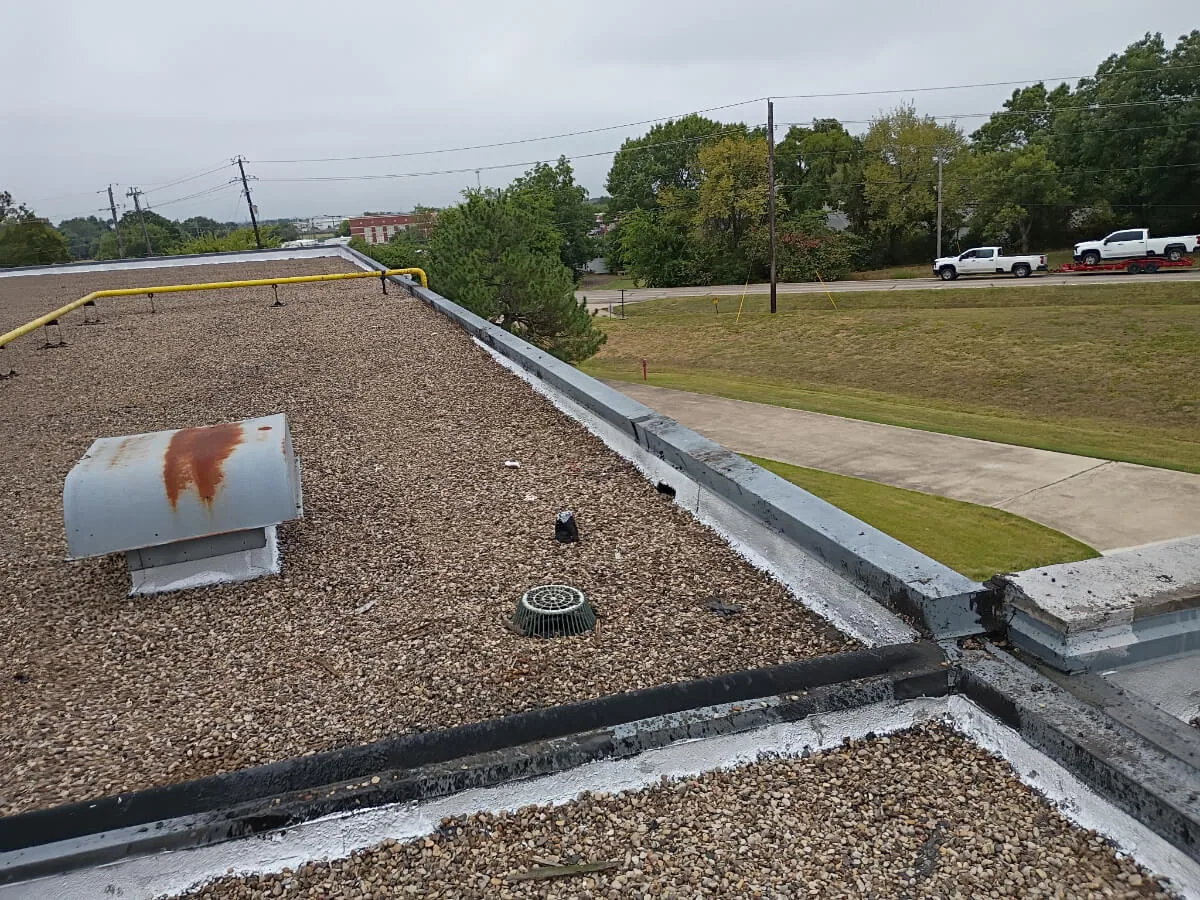
Supermarkets and department stores run refrigeration, exhaust and heating equipment on the roof, and each unit sits on a curb with flashing that ages. Refrigeration lines pass through the membrane, and a split boot lets water into the stockroom. Condensate drips onto the same patch of membrane for years until it wears through.
Each penetration is traced to a tenant, photographed and rated for flashing, and penetration flashing repairs carry their own prices so each party pays for its own. Walk pads go along the service routes. A landlord with a dated record of who installed what has a firm place to start when a lease dispute arises about who pays for a leak.
A supermarket roof sits over stock that spoils when wet, so a leak over a cooler or a stockroom outranks the same leak over an office. The log ties each finding to the space below, and the repair order follows. Exhaust from food preparation areas leaves grease on the membrane near fans, so those spots get a cleaning schedule and a protective pad. A membrane that resists fats, such as PVC, is the usual choice around exhaust.
Sandy, the flood line and the roof
When Sandy's floodwater carried off block after block of houses across New Dorp, Midland Beach and Oakwood Beach, the storm also left the state's highest water line, 7.9 feet above ground, at Oakwood. Surge damage is at ground level, but the same storm brought gusts to 80 mph, and roofs in the area are checked for wind-lifted edges and drain backups first. After a storm like that, we walk the roof for lifted edges, displaced flashing and punctures from blown debris. Storm damage roof repair brings dated photographs and a written report that can back an insurance claim, and a landlord holding a baseline log can show what changed.
Ponding, drains and the long strip
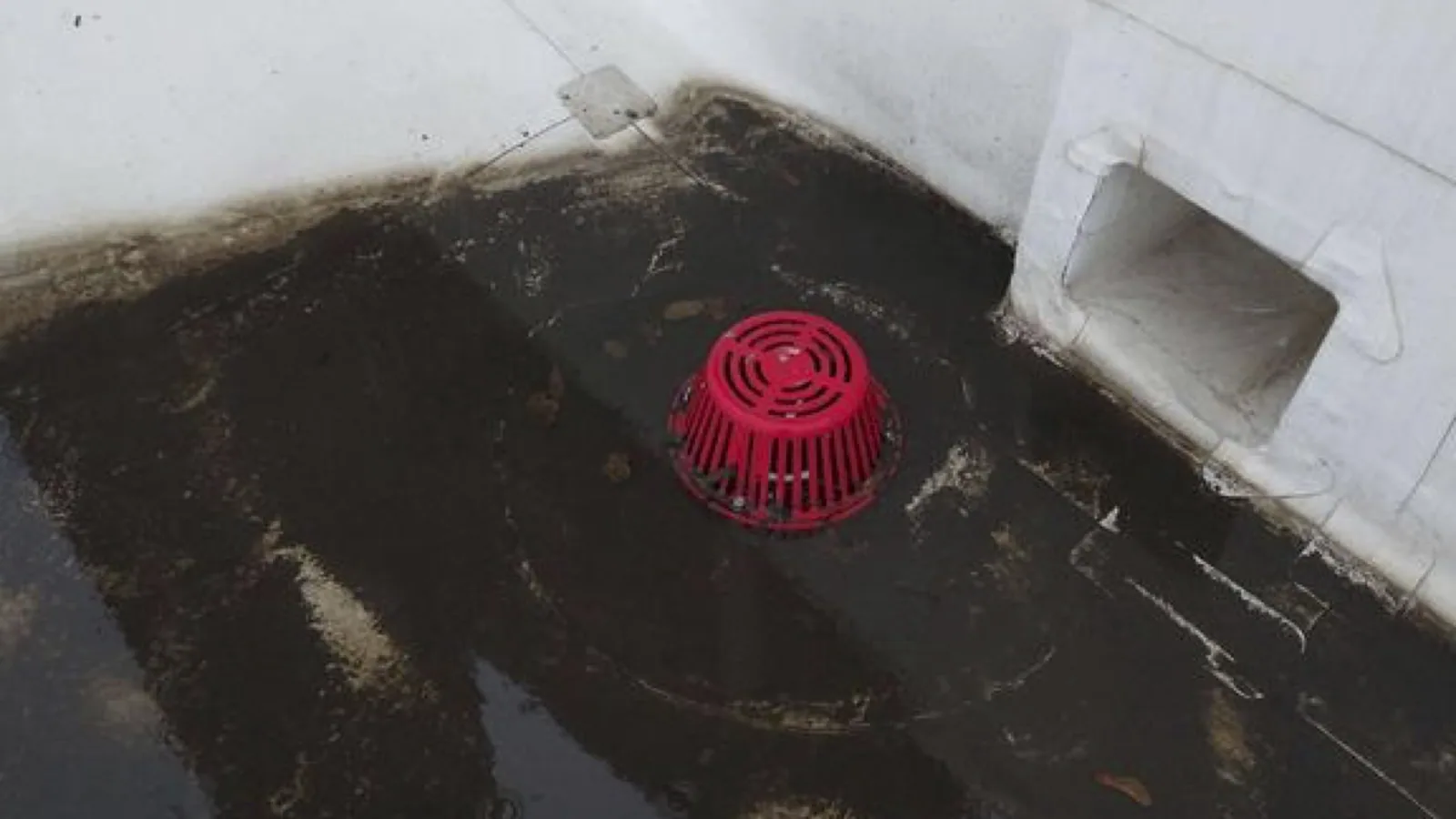
A long, flat strip roof sends water toward a few drains, and the low corner of the deck collects it. Ponds that last two days after ordinary rain mean a clogged outlet, a settled deck or a missing cricket behind a unit. A strip roof with one blocked outlet has nowhere else to send the rain of an Ida-class storm like the one in September 2021 that set off a flash flood emergency. Each strainer is cleared and photographed, the leaders are flushed and the slope is measured. Overflow scuppers go in where the parapet allows. Tapered insulation corrects slope during a recover, and crickets move water around curbs. Drain and scupper work is the cheapest roof repair on the list and often prevents the most expensive one.
Snow, ice and the spring walk
The city's snow runs 29.8 inches in an average year, and 27.3 inches fell on one day, January 23, 2016. Drifts pile against parapets and curbs and melt back toward the wall, which is why March is when base flashing in those corners gets checked. Ice at a drain bowl backs water up behind it and can lift flashing when it expands.
A fall visit clears drains and checks edges. A spring visit finds what winter did. Retail landlords schedule both outside the holiday trading period, and the log shows which items were watched and which were fixed. Preventive roof maintenance turns these visits into a calendar.
Working around trading hours
Stores keep hours. We work before opening or after closing for loud steps, keep customer paths clear and place hoists away from entrances. Interior protection goes up under any opening, and a manager signs off each day. Phasing by section keeps the center trading while the roof is open. Neighboring Great Kills and Midland Beach use the same sequence for their commercial roofs.
Landlords with more than one property get one report, one calendar and one price format. The summary orders properties by risk and attaches price ranges, which sends the first dollars to wherever water is likeliest to get in.
Shopping center owners along the corridor often hold roofs of the same vintage, so the report sets them side by side. Condition, drainage and leak history are listed for each center on one page, which makes it plain which roofs can be patched this year and which need a budget for replacement. Tenants are named where they sit below an open item, and the manager receives a short schedule of the quietest hours for each section of roof, so repairs avoid the lunch rush and the weekend crowd.
Related Roofing Work
More roofing work that comes up alongside New Dorp.
Commercial Roofing Questions
Our center's roof has been patched for years. Is it time to replace it?
Pull cores before choosing. Dry layers allow a recover over cover board that can add years, while wet layers make replacement cheaper than another patch. We cut the cores, photograph each one and put the result in the report, so the board sees the evidence behind the number.
Who pays when a tenant's unit leaks?
Start with the lease, then the roof record. The record shows who installed the unit and when, and photographs of the flashing support whichever party is right.
Why does the stockroom ceiling stain after every long rain?
Water finds the same weak spot each time, usually a drain, a boot or a seam near it. We trace it from above and fix the entry, not just the ceiling.
Can a roof be replaced while stores stay open?
Yes. Sections are opened and closed in daily, loud steps are timed outside trading hours and interiors are protected.
What does a landlord receive?
A section-by-section log with photographs, ratings and a ranked repair list with prices.