
Commercial Roofing in Graniteville, Staten Island, NY
Commercial roof inspection, repair and replacement along Richmond Avenue in the Graniteville district of Staten Island, NY, for busy retail and service roofs.
Richmond Avenue is the main commercial strip of Graniteville, on Staten Island, NY, and it carries some of the heaviest car traffic on the island, which is the first thing a roofer thinks about before a single drain is checked. Roofs beside a road that busy can pick up soot and grit, and a business below one rarely wants to close for a week while we work.
Commercial Roofing Staten Island inspects, repairs and replaces the commercial roofs along the avenue and the streets that join it. The walk starts at the edge facing the road, because that edge takes the most weather and the most scrutiny from customers, and it goes on from there to the drains, the equipment and the layers under the surface.
The strip and what rides on it
Bus lines follow Forest Avenue and South Avenue, while Richmond Avenue carries the car traffic that gives the strip its character. Any shop or service counter on a road like that depends on being visible and open, so a roof leak that closes a showroom or a counter costs more than the repair. That changes how a roof is ranked: a leak over a customer area jumps ahead of a leak over storage.
What sits on any particular roof along the avenue is for the walk to show. What a roof beside a heavy road tends to collect is already familiar. Road grime settles on a membrane and dulls its reflectivity. Exhaust staining marks the surface near vents. Debris from passing trucks and wind lands in drains. Each of these goes in the log with a photograph, and a washdown and strainer cleaning appears on the first maintenance visit.
What the inspector sees first
On a low-slope retail roof the first notes are usually small. A sealant bead dried to powder around a vent pipe, a drain strainer sitting loose in its sump, a patch of membrane worn thin along the route to a rooftop unit. None of them looks like an emergency, and all of them become one in the first hard rain after a cold snap.
A sign or a canopy that hangs over the avenue adds attachment points to the building face and roof edge. Each bolt through a parapet is a path for water, and each one needs sealant that has not dried out. Our edge metal and coping checks include those attachments, since a loose bracket pulls the coping with it.
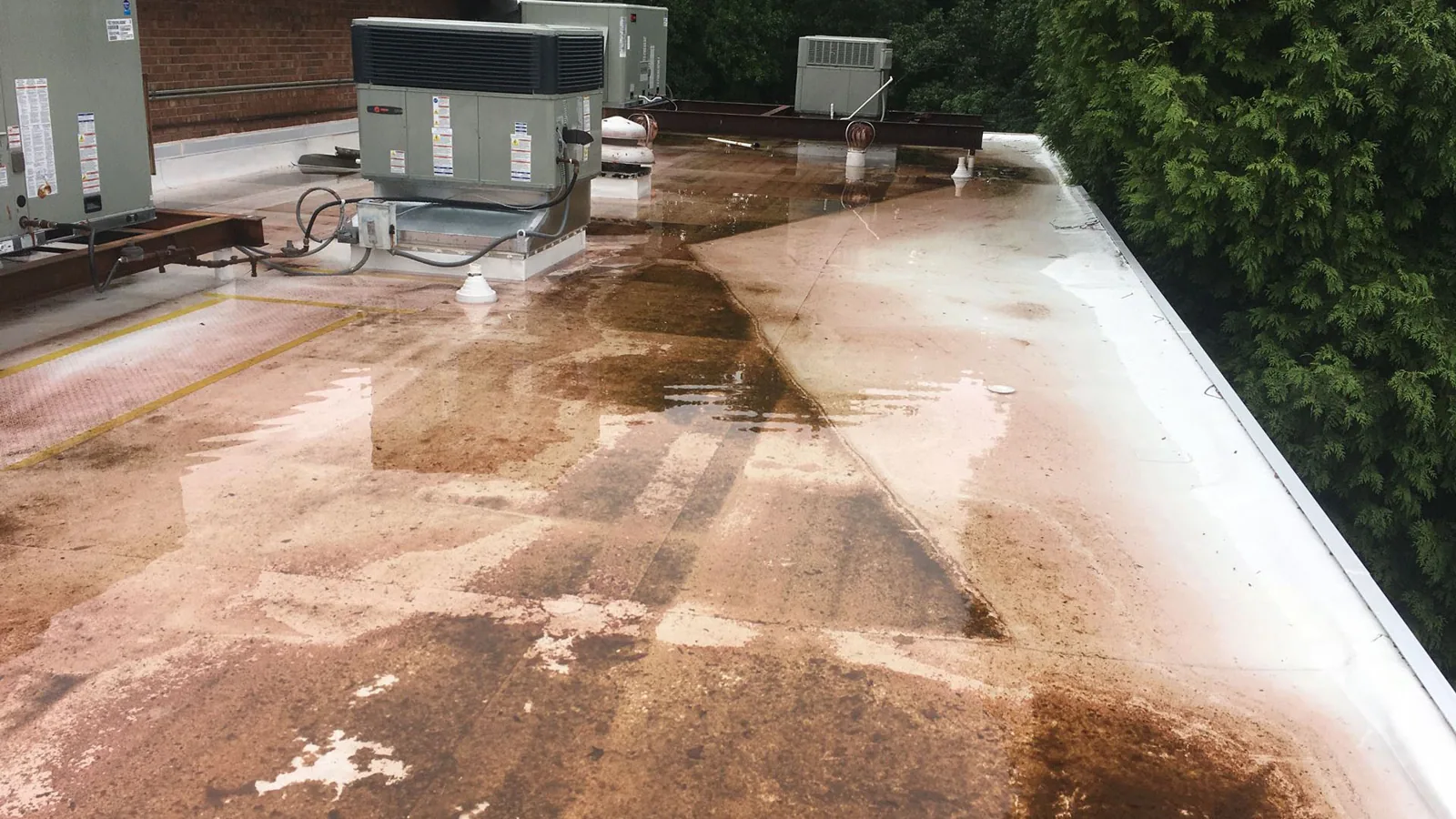
Ponding gets its own entry. Once the rain stops, the depth of the water near each drain and the time it takes to leave are measured, since a pond that outlasts a day or two means one of three faults: a settled deck, a clogged drain or a cricket that was never built. Standing water ages a membrane faster at that spot, grows algae and loads the seams, and the ponding water repair that follows addresses the cause before it addresses the surface.
Penetrations get a count. Each pipe, vent and conduit is marked on the plan and checked for a split boot, a cracked pitch pan or sealant gone to powder. A roof with thirty penetrations and three bad ones has a short list, and the short list is the repair bill.
Rooftop equipment on service buildings
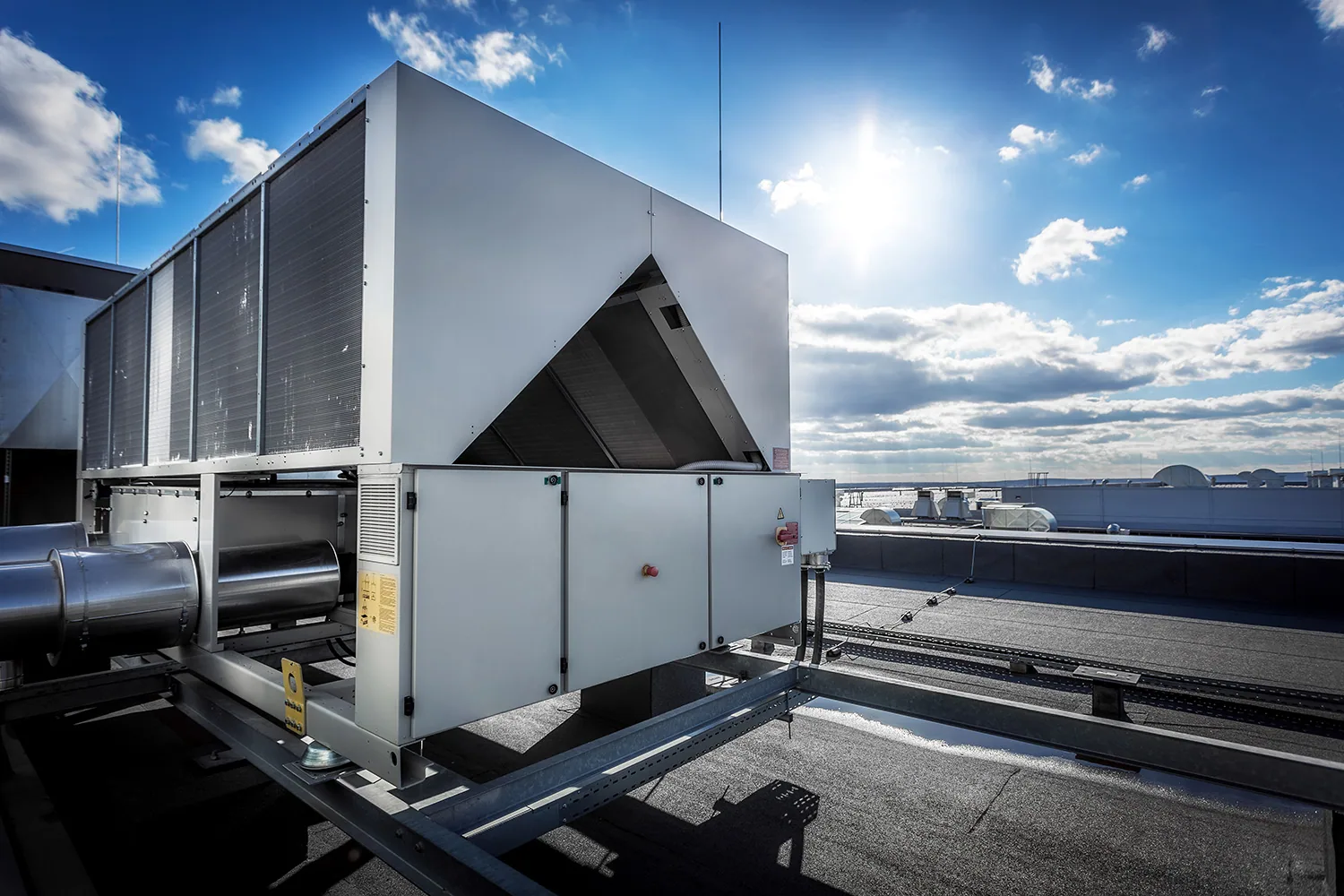
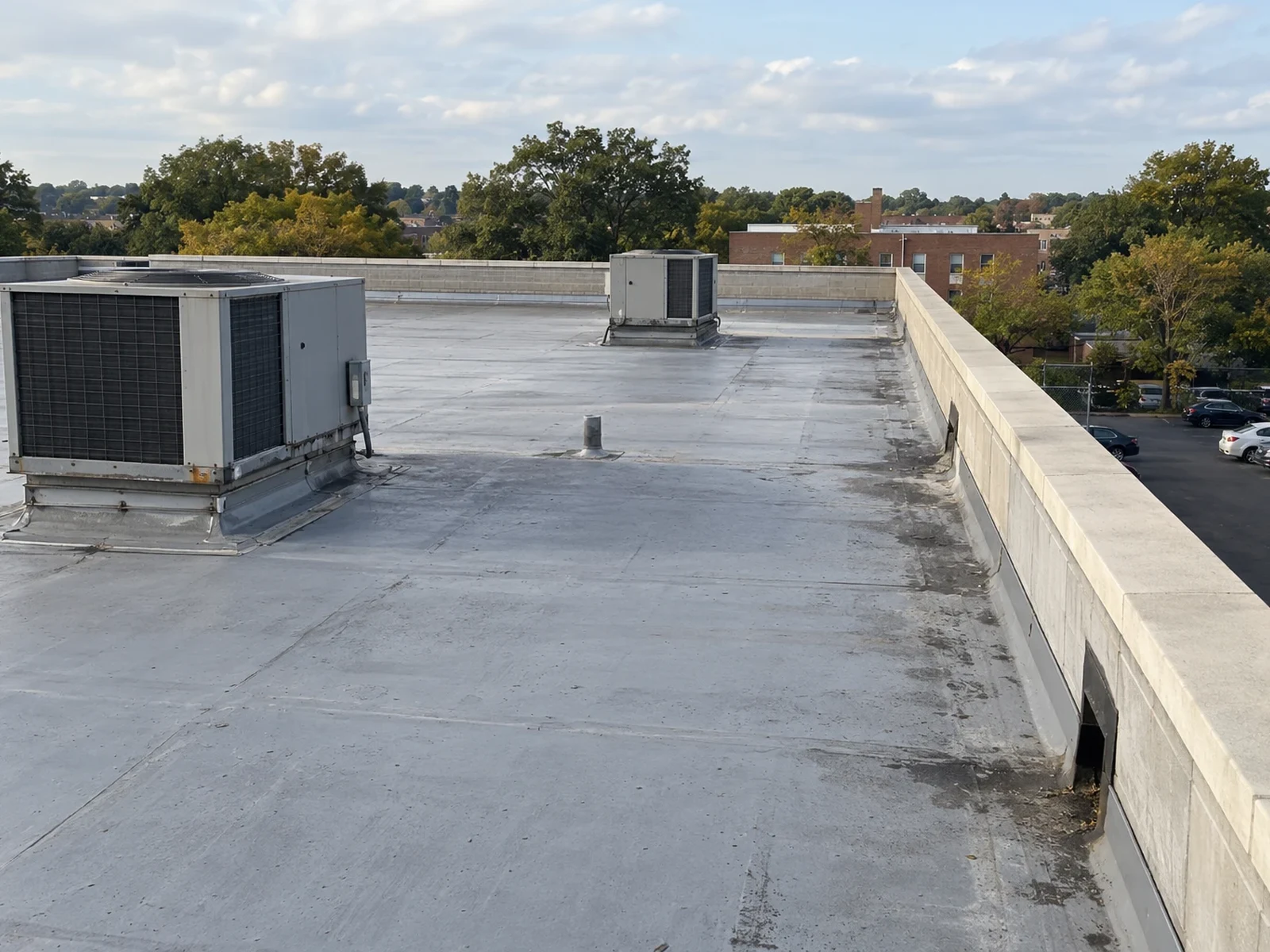
Service and retail buildings carry heating and cooling units, exhaust fans and refrigeration plant, each on a curb or rail. When a unit is replaced, the curb often stays and the flashing gets forgotten. We lift the unit's skirt, inspect the curb flashing, test the sealant and log each unit by number on the roof plan. The rooftop equipment curbs and supports work is the repair that follows.
A dealership or auto service roof adds exhaust and fluid concerns, and a restaurant roof adds grease. Neither is assumed on the avenue. If the walk finds them, the repair is chosen to suit the contaminant.
Repair, restore or replace
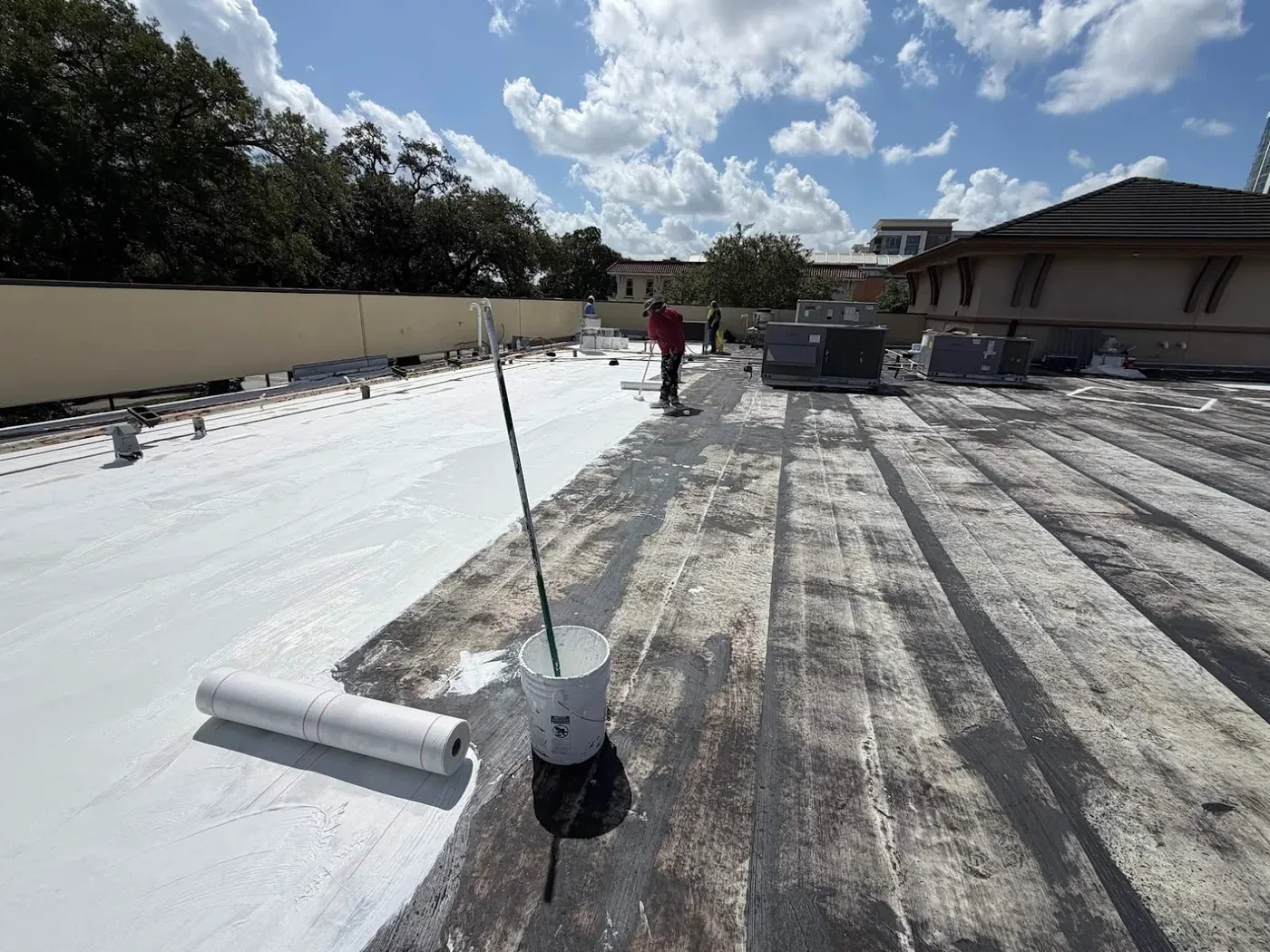
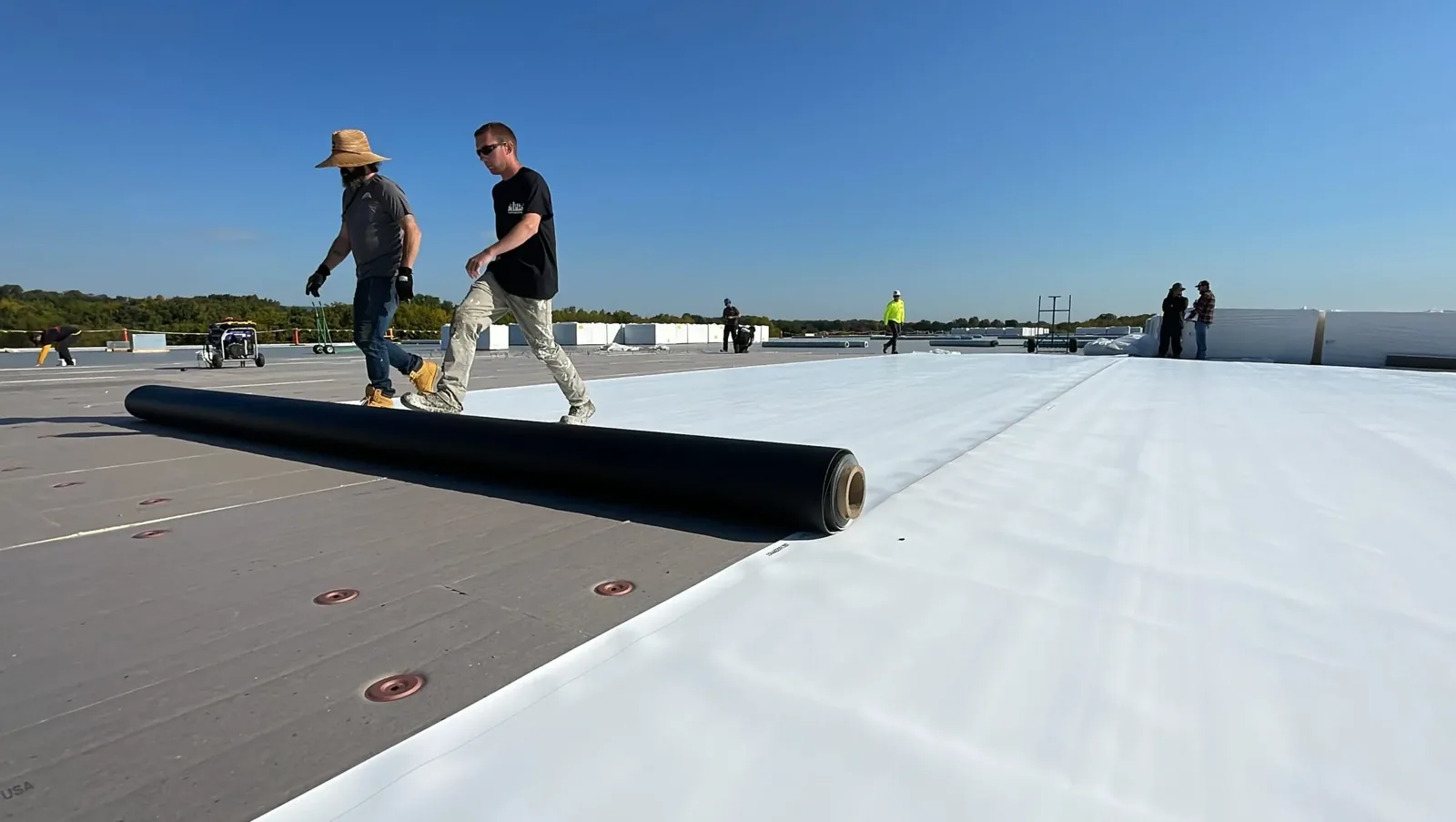
The scan and the cores decide. A roof with isolated damage gets a local repair. A dry membrane with a worn surface may take a coating restoration that keeps the road-side face looking clean. Wet insulation across a wide area means replacement, and the proposal sets the tear-off next to a recover so both can be weighed.
Cost follows the details: perimeter length, equipment count, deck condition and how a hoist reaches the roof from a street this busy. Lane closures and permits are real line items and are listed as such.
Owners often ask whether a coating or a replacement is cheaper in the long run. The answer comes from the cores: coating a dry, sound roof costs less up front and defers the larger spend, while coating a roof with wet insulation wastes the money. The proposal sets the two side by side with the expected service life of each, so the choice is made on the roof's condition and the owner's plans for the building.
Rain, snow and the road
The city takes about 49.5 inches of precipitation in a year, with spring the wettest stretch, plus roughly 29.8 inches of snow, and 27.3 inches fell on the single day of January 23, 2016. Snow that piles against walls melts toward whatever low point is nearest, so parapet bases and rear walls are checked for the stains meltwater leaves. In the Ida downpour of September 2021, a flat roof with a blocked scupper held the rain until the ceiling gave way. Overflow routes are part of the spring and fall visit.
Trading hours and the curb lane
Work above open shops is planned around opening hours. Loud steps happen early or late, hoists are set where they do not block a door, and a flagger works the curb lane when it narrows. Material is staged on the roof or in a rear lot, never on the sidewalk. Other commercial strips on the island, Castleton Corners among them, get the same planning.
Owners with buildings in Tompkinsville or on other avenues can keep the same log format, so a Richmond Avenue roof and a Bay Street roof can be compared on one page when budgets are set.
What goes in the log
The written log carries a roof plan with numbered units, a photograph for every finding, scan results and a ranked list of repairs, each rank explained in a line. An owner can send it to a lender, a landlord or an insurer, and the next walk begins where this one ended.
Related Roofing Work
More roofing work that comes up alongside Graniteville.
Commercial Roofing Questions
Does heavy road traffic change how a roof ages?
It changes what collects on it. Soot dulls the surface and grit packs the drains, so cleaning and strainer checks come earlier in the schedule.
A leak is over my customer area. What happens first?
A same-day dry-in over the leak, then the trace to its source. The permanent repair is scheduled after the roof is dry, and the area is protected inside until then.
Do sign brackets matter for the roof?
Yes. Every fastener through the parapet or sheet is a path for water. We check them, reseal where needed and log each bracket.
Can we phase a replacement if the shop cannot close?
Yes. Work moves in sections that are dried in the same day, with temporary protection over any open area at night.
How do you handle a unit that was replaced but not reflashed?
The unit's skirt is lifted, the curb flashing checked and, if it has failed, rebuilt. A new unit on an old curb is a common leak source.