
Snow and Ice Roof Damage Repair in Staten Island, NY
Snow load and ice damage repair for Staten Island commercial roofs: frozen drains, ice dams, drift loads, split seams and sagging decks. Request an inspection.
A row of shallow nicks across a membrane, each the width of a shovel blade, is the first thing an inspector photographs on a commercial roof after a snow, because someone tried to help the roof and cut it. Snow is weight, and ice is a dam. Between them they load the structure, back water against walls and open every seam that has been waiting for a reason.
Commercial Roofing Staten Island repairs snow and ice damage on commercial roofs across the island, and we begin with the drains, the deck and the walls, in that order, before we look at the membrane.
How snow and ice hurt a roof
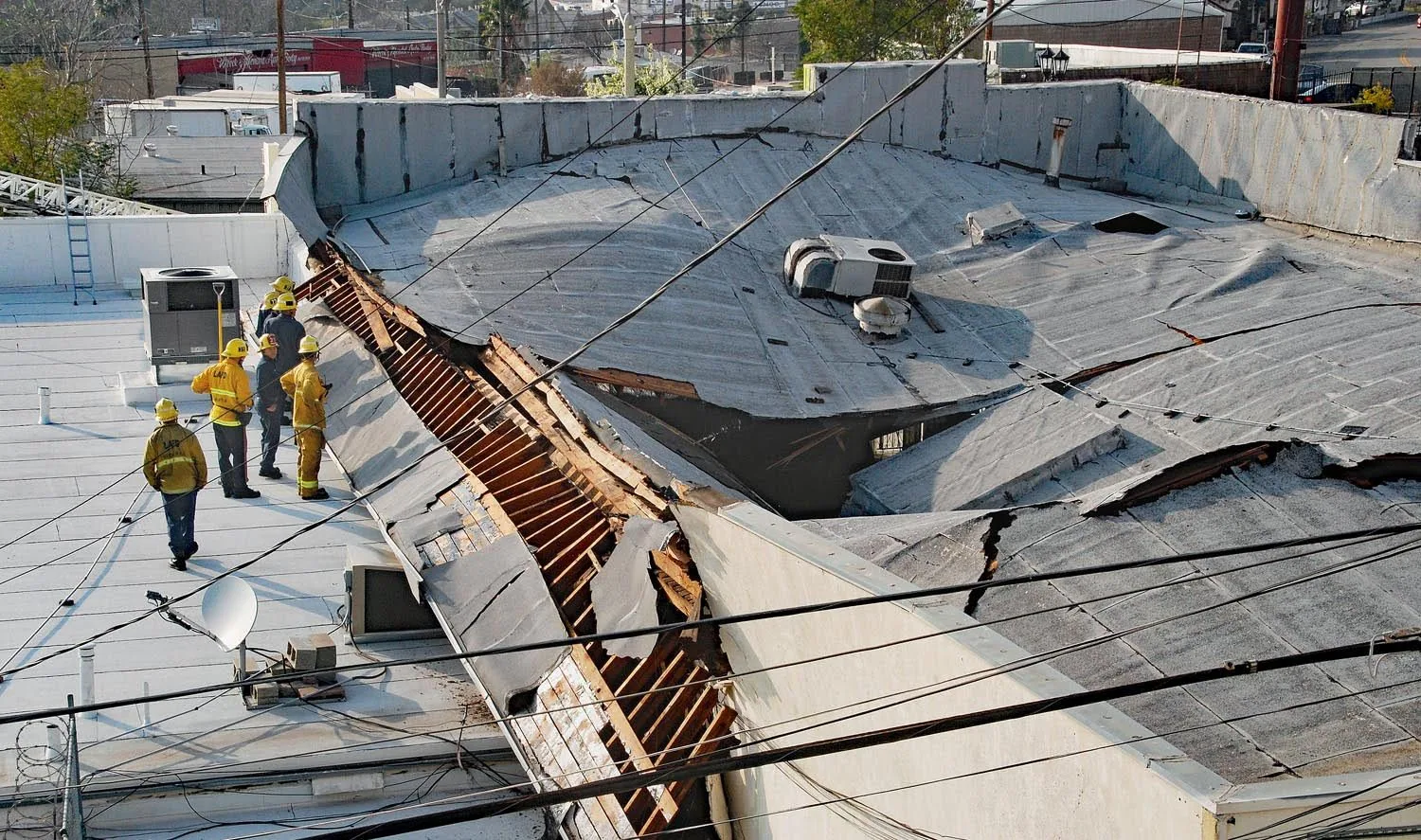
Snow does damage in four ways. Weight: a foot of wet snow is a large load, and drifting concentrates it against walls, penthouses and rooftop units. Meltwater: sun and heat from below turn snow to water that runs to drains and freezes in them. Ice dams: ice builds at cold edges and holds water behind it. And freeze and thaw: water in a seam or a crack expands as it freezes and opens the gap wider.
The roof surface suffers mechanical damage as well. Shoveling with metal tools, ice picks and snow blowers cut membranes, and ice sliding off a higher roof strikes a lower one. A sheet that was fine in December can be punctured in January by someone trying to help.
Weight is not evenly spread. Snow slides off pitched sections onto flat ones, drifts against taller walls and piles behind parapets, and a roof that carries a modest average can carry a heavy local load in one bay. Rooftop units and their curbs make drift dams of their own, and the low side of every curb collects a wedge of snow that melts late and refreezes at night. Flashing failure at those curbs is a winter finding as often as a summer one.
What the island's winters do
The city gets 29.8 inches of snow in a typical year, though it varies widely, and January 23, 2016 set a single-day record of 27.3 inches. A day like that puts a lot of weight on a flat roof at once, and it arrives before anyone has cleared a drain. The city also averages about 49.5 inches of precipitation a year, so the roof meets rain and snow in the same season.
On the island, the large flat roofs of the West Shore, where most of the industrial development sits, carry the load across long spans, and Bloomfield's Matrix Global Logistics Park opened there in 2018. St. George climbs a steep hillside, where terrain shapes development. Drifting piles snow against every parapet, penthouse and unit, and that a snow day on the island is a drain-and-drift inspection day for any facility director.
Spring is the wettest season in New York City, so the thaw follows into rain. A roof that sat under a drift in February meets a spring downpour with drains that may still be partly iced, and a roof that survived the snow can fail in the first big rain after it. That is why the walk after the thaw matters as much as the walk after the storm.
What the inspector checks
After a storm we start with the drains and scuppers, clearing ice carefully and noting which were blocked. Then the drift zones, where snow loads concentrate. Then the deck, from below where possible, looking for deflection, cracking or new gaps at the walls. Then the membrane, looking for splits at seams, flashings pulled by ice and punctures from tools.
- Drains and scuppers, blocked by ice or debris.
- Drift zones against walls and rooftop units.
- Deck deflection, shown by sticking doors or dropped ceiling tiles.
- Seams and flashings opened by freeze and thaw.
Interior signs matter in winter. A door that sticks after a storm, or a ceiling that has dropped overnight, can mean the structure is loaded beyond what it likes, and the roof is cleared before it is inspected.
We also look at the gutters, leaders and downspouts, since ice in a leader can split a pipe and send water back onto the roof or into a wall. A leader that runs inside the building and freezes is a concealed leak waiting to be found, and we trace the interior stains to it before we open the roof.
The repair in plain terms
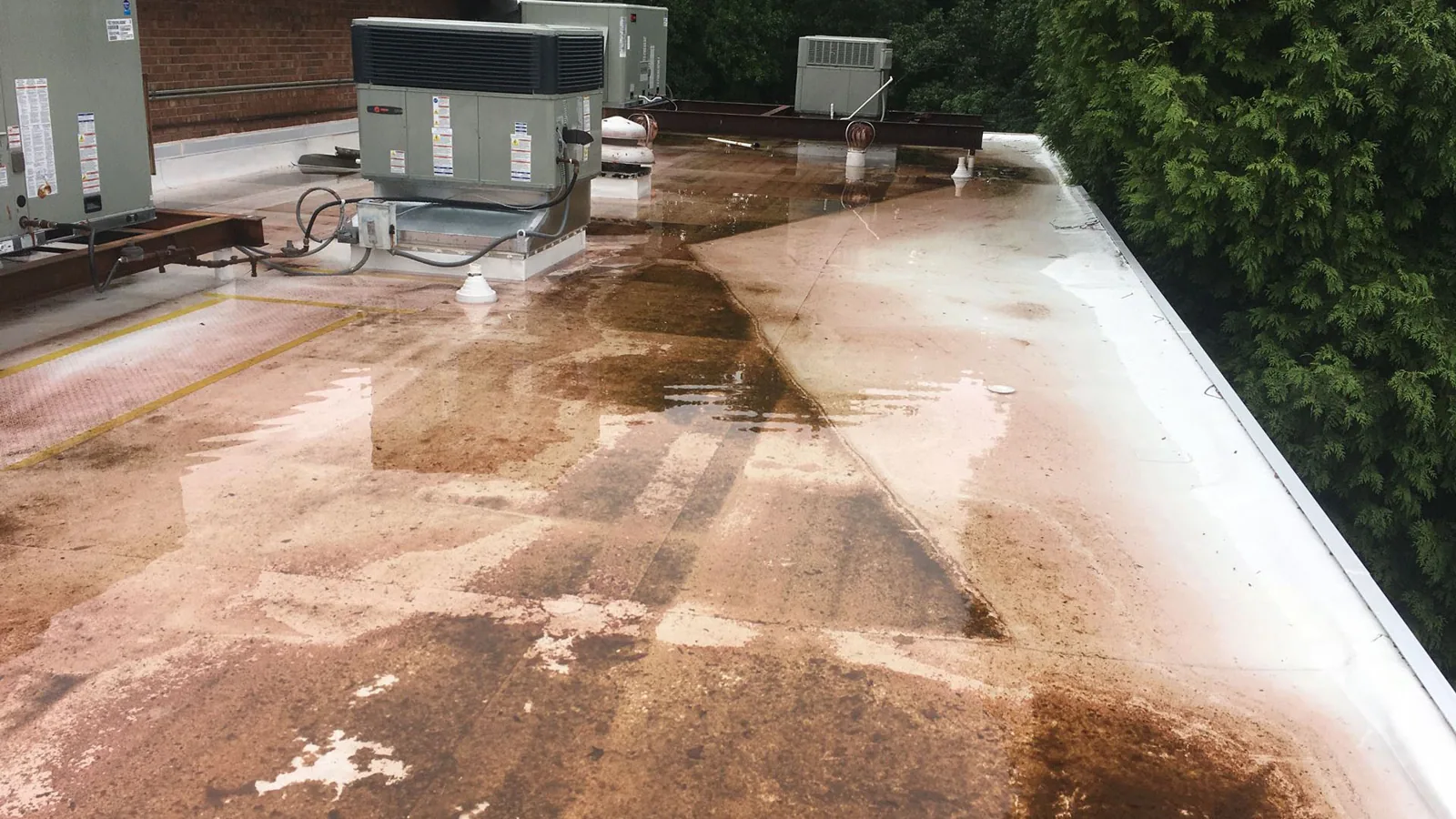
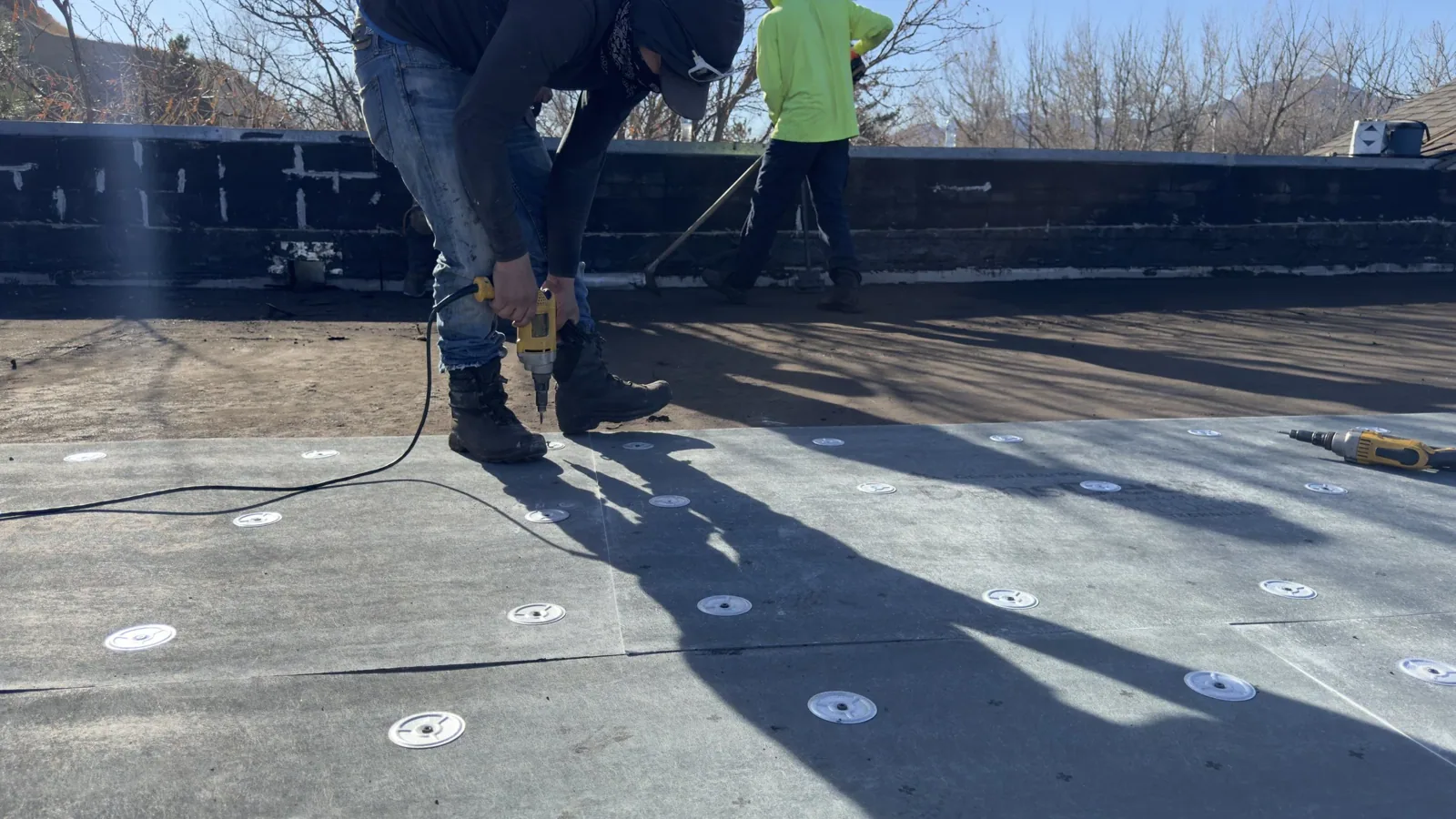
The first job is safe removal of snow and ice from drains and from overloaded areas, using plastic tools and leaving a layer of snow on the membrane to protect it. Then repairs: split seams are cleaned and re-welded, flashings pulled by ice are reset, punctures are patched, and sagging decks go to an engineer. Ice-damaged ponding areas are repaired as ponding water problems, and frozen drains get a longer-term fix, such as a heated drain or a larger sump.
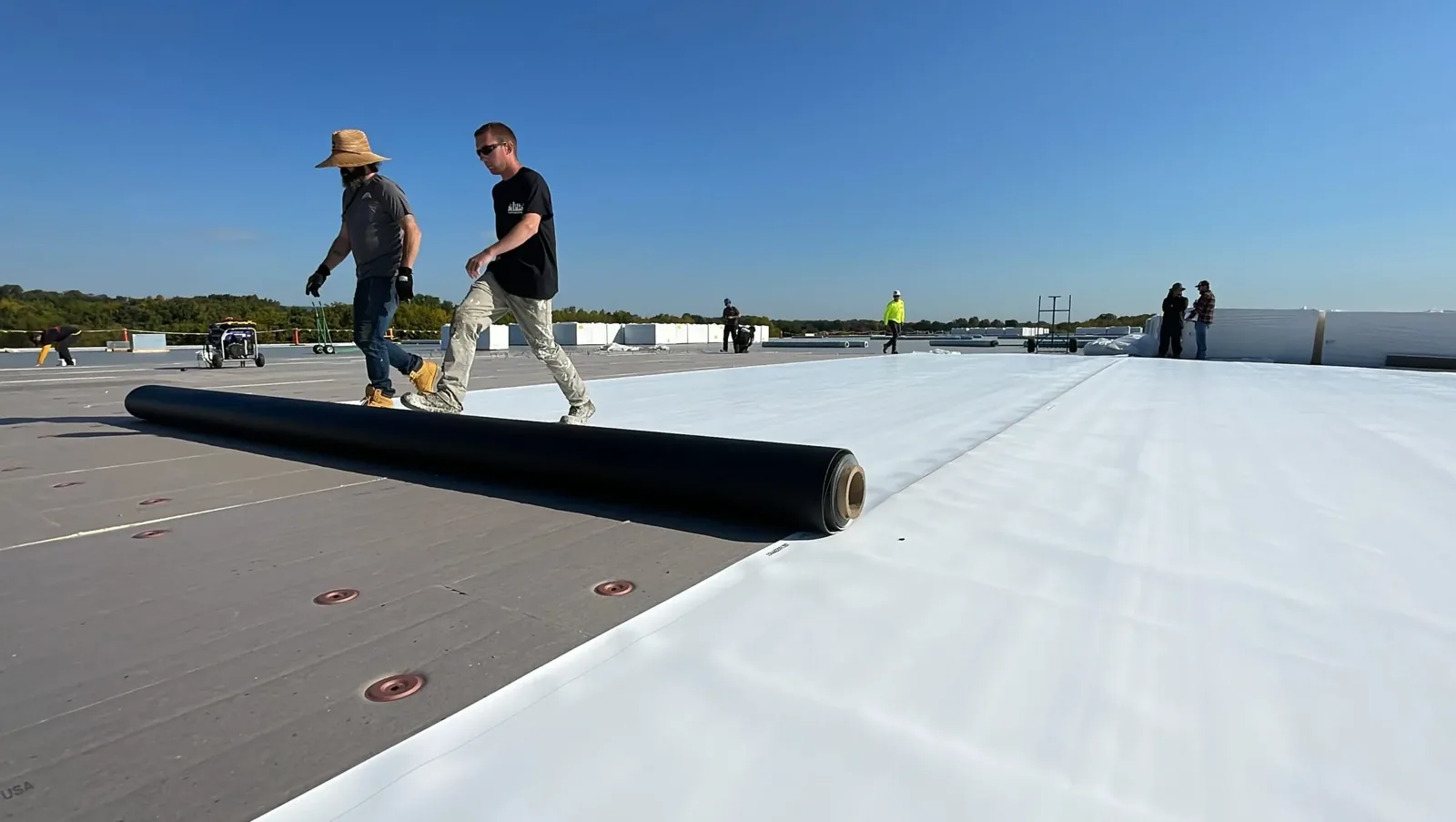
When damage is widespread, the question is repair or commercial roof replacement, decided by moisture and age. A split seam is a seam failure, and a sheet cut by a shovel is a puncture, so the scope lists each by cause for the insurer.
Cost drivers are plain: the size of the drift zones, the number of frozen drains, the extent of seam repair and whether the deck needs an engineer. Clearing a drain is a short visit, resealing a seam is a half day and a deck repair is a project. We price the three separately so the owner can start with the item that is stopping water.
Preparing before the first flake
The best snow repair is the drain cleared in November. Before winter, strainers and scuppers are cleaned, overflow paths are checked and loose items are secured. For roofs with heavy drifting, a snow removal plan names who clears what, with what tools and in what order. The plan also names roofs that should not be shoveled at all, such as those with fragile membranes or weak decks, where a structural engineer should be called first.
Wind drives the drifts. A winter storm with wind near the 80 mph Sandy brought in October 2012 piles snow against walls in a hurry. Ida's September 2021 rain showed how fast water arrives when a drain is blocked, and in winter the plug is ice.
Roofs with a history of overload get a structural note in the file, and the owner is told what depth of snow calls for removal. The note names the depth and the bays, not a general warning.
What goes in the log
The log for a winter loss holds dated photographs of drains, drifts and damaged areas, the roof plan with findings, the snow depth at the time, and a priced scope. It also records the deck condition when we see it. Any structural repair after a snow load is filed under the 2022 NYC Construction Codes the Department of Buildings publishes. A building in Bloomfield or elsewhere on the West Shore begins with the roof plan and the date of the storm. A preventive maintenance visit each November puts the drain clearing on a calendar.
After the winter, a thaw-season walk resets what moved and enters the findings in the log, so the spring list is ready before the first warm week.
Related Roofing Work
More roofing work that comes up alongside Snow and Ice Roof Damage Repair.
Commercial Roofing Questions
Should we shovel a commercial roof?
Only with a plan. Use plastic tools, leave a layer of snow on the membrane and start at the drains. Weak decks should be assessed by an engineer first.
What does an ice dam do to a flat roof?
It holds meltwater behind a frozen edge or drain, pushing water under flashings and into seams.
How can I tell whether snow is overloading the structure?
Doors that stick, ceilings that sag, new cracks in walls and creaking sounds are warning signs. Clear the area and call an engineer.
Does freeze and thaw damage membranes?
It opens seams and cracks aging sheet. A short spring walk finds what winter moved.
Can heat trace keep drains open?
Heated drain bodies and heat cable at scuppers can help. They suit roofs that repeatedly freeze at the same drain.