
Cool Roof Installation in Staten Island, NY
Reflective membranes and coatings for Staten Island warehouses, retail and office roofs that carry a heavy cooling load. Request a written roof inspection.
Crazing across the field and a thin, chalky surface at the walk pads are what an inspector notes first on a dark roof that has been taking the summer sun, and they point to a roof that is paying for its own cooling twice, once through the sun and once through the units that fight it. A reflective surface changes the starting point, and for a facility director on the island the useful question is whether the roof under it is sound enough to carry the change.
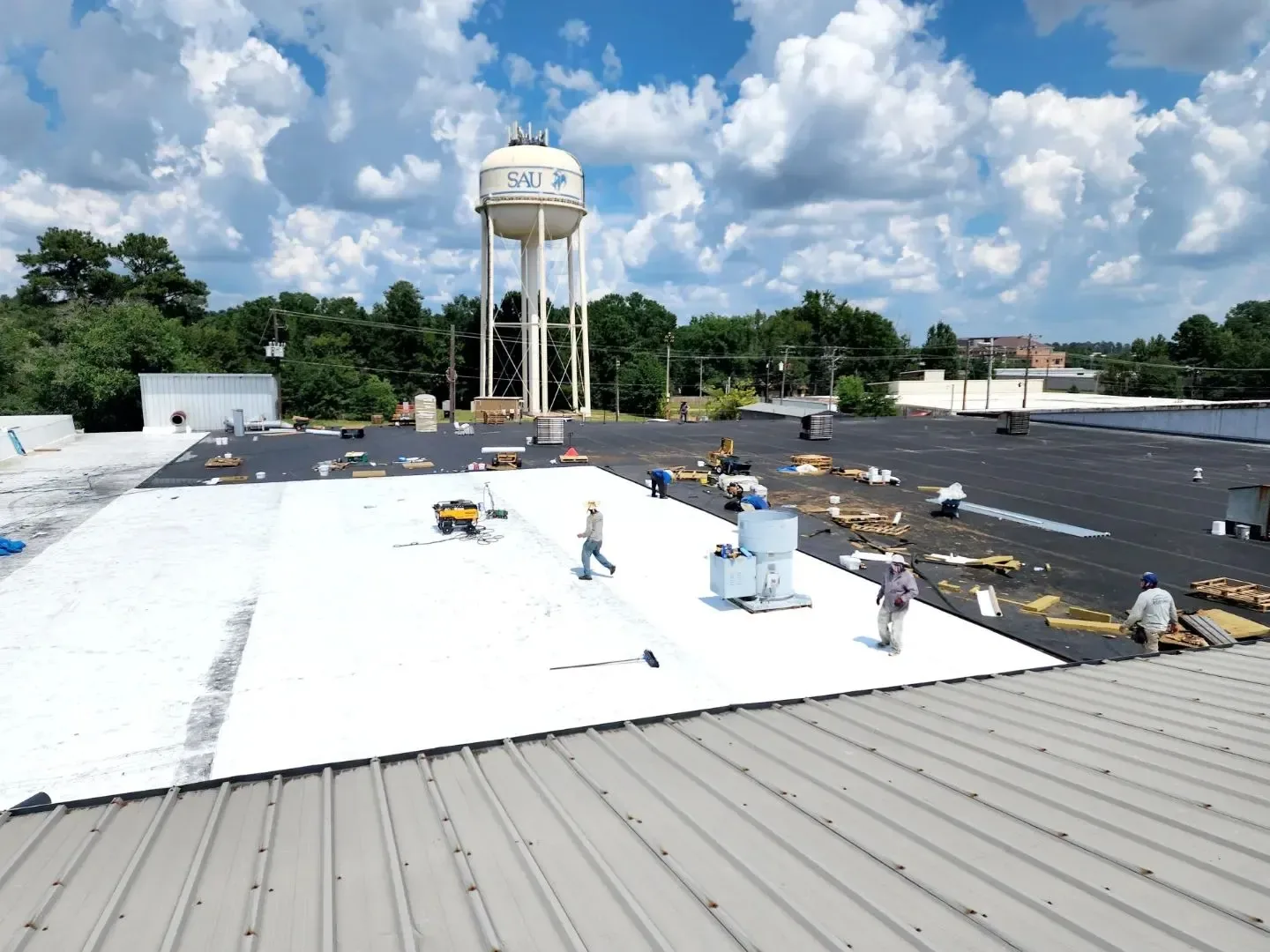
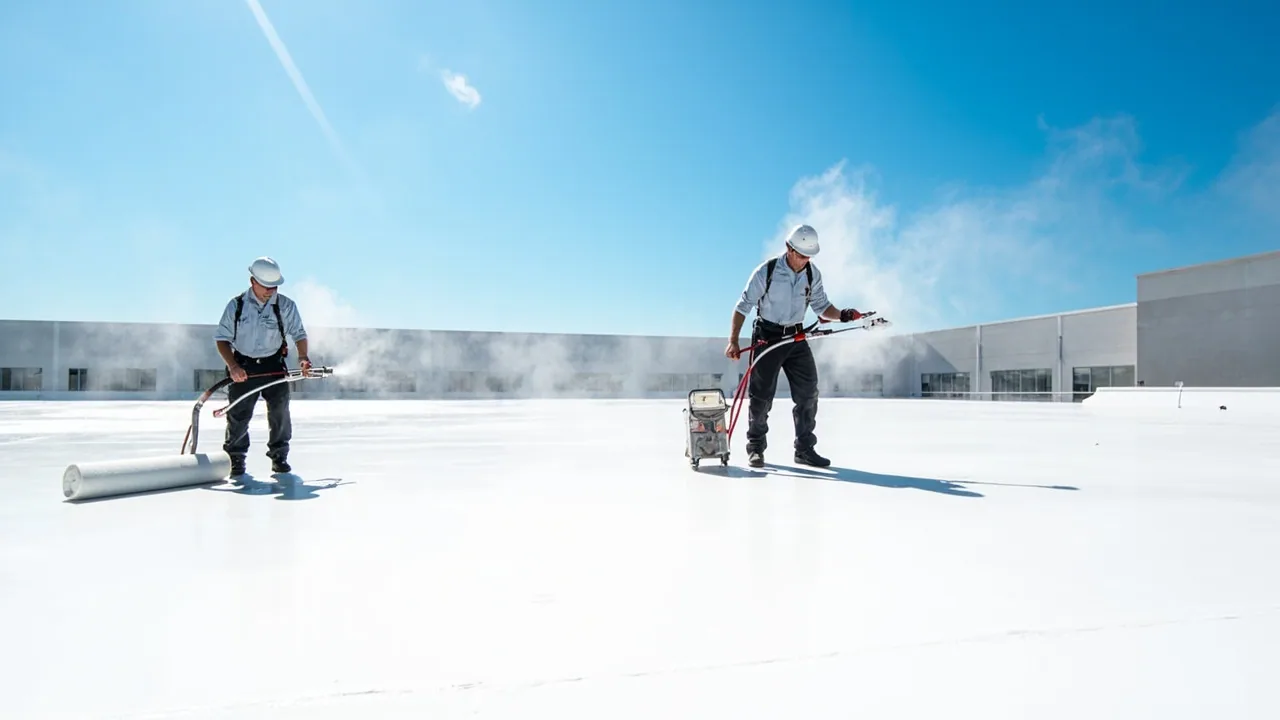
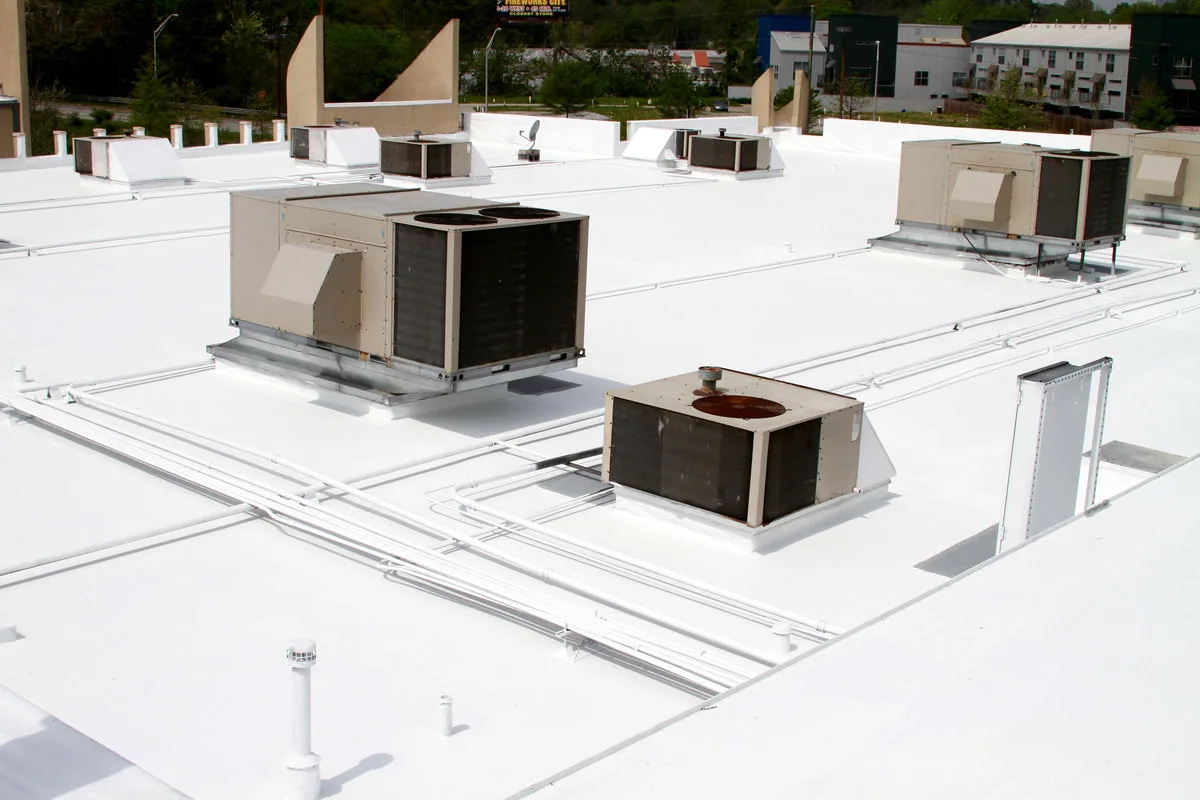
Commercial Roofing Staten Island installs reflective single-ply membranes and reflective coatings on low-slope roofs, and we tell you plainly which of the two fits the building after we have walked the roof and scanned it for moisture.
Two ways to a cool roof
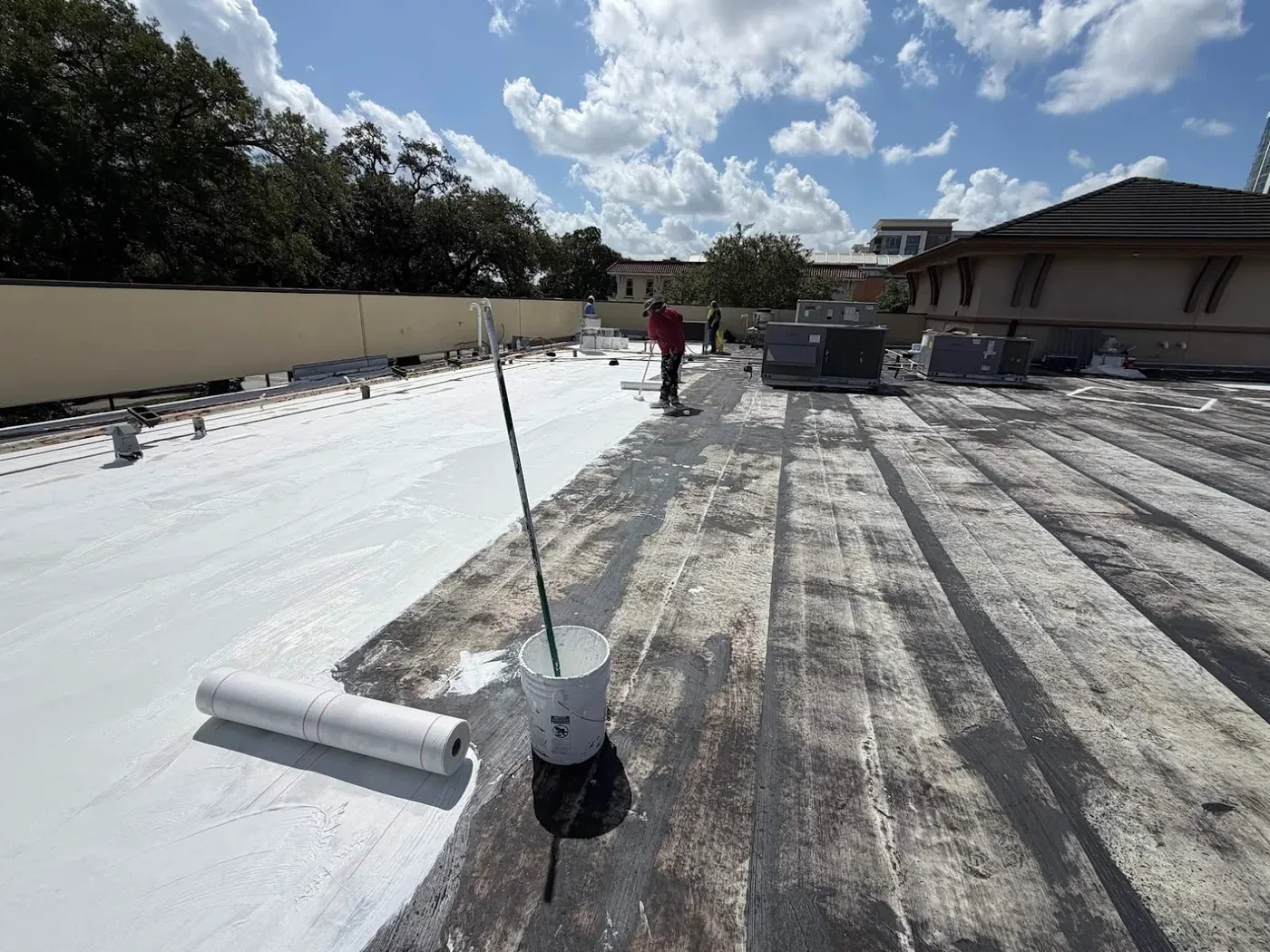
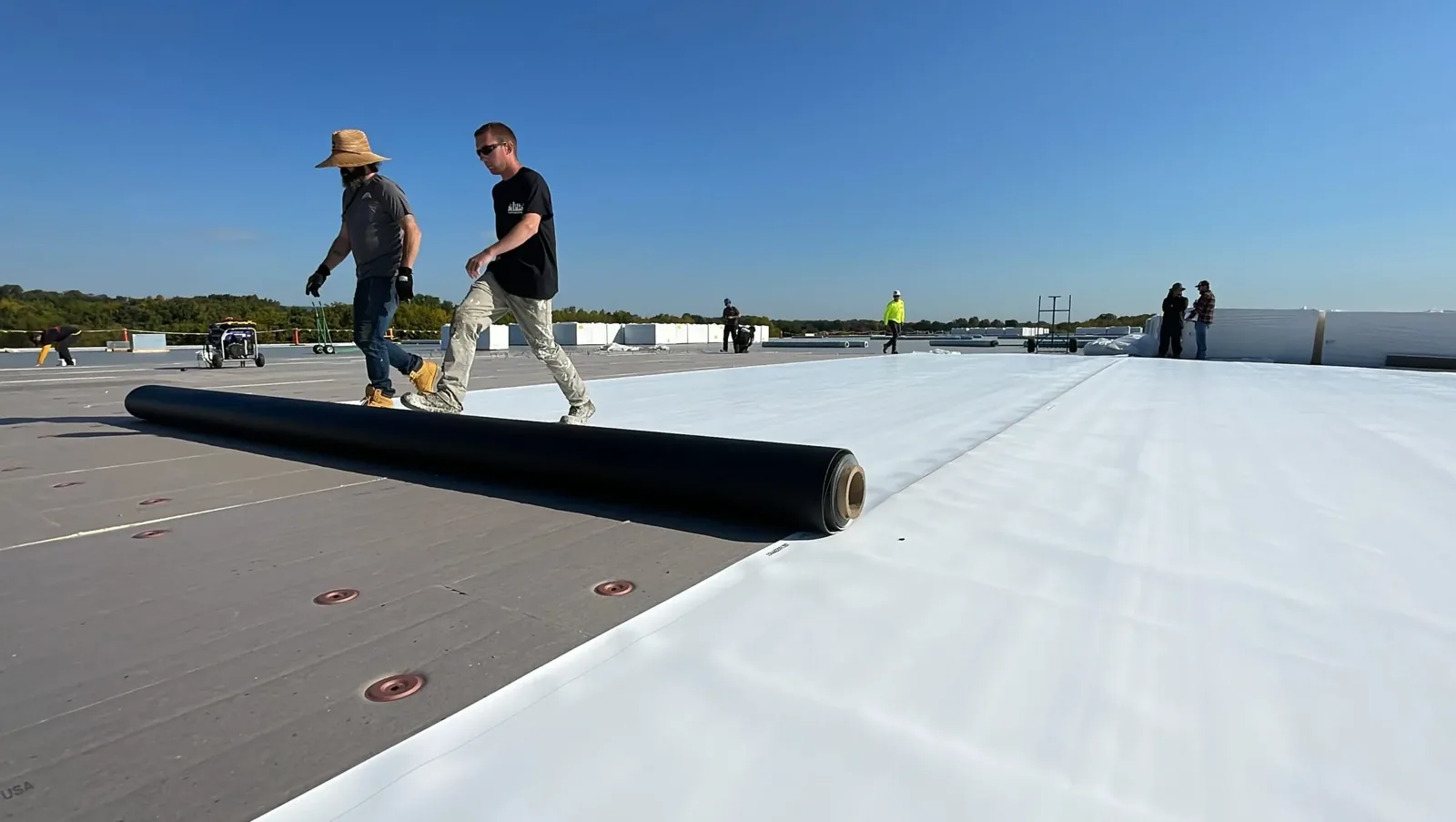
The first route is a white or light single-ply sheet, such as TPO, laid new or over a prepared roof, which gives a fresh waterproofing layer with the reflective finish built into the sheet. The second route is a liquid coating, either acrylic or silicone, rolled or sprayed over a sound existing surface to give it a reflective, waterproof film.
Neither one rescues a failing roof. A coating needs a dry, clean, well-bonded surface, and a membrane needs insulation that has not taken on water, so the work always starts with the inspection rather than the product.
There is a third path that sits between them, a reinforced coating with fabric laid into the seams of a dry but worn roof, which restores a reflective waterproof surface without tear-off. It suits a roof with several good years left and no wet insulation, and it does not suit a roof with deep splits, sagging decks or a history of repeated leaks at the same corner.
Where the heat shows up
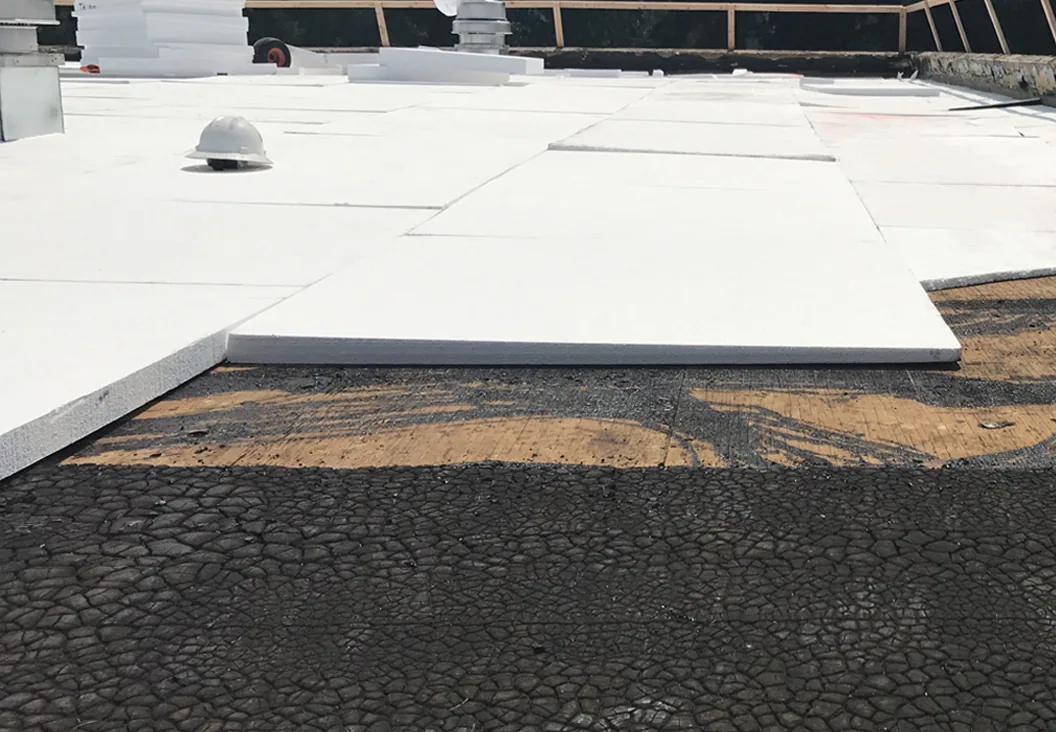
July in New York City has a mean daily maximum of 84.9 F, with 100 F days very rare, and that sounds mild until a dark roof is measured: the surface runs far above the air, and daily expansion dries asphalt and ages seams. The wear shows as crazing across the field and a chalky, thinning surface, which an inspector can read from the walk pads.
The heat load matters most over occupied space that runs cooling for months at a time. The Teleport industrial park at the eastern edge of Travis houses mostly Internet and telecommunications companies, and for any building that runs equipment through the summer, the cooling plant and the roof over it are one question.
Top-floor tenants feel it first. A work order that blames the cooling unit is often a roof complaint in disguise, because a dark membrane hands heat to the room below long after the sun has moved on, and the unit is simply doing its best against the surface above it. Reading that complaint correctly saves a mechanical call and points the repair at the right trade.
What we check before a reflective layer goes on
Four questions come before any product. Is the insulation dry? Wet board under a coating blisters. Are the seams and flashings closed? A reflective film will not span a gap. Is the surface clean enough to bond, free of tar, oil and old coating? And does water leave? Ponds collect dirt that dulls the finish and can attack some coatings.
We answer with a moisture scan, a handful of core cuts and a pull test on a small patch of coating, and the result is a map of dry and wet zones. Wet zones are cut out and replaced before a reflective layer covers anything, since a cool surface over a wet roof only hides the problem for a season.
We also read the edges. Flashing, coping and gutter metal at the edges get the same sun the field gets, so a bright field beside bare, rusting edge metal leaves the weakest part of the building untouched, which puts edge repairs ahead of the surface work.
Which roofs gain the most
The roofs that gain most are large and flat with cooling load below them: West Shore warehouse roofs, retail along Richmond Avenue and Hylan Boulevard, and office roofs in Bloomfield, where several large office buildings went up as development picked up in the late 1980s. Each is a candidate when the membrane is dry.
Where the sheet is sound, a coating through roof coating restoration adds years and a reflective finish at lower cost than replacement. Where it is not, a reflective membrane goes in as part of a commercial roof replacement, ideally with new insulation and cover board beneath it.
Added insulation under either choice is a separate decision. If the existing board is thin or crushed, the reflective surface will not carry the load by itself, and an insulation and cover board upgrade is priced beside the coating so the owner can see what each layer buys. Owners in Bloomfield and the West Shore can start with the roof plan.
Winter still has its say
A reflective surface helps in July and does nothing against a January in a city that averages 29.8 inches of snow and once saw 27.3 inches in a single day, so a cool roof on the island still has to shed snow, take freeze and thaw and keep its drains open. We check the drains and scuppers first, because a ponded cool roof turns gray quickly.
Wind matters too. Sandy's gusts reached 80 mph in 2012, and a coating or sheet at the roof edge is only as good as its attachment, so edge metal and parapet returns are checked before the field of the roof is coated. A reflective finish on a loose edge is cosmetic.
Parapet walls cast shade across parts of many roofs for much of the day, and shaded zones stay damp longer, so we let those areas dry fully before coating. Crews wear soft-soled shoes on finished surfaces, and skylights, curbs and drains are masked so overspray stays off the building.
Scheduling and upkeep
Coatings go on faster than tear-off work and make less noise, so tenants are rarely disturbed, but they need a dry roof, moderate temperatures and no rain for hours after the last pass. The workable season on the island runs from late spring into early fall, and the schedule holds float for the afternoon shower.
Reflective surfaces collect dirt, and a gentle wash once a year keeps them working. We build that wash into a preventive maintenance plan and record the date in the inspection log, so the next recoat is planned by the calendar rather than by a complaint from the top floor.
Cost depends on roof area, how much seam and flashing work comes first, access to the roof and whether insulation is added. Against replacement, a coating skips tear-off and disposal, and that saving is largest on big, simple roofs with few curbs.
Related Roofing Work
More roofing work that comes up alongside Cool Roof Installation.
Commercial Roofing Questions
How much cooler will the roof run?
The surface runs well below a dark sheet on a hot afternoon, and the heat load on the floor beneath drops with it. We do not promise a savings figure, because insulation, ventilation and the amount of equipment the building runs decide how large the gain is.
Can a roof that has leaked be coated?
Not until the wet insulation is found and out. The scan locates it, the saturated sections are cut and replaced, and the whole roof is then coated so the repaired areas blend in.
Will a white roof stay white?
Not by itself. Dirt, ponding and foot traffic dull it within a few seasons, and an annual wash restores most of it.
Does a cool roof cost heat in winter?
A little, though cooling seasons are long and insulation does the real work of holding heat in.
What affects the price?
Roof area, how much seam and flashing repair comes first, access, and whether new insulation goes in. On a sound roof the total still lands below the cost of a replacement.